
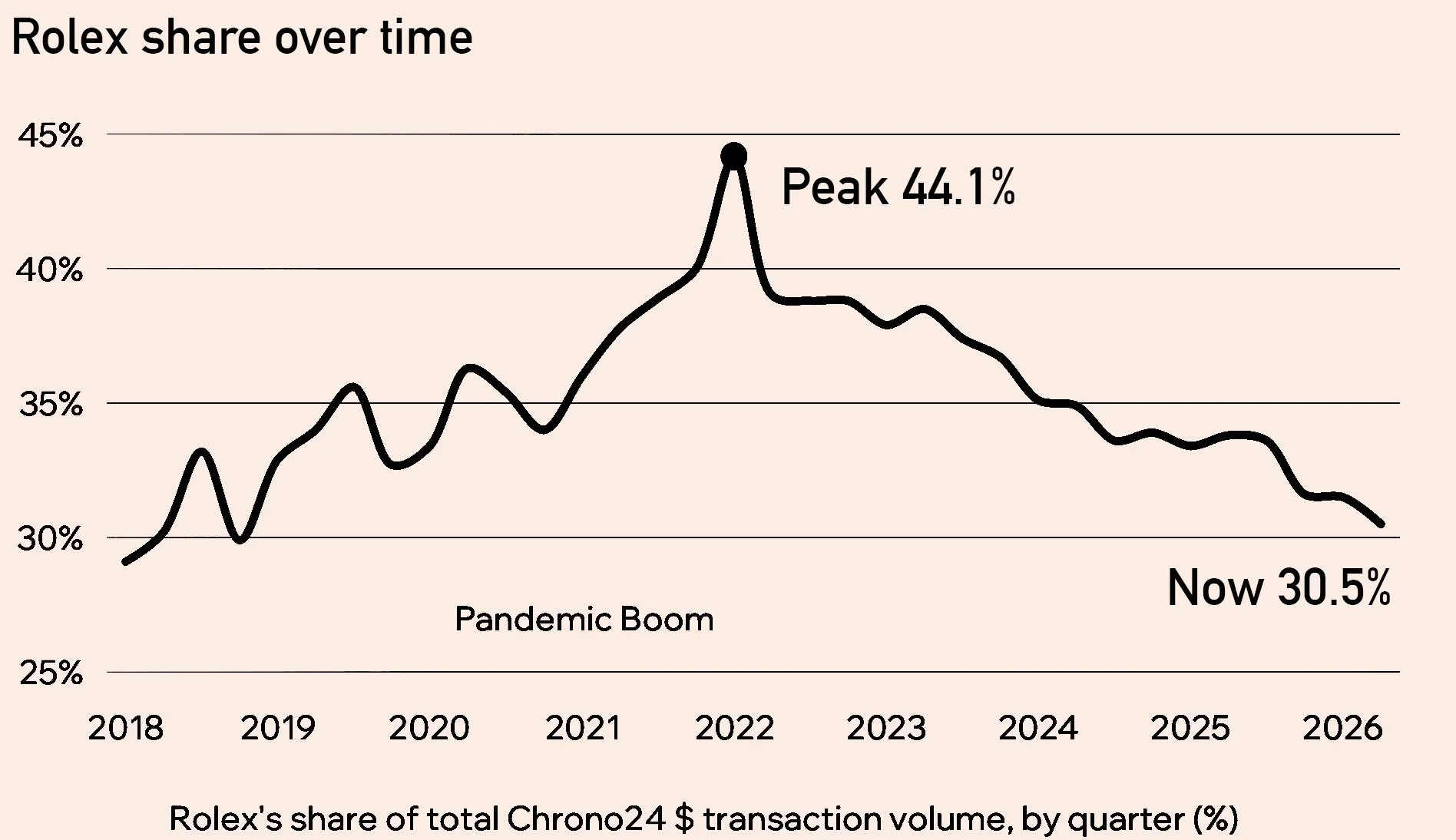
(Data: Chrono24)
Karlsruhe, Germany-based Chrono24 released its latest report last week. Unlike reports from WatchCharts or EveryWatch, which track sales across multiple platforms but generally lack visibility into final negotiated prices, Chrono24 covers only its own marketplace but knows what watches actually sold for. Its report is based on several million transactions from 2018 through the second quarter of 2026, Chrono24 said.
Rolex may remain the most important brand in the global luxury watch market, but its dominance is waning, the report shows. Its share of Chrono24’s total transaction value continues to trend downward as other brands gain ground.
To be sure, a declining share does not necessarily mean Rolex sales are falling. The rest of the market may be growing faster. Cartier has enjoyed a resurgence, while Patek Philippe, Audemars Piguet and Vacheron Constantin have gained ground with collectors, especially in a K-shaped economy, where more money is going toward haute horlogerie. And because Chrono24 measures transaction value rather than the actual number of units sold, a small increase in transactions for Patek, AP or Vacheron watches can disproportionately affect the data.
Still, the trend may tell a broader story than collectors simply diversifying. As Rolex raises prices and continues to produce more than a million watches a year, availability has improved for some models, giving buyers less reason to pay premiums on Chrono24 and more reason to wait for one at retail. Since 2022, Rolex’s Certified Pre-Owned program, which has been chronicled in this magazine, has created another major channel for preowned watches, likely taking Rolex sales away from Chrono24.