
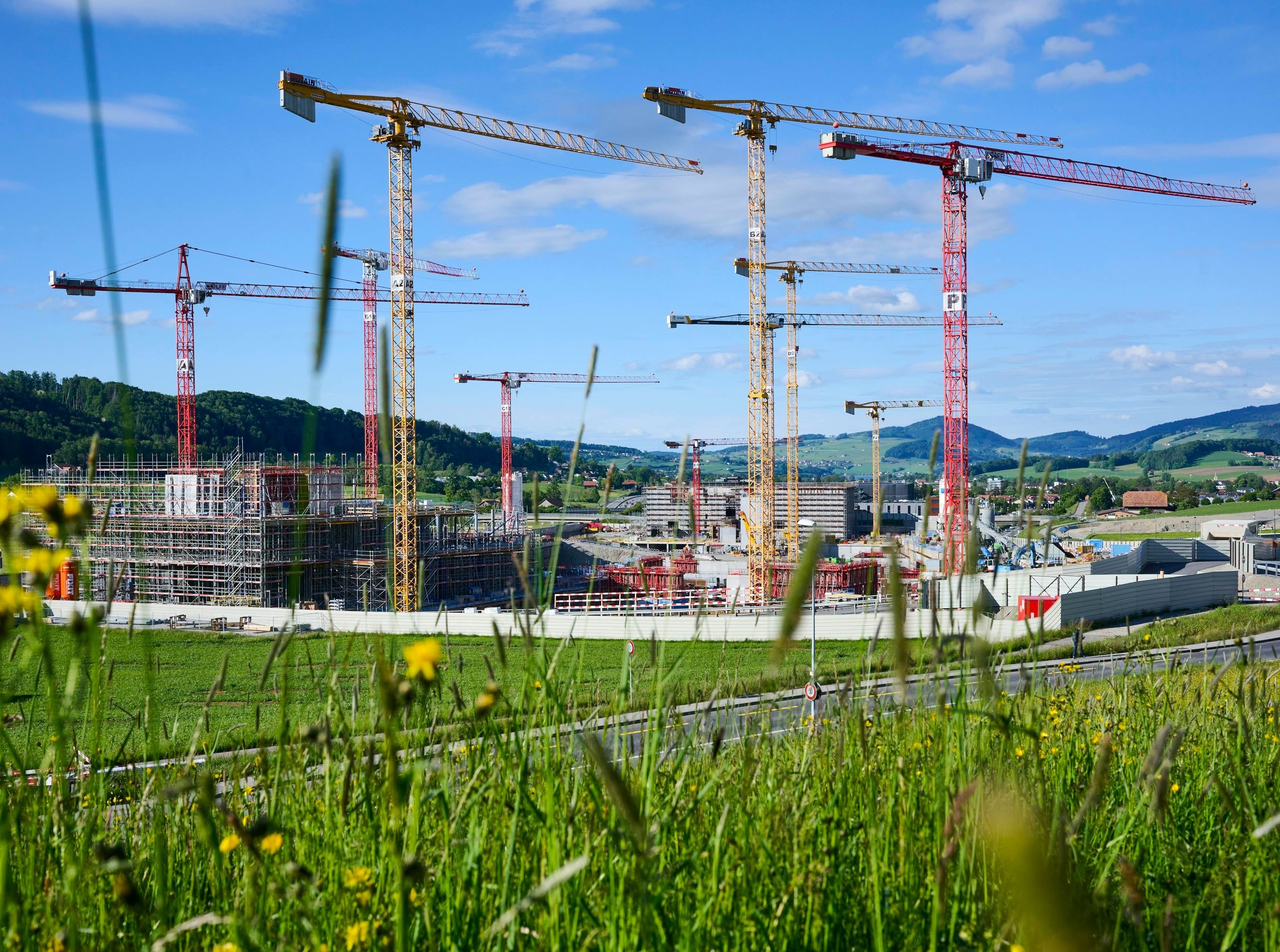
As Rolex shortages persist, the challenges of building a manufacture the size of a small town in Switzerland are exposing the true cost of “Swiss Made.”
Ten cranes now dominate the entrance to Bulle, a Swiss town where Rolex is constructing one of the largest industrial projects currently underway in the country. Along the A12 highway, crews are excavating, pumping groundwater and treating runoff as the watchmaker races to build a massive new manufacturing campus intended to help relieve years of supply shortages and client frustration.
Rolex display cases may remain empty, but the growing forest of cranes above Bulle has become a visible reminder of the extraordinary lengths Switzerland’s biggest watchmaker is willing to go to expand production in one of the world’s most tightly regulated industrial environments. Coronet has previously reported on Rolex’s ambitious plan for green manufacturing.
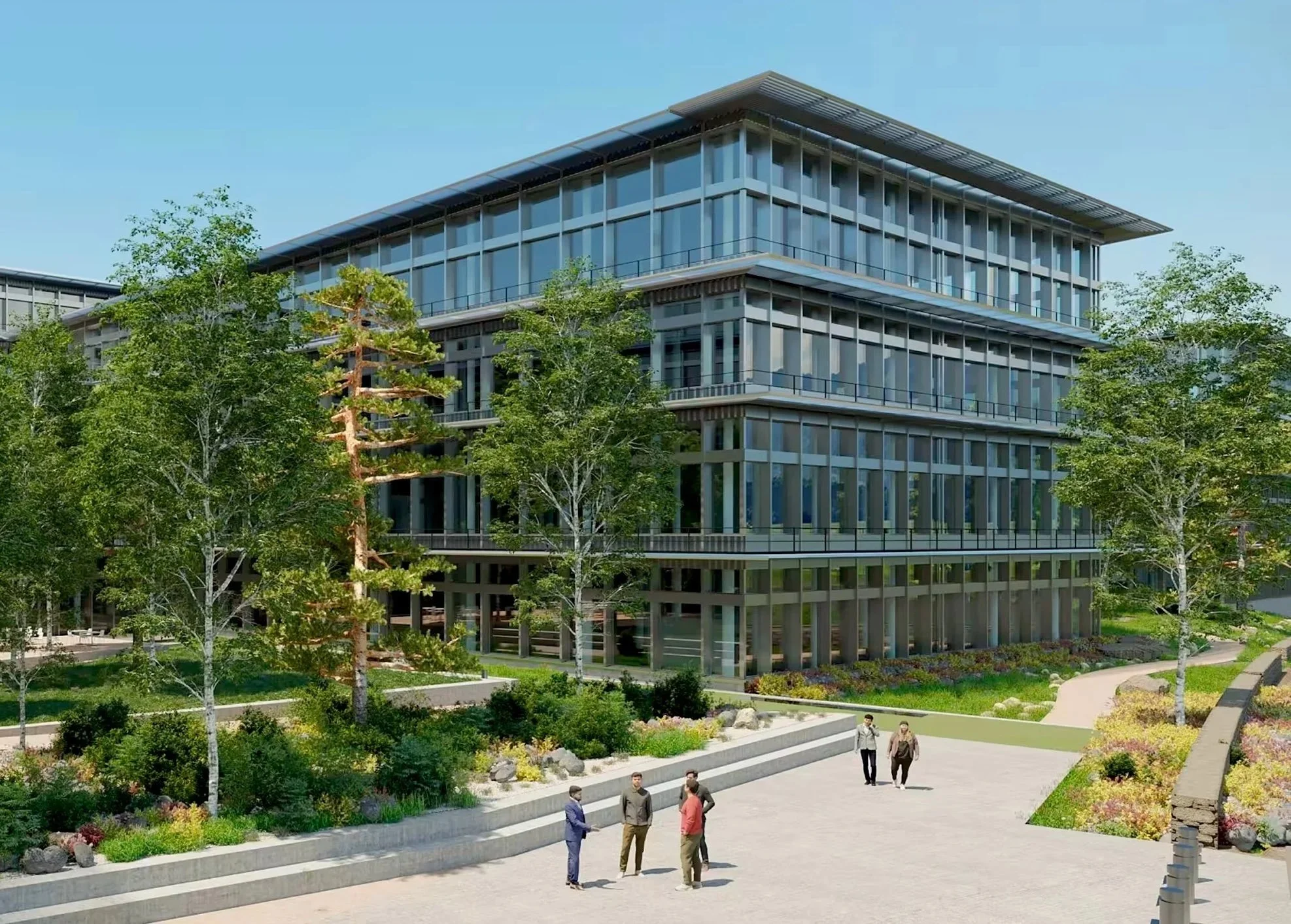
Illustration of Rolex’s future manufacture in Bulle. (Rolex)
The scale is difficult to overstate. The future Rolex site in Bulle will consist of five interconnected buildings stretching nearly 1,250 feet, with operations scheduled to begin progressively between 2029 and 2030. Swiss authorities say the project covers roughly 10 hectares of construction area, plus another 6.7 hectares devoted to temporary installation zones, dimensions rarely seen in the canton of Fribourg.
“By accessing a new labor pool in the Fribourg region, we will be able to support our development further and continue to guarantee the level of quality the brand is renowned for,” Rolex said.
But building a mega manufacture in Switzerland in 2026 requires navigating far more than concrete, steel and labor challenges in the Fribourg region. Environmental regulators are closely monitoring nearly every stage of the project, highlighting the complexity of large-scale industrial expansion in a country with some of Europe’s strictest land- and water-protection rules.
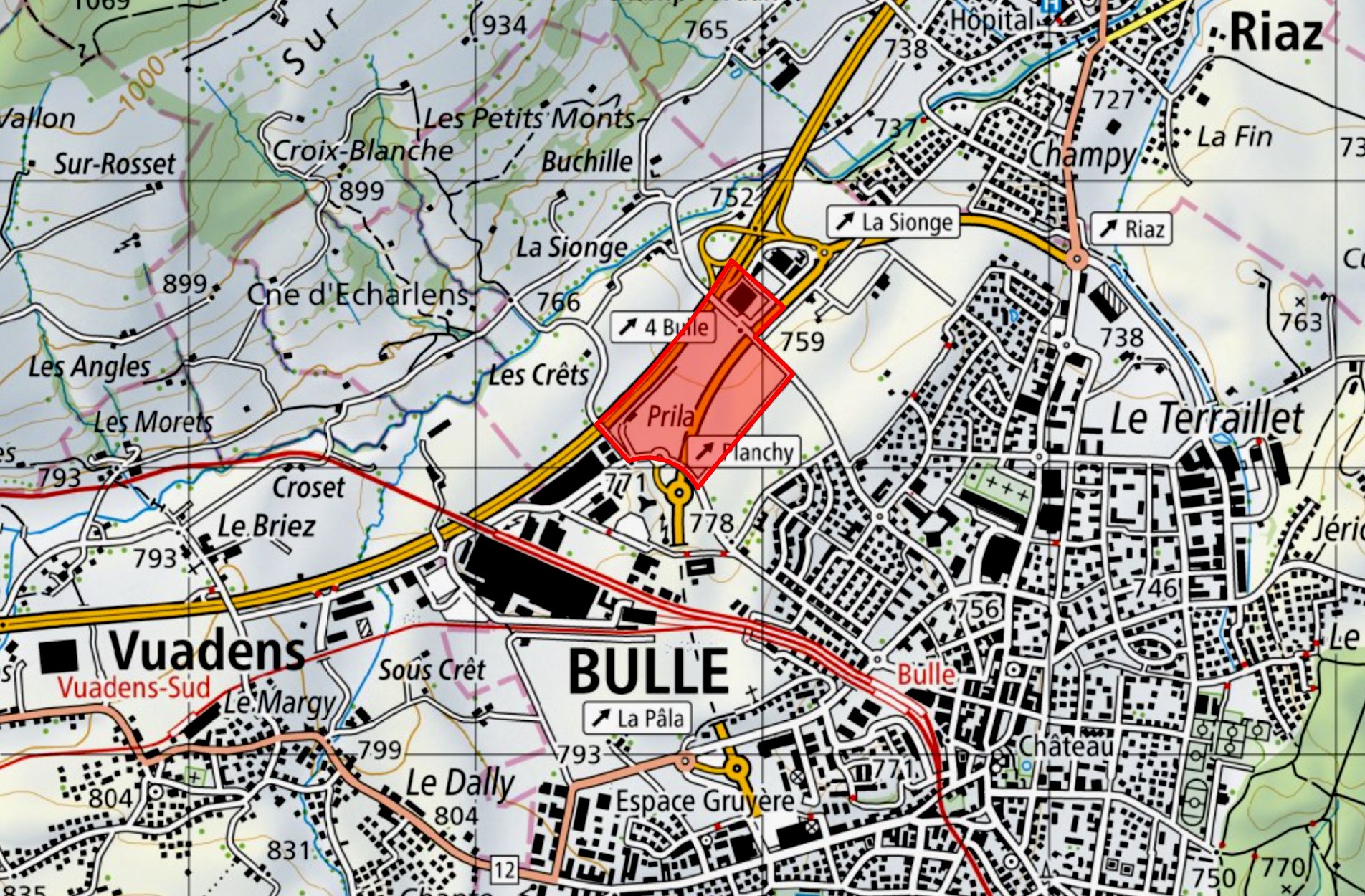
(Credit: Canton de Fribourg)
The Rolex site sits near the Sionge stream and above a groundwater table that must be continuously lowered by pumping to allow excavation work to proceed. Authorities required the installation of 15 separate treatment systems designed to prevent contamination, including sedimentation basins, hydrocarbon recovery units and facilities capable of neutralizing concrete runoff during heavy rain.
Officials said the systems were engineered to withstand extreme weather events, reflecting rising concerns in Switzerland over industrial runoff and water management as construction projects become larger and more technically demanding.
Environmental oversight on the project has become unusually extensive. Canton officials said roughly 120 hours of environmental monitoring have already been carried out, including repeated on-site inspections and mandatory reporting requirements. Rolex and its contractors must also maintain a dedicated environmental monitoring office and a 24-hour emergency response system in case of spills or failures.
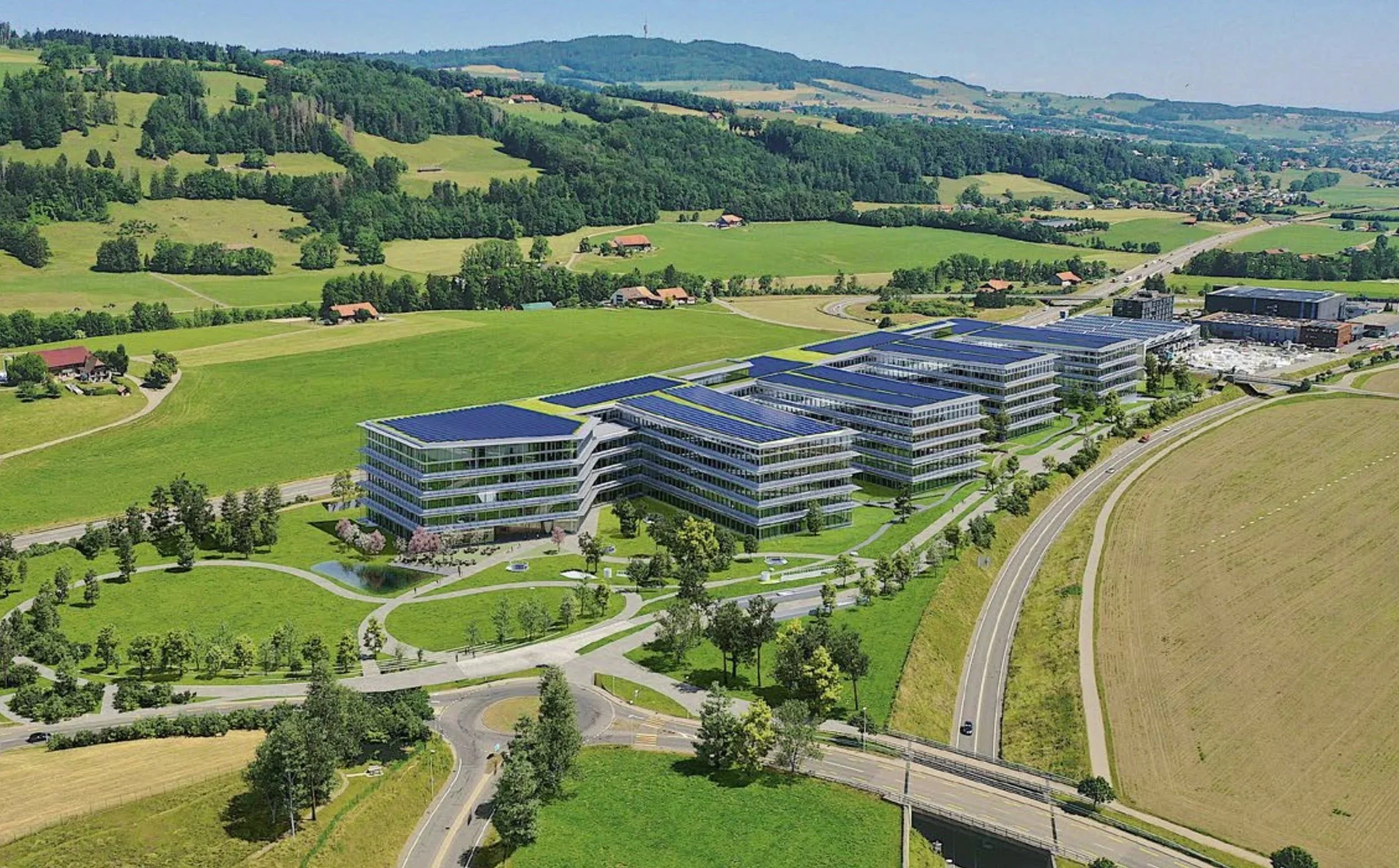
Official renderings of Rolex’s future facility. (Rolex)
The scrutiny reflects both the sheer scale of the development and the symbolic importance of Rolex itself, one of the few fully vertically integrated watchmakers whose pieces remain among the hardest to obtain. Wait lists for many models continue to stretch years at official retailers, while secondary-market prices for most references still trade well above retail despite a slowdown in the luxury industry.
The Bulle expansion, extensively chronicled in these pages, is part of Rolex’s long-term attempt to gradually increase production capacity without sacrificing quality.
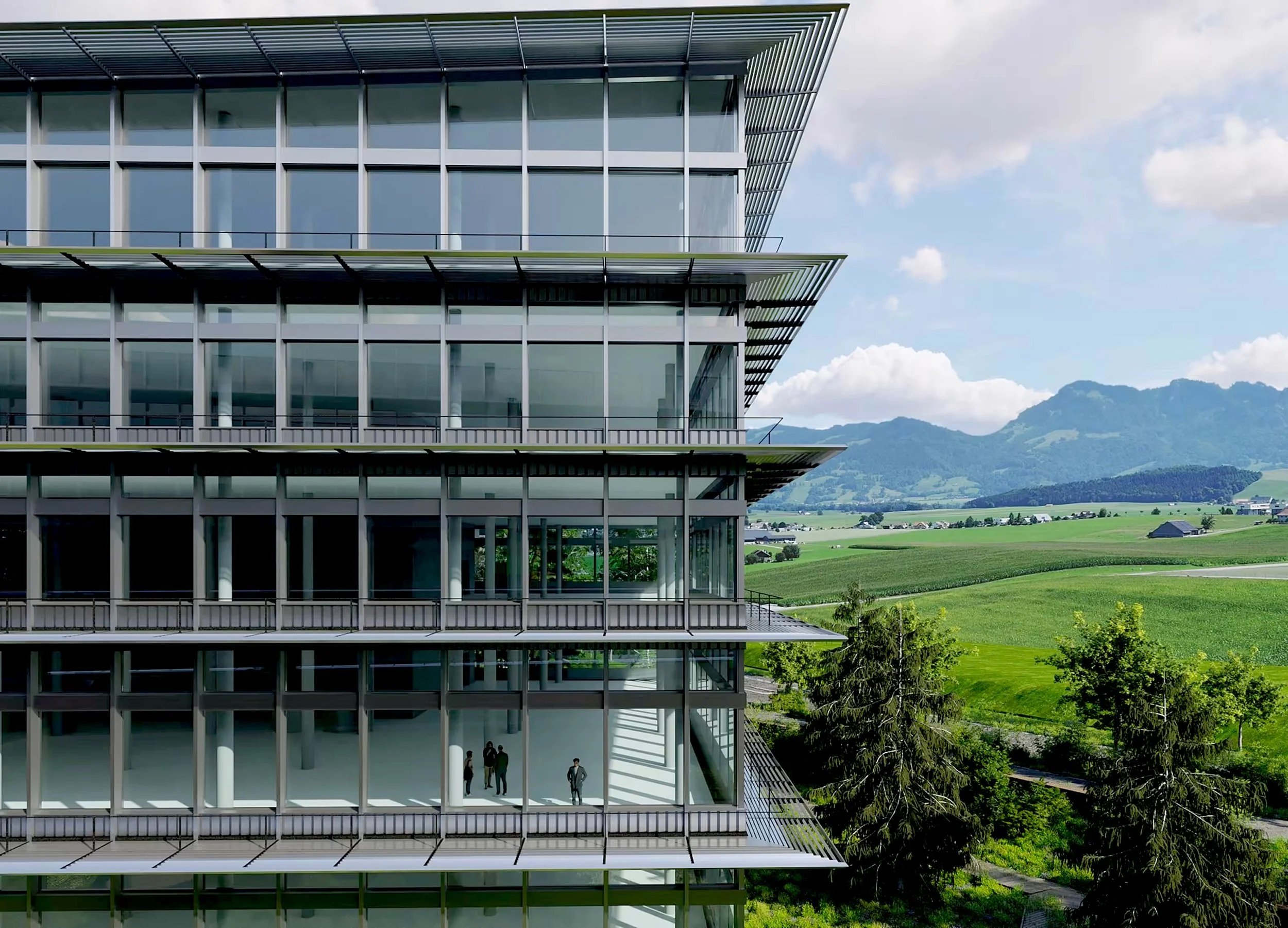
Illustration of Rolex’s future manufacture in Bulle. (Rolex)
The project is the latest example of the delicate balance Switzerland faces between industrial growth and environmental preservation. Part of the construction zone occupies protected agricultural land that will eventually need to be restored to farming use. In Bulle, soil specialists are overseeing the handling of fertile earth to prevent long-term damage and compaction from heavy machinery.
Then there is the excavation itself. The site requires the removal of roughly 645,000 cubic meters of material, a volume local authorities described as extraordinary even by Swiss infrastructure standards. Much of the excavated material is being reused for construction fill, gravel-pit restoration and landscaping projects in an effort to avoid landfill disposal.
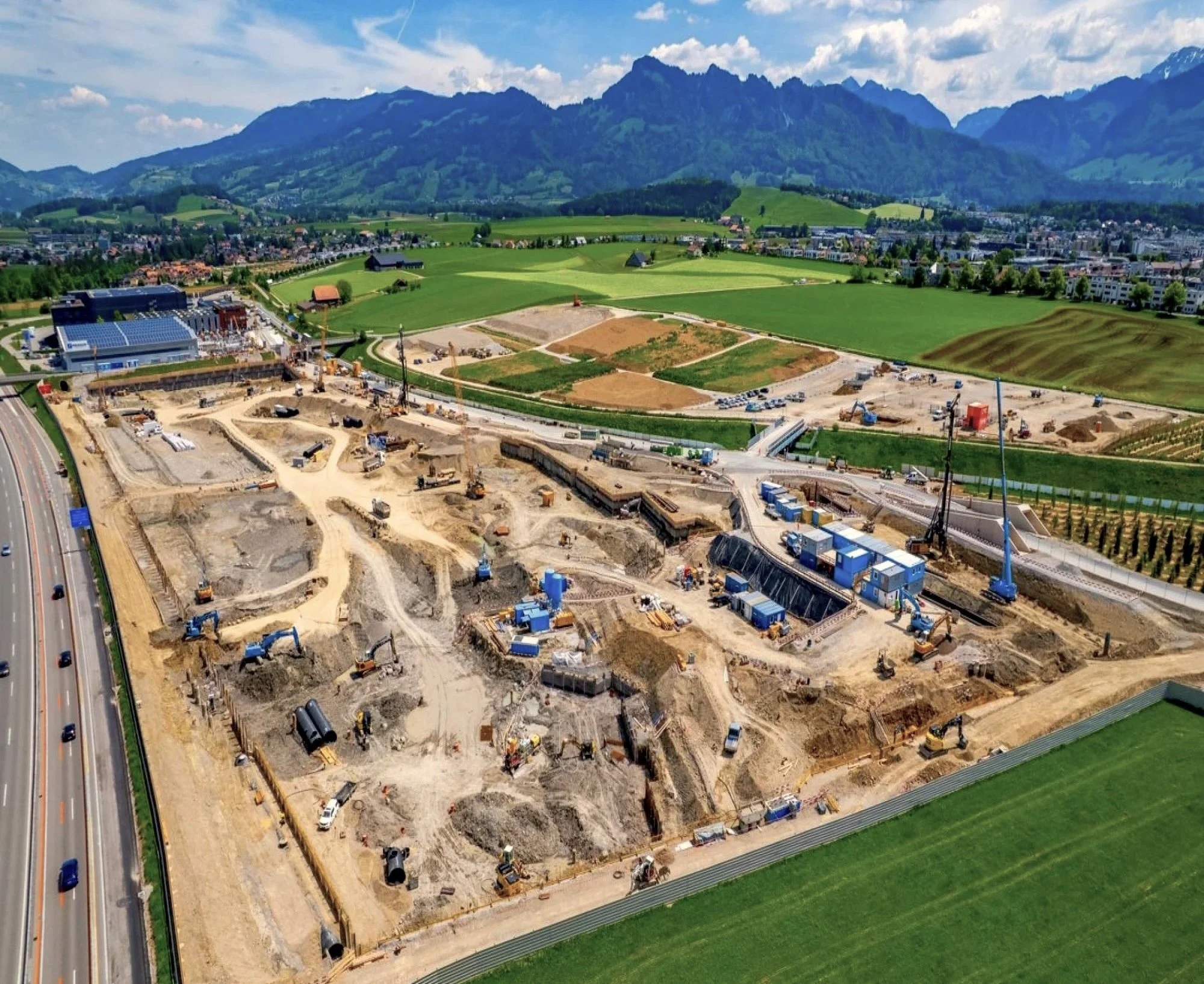
Rolex’s future manufacture. (Photo credit: Pedro Gutiérrez)
Last year, the project briefly came under scrutiny after pollution was discovered in the nearby Sionge stream, highlighting the environmental risks surrounding a construction site of this magnitude. Investigators were unable to determine the source of the contamination, though authorities ultimately ruled out the Rolex project itself. Still, the episode shows how little margin for error exists when building a factory of this scale in modern Switzerland.
Coronet’s full coverage of Rolex’s future site can be found here.