
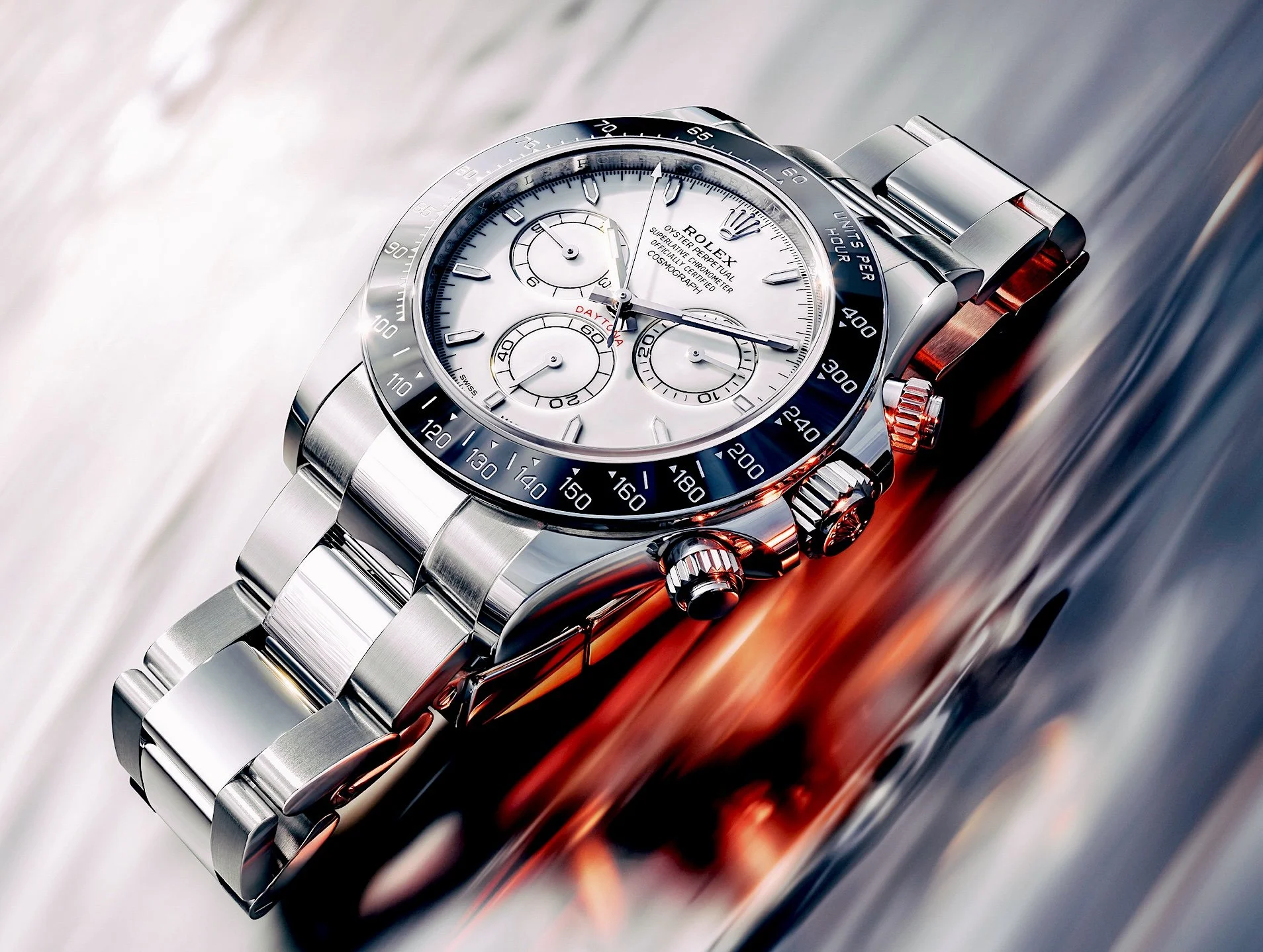
Rolex’s newest Daytona. (Photo credit: Rolex)
One of the hardest Rolex watches to buy, the Daytona, saw a new reference released at Watches and Wonders this year. For a model mostly in steel, it carries a price tag of $57,800 before tax. And because it is off-catalogue, the client will need to spend significantly more with an official retailer to be eligible to buy it.
Despite global tensions and economic uncertainty, Rolex is leaning into exclusivity, catering more and more to a K-shaped economy where those at the top continue to do well — and increasingly so. It is also canceling decades-old contracts with local retailers and building flagships in major cities, where high rollers can compete on spending history.
Meanwhile, the brand continues to market its watches through a professional lens. In the press release for the $57,800 Daytona, we learn it is “designed to meet the needs of professional racing drivers.” The Yacht-Master II, which now tops $20,000 for the steel version, is “specifically for regatta starting sequences.” Rarely in business has a brand so rooted in professional products moved so deeply into exclusivity.
I received an email last week from someone who reminds me of the old Rolex ad: “If taming oil well fires were your job, you'd wear a Rolex.” Tom currently works in the oil and gas industry on the coast of Louisiana and is also an emergency response firefighter. “We use our watches in the field and on oil rigs, in heavy weather or in areas with electrical classifications that do not permit non-explosion-proof devices,” Tom told me. “I use my Submariner every day, not just as a keepsake to celebrate a milestone, but as a reliable tool.”
From explorers and pilots to those “who guide the destiny of the world,” Rolex rests on a history that other businesses could only dream of. Today, Rolex's strategy is to take its catalogue of iconic designs and dial up the exclusivity through luxury upgrades. As a business model, Rolex is not wrong to lean into the K-shaped economy. But if it wants that story of professional use to continue, it must ensure that those who use its watches in the field, like Tom, remain part of it.