

Smartphones and digital watches measure time to the millisecond. A mechanical watch, by comparison, is imprecise, its tiny balance wheel able to keep only so steady a rhythm.
Still, at Rolex, a brand now more closely associated with luxury than with instrument making, scientists, engineers and watchmakers continue to devote enormous effort to improving the accuracy of its mechanical movements.

(Photo credit: Rolex)
For the Geneva brand, measuring the passage of time is not only a technical challenge but also a philosophical goal that defines its research and development division, where specialists work to refine the smallest margins of precision.
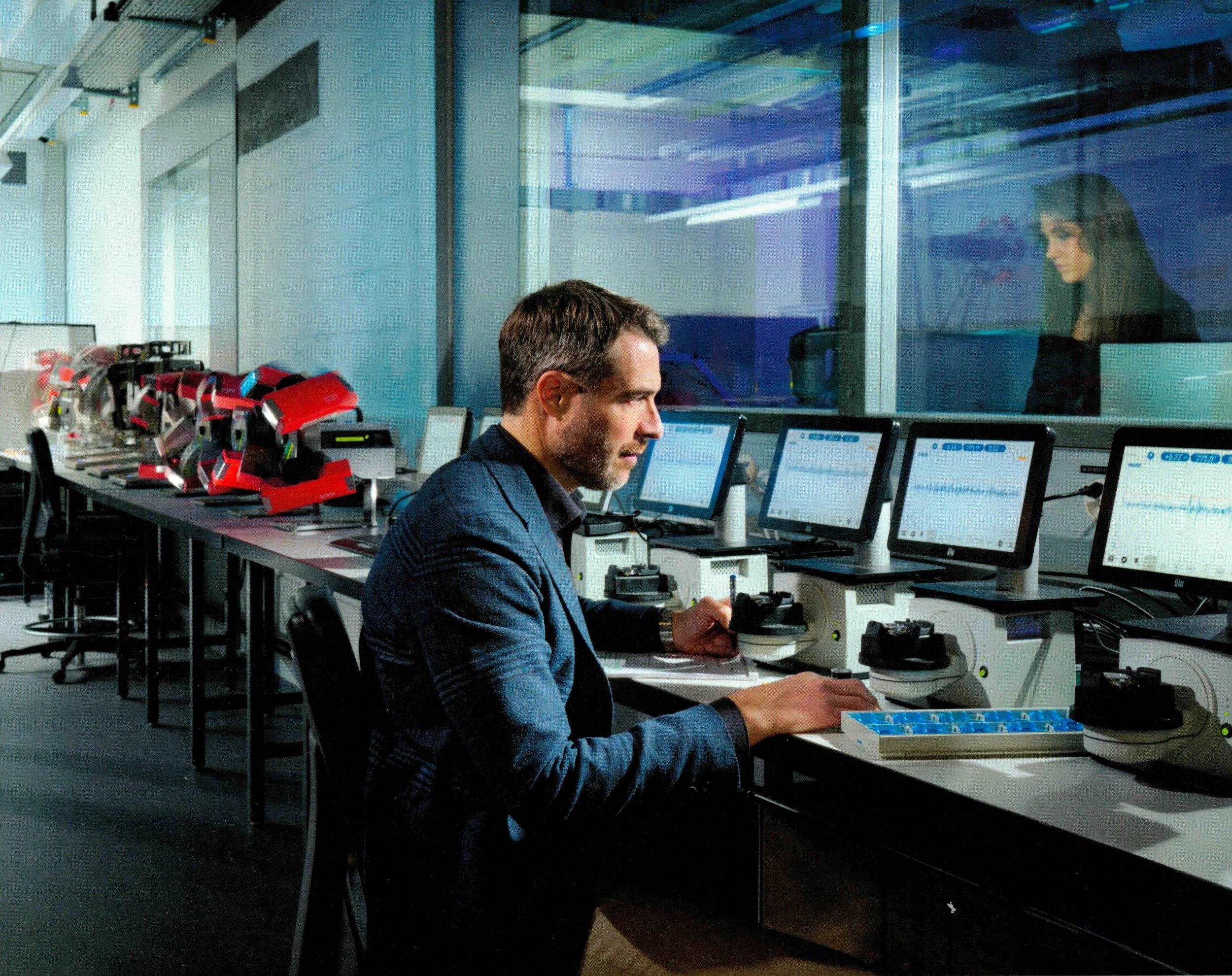
Every new Rolex leaves the manufacture with a certified precision of between -2 and +2 seconds per day, an error margin of just four seconds out of the 86,400 that make up a day. Achieving that level of consistency requires a degree of technical mastery comparable to “sinking a golf putt from 250 meters away,” according to Rolex. It’s a sign of the company’s focus on chronometric performance, even in an age of smartwatches.
(Photo credit: Rolex)
And though smartwatches can keep time with near-perfect precision, Rolex says it continues to treat chronometry as a defining discipline. For the brand, mastering the passage of time is not about outperforming electronics but about perfecting the watchmaking art that makes precision possible.
For Rolex, the value of precision is no longer purely functional but philosophical; it is part of a broader pursuit of excellence that defines the company’s approach to watchmaking. The work is mostly invisible to the wearer, yet it continues to shape how the brand measures progress.

(Photo credit: Rolex)
For nearly twenty years, Félix Grasser has worked on the science of timekeeping at Rolex. He now leads a team of ten specialists within Rolex's Research and Development Division focused on chronometry, whose collective work keeps the brand’s watches running within a few seconds of perfection.
What is chronometry?
Félix Grasser: Chronometry is the study of time measurement. It began several thousand years ago when a stick, known as a gnomon, was planted in the ground to tell the time by the shadow it cast. Today, at Rolex, we assess the accuracy of our watches with a scale of one tenth of a second of variation over an entire day.

(Photo credit: Rolex)
Why is chronometry so important to Rolex?
FG: Our research confirms that accuracy is an essential factor in the way customers perceive their watches. Accuracy goes hand in hand with quality, and this precept has guided the work of Rolex engineers and watchmakers since the brand's foundation.
What are the constraints to be overcome when trying to improve the accuracy of a mechanical watch?
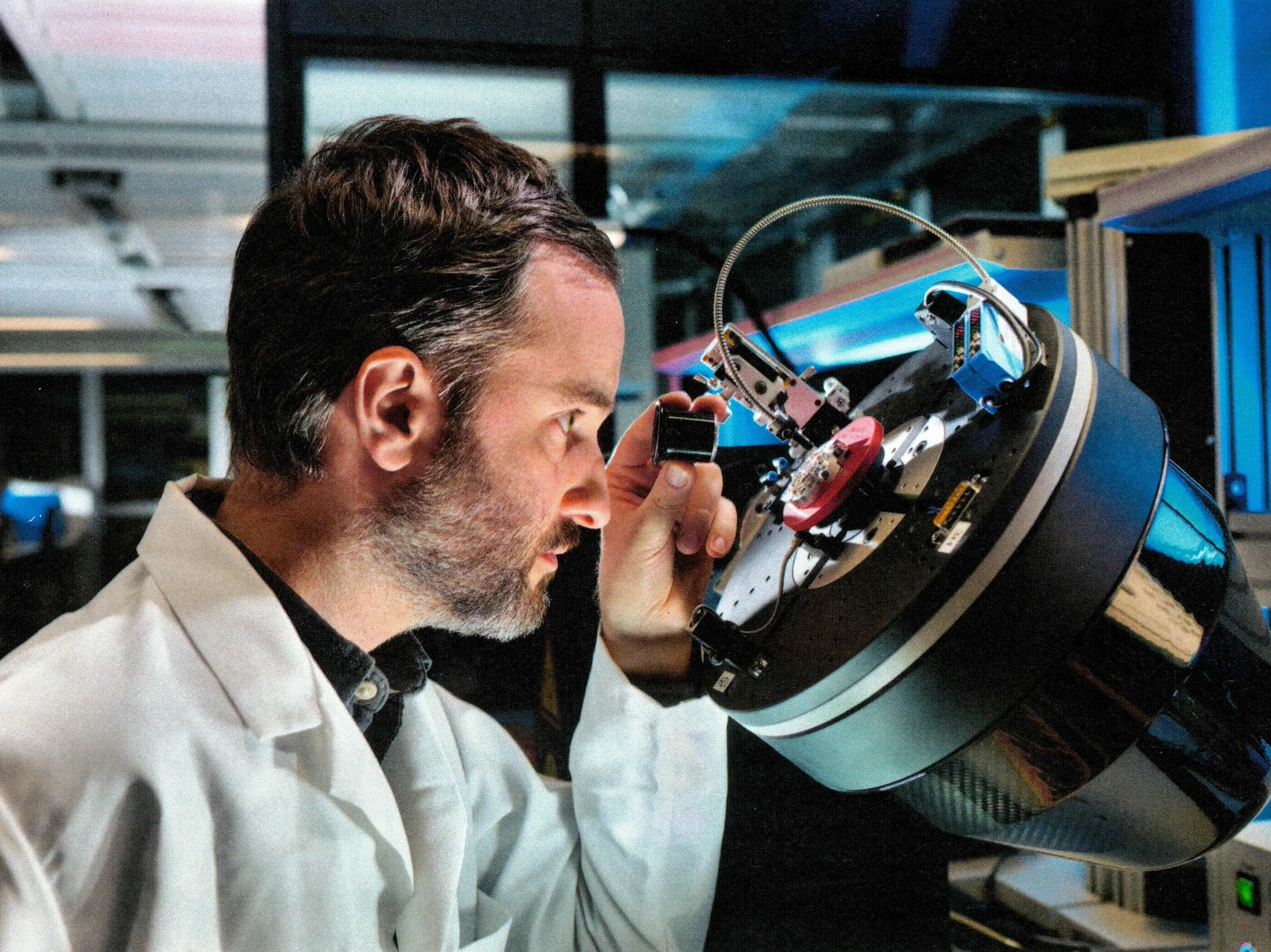
FG: A mechanical movement is a complex system made up of hundreds of components that are subject to stress, sometimes of an infinitesimal scale. There is a long list of factors that can disrupt a movement's smooth running — the way the wearer moves, changes in temperature, variations in atmospheric pressure or exposure to magnetic fields, to name a few. All of these variables must be controlled to ensure a watch's accuracy. Moreover, it is essential to guarantee this accuracy over time and in all circumstances because a watch is an instrument of endurance.
(Photo credit: Rolex)
Can the accuracy of a watch change over time?
FG: It can indeed. Firstly, because of natural wear and tear on the movement. But that is not all: we have found that the way a watch is worn is the leading cause of accuracy issues. Rolex watch wearers lead very different lifestyles. Some are highly active, while others are more sedentary. However, it is not necessarily the most active wearers who will see their watches become less accurate. Factors such as the type and frequency of gesticulations, even if they seem perfectly normal, can have an impact.
Could you give an example?

(Photo credit: Rolex)
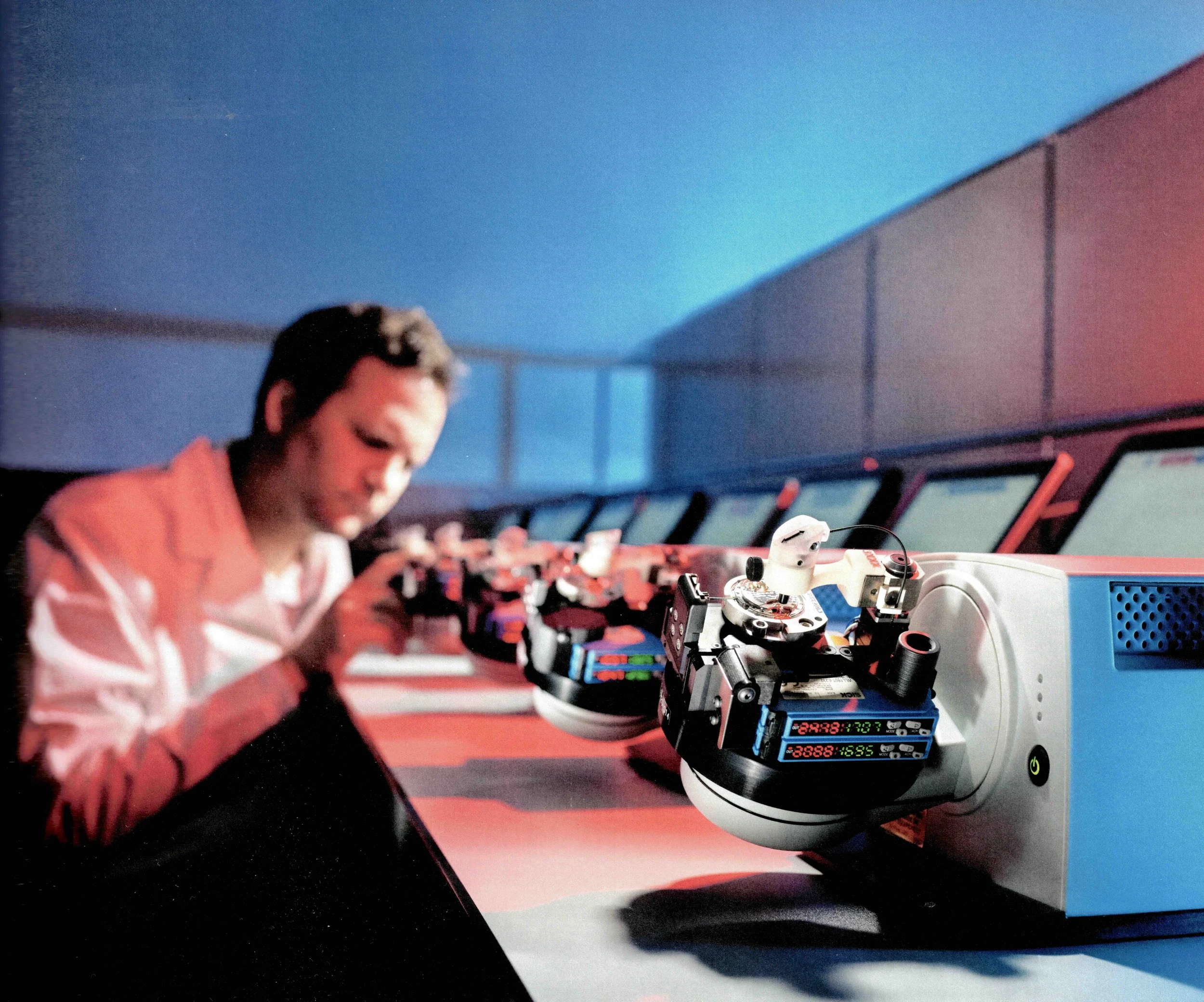
FG: This year, Rolex has unveiled the Land-Dweller range, with a 7135 calibre that beats at a frequency of 5 hertz, or 36,000 beats per hour. This frequency is higher than that of other Rolex movements, which was 4 hertz, or 28,800 beats an hour. If we increase the rate of oscillation, we reduce the likelihood of a wearer's everyday actions and activities interfering with the watch movement's frequency. Some wearers unwittingly move in ways that can resonate with the back-and-forth movements of the oscillator, which is the heart of the watch dividing time into pulses. As such, the movement, which must remain perfectly stable under all conditions, is disrupted. Thanks to the revolutionary Dynapulse escapement, the oscillator receives more energy from the barrel than our other movements do. This extra power enables the movement to operate at a frequency of 5 hertz. It also contributes to better timekeeping by stabilizing the operation of the oscillator, regardless of its position.

(Photo credit: Rolex)
How did you realize that the oscillator resonates with the wearer's movements?
FG: Research into chronometry relies on significant technical and human resources. In particular, our investigations have seen test equipment created that is unique in the field. We have also developed exclusive analysis algorithms. These provide an extraordinary level of analysis that can bring us to these kinds of discoveries. In addition, we are constantly conducting test campaigns involving hundreds of volunteers who are asked to wear modified or unmodified watches, sometimes with sensors. These studies, which are spread out over several months, or even years, enable us to look at the long-term behavior of the watches.
(Photo credit: Rolex)
What are Rolex's latest advances in chronometry?
FG: Some 20 years ago, the measurement scale used in laboratories to assess a watch's accuracy was calibrated to a deviation of one second per day. Today, we conduct our research at the level of a tenth of a second of deviation per day. We realized that to achieve this outcome, we had to look beyond the simple shape of the components, the materials from which they are made, and the way the movement is assembled. The fractions of a second that we aim to control are found in the manufacturing processes as well as in the accuracy of the measurement methods used.

(Photo credit: Rolex)
We often work at such an abstract level that the phenomena we are trying to observe cannot be grasped directly. As a result, we need to analyze their impact indirectly using high-tech equipment. This was the case, for example, when we were trying to gain a more in-depth understanding of the beat — the difference in alignment between the neutral position of the escapement and that of the oscillator. This study led to the creation of a theoretical concept that we have named the “beat analysis indicator.” It is an invaluable tool that has enabled us to create movements on which the beat no longer needs to be set: the 71XX calibres.
Does chronometry research leave room for intuition and imagination?
FG: Of course! A number of ideas have emerged from what are sometimes informal discussions. There is a significant exploratory dimension to chronometry research. We make progress through trial and error. Intuition and differing opinions can influence the direction of research and lead to new discoveries.

(Photo credit: Rolex)
3 Rolex Chronometry Facts
• All Rolex watches have an accuracy of between -2 and +2 seconds per day when they leave production. Achieving this precision requires a technical mastery equivalent to a golfer sinking a putt from a distance of 250 metres.
• To check the accuracy of a watch for Superlative Chronometer certification, the system analyzes the time displayed on the dial. This is done by comparing two photos of the time on the dial taken at a specific time interval to assess the movement of the hands, an innovation first reported by Coronet. To ensure the photo is captured precisely when the seconds hand changes position, the dial is filmed, and the photo is automatically triggered at the exact moment the hand moves. This process avoids the need to count the latency period — up to 115 milliseconds — during which the seconds hand remains stationary.
• Bienne, where Rolex movements are manufactured, is at a slightly higher altitude than Geneva (437 metres above sea level compared to 375). This difference affects the accuracy of the movements, as the higher pressure in Geneva slows them down by one or two tenths of a second per day. To compensate for the discrepancy, adjustments are made during the manufacturing process to ensure that new Rolex watches display Geneva time.