
Books about Rolex often fall into one of two categories. There's the book for hard-core collectors, filled with reference numbers, production changes and obscure dial details about transitional models. Then there's the one that can be frustratingly superficial, recounting the well-worn Rolex anecdotes found across the internet.
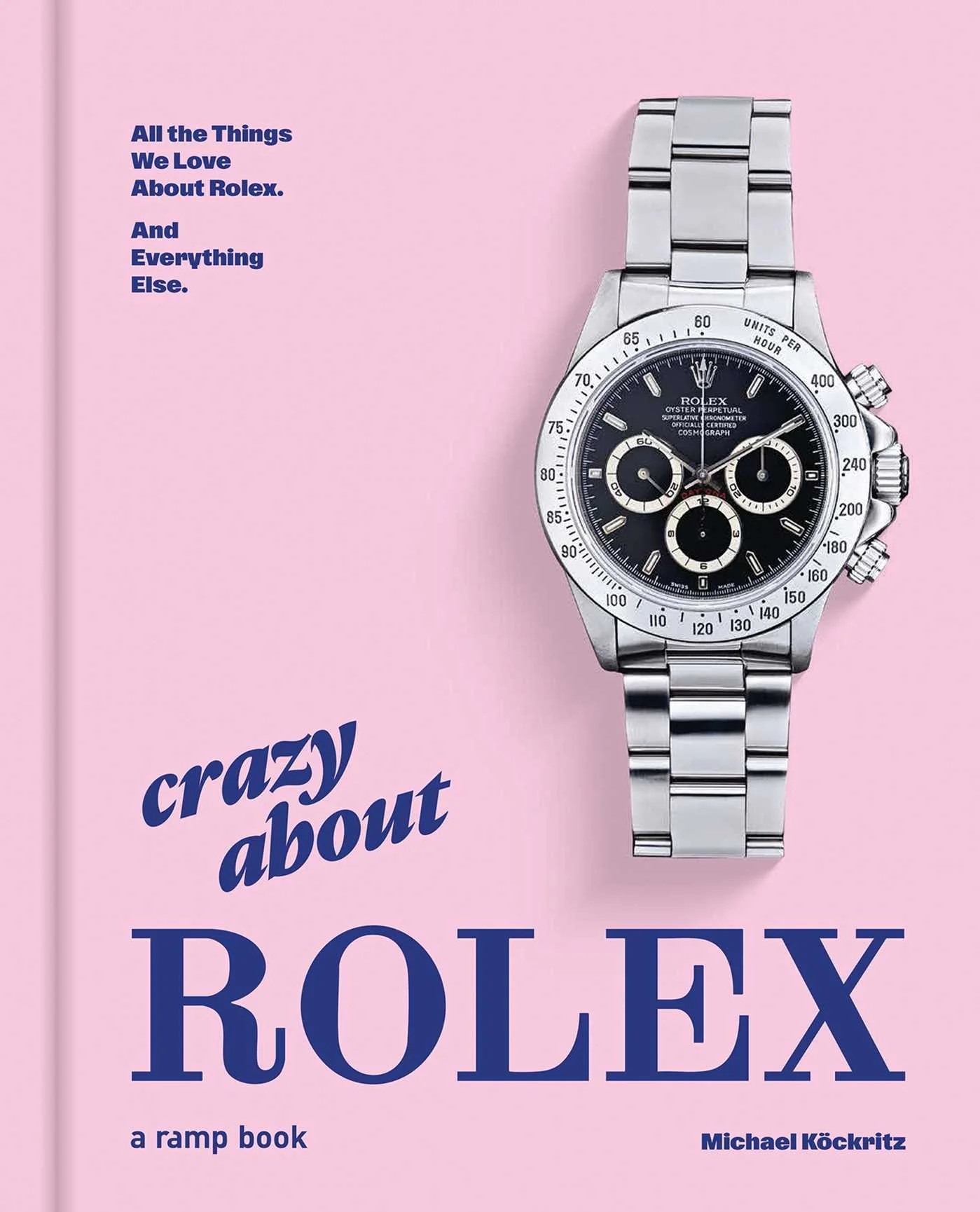
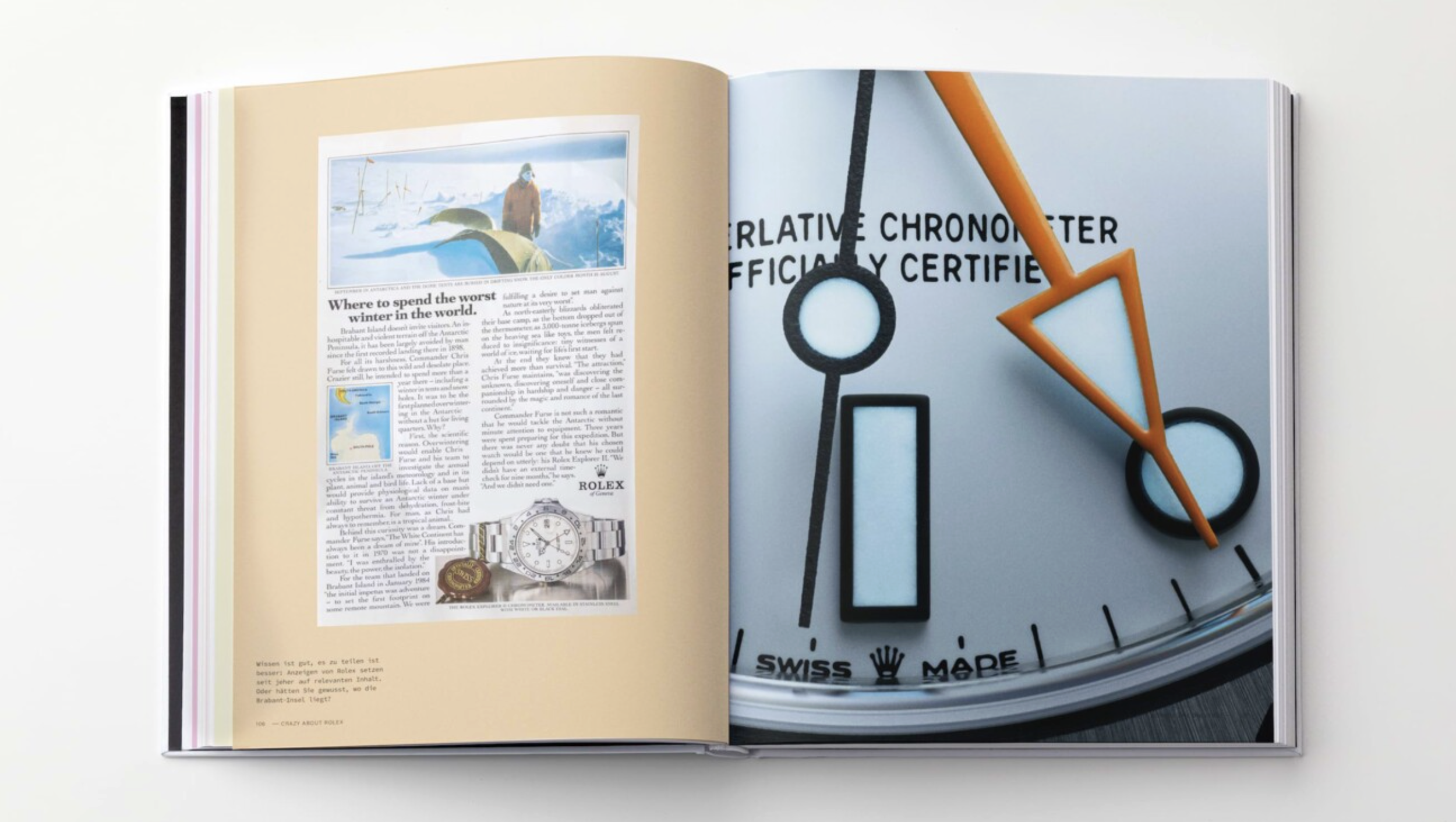
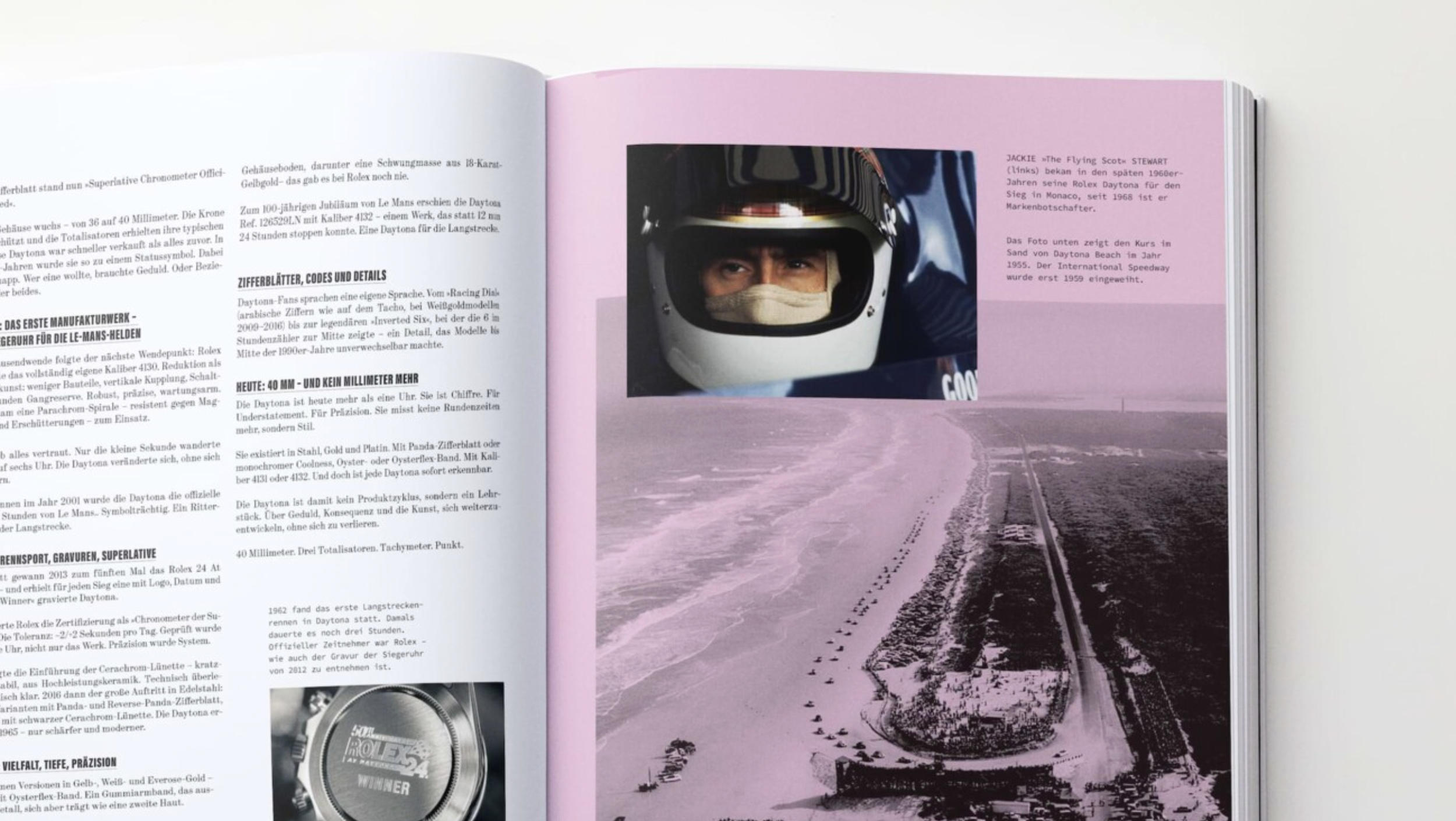
A new Rolex book, which has caught Coronet's attention, is set to arrive in bookstores on June 30. Crazy About Rolex is written by German journalist and publisher Michael Köckritz, who seeks to strike a balance. The 308-page hardcover, published by Ramp and distributed in North America by Simon & Schuster, mixes bold typography, vibrant colors, magazine-style layouts and large-format imagery all while talking about Rolex's collections, culture and philosophy.
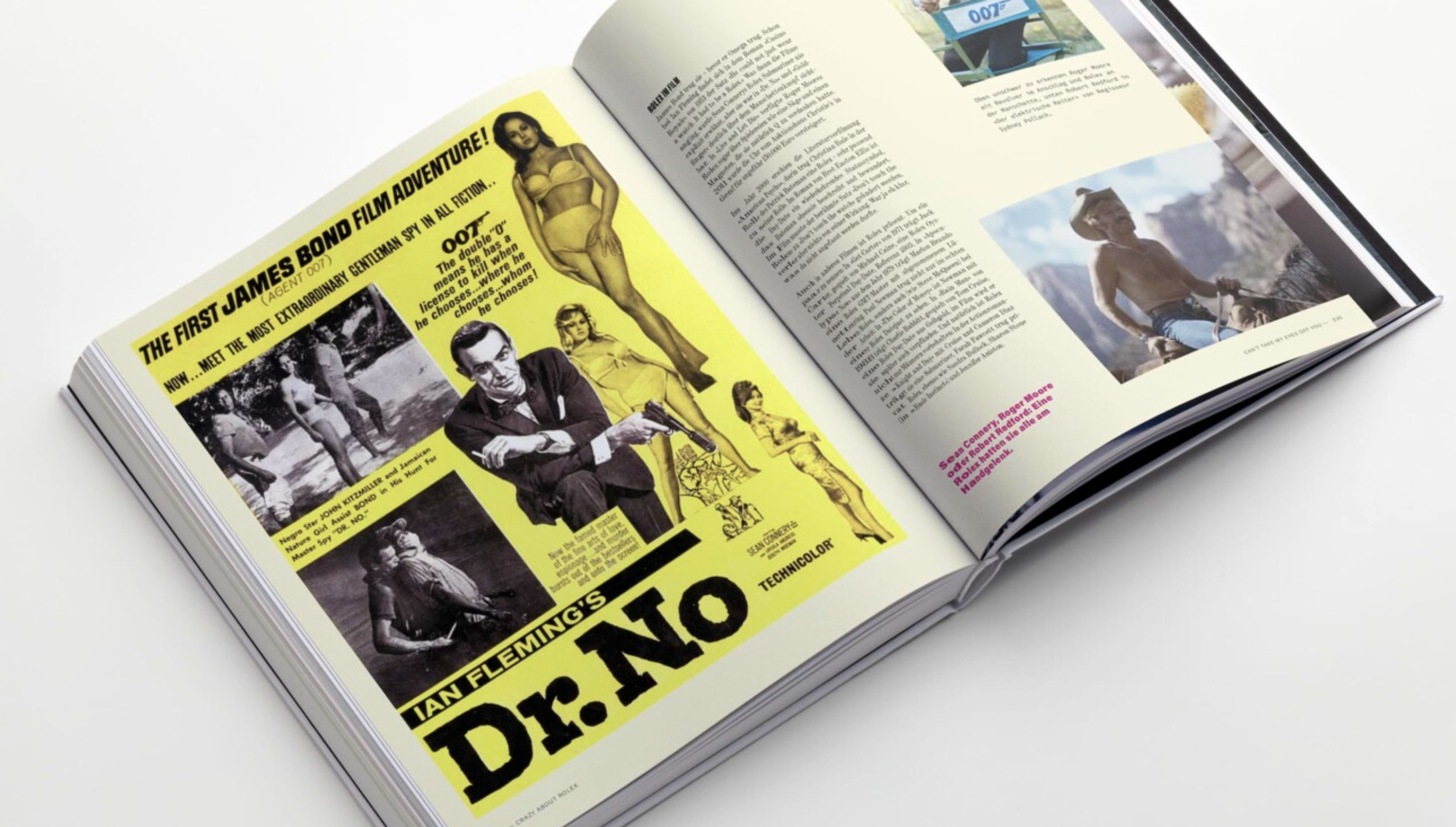
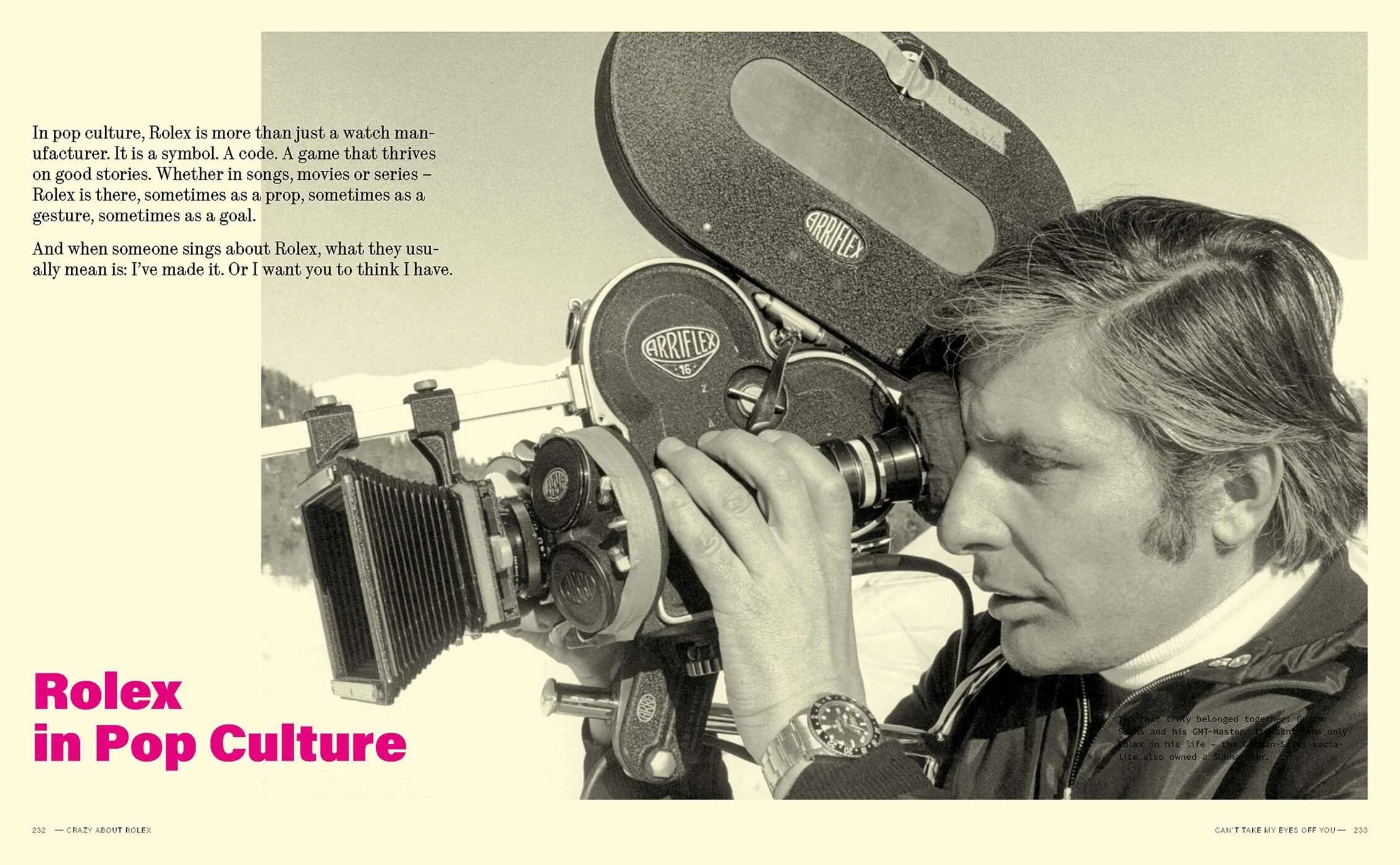
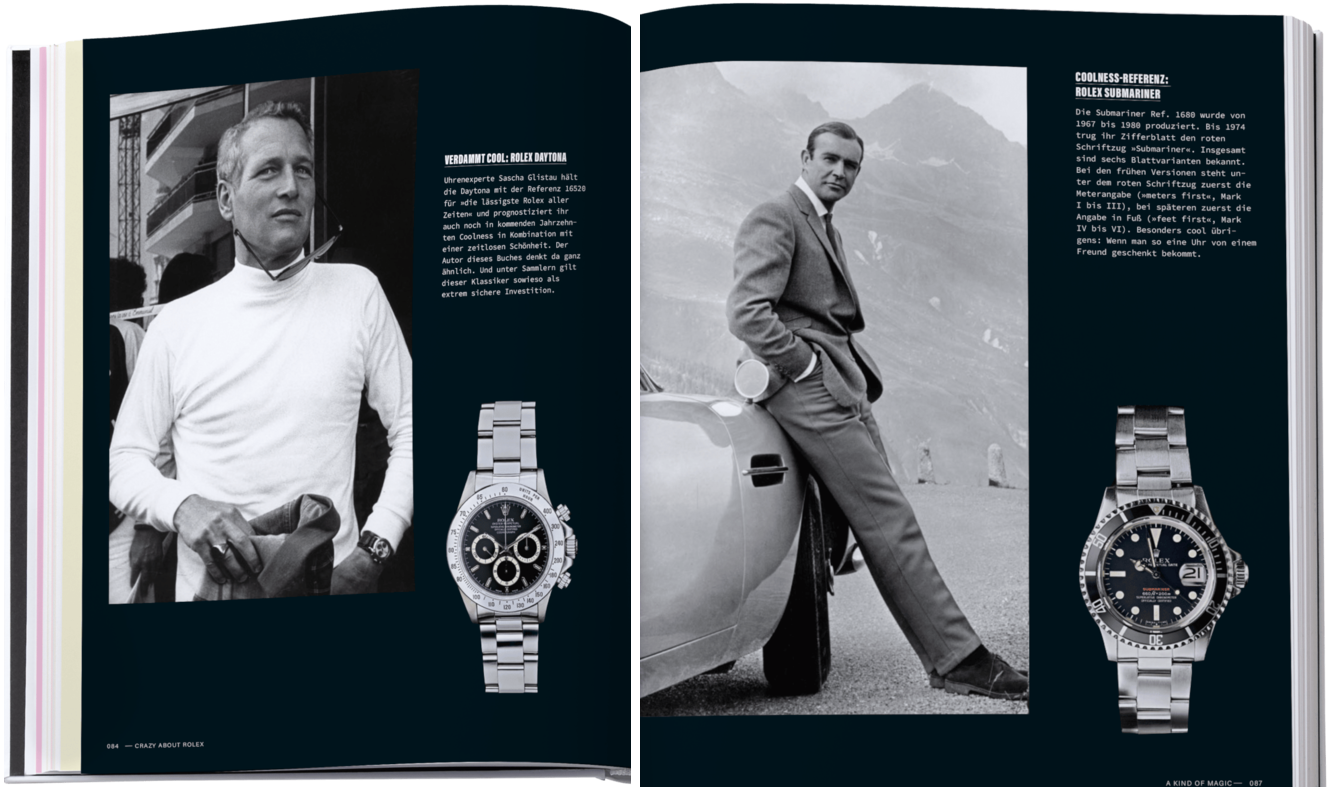
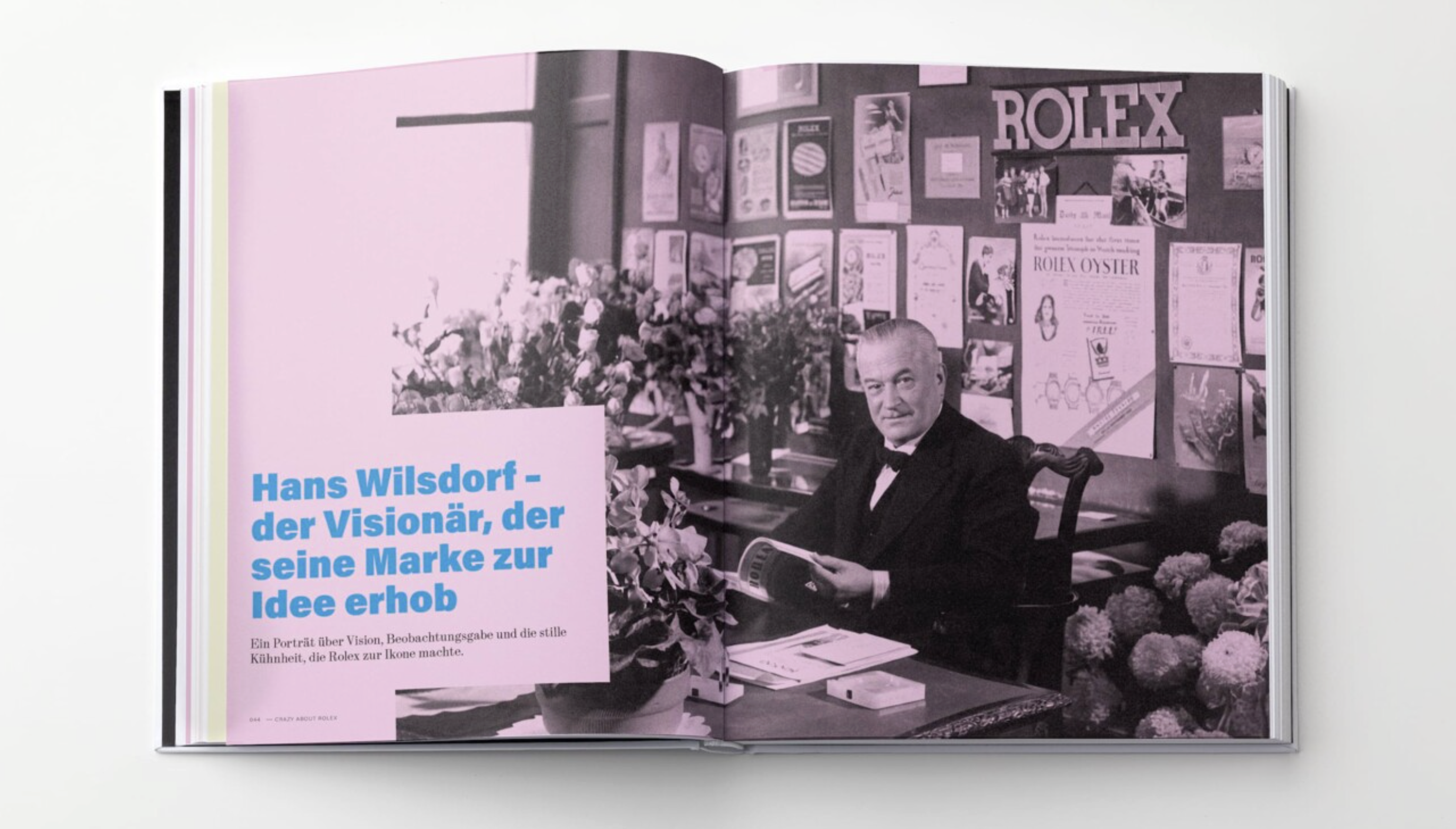
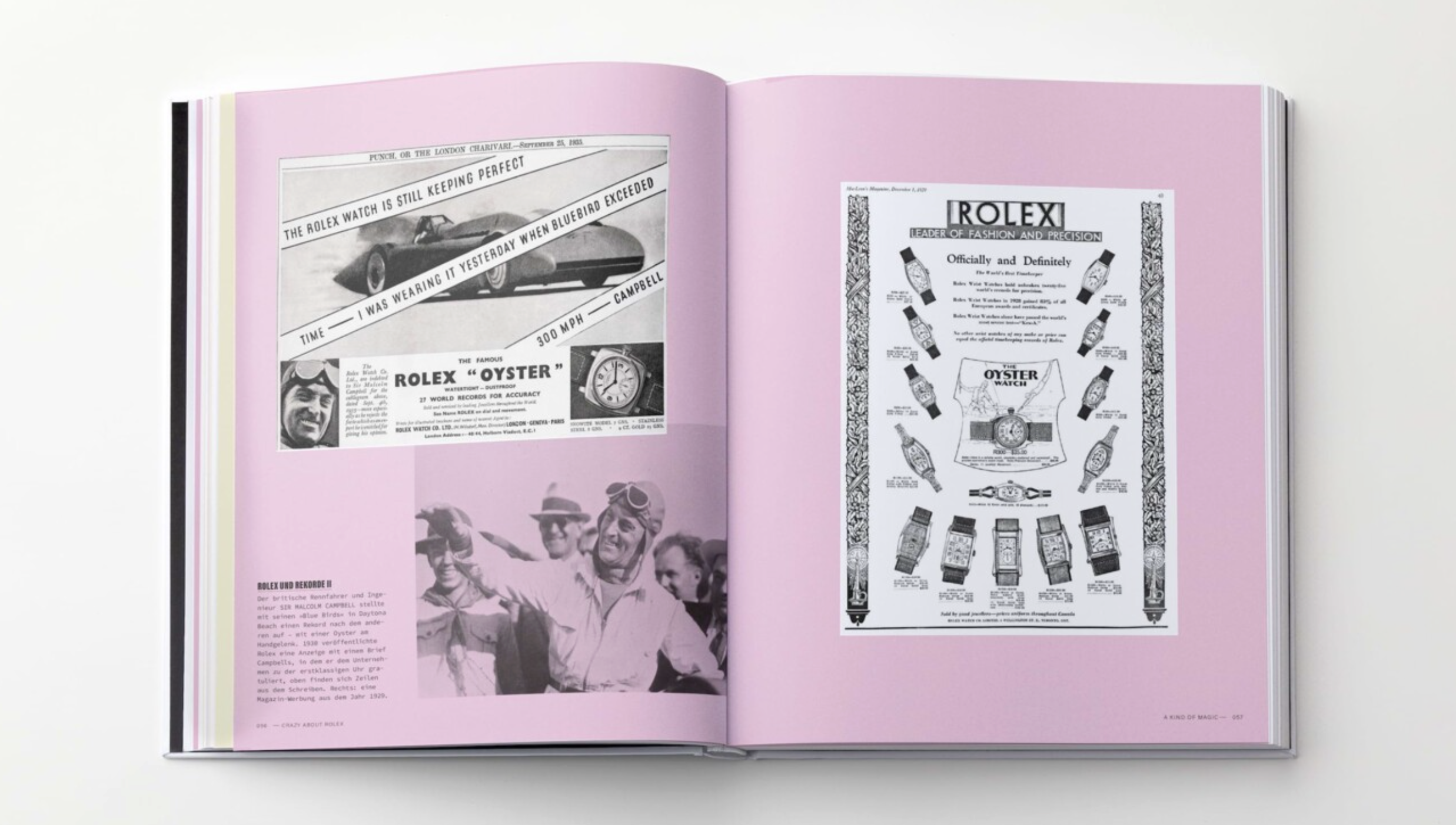
Readers can expect chapters on founder Hans Wilsdorf, but also Rolex's ties to exploration, motorsports, diving and popular culture, while later chapters examine topics such as reference numbers, counterfeit watches, the Hans Wilsdorf Foundation, Rolex's relationship with Porsche and lesser-known facts about the brand.
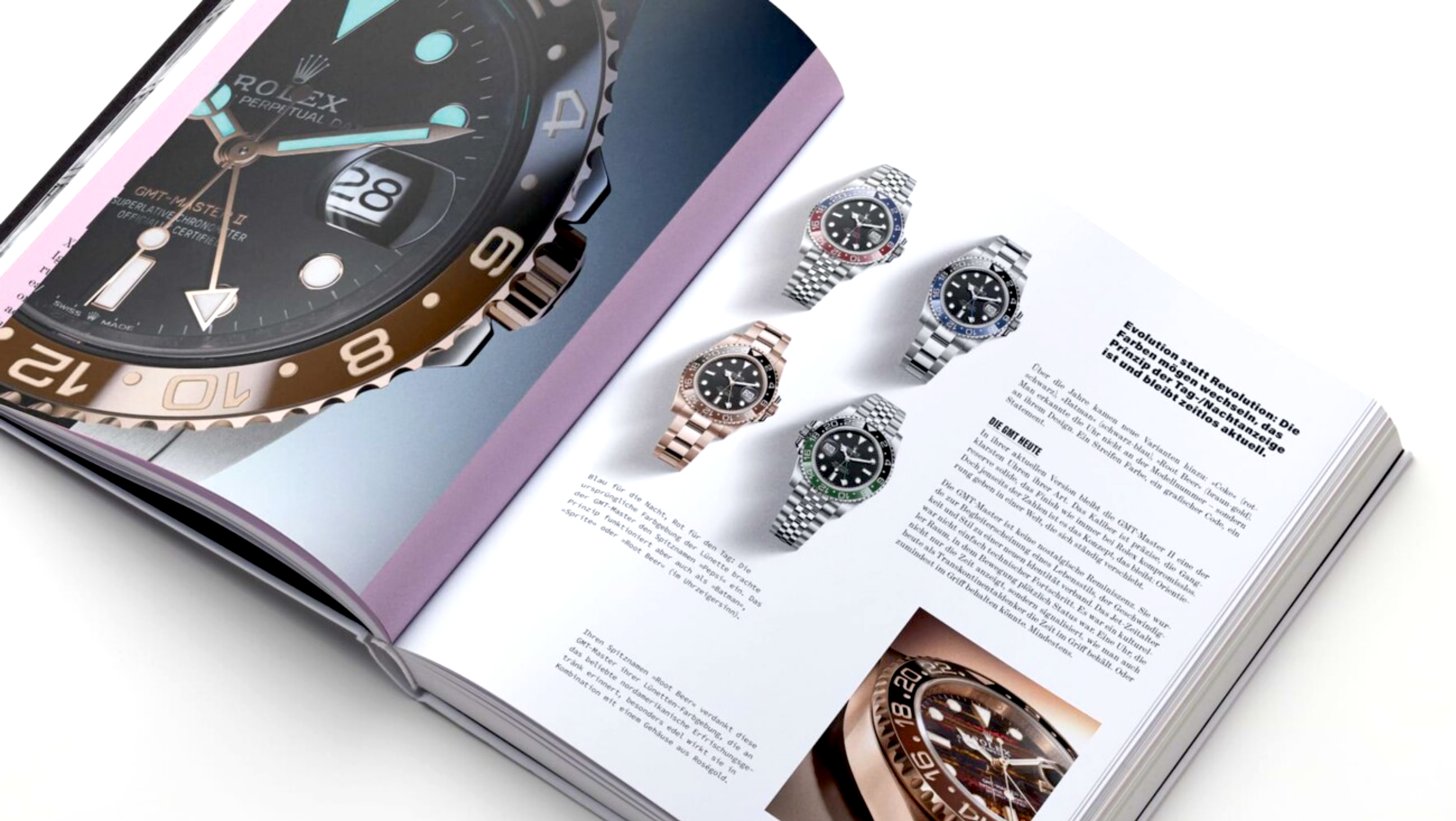
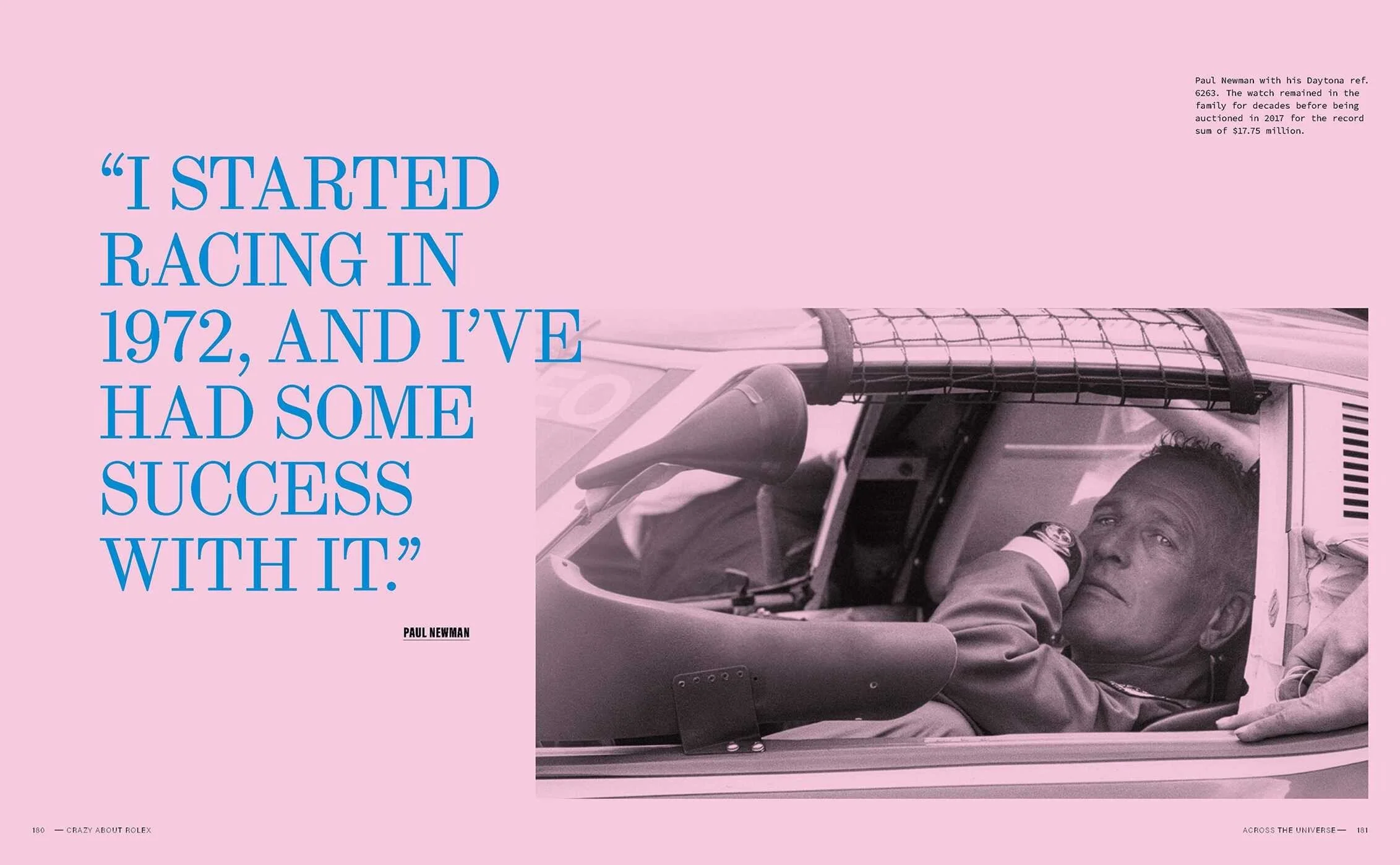
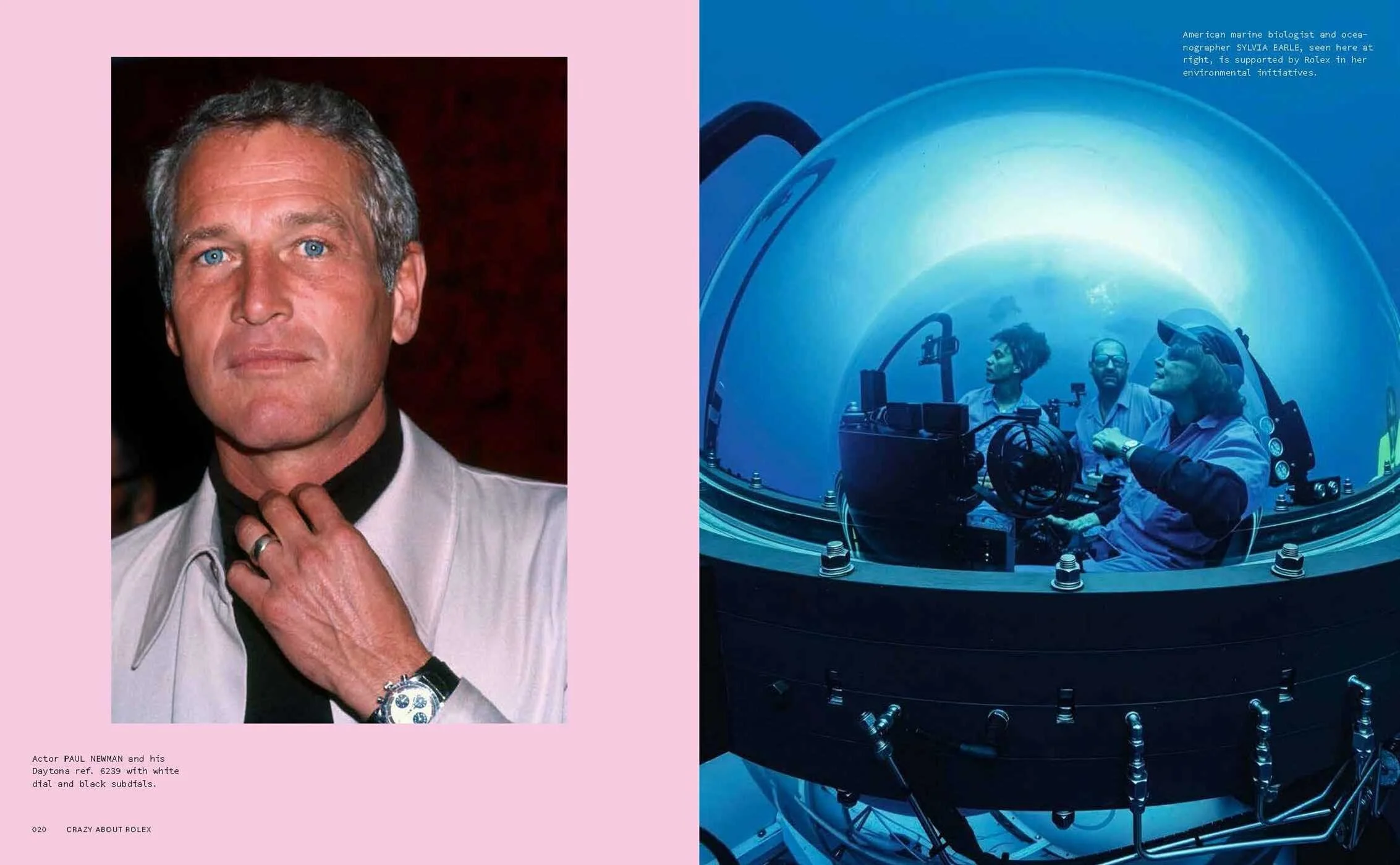
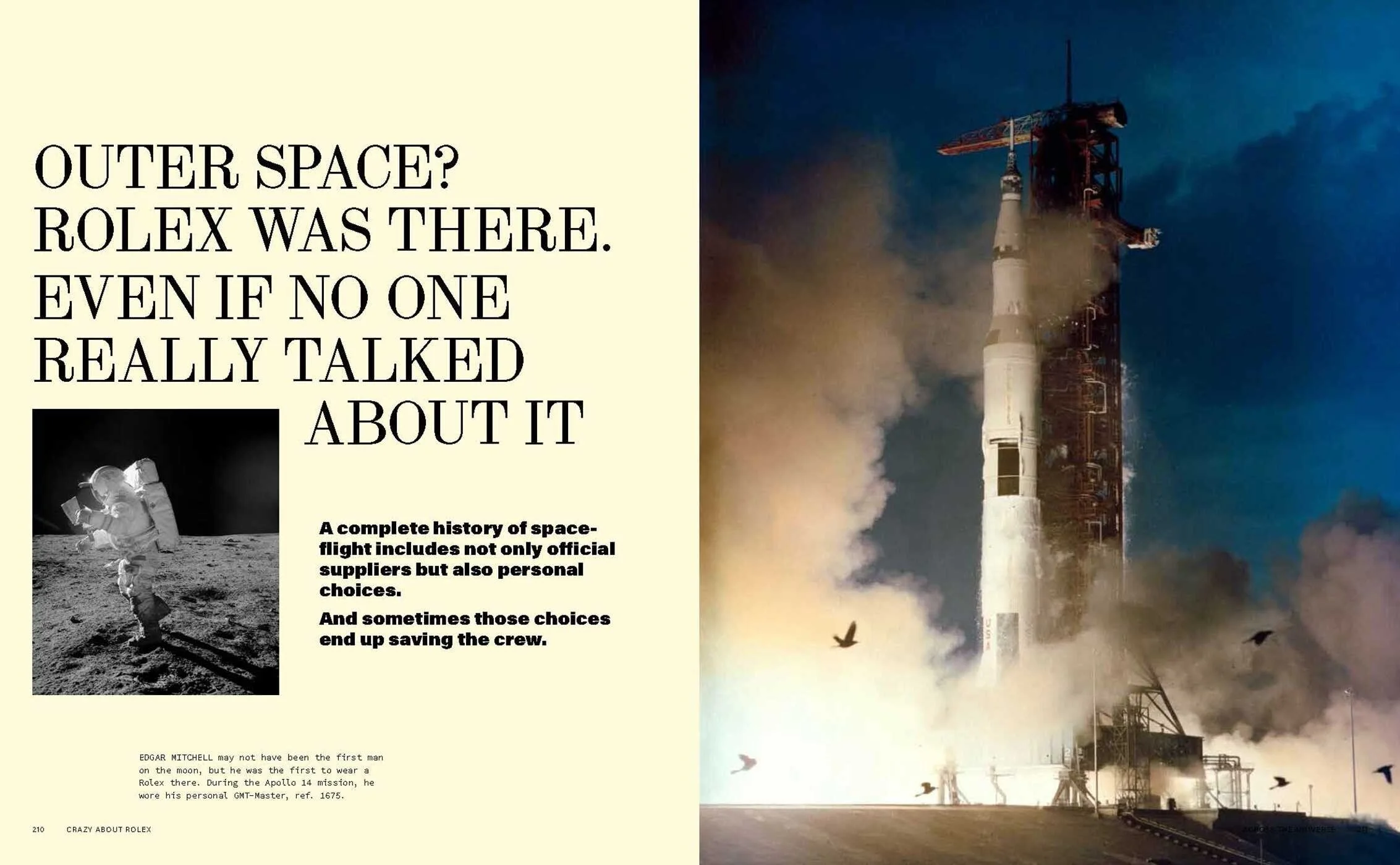
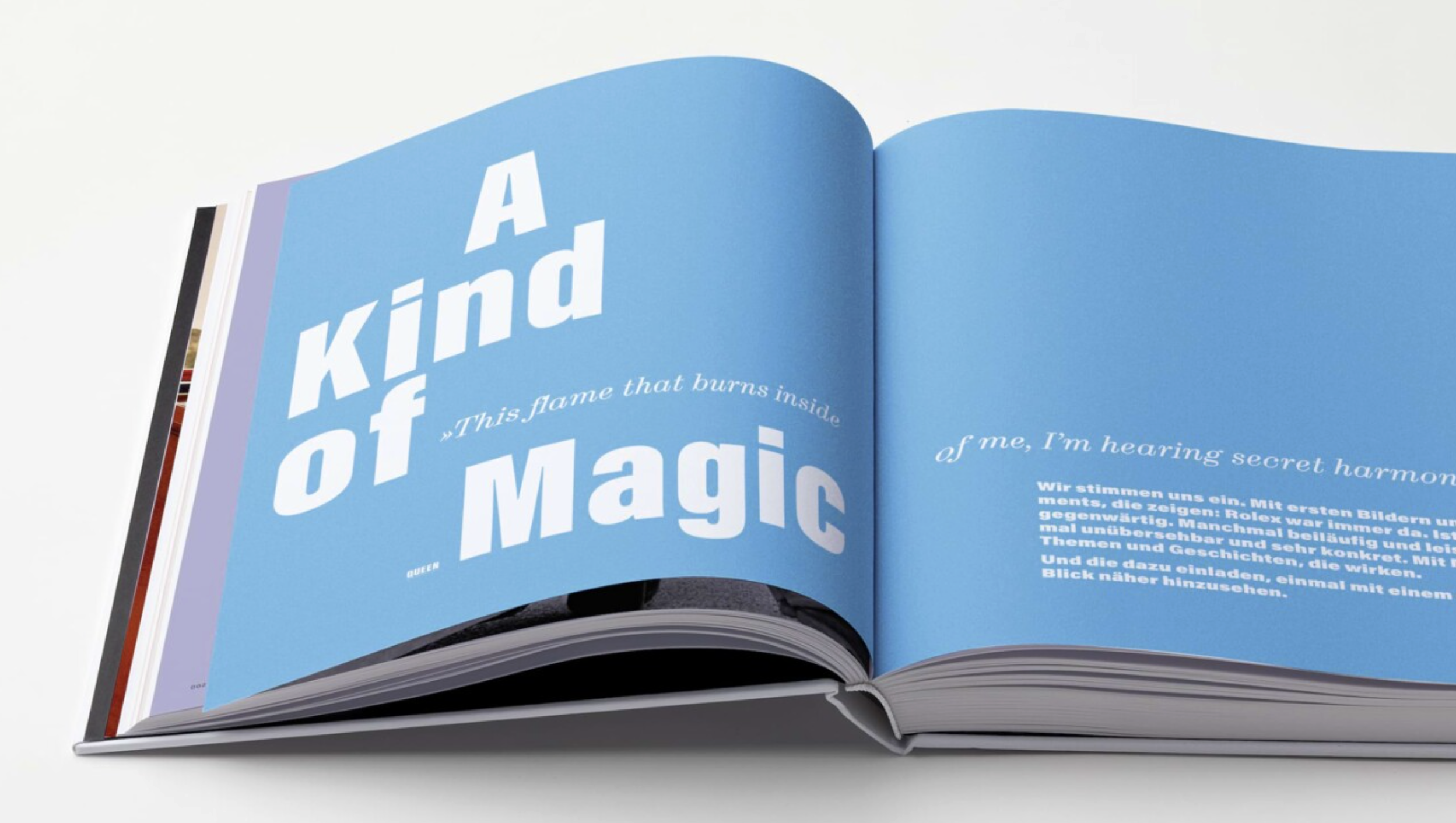
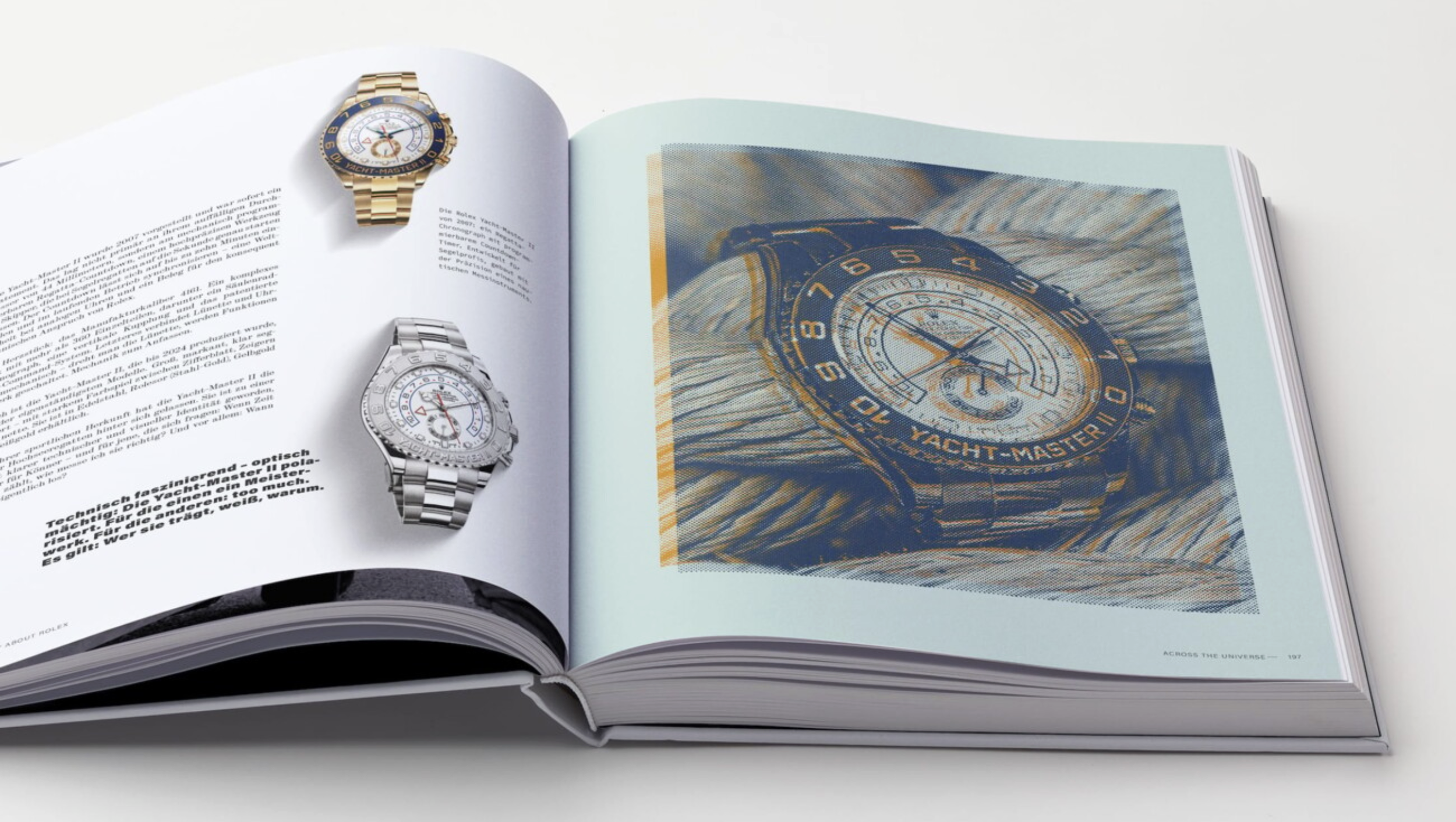
With roughly 250 photographs spread across large-format pages, Crazy About Rolex's most distinctive feature may be its presentation. Its oversized typography, pastel color palettes, full-spread photography and magazine-style layouts are reminiscent of a design publication. The publisher describes the volume as "a declaration of love for precision, zeitgeist and a cultural phenomenon" and says it aims to celebrate "the Rolex idea" as much as the watches themselves.
Following are excerpts from the book. The 308-page book will be released on June 30 and can be found on Amazon and other online retailers.
Below are excerpts from ‘Crazy About Rolex’
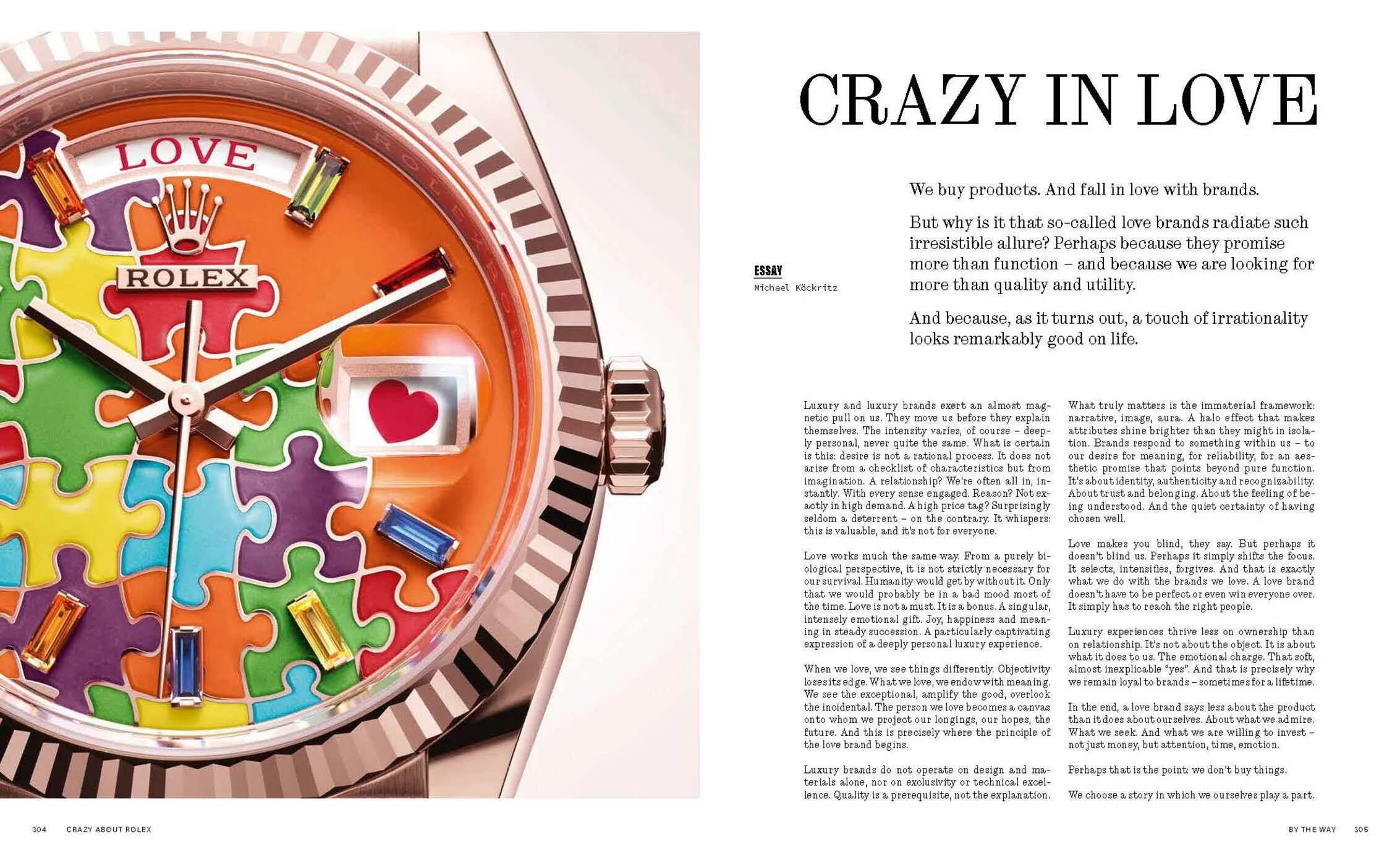
We buy products. And fall in love with brands.
But why is it that so-called love brands radiate such irresistible allure? Perhaps because they promise more than function — and because we are looking for more than quality and utility.
And because, as it turns out, a touch of irrationality looks remarkably good on life.

Luxury and luxury brands exert an almost magnetic pull on us. They move us before they explain themselves. The intensity varies, of course — deeply personal, never quite the same. What is certain is this: desire is not a rational process. It does not arise from a checklist of characteristics but from imagination.
A relationship? We're often all in, instantly. With every sense engaged. Reason? Not exactly in high demand. A high price tag? Surprisingly seldom a deterrent — on the contrary. It whispers: this is valuable, and it's not for everyone.
Love works much the same way. From a purely biological perspective, it is not strictly necessary for our survival. Humanity would get by without it. Only that we would probably be in a bad mood most of the time. Love is not a must. It is a bonus. A singular, intensely emotional gift. Joy, happiness and meaning in steady succession. A particularly captivating expression of a deeply personal luxury experience. When we love, we see things differently. Objectivity loses its edge. What we love, we endow with meaning.
We see the exceptional, amplify the good, overlook the incidental. The person we love becomes a canvas onto whom we project our longings, our hopes, the future. And this is precisely where the principle of the love brand begins. Luxury brands do not operate on design and materials alone, nor on exclusivity or technical excel-lence. Quality is a prerequisite, not the explanation.
What truly matters is the immaterial framework: narrative, image, aura. A halo effect that makes attributes shine brighter than they might in isolation. Brands respond to something within us — to our desire for meaning, for reliability, for an aesthetic promise that points beyond pure function.
It's about identity, authenticity and recognizability. About trust and belonging. About the feeling of being understood. And the quiet certainty of having chosen well. Love makes you blind, they say. But perhaps it doesn't blind us. Perhaps it simply shifts the tocus. It selects, intensifies, forgives. And that is exactly what we do with the brands we love. A love brand doesn't have to be perfect or even win everyone over. It simply has to reach the right people.
Luxury experiences thrive less on ownership than on relationship. It's not about the object. It is about what it does to us. The emotional charge. That soft, almost inexplicable "yes". And that is precisely why we remain loyal to brands — sometimes for a lifetime. In the end, a love brand says less about the product than it does about ourselves. About what we admire. What we seek. And what we are willing to invest - not just money, but attention, time, emotion. Perhaps that is the point; we don't buy things. We choose a story in which we ourselves play a part.
Excerpt No. 2: Why Small Flaws Tell Big Stories
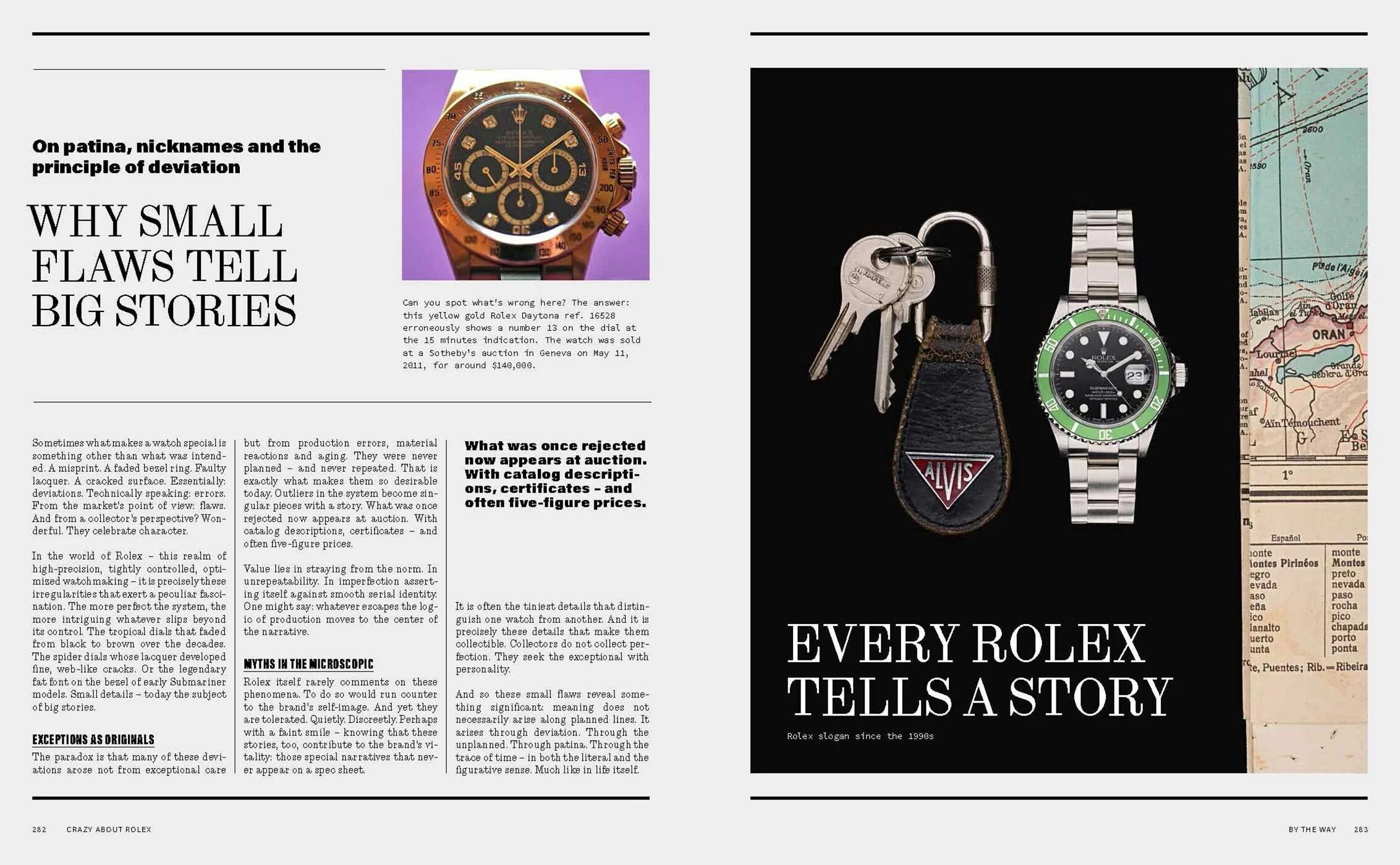
Sometimes what makes a watch special is something other than what was intended. A misprint. A faded bezel ring. Faulty lacquer. A cracked surface. Essentially: deviations. Technically speaking: errors. From the market's point of view: flaws. And from a collector's perspective? Wonderful. They celebrate character.

In the world of Rolex — this realm of high-precision, tightly controlled, optimized watchmaking — it is precisely these irregularities that exert a peculiar fascination. The more perfect the system, the more intriguing whatever slips beyond its control. The tropical dials that faded from black to brown over the decades.
The spider dials whose lacquer developed fine, web-like cracks. Or the legendary fat font on the bezel of early Submariner models. Small details — today the subject of big stories.
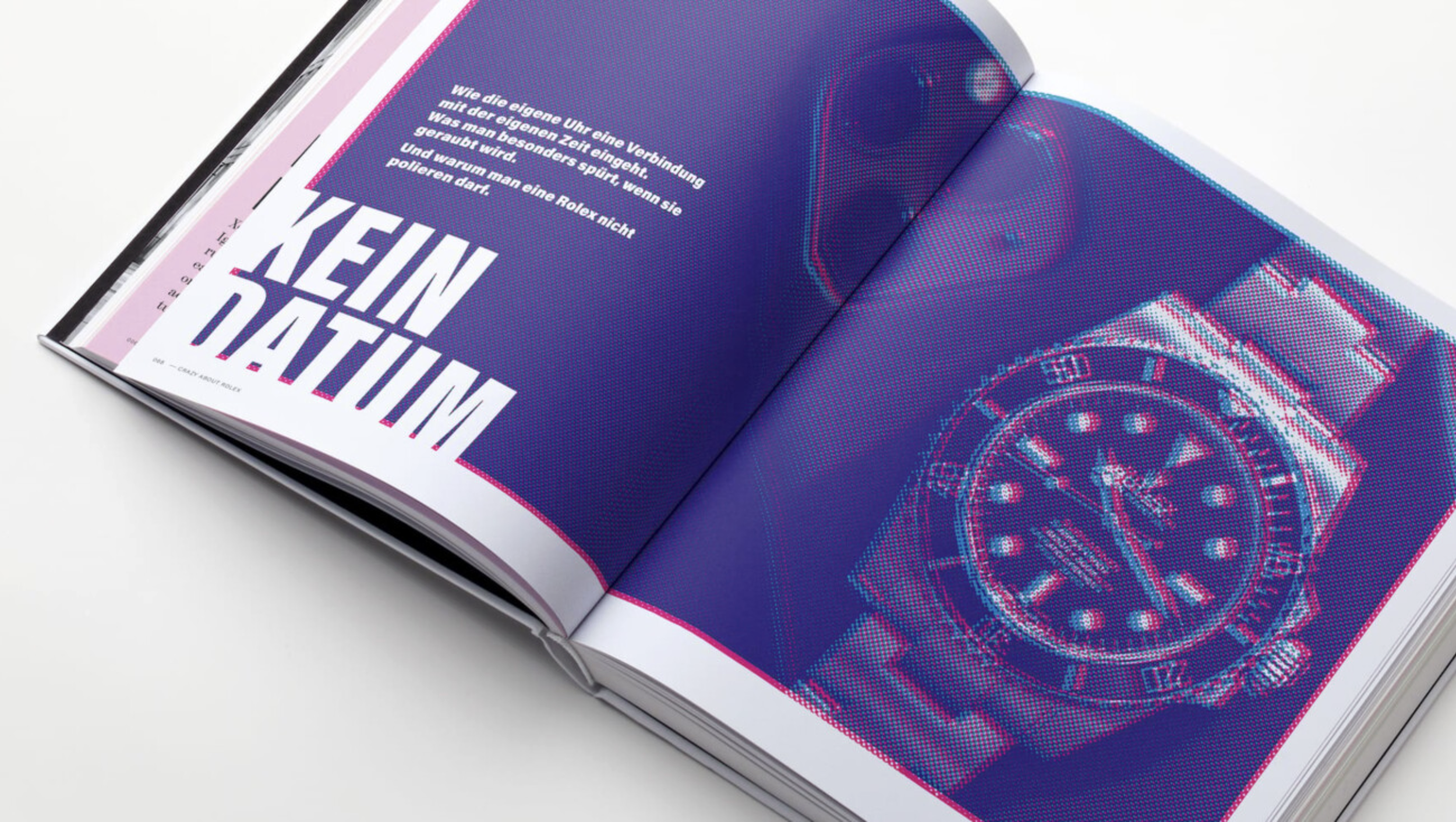
The paradox is that many of these deviations arose not from exceptional care but from production errors, material reactions and aging. They were never planned — and never repeated. That is exactly what makes them so desirable today. Outliers in the system become singular pieces with a story. What was once rejected now appears at auction. With catalog descriptions, certificates - and often five-figure prices.
Value lies in straying from the norm. In unrepeatability. In imperfection asserting itself against smooth serial identity.
One might say: whatever escapes the logic of production moves to the center of the narrative.
Rolex itself rarely comments on these phenomena. To do so would run counter to the brand's self-image. And yet they are tolerated. Quietly. Discreetly. Perhaps with a faint smile — knowing that these stories, too, contribute to the brand's vitality: those special narratives that never appear on a spec sheet.
It is often the tiniest details that distinguish one watch from another. And it is precisely these details that make them collectible. Collectors do not collect per-fection. They seek the exceptional with personality.
And so these small flaws reveal something significant: meaning does not necessarily arise along planned lines. It arises through deviation. Through the unplanned. Through patina. Through the trace of time — in both the literal and the figurative sense. Much like in lite itself.
Excerpt No. 3: The Rolex Deepsea and Deepsea Challenge
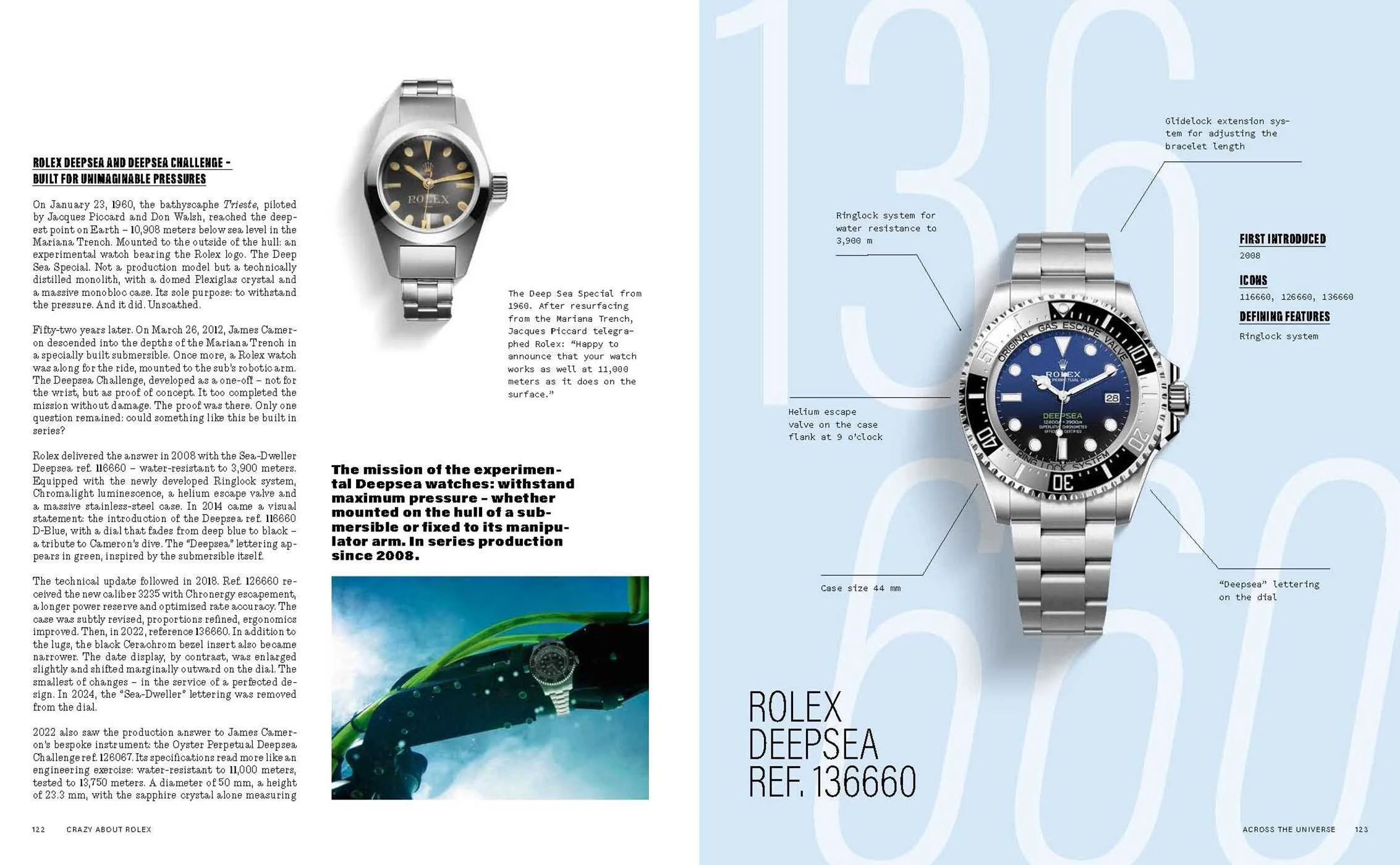
On January 23, 1960, the bathyscaphe Trieste, piloted by Jacques Piccard and Don Walsh, reached the deepest point on Earth — 10,908 meters below sea level in the Mariana Trench. Mounted to the outside of the hull: an experimental watch bearing the Rolex logo. The Deep Sea Special. Not a production model but a technically distilled monolith, with a domed Plexiglas crystal and a massive monobloc case. Its sole purpose: to withstand the pressure. And it did. Unscathed.
Fifty-two years later. On March 26, 2012, James Cameron descended into the depths of the Mariana Trench in a specially built submersible. Once more, a Rolex watch was along for the ride, mounted to the sub's robotic arm.
The Deepsea Challenge, developed as a one-oft - not for the wrist, but as proof of concept. It too completed the mission without damage. The proof was there. Only one question remained: could something like this be built in series?
Rolex delivered the answer in 2008 with the Sea-Dweller Deepsea ref. 116660 — water-resistant to 3,900 meters.
Equipped with the newly developed Ringlock system, Chromalight luminescence, a helium escape valve and a massive stainless-steel case. In 2014 came a visual statement: the introduction of the Deepsea ref. 116660 D-Blue, with a dial that fades from deep blue to black — a tribute to Cameron's dive. The "Deepsea" lettering appears in green, inspired by the submersible itself.
The technical update followed in 2018. Ref. 126660 received the new caliber 3235 with Chronergy escapement, a longer power reserve and optimized rate accuracy. The case was subtly revised, proportions refined, ergonomics improved. Then, in 2022, reference 136660. In addition to the lugs, the black Cerachrom bezel insert also became narrower. The date display, by contrast, was enlarged slightly and shifted marginally outward on the dial. The smallest of changes - in the service of a perfected design. In 2024, the "Sea-Dweller" lettering was removed from the dial.
Special thanks to Michael Köckritz. All photos courtesy of Ramp.