

When Peru’s first female president, Dina Boluarte, made the international news because she became embroiled in a corruption scandal nicknamed “Rolexgate” earlier this year, a large daily newspaper in Geneva came to the defense of... Rolex.
A police investigation in Peru began in March after a podcast drew attention to luxury watches President Boluarte was wearing at public events.
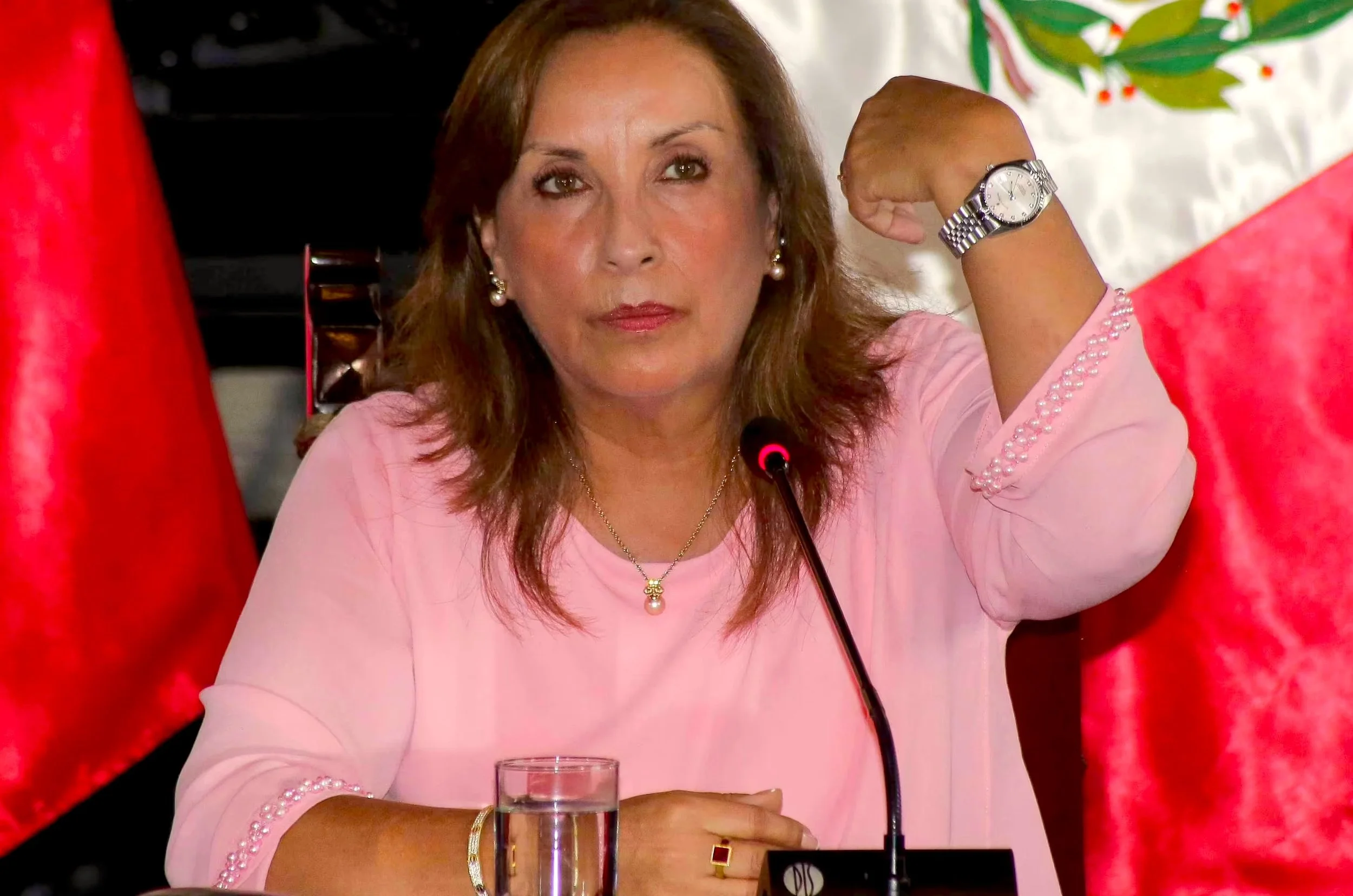
Peru's President Dina Boluarte. (Photo credit: AFP/Getty Images)
Police and prosecutors battered down the door of her home in a Lima suburb in a night-time raid searching for the watches. The Rolexgate scandal has embroiled her government in a political crisis and forced her to reshuffle the cabinet after abrupt resignations. She also faced closed-door questioning by prosecutors which lasted nearly five hours. Newspapers the world over reported the story of an embattled president in the middle of a corruption scandal.
In Geneva, Le Temps, the only French-language daily newspaper with a national and international focus in Switzerland, wrote in an article titled “The Symptomatic Instrumentalization of Rolex” that indeed it was the Swiss watch industry that was “victime collatérale” of the Peruvian corruption scandal.
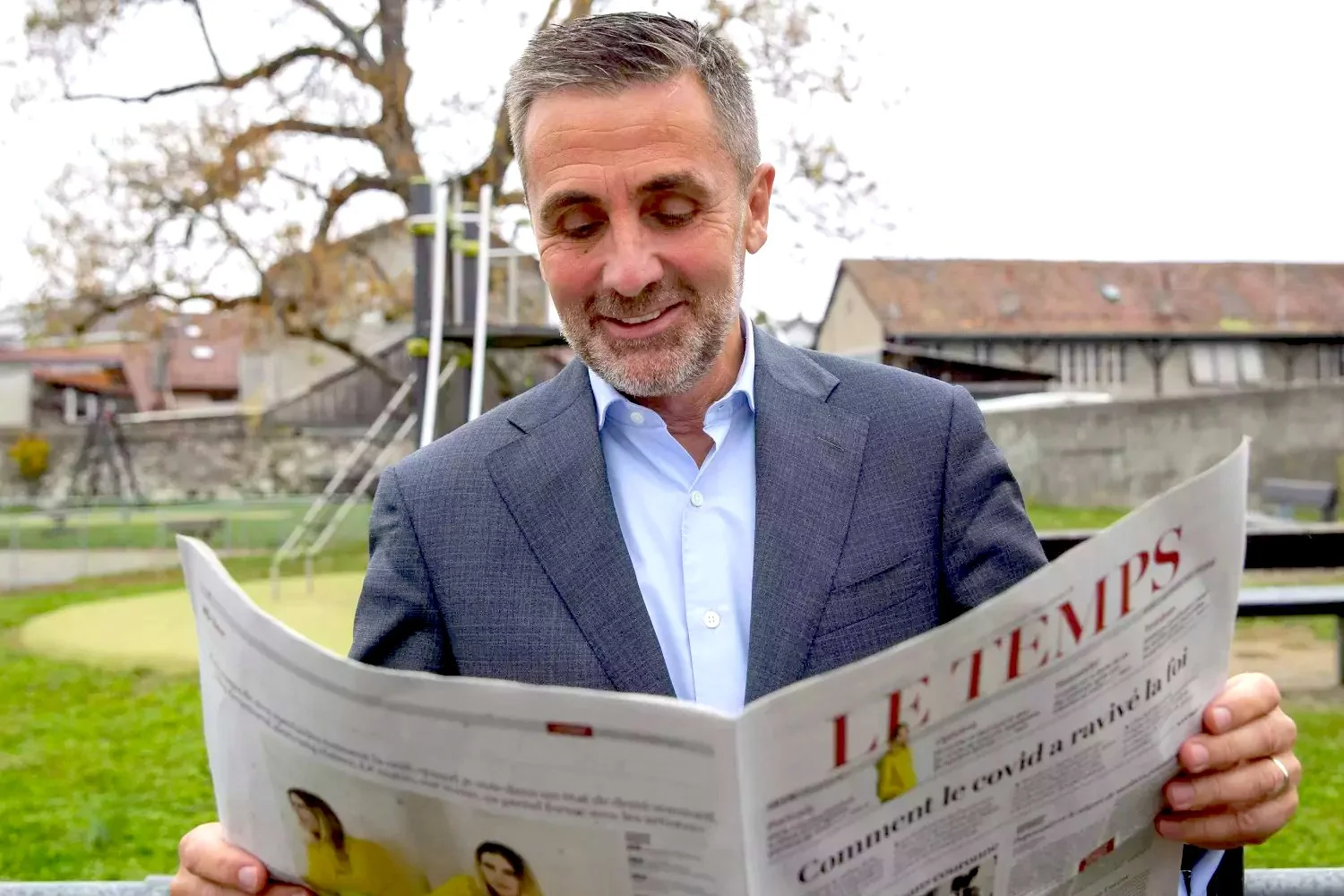
François Longchamp, President of the Aventinus Foundation, which finances Le Temps.
The article insisted that among the 14 watches spotted on the president's wrist, only one Rolex had appeared in the report that instigated the scandal, a two-tone Rolex Datejust. Yet, the newspaper deplored, the scandal received the unfortunate name of “Rolexgate.”
“In Peru, a single watch was enough to turn suspicion into a scandal and push a third of a government to resign. Under a name carved like a brand: ‘Rolexgate,’” the article read.
“En l’occurrence, la marque à la couronne paie le prix fort de son rayonnement,” Le Temps wrote. (“In this case, the brand with a crown pays a high price for its influence.”)
Le Temps comes to Rolex's defense further by quoting an AFP report that no Rolex were actually found. “The president's defense claims that the police found a few watches during operations at the government palace, but no Rolex.”
In a story of government corruption, cabinet resignation and midnight police raid, the newspaper Le Temps wrote an article about Rolex being the victim of its own success. That is because the Swiss newspaper is funded by the Hans Wilsdorf Foundation since 2020.

(Source: Fondation Hans Wilsdorf)
The Hans Wilsdorf Foundation, which is the sole owner of Rolex, helped establish the Aventinus Foundation in 2020 to support local “independent, diversified and high-quality press and media.” That November, the foundation bought the daily newspaper Le Temps from German media mogul Axel Springer.
Though no details of the deal were revealed, Radio Télévision Suisse estimated the purchase at 6.5 million euros. Le Temps is now 100% backed by the Aventinus Foundation, which is chaired by François Longchamp and financed by the Hans Wilsdorf Foundation, the Leenaards Foundation and the Jan Michalski Foundation for Writing and Literature, according to Aventinus’ website.
(The Aventinus Foundation also bought the Swiss news site Heidi.news in 2020.)
Le Temps, founded in 1998, employs 120 people, including correspondents in New York and Paris, and relies on a solid network of freelancers around the world.
It is considered a newspaper of record in Switzerland. According to the Research Department on Public Opinion and Society (FÖG) of the University of Zurich, it is of “high quality.”
A luxury brand financially backing a newspaper is not new, as the luxury industry tends to be highly protective of its image. LVMH in 2007 bought Les Echos, France's largest business newspaper.
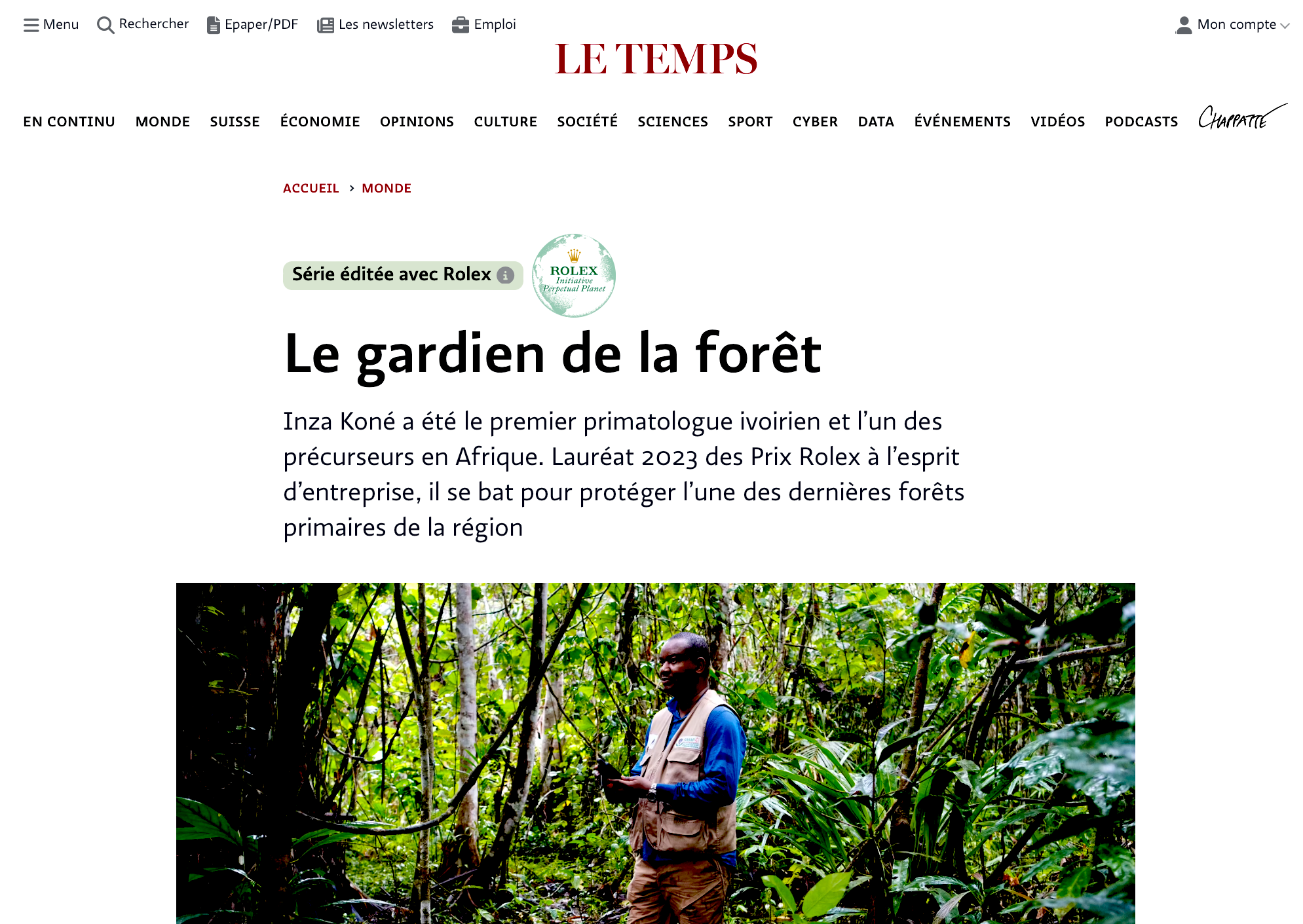
(Screenshot from Letemps.ch)
Le Temps publishes articles that are sometimes clearly labeled in parternship with Rolex. Since Rolex's acquisition of the largest Rolex retailer in the world, Bucherer, last August, Le Temps has also published articles in partnership with the retailer.
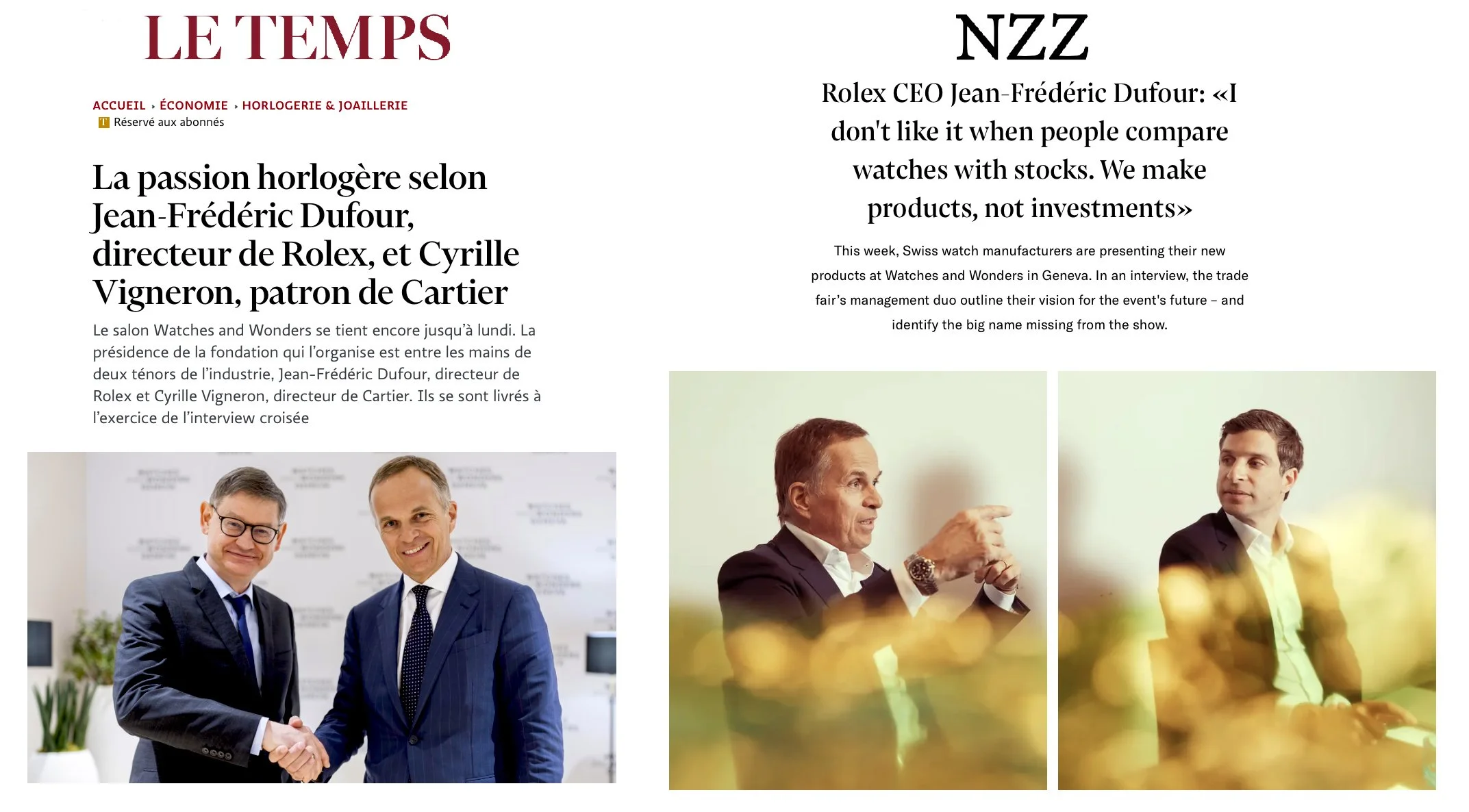
In 2022, Le Temps struck a business partnership with the Zurich-based, German-speaking daily newspaper Neue Zürcher Zeitung. Exclusive interviews with Rolex CEO Jean-Frédéric Dufour appear in alternance in Le Temps and NZZ.
When a short passage in a new book titled “La fabrique de l'excellence” put Hans Wilsdorf in a negative light in March, Le Temps wrote a lengthy article defending the Rolex founder.
Allegations that Wilsdorf might be a “fervent admirer of the Hitler regime,” according to a 1941 police report published in the book, was like catnip to journalists.
While the press en masse hurried to report this latest discovery, none sought to undermine the explosive allegations by the Swiss author — except, of course, for Le Temps.
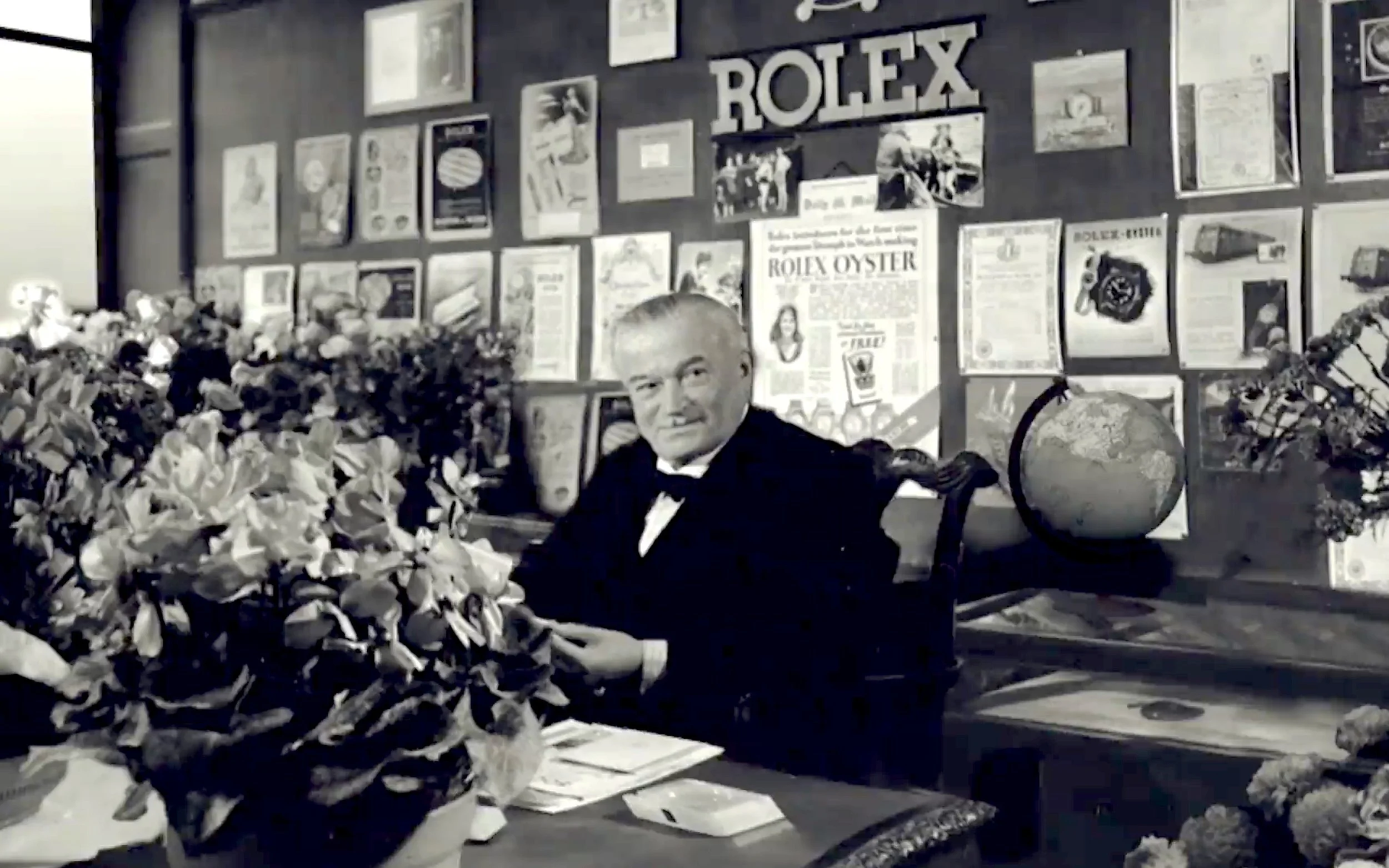
Rolex founder Hans Wilsdorf. (Credit: Rolex)
In an article titled “Exclusive – Historian doubts Nazism allegations against Rolex founder Hans Wilsdorf,” Le Temps said it had “sollicité” a historian who was also a specialist in Swiss diplomatic documents and “an author of numerous works on Swiss foreign relations and the economy.” The historian would go on to minimize the World War II police report in a 1,300-word article.
Le Temps' same article contained an exclusive quote from the Hans Wilsdorf Foundation which promised to explore the issue further by commissioning an initial documentary research.
After the historian outlined three reasons why Rolex and its founder couldn't have supported the Nazi regime, Le Temps ended the article with a quote from the book's author who admitted including the finding in a mere footnote “so as not to be accused of having it quietly passed over.”
If Rolex's reputation is today the brand's biggest asset, the discreet purchase of the newspaper Le Temps through an intermediary foundation has been one of the brand's boldest move since 2020, a move that has continued to pay dividends if and when the Crown is unwittingly embroiled in global scandals.