Bucherer AG

At 9,908 Feet, Rolex Opens Its Highest Boutique Yet

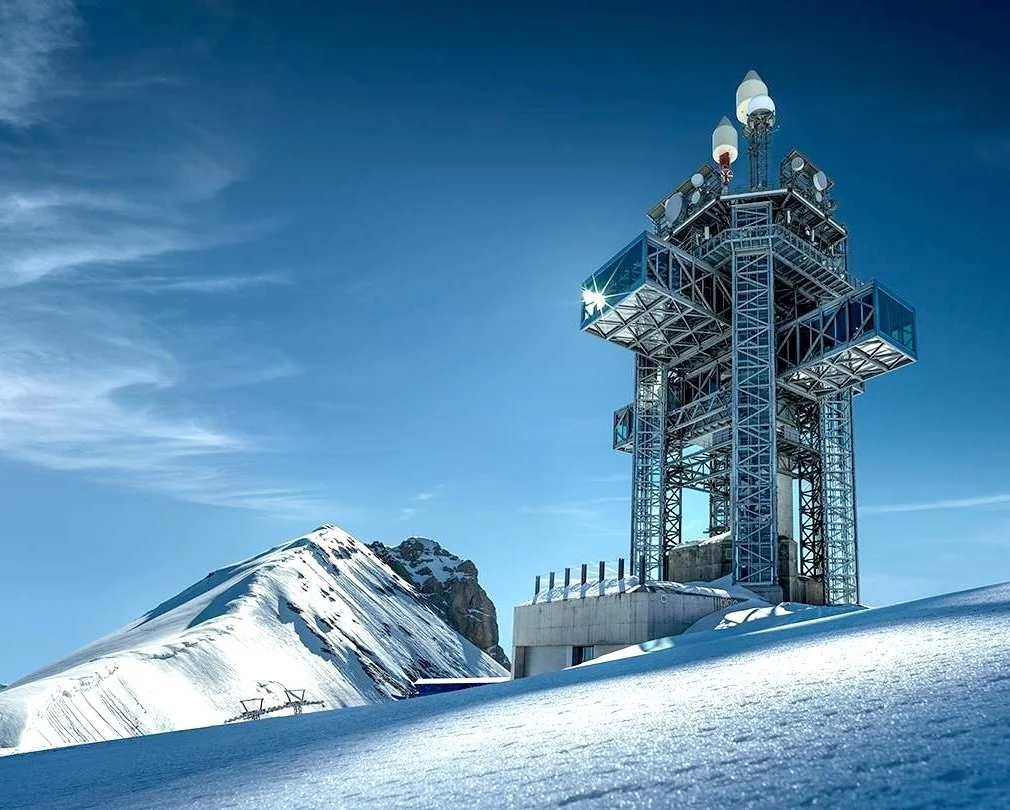
Peak retail. (Photo credit: Titlis Tower)

Rolex and Bucherer have opened what they describe as the world's highest watch boutique, located at 3,020 meters (9,908 feet) atop Mount Titlis in central Switzerland. The store occupies part of the newly completed Titlis Tower, a redevelopment project designed by Swiss architects Herzog & de Meuron that transformed a former telecommunications structure into a tourist destination overlooking the Uri Alps.

The new boutique, which was announced last week on Bucherer's Instagram account, is Rolex's latest example of so-called destination retail. The brand has pivoted from using its boutiques primarily as points of sale to places focused on the brand experience, especially as most Rolex models are still unavailable to buy.

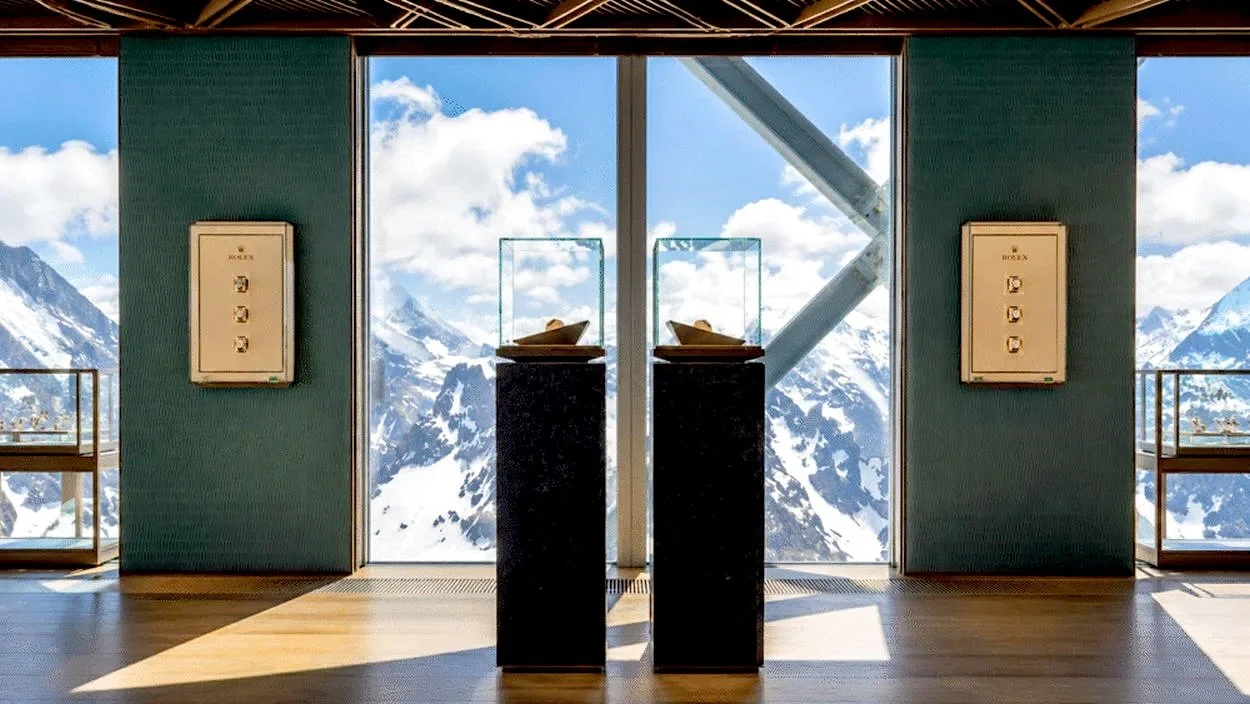
This latest project builds on Rolex's association with exploration and mountaineering. Visitors reach the boutique through a tunnel carved into the mountain from the summit station before entering a space featuring Rolex's design language, including Verde Alpi marble, wood finishes and floor-to-ceiling windows offering breathtaking views of the glacier.

When it comes to Bucherer, Rolex may not be giving the retailer preferential access to watches, as some feared when it acquired the Lucerne-based company in 2023. But it is using Bucherer as a vehicle for expansion, opening more Bucherer-operated boutiques while ending relationships with some independent dealers. Still, for this unusual location, Rolex was able to pursue a project that few retailers would consider, investing capital and staff in a boutique atop a mountain, accessible only by cable car, where operating above 3,000 meters brings more challenges and costs.

The Titlis Tower Rolex boutique. (Photo credit: Rolex)

As Rolex Builds Flagships, Bucherer Gains More Ground

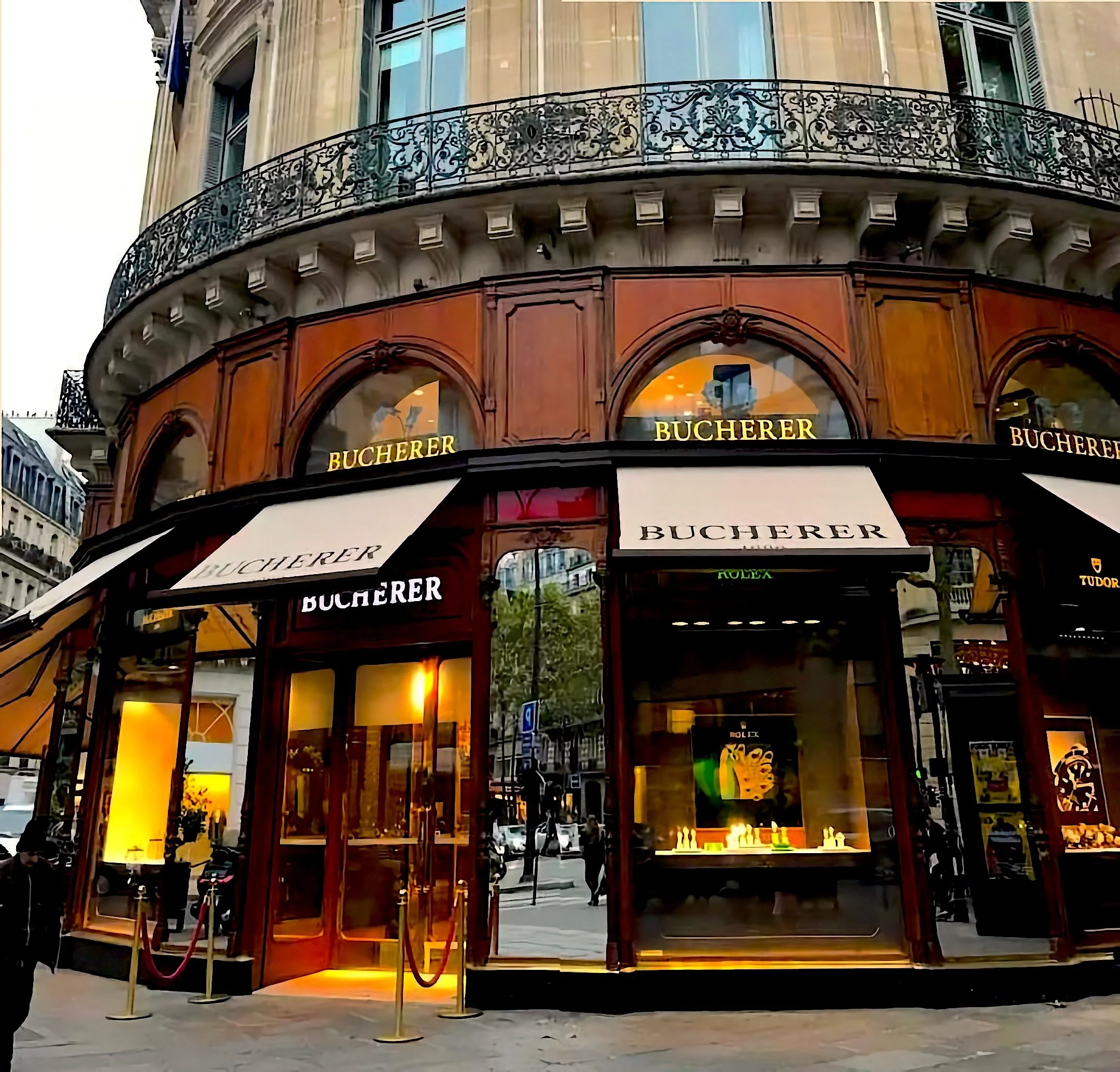
(Photo credit: Luc Jacquemin)

Rolex will open a new major store in Paris, the latest in a string of flagships from Asia to Europe. It will be its fifth Rolex-exclusive boutique in the French capital, but the first run by Bucherer, the latest sign the brand is turning to its own retailer to operate new flagships.

Rolex may not be giving preferential treatment to Bucherer in its allocations, as some feared when the brand announced it would acquire the Lucerne-based retailer in 2023. But it is building more flagships run by Bucherer while canceling the licenses of independent dealers located too close to these stores.

Wempe in Paris could be at risk of losing its Rolex license, as it did on Bond Street in London and on Fifth Avenue in Manhattan, where its multi-brand stores sit too close to newly built Rolex flagships. Galeries Lafayette Royal Quartz on Rue Royale, another Rolex retailer, could also be at risk.

Until now in Paris, Rolex’s exclusive boutiques have been run by Dubail on the Champs-Élysées and Place Vendôme, while those on Rue Pierre Charron and Rue de Sèvres are operated by Arije and the Lassaussois family. The new boutique, just approved by City Hall last month, will be a two-story location on the corner of Rue Royale and Rue Saint-Honoré, near the Tuileries Gardens.

Rolex Builds a 30-Story Flagship, but Plans to Occupy Only Half

Sky-dwelling. (Photo credit: Rolex)

Rolex announced last week that its new 30-story flagship at 665 Fifth Avenue in Manhattan will open this fall. Rolex will not occupy all 30 floors, but will use about half of the building and lease out the rest. In a statement, Luca Bernasconi, CEO of Rolex Watch USA, said the tower “will serve our team and tenants.”

“New York City and Fifth Avenue, in particular, have long been crucial to Rolex in the US. The Rolex Building at 665 Fifth Avenue is a clear expres­sion of our enduring commitment to this city: a beautiful example of modern architecture that will serve our team and tenants, as well as welcome clients for decades to come,” he said.

The 165,000-square-foot building will include a multi-level Rolex retail space managed by Bucherer and topped by office floors, along with amenities such as a restaurant and event space. A number of floors above Rolex’s offices will be available to select tenants, including Angeles Wealth Management, which will move in this fall.

Rolex’s new building is part of a new trend in luxury, a flagship arms race of sorts, to develop prominent sites. LVMH plans to demolish its building at 57th Street and Fifth Avenue to construct a new flagship, a move reportedly influenced by Rolex’s project. Meanwhile, Kering has agreed to buy the retail portion at 715–717 Fifth Avenue. Prada is planning a tower at 724 Fifth Avenue, with a store at the base and offices and condominiums above. Having an address on the Champs-Élysées or Fifth Avenue is no longer enough. Brands like Rolex want larger, more visible flagships, a shift often reported in these pages.

As Rolex Integrates Bucherer, Early Signs of Change Appear

Crown control. (Photo credit: Expedia)

Someone inside Bucherer is speaking to Inside Paradeplatz, and it makes for fascinating reading. Inside Paradeplatz is a fairly large blog fed by business rumors from Switzerland’s finance world. It is run by former business reporter Lukas Hässig, whose prose is reminiscent of yellow journalism. And though Bucherer, the Rolex-owned retailer, is based in Lucerne rather than Zurich’s Paradeplatz, Mr. Hässig has written two stories about it just this past week.

In his latest story, published Friday and already viewed nearly 30,000 times, Mr. Hässig said Bucherer has cut 20 positions at its headquarters, “including senior executives on the sales front, in marketing, and in the design and social media departments,” he wrote, speculating Bucherer's CEO Guido Zumbühl might be next, according to another inside source.

While his sources are unnamed and reader’s caution is advised, it is not far-fetched to think Rolex’s integration of Bucherer brings its own challenges and has entered a more disciplined phase. The report said Rolex is frustrated with Bucherer’s difficulty upgrading its IT system, an investment expected to reach 15 million francs.

Rolex CEO Jean-Frédéric Dufour said at Dubai Watch Week last November he is not interested in buying another retailer, describing the experience as a learning curve for the brand. “We have no intention of growing further than that. It was an opportunity, and we had to do it. Now we are maybe understanding the retail business a little better, and that is a good thing,” he said.

Mr. Hässig in his report claims the layoffs are because of tepid sales at Bucherer. When the most successful luxury watch company in history acquires a retailer with more than 2,000 employees, cuts at the top may be because of brand control as much as sales. Rolex’s image today is its most valuable asset, and Bucherer’s reputation reflects on the watchmaker.

With more than 60 locations worldwide, Bucherer is now a public-facing extension of Rolex. Whether the cuts are driven by sales or strategy, we won’t know. But if Inside Paradeplatz's reports are accurate, Rolex is shaping Bucherer in its own image, which is ultimately a win for the client.

Rolex Prepares Its Biggest Boutique in Germany

Construction takes time. (Photo credit: MUC Watch)

Rolex continues its flagship expansion across the world, refining its retail footprint by building prominent stores while terminating contracts with smaller multi-brand jewelers. From Rodeo Drive (2024) to Bond Street (2025), the Ginza district (2024) and Galleria Vittorio (2024), the brand has recently had a string of grand openings for new multi-level, Rolex-exclusive boutiques.

Most recently, it opened Canada’s largest boutique in Montreal, in 2025, while in the U.S. it added new boutiques in East Hampton (2025) and the Miami Design District (2025), and has acquired a building in Brooklyn for a future multi-level flagship, as reported by Coronet in October. The brand is also set to open its new 28-story American headquarters later this year. In Europe, Coronet has further reported on plans for new multi-level boutiques in Düsseldorf and Luxembourg.

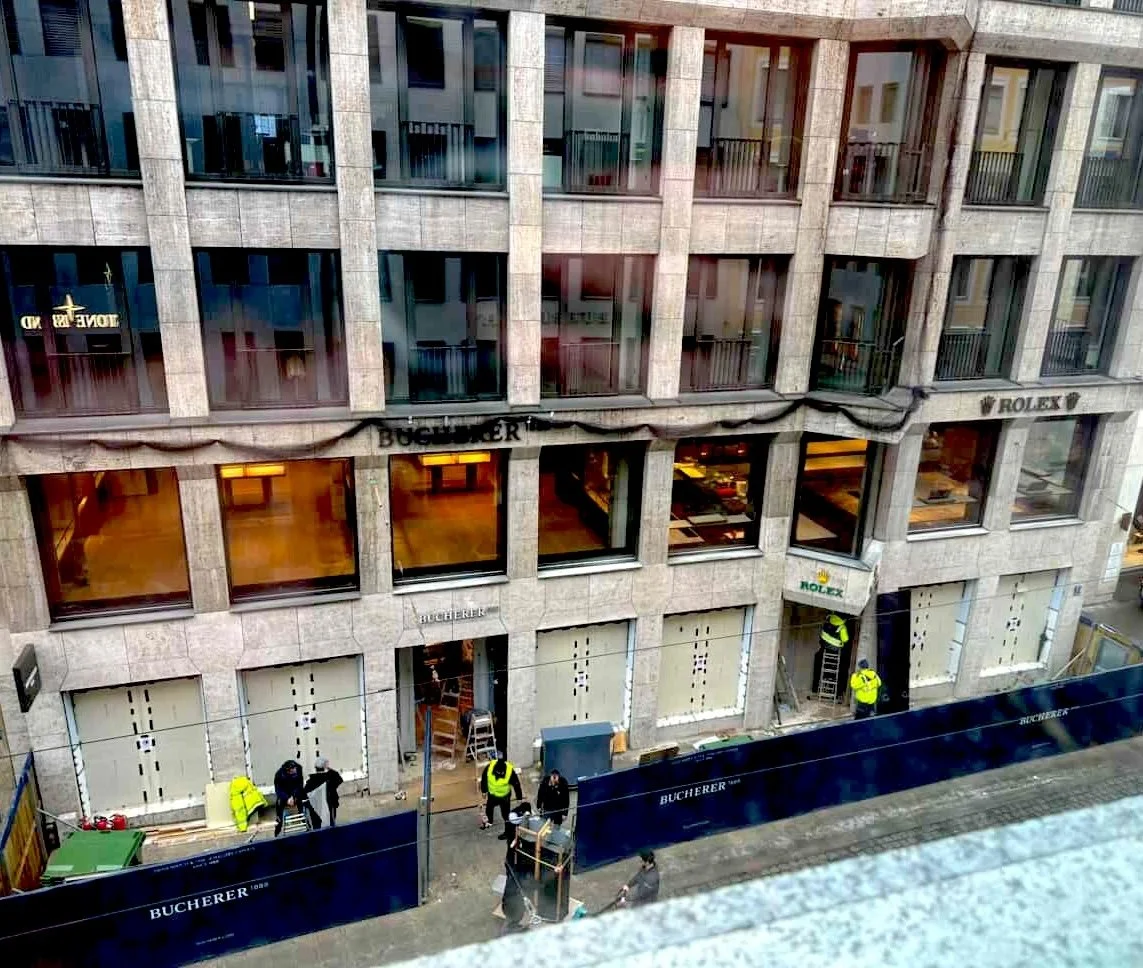
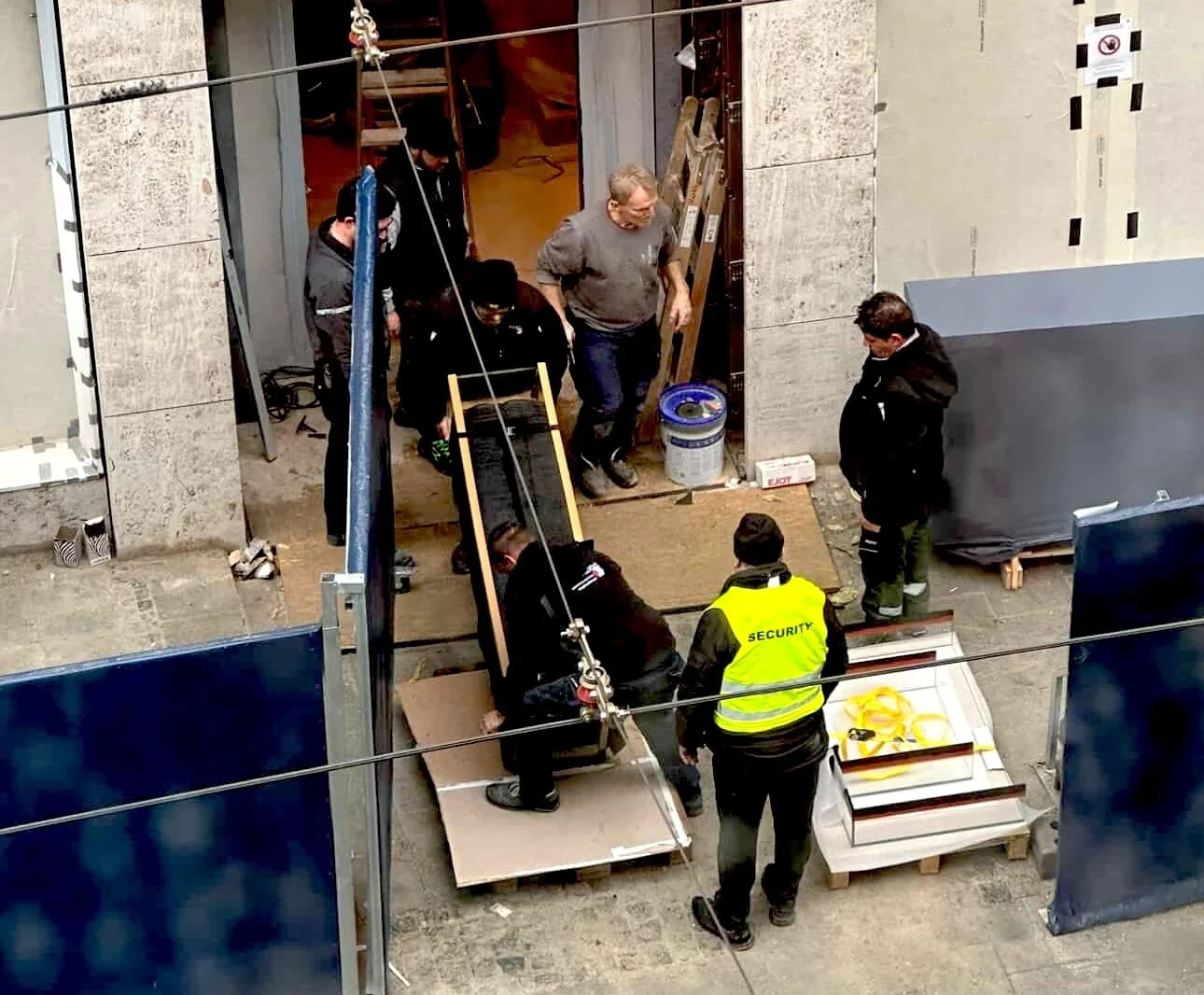
In Munich, Rolex’s newest German boutique, rivaling the size of its London flagship on Bond Street, is just weeks away from opening. While little information has been disclosed so far, Munich-based vintage specialist MUC Watch, whose offices are located just across the street, provided Coronet with photos showing Rolex showcases being moved in last week. The activity is a sign that the opening is approaching after two years of construction. The new multi-level boutique, located on Perusastraße, will be Germany’s largest and will be operated by Bucherer.

Future Rolex boutique in Munich. (Photo credit: MUC Watch)

Elsewhere in Germany, Rolex plans to revamp its headquarters in Cologne, as reported by Coronet in October. Rolex Deutschland GmbH, the wholly owned subsidiary responsible for distributing Rolex products across Germany, intended to demolish and rebuild its headquarters. The company has since disclosed that it will instead preserve the existing structure, located near a 17th-century church, a decision it describes as more sustainable. “For us, renovation, from both an ecological and economic perspective, represents the more sustainable alternative to demolition and new construction,” a Rolex representative said.

Rolex CEO Offers Rare Public Remarks at Dubai Watch Week

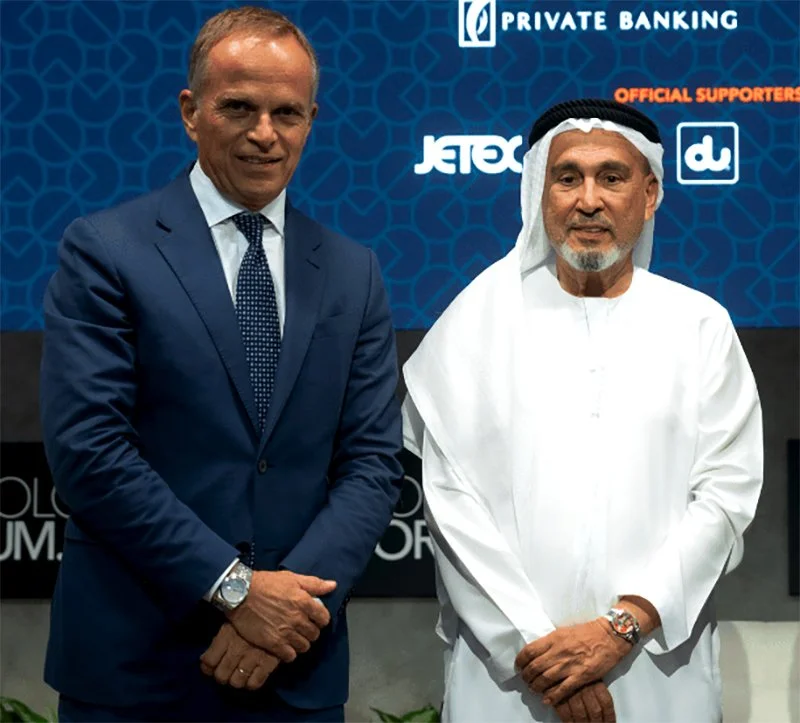
Dufour with Abdul Seddiqi on Nov. 19. (Credit: DWW)

Dubai Watch Week kicked off Wednesday with a rare public appearance from Rolex CEO Jean-Frédéric Dufour, who turns 58 in two weeks. The event’s Director General, Hind Seddiqi, recently told the Luxury Society podcast that it was a member of her team who first floated the idea of inviting him to speak. “There's no harm in asking,” Seddiqi told her. “We asked, and he kindly accepted,” she said.

Dufour’s remarks at the event avoided the subject of tariffs, but he offered some insights into the brand (Coronet’s full story). He said Rolex’s long-term success rests on trust-based partnerships not only between the brand and the retailer but also the client. He described Certified Pre-Owned as a safeguard for consumers, and said innovation at Rolex means balancing tradition with advances such as the new escapement in the Land-Dweller.

On AI, Dufour said Rolex remains committed to human relationships and craftsmanship while investing in technology to improve product quality. Regarding the Bucherer acquisition, he offered a rare insight into the company’s long-term plan, saying they have “no intention to grow further than that. It was an opportunity, and we had to do it.” He added, “Now we are understanding the retail business a little better, and that is a good thing.”

Read more excerpts from Dufour’s latest remarks in Coronet’s Long Reads.

Rolex Plans a New Boutique in New York as It Expands Retail Control

Rendering of Rolex’s future boutique. (Image: ESRT)

Rolex is expanding its presence in New York City and plans to open a new boutique in the Williamsburg neighborhood of Brooklyn, marking its fifth wholly owned store in the city. The 3,767-square-foot boutique will occupy an existing corner building at 86 North Sixth Street. Rolex has been refining its retail footprint since the Bucherer AG acquisition, expanding flagship and brand-operated stores while closing others.

Tourneau, the American retailer Rolex acquired through its 2023 purchase of Bucherer, signed a 15-year agreement with Empire State Realty Trust, which had acquired 86–90 North Sixth Street earlier this year as part of a $31 million portfolio purchase, according to city records made public in July. The move is the latest sign of Rolex's push for greater control over its retail network across major markets despite of tariff uncertainties in the U.S.

Rolex, through Bucherer, already operates four boutiques in Manhattan. As the brand completes construction of its new 199,000-square-foot New York headquarters at 665 Fifth Avenue, it plans to end its 45-year partnership with Wempe at 700 Fifth Avenue by the end of 2025.

In Brooklyn, the new store will complement William Barthman, the borough’s only Official Rolex Jeweler, located about nine miles away.

Rolex Deal Leaves a Legacy, and a Dispute, in Switzerland

Jörg Bucherer in an undated photo. (Credit: Corriere del Ticino)

It was two years ago, on Nov. 6, 2023, that Jörg G. Bucherer, the owner of the largest watch and jewelry retailer in the world, passed away, weeks after selling his company to Rolex.

Now, the foundation he left behind, worth several billion francs and among the largest in the country, has come under closer scrutiny from Swiss authorities, who have appointed two independent trustees to ensure its proper and independent functioning, according to the Federal Supervisory Authority for Foundations (FSAF).

Coronet reported in July 2024 that proceeds from the Rolex acquisition would go to a newly created Bucherer Foundation, established under Bucherer’s will by his executor and personal attorney, Urs Mühlebach, to support cultural, scientific and social causes in the Lucerne region.

Because Mühlebach is now both the will’s executor and the foundation’s board chairman, he can select board members likely to be sympathetic to him while they’re supposed to oversee his own decisions. The Swiss authority described this a “potentially serious structural and personnel conflicts of interest within the foundation's board.”

Mühlebach said the arrangement reflects Bucherer’s wishes. Bucherer had named him both executor of the will and a member of the foundation’s board, but the document does not specify his appointment as chairman.

Rolex’s Flagship Expansion Reaches More Cities

Future site of Rolex’s flagship boutique in Düsseldorf. (Photo credit: Anne Orthen)

Rolex confirmed plans to open a two-floor boutique on Düsseldorf’s Königsallee in 2027, the city’s most prestigious luxury shopping street. Though Düsseldorf has just 600,000 residents, it is the latest example of Rolex concentrating its presence into bigger but fewer locations, even in mid-size German markets. The new boutique will be managed by Bucherer.

From Rodeo Drive to Bond Street to the Ginza district — and now Königsallee — Rolex is consolidating retail into larger, high-profile flagship stores that function almost as temples to the brand. Unlike traditional retailers, these boutiques go beyond displaying timepieces; they immerse visitors in Rolex’s storytelling, showcasing its heritage, innovations and expertise. In recent years, the company has closed smaller points of sale to make way for these multi-level flagships in key markets.

In Germany, Rolex is closing up to 40 locations, according to some reports, including in Düsseldorf, where the new flagship boutique is planned. Juwelier Rüschenbeck, a large German jeweler with additional stores in Frankfurt and Cologne, is unfortunately located near Rolex's future site and will lose its agreement next year, a fact the brand confirmed. “The partnership will end by mutual agreement on December 31, 2026,” a Rolex spokesperson said.

Will Rolex Embrace Carl F. Bucherer’s Patents?

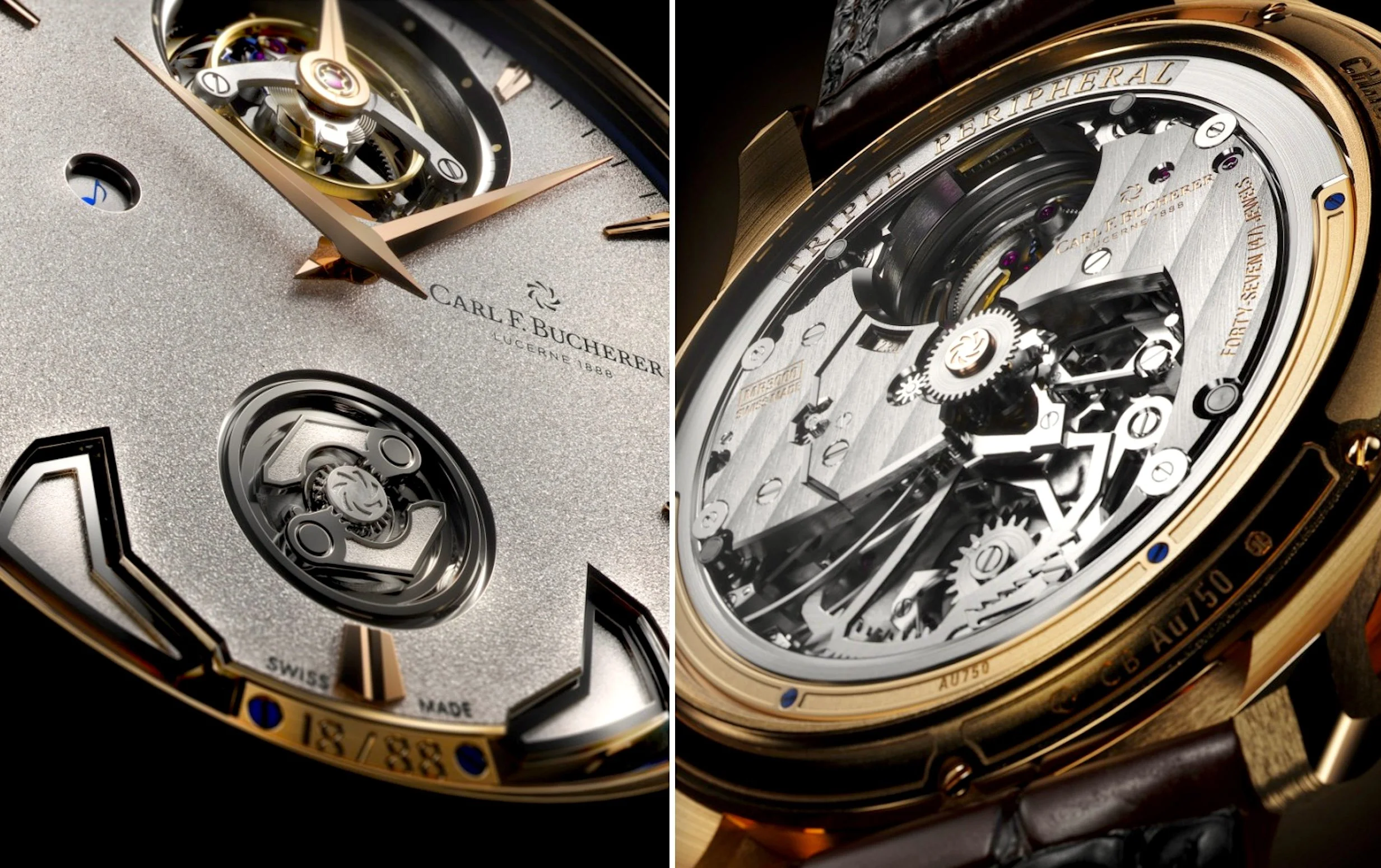
(Photo credit: Carl F. Bucherer)

As Rolex winds down the Carl F. Bucherer’s manufacture, streamlining its focus to just Rolex and Tudor, the real question is what it plans to do with Bucherer’s five patents and four in-house movements. Rolex now holds a set of innovations that could shake up its designs — or left to disappear into the archives.

One patent, for example, features a peripheral rotor that keeps the movement unobstructed, with the oscillating weight rotating around the caliber instead of covering it. With Rolex finally embracing display casebacks, this technology could elevate the experience, putting its movements on full display like never before.

Another patent centers on a floating tourbillon, held peripherally by three ceramic ball bearings, enabling a thinner movement and an elegant visual effect that could be unique to Rolex.

While Rolex has never produced a tourbillon, the complication could find a place in its nascent Perpetual 1908 collection. With Carl F. Bucherer’s expertise in tourbillons spanning over a decade, Rolex now holds the option to integrate this technology — or leave it on the shelf.

EU Publishes Findings on Rolex-Bucherer Deal Approval

The European Commission publicly released its report for the first time on Friday, outlining its July approval of Rolex's acquisition of Bucherer while examining competition concerns under EU merger regulations.

The 30-page report provides an insight into the Commission's analysis of the buyout’s impact on the watch market, particularly in the €10,000–€49,999 segment, where Rolex already commands a 50–60% market share.

The Commission questioned whether Rolex might prioritize its own products at Bucherer outlets. But it concluded that Rolex lacked the incentive to do so without harming its own broader distribution network​.

The Commission also raised concerns that Rolex could gain access to competitors' strategies, given that Bucherer sells products from various brands and holds valuable data on sales performance, inventory levels, marketing strategies and customer preferences. But Rolex pledged to enforce safeguards, including limiting employee access to sensitive information, maintaining completely separate IT systems and restricting Rolex to aggregated data, with detailed data only accessible to non-strategic staff.

The Bucherer-Rolex Deal and the Man Who Sealed It

Mühlebach standing behind Bucherer. (Credit: H. Zimmermann)

New details of the deal between Bucherer and Rolex emerged Saturday, after a profile of Jörg Bucherer's lawyer, Urs Mühlebach, was published in Zurich-based magazine Bilanz.

Bucherer, who passed away just weeks after penning a deal with Rolex, had placed immense trust in Mühlebach, granting him full power of attorney over all business matters.

As his health began to decline, Bucherer entrusted his lawyer with another task: initiating the sale. Mühlebach suddenly found himself as the negotiator, executor, estate administrator and chairman of the foundation board, all rolled into one. But Mühlebach proved to be a tough negotiator with Rolex during the airtight talks that took place over an 18-month span.

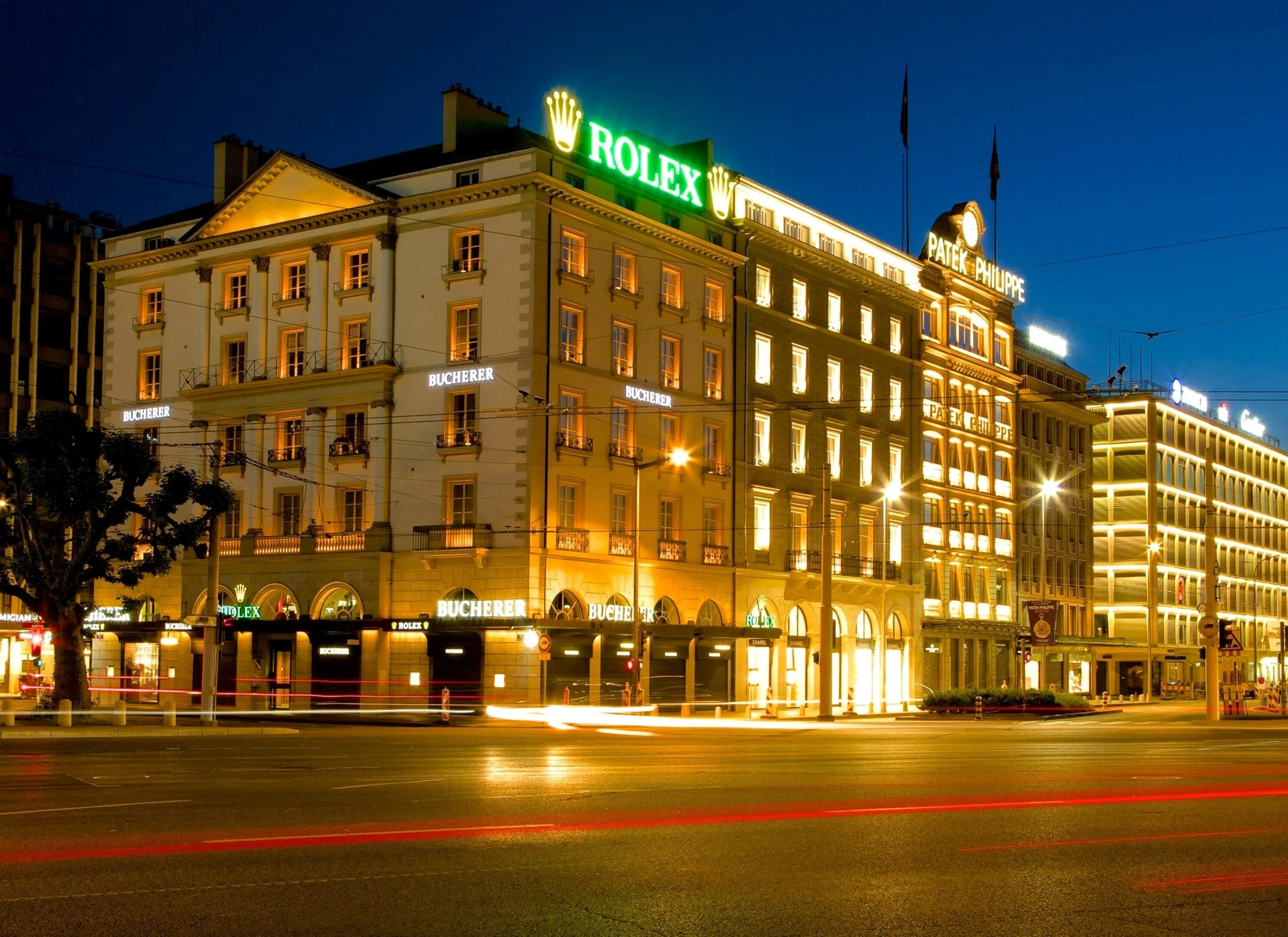
Mühlebach said one of the biggest sticking points in the negotiations surrounded the retailer's real estate: properties in Lucerne, Geneva and Zurich had been recorded for less value than they were worth today, with Geneva's flagship building as the crown jewel. The final agreement was kept secret, in Swiss fashion, but it is widely believed to have topped four billion francs.

The Jörg G. Bucherer Foundation today is worth an estimated five billion francs, putting it in the top five foundations in Switzerland. But while the Hans Wilsdorf Foundation, which donates more than 300 million francs every year, has eight board members and requires a collective signature by three, Bucherer’s trusted lawyer, Mühlebach, runs the foundation alone.

Urs Mühlebach. (Photo credit: Herbert Zimmermann)

Swiss Authorities Clear Way for New Bucherer Charity

Jörg Bucherer. (Photo credit: Corriere del Ticino)

The Swiss government cleared the Bucherer Foundation to be officially registered in the public records in January 2025 after ruling Jörg Bucherer had no legal heir to his estate. The foundation will begin operation in 2026.

It was a year ago, on Nov. 6, 2023, that Bucherer, the owner of the largest watch and jewelry retailer in the world, passed away, weeks after selling his company to Rolex.

Because he had no descendants, the inheritance estimated at more than 6 billion francs will be poured into a new foundation, as reported by Coronet, following in Rolex founder Hans Wilsdorf's footsteps.

Rolex’s takeover was finalized in July after antitrust authorities signed off on the deal. The Swiss government approved the establishment of the foundation, ruling out the possibility of legal heirs after local newspapers publicized a search into Bucherer’s grandparental line.

The foundation will support music, literature, scientific research, the care of disabled children, as well as improving availability in nursing homes, according to the executor of Bucherer’s will, Urs Mühlebach.

Rolex-Bucherer Deal Would Pour Billions Into New Foundation

(Photo credit: Rolex)

Now that antitrust authorities have signed off on the deal that shook the watch industry almost a year ago, Rolex’s takeover of the largest watch and jewelry retailer in the world is scheduled to be finalized at the end of this month.

But the owner of the retailer, Jörg Bucherer, won't see the deal close, as he passed away a few months after penning the sale. Like Rolex founder Hans Wilsdorf, Bucherer had no children; he died one of the richest men in the canton of Lucerne.

According to insiders, a windfall of at least 4 billion francs from Rolex should go to his estate after the deal closes, leaving an inheritance topping 6 billion francs.

The executor of Bucherer's will, a lawyer named Urs Mühlebach, said the money will go to a new foundation, the Bucherer Foundation. People familiar with the matter say the Lucerne region will “benefit greatly.”

Mühlebach said the foundation’s purpose will be “the promotion and support of music, fine arts and literature, quality tourism, scientific research and teaching, improving the availability of places in retirement and nursing homes, and the care of disabled children.”

Bucherer Employees to Get Bonus as Rolex Takeover Is Approved

Jörg Bucherer (Photo credit: Bucherer)

An internal letter sent to all 2,000 Bucherer employees on Wednesday confirmed the news reported by Coronet last week: The buyout by Rolex has been approved by all antitrust authorities.

Bucherer employees who were on the payroll by the end of 2023 will receive a bonus between half a month's salary and one and a half months' salary based on longevity. The letter, which was signed by Bucherer CEO Guido Zumbühl and Urs Mühlebach, also said the deal will be finalized at the end of July.

Dr. Mühlebach is a Bucherer board member and the executor of Jörg Bucherer's will. Mr. Bucherer, who died last November and was childless, is following in Rolex founder Hans Wilsdorf’s footsteps by leaving his personal wealth to establish a foundation, the Bucherer Foundation.

Mr. Bucherer's wealth was estimated at CHF2 billion before the sale to Rolex. Sources in Lucerne estimate it is triple that now, making it one of the largest charitable institutions in Switzerland with the Hans Wilsdorf Foundation.

Jörg Bucherer Dies Months After Selling Business to Rolex

Photo courtesy: Bucherer

Jörg G. Bucherer, the billionaire third-generation scion of the largest Swiss watch retailer in the world, has died just months after agreeing to sell the business to Rolex. He was 87. The Swiss newspaper Handelszeitung was first to report the news, which was confirmed Tuesday by the Lucerne-based Bucherer group.

Mr. Bucherer took over his father's business in 1977 and pursued a policy of expansion in Austria and Germany. He also opened the world's largest watch and jewelry store in Paris and made acquisitions in the U.K. and U.S. He launched into the second-hand luxury watch business and was first to take part in Rolex’s certified pre-owned program. Today, the brand has more than a hundred specialized jewelry stores around the world and 2,400 employees.

On August 24, 2023, Rolex issued a press release announcing it had decided to acquire the watch retailer “following the choice made by Jörg Bucherer, in the absence of direct descendants, to sell his company’s business.” Rolex said it wanted to preserve the close partnership ties that have linked both companies since 1924.

Mr. Bucherer was the last businessman to personally know Rolex founder Hans Wilsdorf and work with him.