
(Photo credit: Rolex)
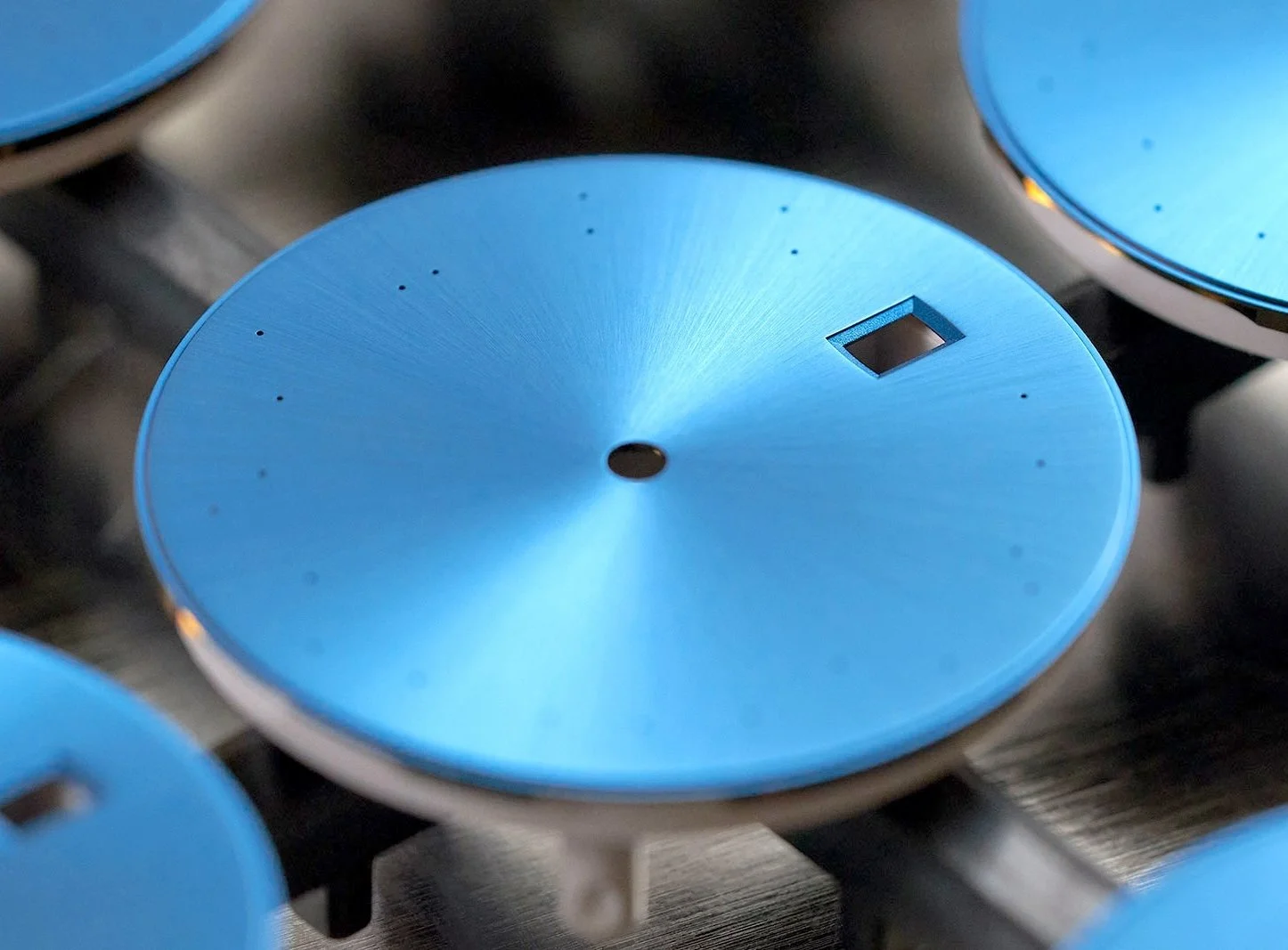
A newly published patent offers an unusual glimpse into what Rolex considers a weak point in watch dial production. Nearly every dial receives a transparent finishing lacquer, often made from a material known as zapon, that protects decorative finishes from moisture and oxidation. Rolex says zapon also gives the dial "a depth effect" and highlights its surface finish.
The problem, according to Rolex, is that the lacquer does not always adhere well enough over time. As the coating ages and is exposed to humidity, its bond can weaken, causing the protective layer to separate from the dial, a process called "décollement" in the patent. For Rolex, stronger adhesion is "essential for the reliability and robustness" of the dial to "guarantee its longevity over many years."
Instead of changing the protective lacquer itself, Rolex engineers found through experiments that inserting an ultrathin layer of metal, like chromium or titanium, between the dial surface and the lacquer improved adhesion "très significativement,” the patent said. Rolex never explained how its engineers came up with the idea of adding a metal layer just a few nanometers thick. But in accelerated aging tests in Rolex’s labs, dials were exposed for three days to 30°C (86°F) and 95% relative humidity before adhesive tape was applied and peeled away. Dials without the metallic layer showed the so-called "décollement," or delamination, while those with it showed none.
The invention is the latest example of Rolex’s R&D spending to improve its watches in ways customers won’t notice when they buy them. The metallic layer is invisible to the naked eye, and the benefit won’t become apparent for decades.