Bulle Manufacture

In Bulle, Rolex Plans to Extend Its Footprint Again

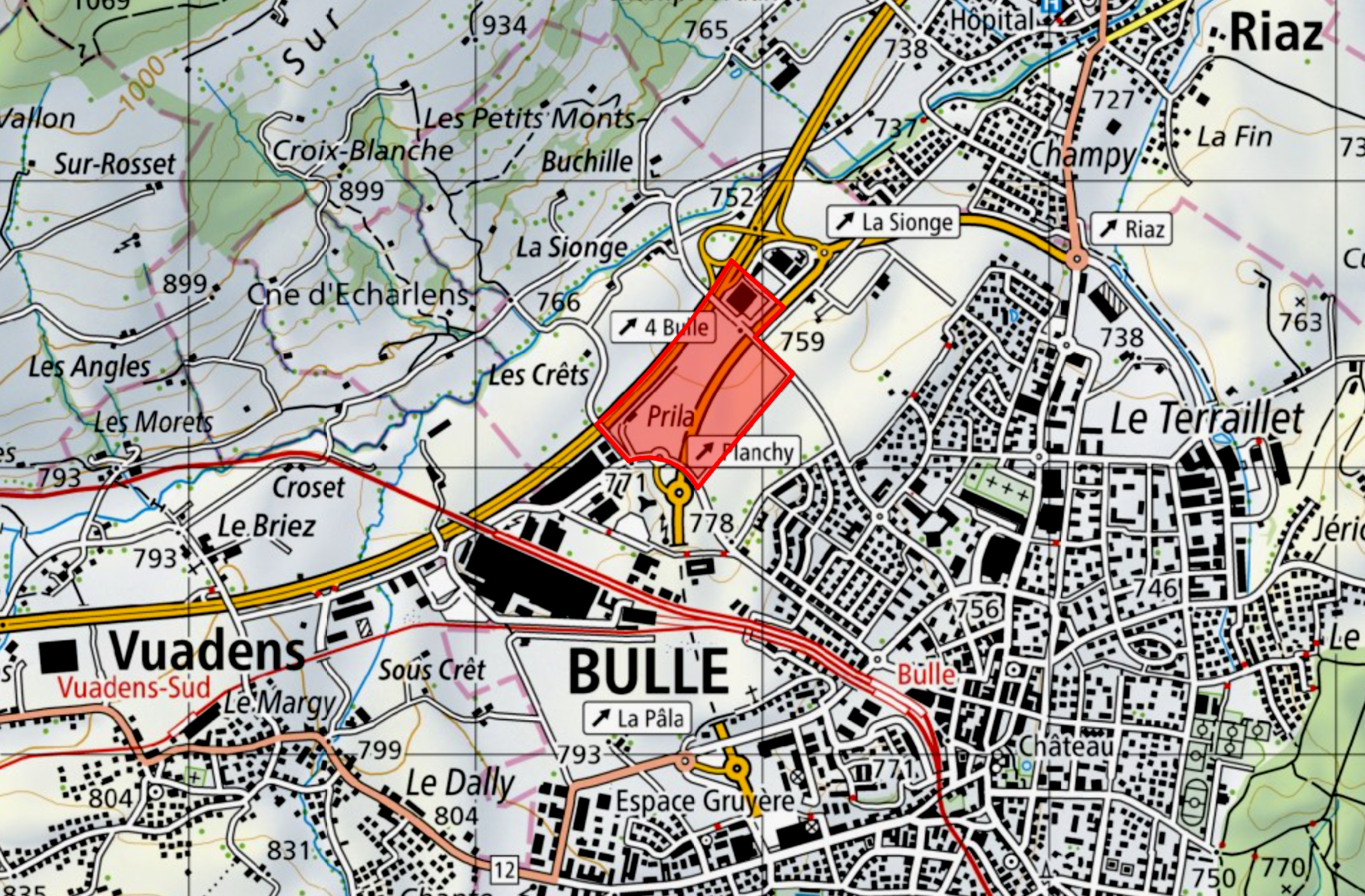
More land-dwelling in Bulle. (Map: City of Bulle)

Rolex is seeking to acquire additional land in Bulle, Switzerland, as work progresses on its new manufacturing site, slated to open in 2029, with the signing of a sale contract expected soon. The acquisition would give the brand control of an adjacent parcel, allowing for potential future expansion to the northeast of its 100,000-square-meter production complex, a sign it expects production to continue growing even amid new economic uncertainties.

Rolex is in talks to acquire the former premises of Progin SA, a metal-industry company that went bankrupt last year after four decades of operation. The site, adjacent to Rolex’s future production campus now rising on the edge of town, is being sold by the cantonal bankruptcy office. Once the purchase is completed, the brand would gain control of a strategically located parcel that could allow it to extend its industrial complex.

The Progin building is a modern glass-and-steel structure completed in 2006. Still, it’s unclear whether it fits into Rolex’s plans to expand its manufacture. The property is not listed as a protected site, leaving Rolex free to retain or demolish it as it integrates the parcel into its new campus.

Rolex Puts Down Roots in Bulle With a Discreet Donation

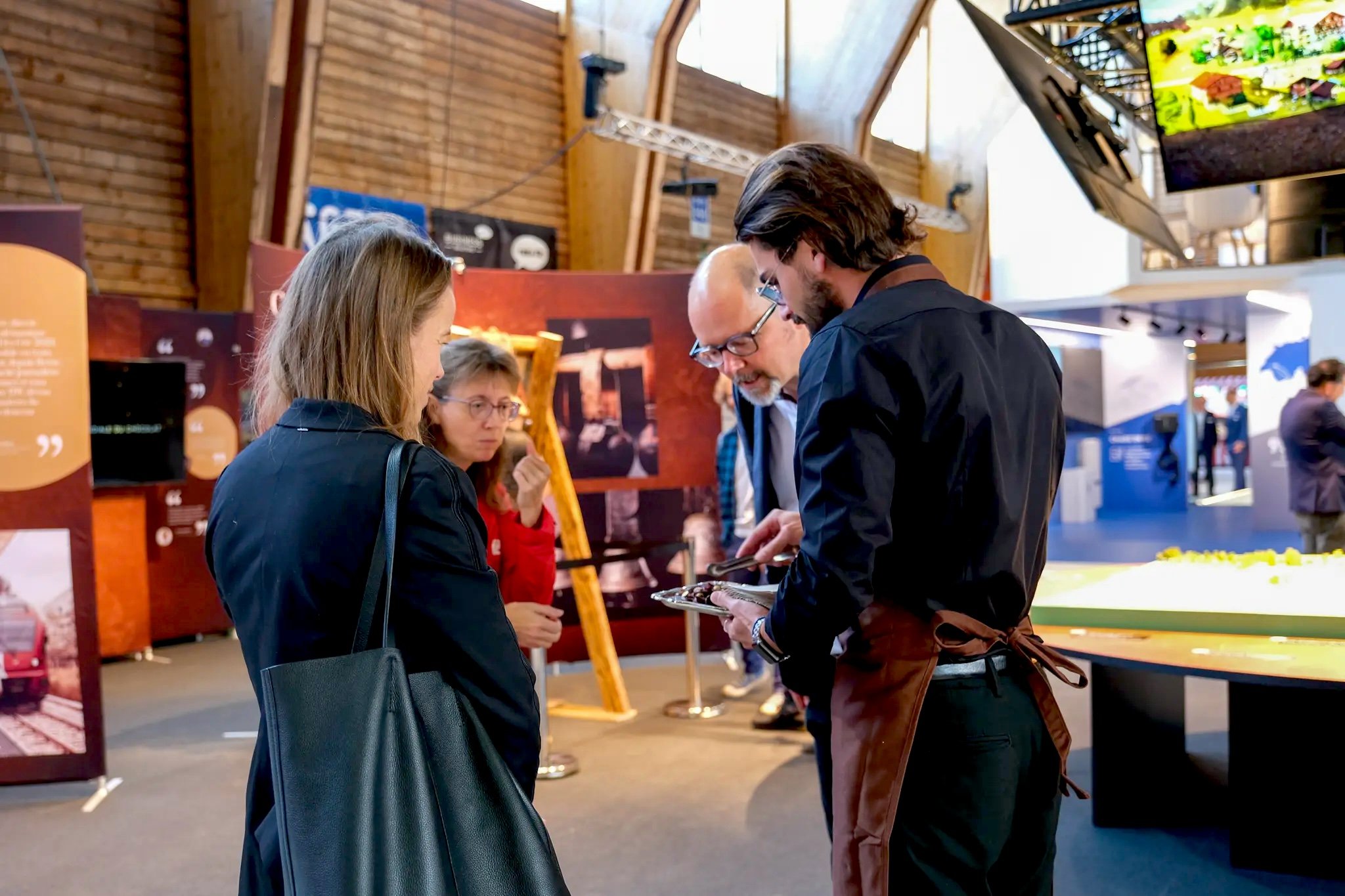
Bulle, Switzerland. (Photo: Yannick Romagnoli)

The Hans Wilsdorf Foundation is known for supporting local projects, and Rolex for sponsoring major events. This time, Rolex is giving quietly to support the renovation of the public library and museum in Bulle, with no sponsorship and no advertising attached, the latest sign the brand is putting down roots in the community that will soon host its newest manufacture. Announced earlier this month during a town meeting, the 3 million-franc contribution drew applause from legislators surprised by both its timing and its scale, according to La Liberté, a county newspaper.

When the expansion of the Musée gruérien and the city library was approved by voters in 2024, officials pledged to seek outside funding. During the Sept. 9 groundbreaking of Rolex’s new site, a city council member presented the project directly to the brand’s chief executive and chief financial officer. The effort paid off: less than three weeks later, on Sept. 24, Rolex confirmed its donation.

City officials said the gift comes with no conditions attached. A spokesperson for the city of Bulle described Rolex’s support as a gesture of goodwill to mark its commitment to the local community.

Rolex Loses Infrastructure Veteran Amid Expansion

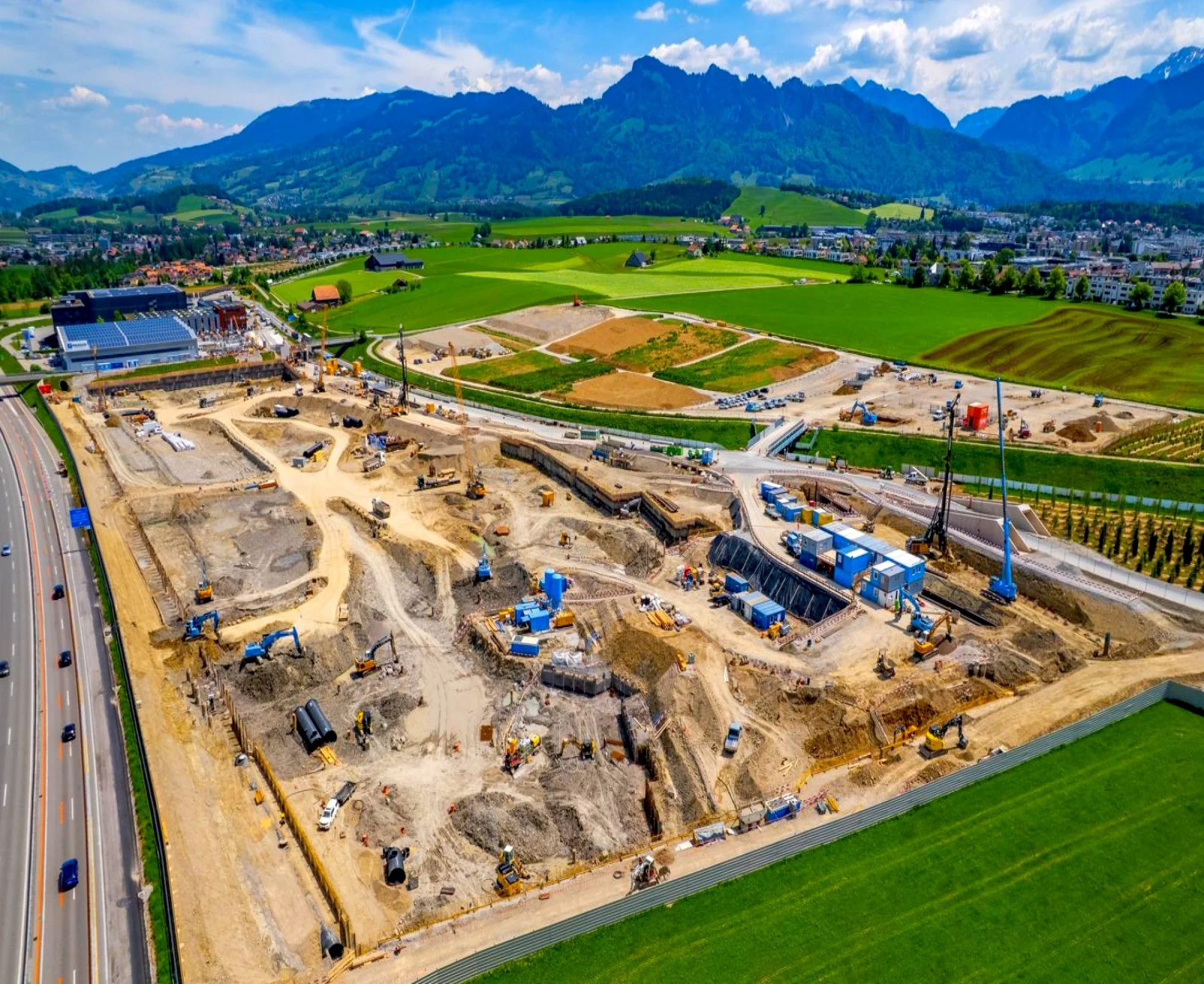
Rolex’s future site in Bulle. (Photo: Chloé Lambert)

After more than three decades at Rolex, Hubert du Plessix is stepping down as senior vice president, closing out a 35-year tenure leading the brand’s Infrastructures & Investissements division.

Du Plessix studied law in Paris and spent a short stint in London before moving to Switzerland, where he rose to Rolex’s top ranks. Since joining the company in 1990, he has overseen the brand’s investments and infrastructure, including management of Rolex’s facilities, headquarters and new construction projects. As reported by Coronet, the brand owns significant real estate in Switzerland and abroad.

Du Plessix’s departure comes as the brand pursues one of its most ambitious projects: the construction of a new, one-billion-franc manufacture in Bulle.

Du Plessix’s influence has extended well beyond Rolex. As president of the Swiss Exhibitors Committee at Baselworld, he made headlines in 2020, when a leaked letter revealed his push for MCH Group to refund exhibitors, warning that without fair treatment Baselworld was headed for collapse.

Environmental Impact Report for Rolex's Bulle Site Released

Rolex’s new manufacture site. (Photo credit: Antoine Vullioud)

According to an environmental impact report released this week, Rolex’s future manufacture in Bulle will include upgraded initiatives, revealing an internal commitment to sustainability by the brand.

The report shows that 98% of heating needs will be covered by just renewables, including geothermal probes and recovered machine heat from the manufacture. Cooling systems will rely at 100% on renewable energy, supplemented by rooftop solar panels. In a contract signed with Gruyère Energie SA, Rolex will buy renewable electricity from the local energy company.

Rolex has also set in place plans to dispose safely of hazardous materials, including cutting oils, solvents and acids. Production waste will be categorized and treated, alongside regular industrial and non-recyclable waste. Although the exact industrial processes are not finalized, the environmental impact report draws on experience from other Rolex sites to anticipate the potential footprint.

For complete coverage of Rolex’s newest site, follow Coronet’s reports about Bulle, including Rolex’s project to plant 500 trees around the manufacture.

Rolex Enlists Top Builders for New Manufacturing Site

(Photo credit: La Gruyère)

Rolex has hired three construction companies with 275 years of combined experience for its most expensive project to date.

While construction equipment can already be spotted on Rolex's future manufacturing site in Bulle, Switzerland — Rolex received last August an advance authorization to prep the site — the construction won't officially begin until mid-January.

The building permit for Rolex's fifth manufacture was granted last Wednesday by the Gruyère Préfecture, according to public records published on Nov. 29, 2024.

While Rolex typically asks contractors for their discretion, Coronet is reporting that the three companies that have won the bid are Grisoni-Zaugg SA, JPF Construction SA and Antiglio SA, all major players in the construction industry. Grisoni has been in business for over 75 years; JPF, 98 years; and Antiglio was founded in 1898.

Together, next month, they will begin a four-year, one-billion-franc project that will include five buildings, 692 indoor car spaces, 60 spaces for two-wheelers and 684 bicycles spaces.

Rolex Posts Job Listings for Temporary New Sites

(From carrieres-rolex.com)

Rolex has started to post job listings for the canton of Fribourg, where Bulle is located. While the Bulle manufacturing site is not scheduled to be up and running until 2029, Rolex is going ahead with plans to use temporary sites in the same canton, as reported by Coronet.

The two temporary sites, which will be operational as early as 2025, will likely put pressure further on Rolex’s secondary market. There are four times more preowned Rolex watches listed for sale today than in 2021.

On its employment page, Rolex has listed five job openings for the Fribourg site. Rolex plans to hire between 250 and 300 new employees, who will be trained at those locations before transferring to Bulle in 2029, when Rolex’s new CHF1 billion factory is operational.

Earlier this week, Glâne prefecture gave Rolex the green light to start renovating the defunct Tetra Pak site in Romont, in the Fribourg canton. Rolex's other temporary site will be in Villaz-Saint-Pierre.

Bulle Residents Back Rolex's Arrival of New Manufacture

Rendering of Rolex’s planned new manufacture. (Credit: Rolex)

Another hurdle for Rolex’s planned new manufacture in Bulle has been removed, as the window for residents to voice their oppositions recently closed.

The City of Bulle said the residents had a month to review Rolex’s plans, and it gave itself 10 more days after the deadline of July 8 to review the public comments and release the results.

Out of 27,000 residents, only one opposition was submitted by an individual, according to the city. But that individual does not live in Bulle. “As the opponent withdrew his opposition, the Municipal Council did not have to consider it,” the city said.

Bulle is planning to build at least two new elementary schools, add one junior high school and is mulling revamping its recreation center. Banks, retailers, hotels, restaurants, construction and equipment companies — all are expecting a boom in business thanks to Rolex’s arrival.

To secure the financing for new schools, the Bulle Municipal Council plans to submit a bond request in December 2024, according to Council member David Seydoux. This will be the second bond request in three years, as the Bulle General Council already approved a bond of 1.6 million Swiss francs in 2021.

“We would like this growth to be slower, but we cannot control the pace,” Seydoux said. “Bulle is a bit of a victim of its success!”

Rolex Reveals Details of Bulle Project

(Image credit: Rolex)

Rolex has revealed new details ahead of an application for a building permit published Friday in the Feuille officielle du canton de Fribourg, including the first rendering of the project, which is estimated to top one billion Swiss francs.

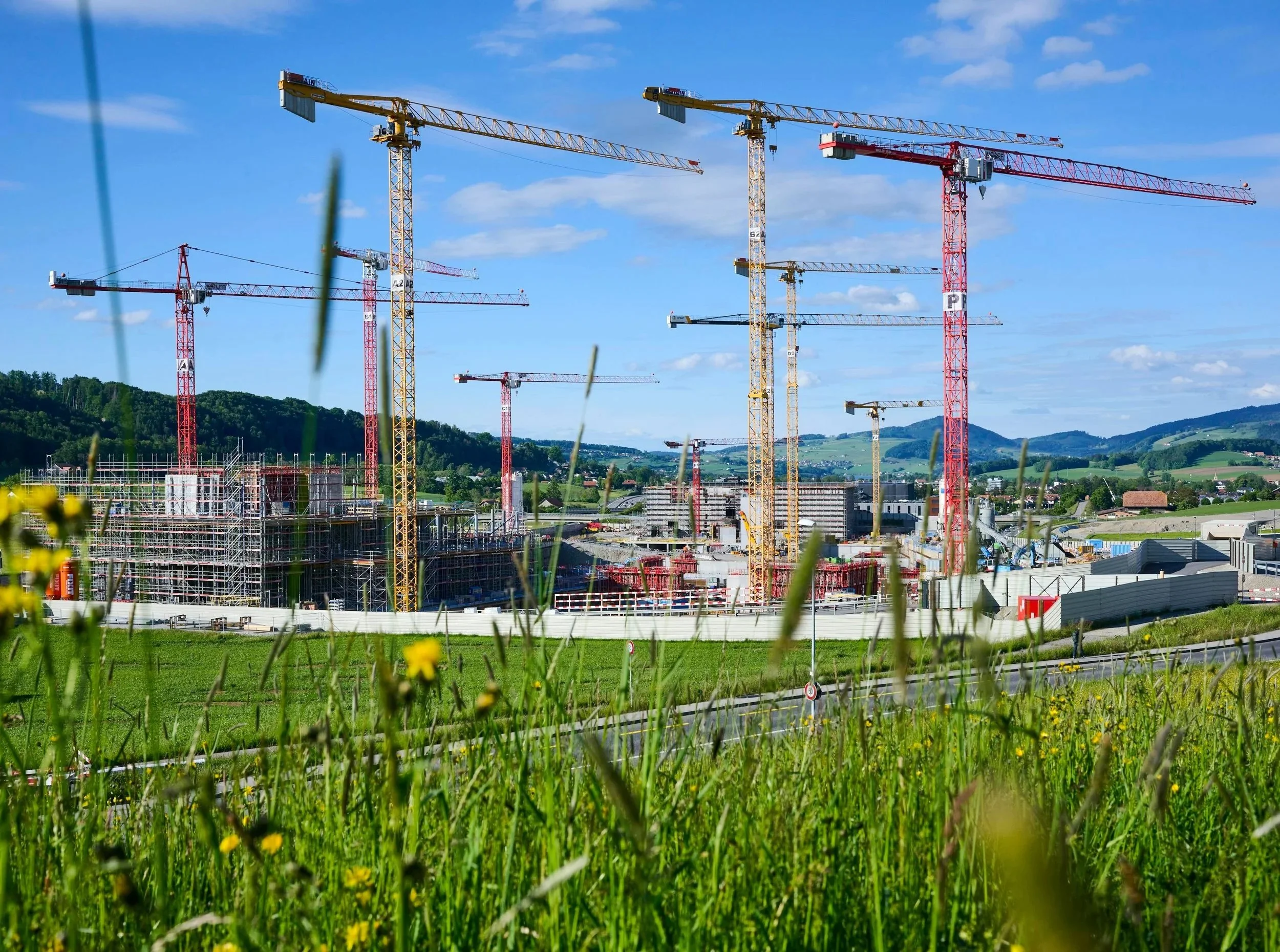
No fewer than eleven cranes will be used to build the new manufacture, Rolex’s fifth, in Bulle, Switzerland, a project that will be completed in phases by 2030. The manufacture will span 380 meters, or 415 yards. Rolex said the idea is to give it a “campus feel.”

All four buildings will be used for production and be connected for “administration, support, catering, meeting and rest areas,” Rolex said. At the southern tip, a fifth building will house the main entrance to the site.

Rolex will also set up a system to collect and treat rainwater for the grounds; no drinking water will be used for the 32,000 square meters [7.9 acres] of landscaping planned. The brand will also add 2,750 square meters [0.7 acres] of “wet surface friendly to amphibians.” Rolex will plant 500 trees, and all roofs will be equipped with solar panels.

Archeologists Have Begun Digging on Rolex Land

Time travel. (Photo credit: Chloé Lambert)

Swiss archeologists reported last week their first finds taken from Rolex's recently acquired land in Bulle.

The brand’s future manufacturing site, slated to open in 2029, happens to sit on a 2000-year-old road built by the Romans, as reported in these pages last month. Archeologists are rushing to dig before the road is destroyed by the new construction.

A team of five archeologists said they’ve found a sepulcher and various objects dating from the Bronze and Middle Ages near the ancient road. In coordination with Rolex, the team was given priority to do the excavation.

The finding last Thursday of an ancient sepulcher — a cremation grave with the presence of calcined bones — along the side of the road was a surprise, the archeology team told local newspaper La Liberté. The team said the initial land survey had not revealed the presence of a vestige of this importance on Rolex's land.

A Roman Road Will Be Excavated in Bulle, on Rolex's New Site

Time travel. (Credit: Jean-Guillaume Moitte)

Roman numerals on a Rolex dial won't be the only connection the brand has with ancient Rome. Its new manufacturing site, slated to open in Bulle in 2029, happens to sit on a 2000-year-old road built by the Romans.

A group of Swiss archeologists will inspect 400 square meters of the site for the next three months, and they said it won't delay Rolex's plans. Roman roads can reveal objects lost by pedestrians, but they’re also famous for being the clearest testament to the power of the Roman Empire, designed to unite its conquests.

This road first discovered in 2002 is one of the main Roman corridors along the flank of Le Gibloux, a Swiss mountain, according to one of the archeologists. “There is a whole network of well-structured Roman occupation in the Bulle region,” he told the local newspaper, La Liberté.

Rolex Confirms New Hiring Center Open in Bulle

Clocking in. (Photo credit: Rolex)

Rolex confirmed it has opened a recruitment center, a business space occupying several hundred square meters on one floor at the Bulle train station. “The recruitment center was opened early December and the director of HR has taken possession of the premises,” Rolex spokesperson Céline Gouzer-Monney said. “The space is not open to the public and remains a work space linked to recruitment.”

While the Bulle site won't be operational until 2029, one of its temporary sites, located in Villaz-Saint-Pierre, will begin work in the second quarter of 2024, according to Rolex. “These will be after-sales service activities,” said Ms. Gouzer-Monney. “The number of employees will be defined according to needs.” The other temporary site, in Romont, will begin operations as early as 2025. A list of job openings can be found on Rolex’s official hiring site.

For more reading, I’ve already reported on Rolex recruitment efforts here and the company’s plans to open temporary sites in Romont and Villaz-Saint-Pierre here.

Rolex to Increase Production Before 2029

Photo credit: Jean-Christophe Bott

Rolex is moving forward with plans to set up temporary production sites, in Romont and Villaz-Saint-Pierre, until 2029, when the new 2,000-employee Bulle facility is up and running.

Renovations for the Tetra Pak halls, in Romont, began earlier this month and will top 33 million Swiss francs. The new site will have between 250 to 300 Rolex employees, who are slated to transfer to the Bulle location in six years.

Rolex getting a jump on production before the Bulle site is ready won’t help the current state of its secondary market, whose value is already in decline, according to a WatchCharts & Morgan Stanley report out last week.

Few are opposing Rolex’s move to the defunct Tetra Pak site in Romont. The Swiss non-profit bicycle organization Pro Vélo said last week the current plans didn’t include enough parking spots for bicyclists.

ROLEX PLANNING FOR MAJOR EXPANSION IN SWITZERLAND

A NEW BILLION-DOLLAR PRODUCTION FACILITY SET TO BE COMPLETE IN 2029

Rolex head office in Geneva Switzerland / Credit: Rolex

Rolex is planning to invest up to one billion Swiss Francs in a new production facility in Bulle, Switzerland.

The official purchase deal for the land is set to go through in late 2022, with plans to have the production facility up and running by 2029. Rolex currently has operations in Chene-Bourg, Plan-les-Ouates, Biel, and Geneva.

Rolex facility in Bienne, Switzerland / Credit: Rolex

Rolex is the largest Swiss luxury watchmaker, and the brand is inextricably linked to the Swiss watchmaking sector. This new development would create about 2,000 new jobs for Switzerland.

Since 1960, the company has been owned by the Hans Wilsdorf Foundation, a private family trust. Rolex SA and its subsidiary Montres Tudor SA design and distribute watches under the Rolex and Tudor brands.