

What is Big Ben?
Big Ben is commonly known as the house of Parliament's clock tower, located in the London Borough of Westminster. Although, technically, the name only refers to the bell inside the clock tower, which weighs an astonishing (15.1 tons). The bell also stands at 7.2 feet in height and 9 feet in diameter – quite large when you think about it.
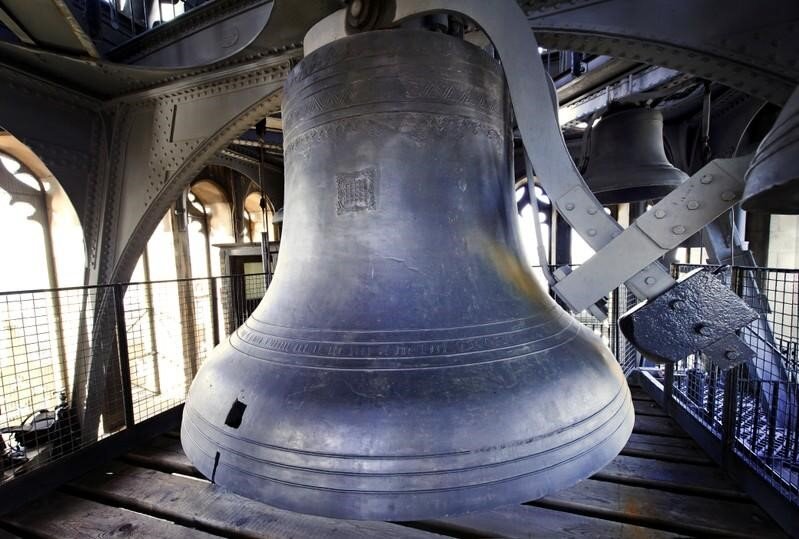
Big Ben’s bell / Credit: Reuters
To give an idea of the dimensions of the tower: the clock tower itself measures about around 100 meters, while the minute and hour hands are about 4 and 3 meters, respectively. The numbers are approximately 2 feet in size, and the dial is 7 meters.

Big Ben’s clock tower before renovations / Credit: Telegraph
So, ‘Big Ben’ is the bell which resides inside the ‘Elizabeth tower’, located at the north end of the Palace of Westminster. Westminster holds both the House of Commons and the House of Lords of the United Kingdom.

Palace of Westminster / Credit: Britain Magazine
Who is Big Ben?
There has never been a set answer to that question, although there are two theories... First, that the bell is named after the English bare knuckle prizefighter Benjamin Caunt, who held the English heavyweight championship from 1838 to 1845 for bare knuckle boxing.
Second, is that it was actually named after Sir Benjamin Hall, who was a civil engineer that had served in the House of Commons. Sir Benjamin Hall was also the Commissioner of Works at the time the Big Ben was built.

Benjamin Caunt pictured bare knuckle boxing / Credit: Nottingham Post

Sir Benjamin Hall / Credit: Wikipedia
The tower in which Big Ben is situated was named ‘St. Stephen’s Tower’ until 2012, when it was renamed the Elizabeth Tower to celebrate Elizabeth II’s 60 years on the British throne.
Was There a Clock Tower Before Big Ben?
Yes! There was a bell used for centuries called the ‘Great Tom of Westminster’. The first clock tower is still highly disputed since there are no records to prove it, but it was said to have been erected between 1288 and 1290. In 1367, this early clock tower (if it did exist), was replaced with a new tower and clock. The first chiming clock in England for the public that and housed the Great Tom.

The Great Tom of Westminster, circa 1776 / Credit: Ancient Society of College Youths
This original Bell was a feature of the Palace of Westminster and was situated on the opposite side of Westminster Hall.
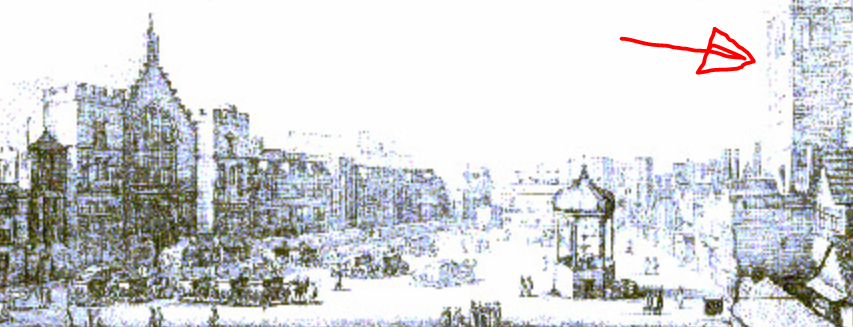
Westminster Hall - left, the Great Tom of Westminster - right
In 1698, clocks had become much more popular and ‘hour bells’ were rapidly becoming redundant. Therefore, the decaying bell tower’s components were sold off to St. Margaret’s of Westminster. The tower was then pulled down in 1707 after the great bell had been sold to St. Paul's Cathedral. Great Tom still resides in St Paul’s Cathedral today. If Big Ben is ever unable to strike, the bell is heard from St. Paul's Cathedral instead.
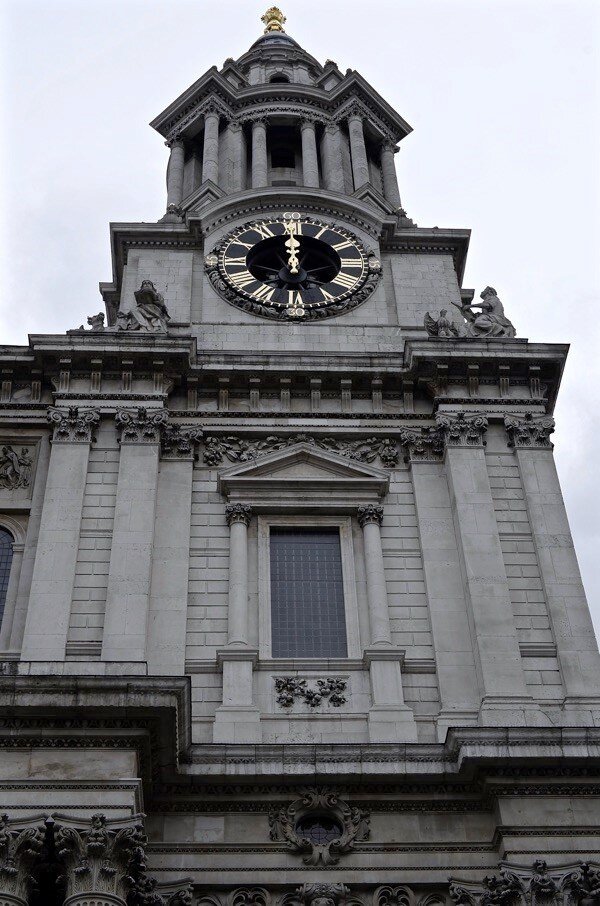
Great Tom at St. Paul's Cathedral / Credit: SpitalFields Life
How Was Big Ben Constructed?
To better answer this question we can look at the clock, tower, and bell. There were a few major players, namely: Charles Barry (architect), Edmund Beckett Denison (clock designer), Sir George Airy (Astronomer Royal and Referee), Edward Dent (clockmaker), and Frederick Dent (Edward’s son and clockmaker).
1834, the Palace of Westminster is almost completely destroyed by a fire that broke out after two underfloor stoves ignited the paneling inside the building. A fire at the Palace of Westminster was also predicted, with a report dating back to 1789 signed by fourteen architects, complaining about the dangers of a fire at the Palace. Although, few precautions were taken.
In 1840, Charles Barry won the design for the new palace, which included the clock tower. Construction began that year with that of the clock tower beginning three years later. Then, Sir George Airy is named Referee to decide who will build the clock in the tower. Strict guidelines for accuracy meant that it took 7 years before a design was finalized.
Denison’s main contribution in the early 1850s was introducing a gravity escapement movement which gave the clock unprecedented accuracy. This was the movement chosen for the tower.
In 1852, Dent won the commission to make the great clock under Denison’s design, but had passed away before completion of the project. This is where his son Frederick Dent was able to step in and replace his father. He completed the mechanism in 1854.
Unfortunately, only a few years later, the first casting of the bell failed and developed a crack. Denison is said to have argued with the manufacturer over who was responsible. This led to a new manufacturer being chosen, who completed the second casting of the bell in 1858. It was drawn to the tower by a team of 16 horses.
By 1859 the great clock and bell are now installed and ticking, the clock started ticking on May 31st, and the Great Bells are heard for the first time on July 11th. However, Big Ben is found to be fractured later that year and a smaller bell is used as a replacement.
Then, in 1863, Sir George Airy, to allow Big Ben to strike the hour once again, recommends rotating the bell and reducing the hammer size.
What Movement Is Used in Big Ben?
Edmund Beckett Denison helped design a very significant horological advance for the time in designing Big Ben’s movement. This was known as the ‘double three-legged gravity escapement’.
In a mechanical clock, the escapement is the device that transfers energy to the timekeeping element. To transfer this energy it needs a force. This force is driven from coiled springs or weights which get transmitted through the clock's gear train.
Each time the pendulum swings, it releases a tooth of the escapements gear wheel. This then allows the gear train to move forward by a fixed amount. The ‘ticking’ noise you hear is actually the sound of the next tooth catching.
The problem with clock towers using escapements is that the large hands (in this case 4 and 3 meters) catch a lot of wind. This in turn generates forces that transmit back into the clock and affect accuracy. Unacceptable to Sir George Airy, chosen to be the Referee for the new clock’s movement.
Prior to the completion of Big Ben, there was no method for stopping external influences from affecting a mechanism’s accuracy. It was Denison who thought of using a calculated arrangement of weighted ‘gravity arms’ to isolate the pendulum. This is what was known as the double three-legged gravity escapement.

Double three-legged gravity escapement / Credit: Richard Burtons
Fast forward to today, Denison’s design has more than proved itself – rarely ever being more than a second off time.
Edison’s design was then incorporated into thousands of clocks all over the world after the completion of the Big Ben, showing not only the cultural significance of Big Ben, but also horological.
Aside from improving on external factors to improve accuracy – another key innovation on the Big Ben was the pendulum itself. In prior pendulums, the material used would either expand or contract based on changes in temperature. This would then affect the duration of the movement, causing inaccuracies. In the design for Big Ben, a 4.5-meter long pendulum was constructed from concentric tubes of zinc and steel. These would expand and contract at different rates and because of the way they were connected to one another, would cause the pendulum to stay the same length and not affect the duration of the movement.
There is quite a bit of upkeep that is required to keep Big Ben moving which won't be discussed in this article, however, one interesting aspect is that the team either adds or removes pennies on the shoulder of the pendulum to keep the time accurate. One penny speeds up the clock by 2/5 of a second per day.

Pennies used as a maintenance measure on Big Ben / Credit: UK Parliament
Was Big Ben Ever Affected by Britain’s War Efforts?
For two years during World War I, Big Ben’s bell was not struck in order to prevent enemy aircraft (primarily Zeppelins) from using it as a compass to find the Houses of Parliament.
From 1939 to 1945, during the entirety of the Second World War, the clock dial remained unlit due to wartime blackout restrictions.
On May 10th and May 11th, 1941, incendiary bombs had fallen onto the House of Commons and Westminster Hall from German aircraft. Since resources were scarce, the fire service claimed that it was impossible to save both, so it was decided to save the Hall.
The House of Commons was completely destroyed by the fire which ravaged until morning. The fire had also spread to the Member’s Lobby causing the roof to collapse.
A small bomb had struck the clock tower (Big Ben) and broke all the glass on the south face, but the clock and bells remained undamaged and the chimes could be heard as usual.
The House of Lords was also struck by a bomb that went directly through the floor of the chambers and had not detonated.
In 2020, workers discovered new World War II damage on Big Ben’s clock tower which will increase the cost of restoring it by roughly $24 million USD. This was a shock to residents as the damage inflicted on the building had not been analyzed fully and was much worse than anticipated.

Bomb damage near Parliament - London, England 1941 / Credit: Bloomberg
Why Has Big Ben Been Silent?
In August 2017, Big Ben stopped running until 2021 repairs are completed. The total cost kept increasing over the years reaching $96.97 million USD.
The plan in 2017 was for the roof of the Elizabeth Tower to be stripped off and restored, the bell frame repaired, the colour of the clock to be changed for a more vibrant look, leaks into the clock room stemmed and a lift installed.
However, in 2020 additional unforeseen problems were discovered. Decay and damage to hundreds of carvings, asbestos in the belfry, extensive use of toxic lead paint, broken glass in the clock dials, and the need for a specialist clock expert were needed.

Big Ben covered in scaffolding / Credit: My London
Gratefully, Big Ben is set to finish construction in 2021 and the bells are to recommence their regular broadcasting.
A brief overview of the history of Big Ben! Although, technically speaking, a brief history of the Elizabeth Tower as Big Ben is only the Bell portion of the structure!
By: Eric Mulder

Elizabeth Tower and Big Ben circa 1897 / Credit: NBC
Read more:
“London’s Big Ben.” Visit London - Official Tour Guide, https://www.visitlondon.com/things-to-do/sightseeing/london-attraction/big-ben.
Betts, Jonathan D. “Big Ben.” Britannica, https://www.britannica.com/topic/Big-Ben-clock-London.
“Architecture of the Palace.” UK Parliament, https://www.parliament.uk/about/living-heritage/building/palace/architecture/.
The Editors of Encyclopaedia Britannica. “Benjamin Caunt.” Britannica, https://www.britannica.com/biography/Benjamin-Caunt.
Ridley, Christopher J. “Great Tom of Westminster.” The Ancient Society of College Youths, December 2003, https://www.ascy.org.uk/articles/great_tom_of_westminster.php.
“A brief history of Big Ben and Elizabeth Tower.” UK Parliament, https://www.parliament.uk/about/living-heritage/building/palace/big-ben/building-clock-tower/key-dates-/.
“Destruction by fire, 1834.” UK Parliament, https://www.parliament.uk/about/living-heritage/building/palace/estatehistory/reformation-1834/destruction-by-fire/.
Excell, Jon. “Why is Big Ben falling silent?” BBC, July 5th, 2016, https://www.bbc.com/future/article/20160704-the-big-ben-renovation-and-how-the-clock-works.
“Bomb damage.” UK Parliament, https://www.parliament.uk/about/living-heritage/building/palace/architecture/palacestructure/bomb-damage/.
“Big Ben: Cost of repairing Elizabeth Tower rises by £18.6m.” BBC, February 13th, 2020, https://www.bbc.com/news/uk-politics-51482370.
Miller, Frederica. “Why Big Ben is covered in scaffolding and when it's set to go back to normal.” My London, August 12th, 2019, https://www.mylondon.news/news/zone-1-news/what-being-done-big-ben-15423821.