
Tokyo, Nagoya, and Osaka
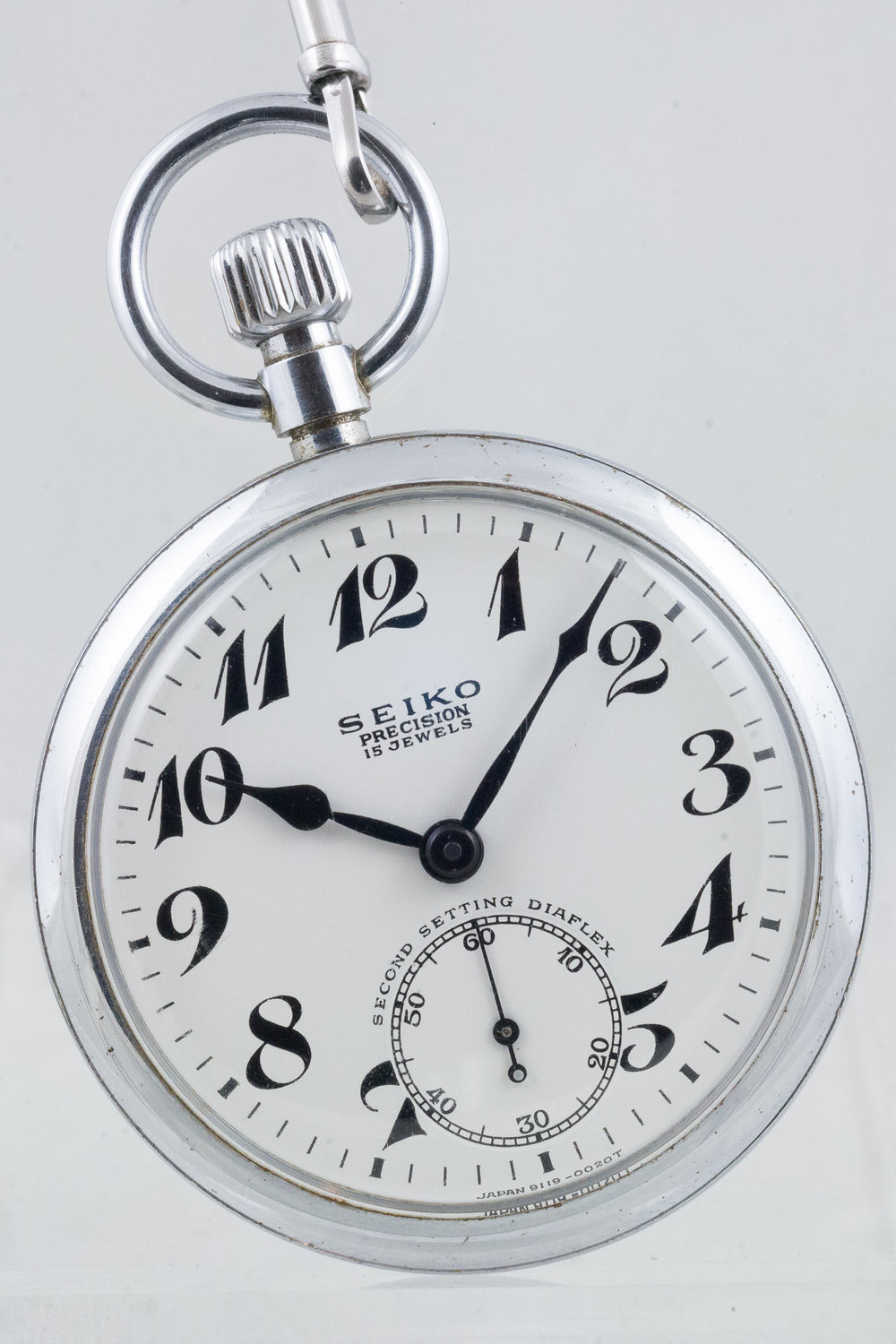
Seiko railway watch / Credit: Plus9Time
We’ve previously discussed ancient water clocks in the context of equation of time complications, and that is where the history of watchmaking in Japan begins; in the 7th century with water clocks made for the Japanese nobility. During the Edo period (1603-1868), when Japan was ruled by the Tokugawa shogunate, it experienced a new wave of arts and culture and imported mechanical clocks from abroad, in spite of isolationist policy. Some highly specialized Japanese artisans started making their own clocks after a while, but the true beginning of the Japanese watchmaking industry coincides with the Meiji Restoration. A period of industrialization in Japan that brought economic growth and internationalization that closed the curtains on the Tokugawa period – starting in 1868.
The clockmaking industry that started up in the latter half of the 19th century, under Emperor Meiji, was centered around Nagoya, the capital of Aichi Prefecture. The city had 64% of the dozens of clock factories in the country at the time. The other centers were Osaka, which was also known as a center for blacksmithing and somewhat naturally made the transition to a watchmaking hub, and Tokyo. Osaka and Tokyo were already clearly secondary hubs, however, with Osaka having 13% of the active companies in the country and Tokyo 11%. However, only 11 of these companies were founded before 1890 and only 3 of those 11 survived into the 20th century, namely: Tokyo Clock Co., Hayashi Clock Co. (Nagoya), and Osaka Clock Co. (Seiko or Hattori & Co. only started making clocks in 1892).
One of the earlier examples of a clock factory was a company opened in 1875 in Tokyo by Kaneko Motosuke, but that ceased activities after a few years (you’ll notice this becomes a trend). In 1877, another attempt was made by a Mizunoi Kazuzo, who was a trader that worked with Swiss watchmakers and was able to import parts and know-how, but his venture also ended in the 1890s. He notably tried to expand from clocks to pocket watches in the 1880s and even sent his son to study at the Watchmaking School of Le Locle which was something many other Tokyo merchants were doing at the time, in an attempt to own the means of production for their clock companies.
The company that became Tokyo Clock Co. was founded in 1883 and grew to exporting to Hong Kong, Singapore, and India by 1896, but closed by 1900. Apart from Seiko and Tokyo Clock Co., another late 1890s Tokyo watch company was the Japan Pocket Watch Manufacturing Co. It was founded by the son of Mizunoi Kazuzo, Mizunoi Taiichi, and the son of another well-known merchant, Takeuchi Jisaburo. They became close with the Favre-Brandt family while studying in Le Locle in the 1880s and eventually founded Japan Pocket Watch Manufacturing Co. in Tokyo in 1898. However, the Japanese were not able to secure the same quality of machines as their counterparts overseas and as a consequence could not keep up, not only in terms of quality of production but also in terms of volume and price. On top of foreign competitors this was also the period in which Nagoya watch companies, as mentioned, were dominant in the domestic market. And eventually, Japan Pocket Watch Manufacturing Co. also succumbed in 1901. However, Taiichi’s father, Mizunoi Kazuzo, was back in the watch industry in 1914, working for Kodo Watch Manufacturing until 1917.
Hayashi Clock Co. was an important early manufacturer founded in 1887 in Nagoya. It reached the level of exporting to Hong Kong, Singapore, Russia and India, becoming the largest clockmaker in Japan and competing heavily with Hattori & Co. (Seiko) in the 1890s. Hayashi was fundamental in establishing Nagoya as the capital of watchmaking, even into the 20th century; as many of its workers founded their own watch companies after working for Hayashi. Hayashi also set the table for subsequent pocket watch manufacturers around Japan, like Osaka Watch Co. and others, and eventually became Nagoya Clock Co. when it became a joint-stock company in 1910.

Osaka Watch Co. pocket watch / Credit: AucFree
Osaka Watch Co. was originally founded as Osaka Clock Co. in 1889 to manufacturer wall clocks. There is a lot of intermixing with American watchmaking in the history of Osaka Clock Co., as we mentioned with Kazuzo, many early business people involved in Japanese watchmaking were first merchants who worked with foreign watch companies. Osaka Clock Co. was led by Habu Masayasu, who was an agent in Osaka of Waterbury Clock Company (remember, the Dollar Watch). They started producing their first wall clocks in 1890 and focused on mass production to benefit from economies of scale. You may recall, we have also mentioned that American watch companies started the process of industrializing their production in the 19th century, in some cases with the help of Henry Ford. In 1893, Osaka Clock Co. was no longer profitable and its shareholders (most of which were a group of 10 other clock and watch merchants not including Masayasu) decided to switch to pocket watches, changing the name to Osaka Watch Co. The change to watches necessitated two things: equipment to make watches and a new influx of capital. The equipment came from an American contact, A. H. Butler, who imported machines from the flailing San Jose Watch company. Now, for the money, the partners turned to Noda Kichibei, an Osaka businessman, and Mitani Norihide, a lawyer, who helped them raise capital from other members of the Osaka elite, to build the production facility. Butler imported the machines by 1894 and their first domestic pocket watches were made in 1894 and sold in early 1895. The company imported cases and springs from the United States and Europe, respectively, and its products were considered to be of good quality, but it could not keep up with competition from the American companies that exported almost 50 times as many watches as Osaka Watch produced in 1894 (making over 100,000). And so, much like Japan Pocket Watch Manufacturing Co., Osaka Watch Co. lost money until 1898, as the cost of imported watches continued to be more favourable and domestic competition increased, finally going bankrupt in 1905.
The pressures described above that Japanese watchmakers faced were present since the late 19th century and Japanese companies could no longer take the foreign watchmakers selling their products in Japan for far less than they could afford. Moreover, there had not been as significant demand for watches from Japanese consumers as there was at the time in Western markets, which gave the Western companies (in particular American companies) more of an advantage. To solve this imbalance, control of the Japanese market was handed over to the domestic companies through (what some would call) improvements in customs laws in the late 1890s, that limited the importation of clocks and watches from abroad. Kintaro Hattori, the founder of Seiko, is one of those who may not have seen the new laws necessarily as an improvement, since the competition from abroad had in some ways been to his advantage. Most other watch producers (like those in Osaka and Nagoya) were specialized in watch production alone and could not compete with the lower prices of foreign watchmakers. Hattori’s company was one of the few that could absorb the losses of competing price-wise with foreign watches, while staying profitable overall as it also had other business lines, allowing him to have greater influence over the domestic watch market in Japan. And so, this period of foreign dominance is considered to have been greatly beneficial to Seiko’s growth and somewhat fundamental to its subsequent dominance of the market. Keep in mind, Seiko started off as a retailer and only later expanded into watch production.
After these new laws were in place, in the early 20th century, the advantage of Japanese watchmakers started to be seen as they were at the confluence of both American and Swiss watchmaking. The bridge between the innovation of American watchmakers and the tradition and techniques of Swiss watchmakers, something that is clearly present when looking at a brand like Grand Seiko today. This was the result of the natural industrialization of the country that imported techniques, not only from the United States but also from Europe. More so via technology transfer, primarily through the education of several early modern watchmakers, from Japan, in Switzerland. With many young men being sent to study at watchmaking schools and then going to work at different Swiss brands like their European counterparts. Then, with the expertise being transferred internally, through operations like the Hayashi Watch Co., over time this led to a significant increase in watches produced in Japan. Production nearly quadrupled to 1.2 million timepieces between 1905 and 1922. The increase in production (or supply) was driven dually by an increase in consumption, as Japan became a westernized country during this period. This increase in consumerism generally came after the WWI, and more specifically after the 1923 earthquake in Tokyo – as thereafter, investment and reconstruction efforts were focused on the city, which became more prosperous, consumerist, and cosmopolitan, than it had ever been before. The watch industry, however, had a problem. It was fragmented, despite most of the hundreds of watchmaking companies still being concentrated in Nagoya (90% of all the watch companies in Japan were in the city as of 1912), most of those were operations of less than 5 people. This made them extremely precarious and when combined with mismanagement meant that most of those businesses did not even make it to WWII.

1923 Great Kanto earthquake
Hayashi, actually kept going until 1947, when it closed due to the turmoil of the war. Throughout WWII, sales plummeted and it took until the late ‘50s for watch production in Japan to recover to something approaching 1937 levels. By that point, Citizen and Seiko were already dominant in the market and watch production in Japan was growing steadily. Going from approximately 280,000 in 1947, to 1.2 million in 1952, and over 4 million pieces by 1958.
As we push further into the 1960s, we return to familiar Japanese watchmaking history territory. The land of Seiko Pogues and Orient King Divers. Once quartz and digital watches came into vogue, Seiko, Citizen, and Casio proved to be the watch companies of consequence in Japan; keeping the balance between themselves and a network of smaller third-party suppliers, who remain the backbone of the industry.
But apart from the lessons of failure and triumph, an important thing to remember when examining these early Japanese watch enterprises is that they always kept cooperation as a central part of their business. Like Mizunoi and his son going through multiple attempts at starting a watch company and working with partners around Japan, Europe, and America to do so. Ironically, the current ecosystem is one that harkens back to the earlier days of watchmaking in Japan, in the late 19th century, when technical know-how was transferred by individual watchmakers who worked within a community, passing knowledge on to the younger apprentices and trying their hand at several other companies before founding their own. Today, the above-mentioned system of third-party suppliers very much serves the same function; sharing know-how, parts, and new innovations with the top watch producers in the country, and allowing the technology transfer to continue.
By: Andres Ibarguen
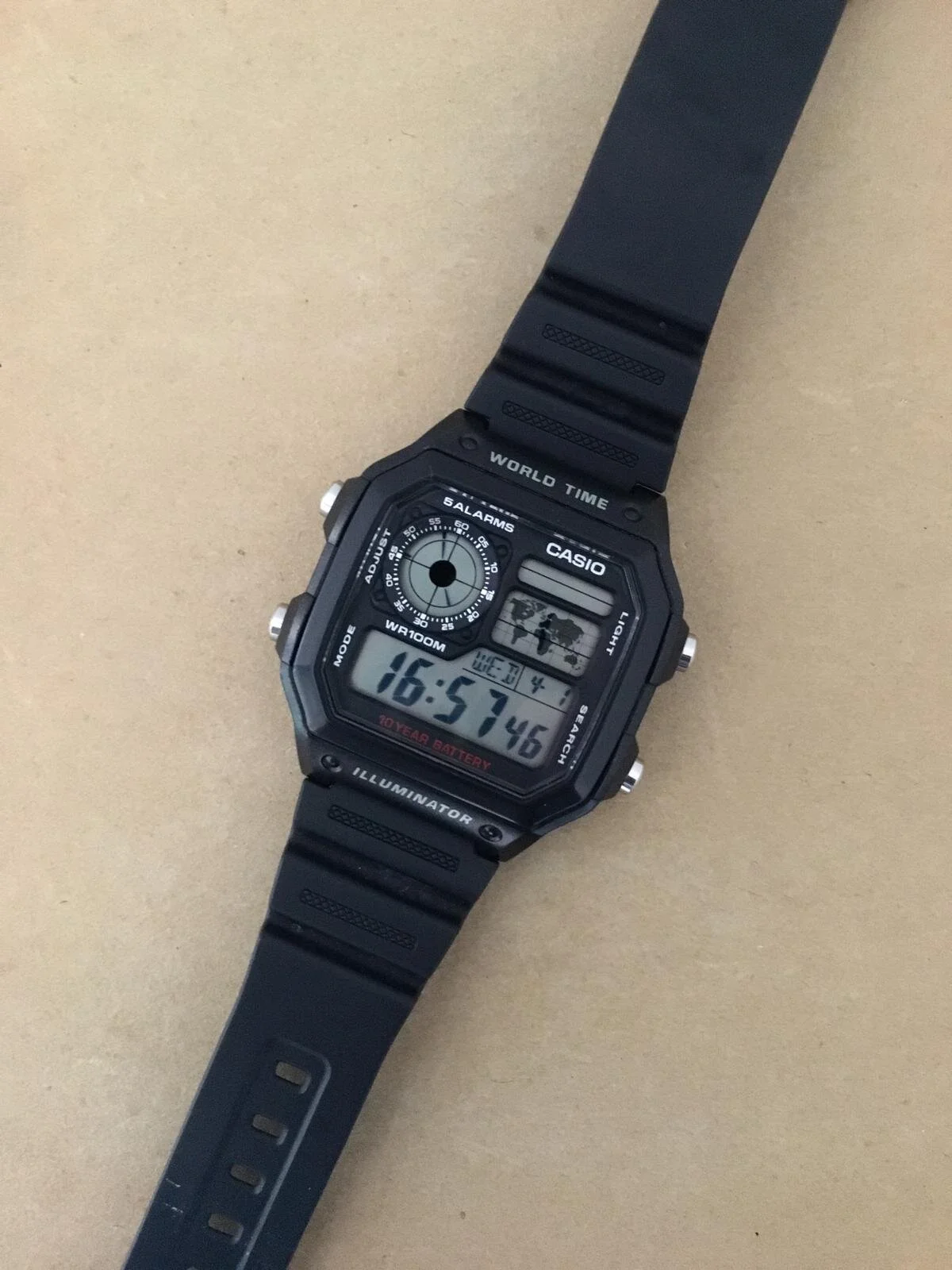
Casio ‘Royale’