
Roni Madhvani is a renowned watch collector known for his affinity to mid-century and Art Deco timepieces from brands like Patek Philippe, Audemars Piguet, and Cartier. As someone who has been interviewed by almost every watch magazine, including in Hodinkee’s famous Talking Watches series, we wanted to explore some of the more granular themes of his collection.
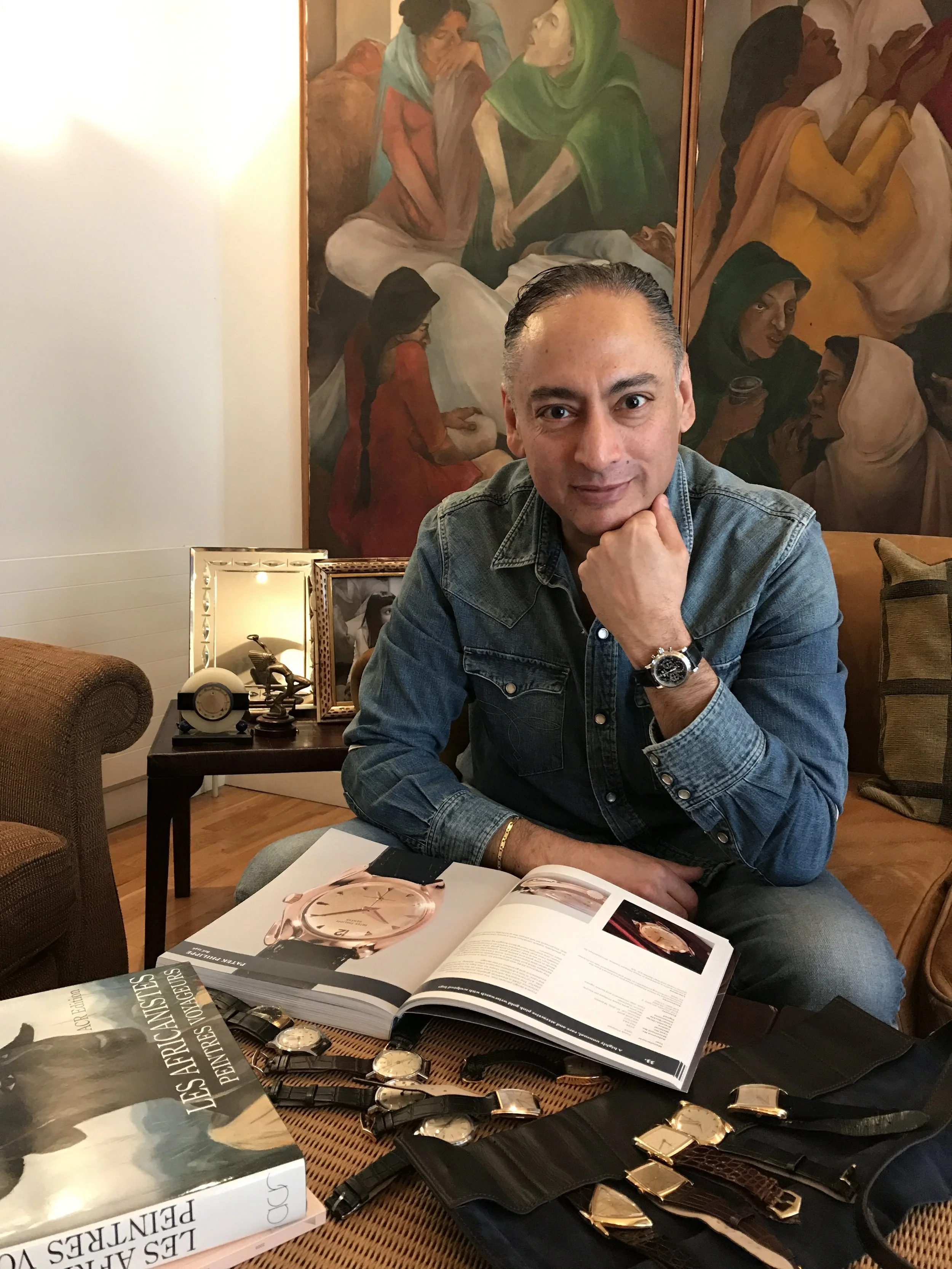
Roni Madhvani
Andres Ibarguen: You’re well-known in the watch world for many multi-year hunts of particular references of Patek Philippes, what motivates you to be so persistent in your watch hunting endeavors?
Roni Madhvani: Passion. The passion for collecting certain timepieces of a particular genre, namely those which are differentiated from a design perspective with unusual cases, lugs, or dials.
AI: What makes the watches you’re after so difficult to find?
RM: The watches I collect are rare, as they were not produced in large numbers when they were born. They were avant garde even then, and Patek Philippe was probably hesitant to produce large numbers for commercial fear. Most of these watches were produced by independent case and dial makers in small quantities in the Swiss valleys.
Many of the watches I collect or am hunting take decades to find, as most collectors, such as myself, rarely let go of prime examples of such watches once they are part of their collection.
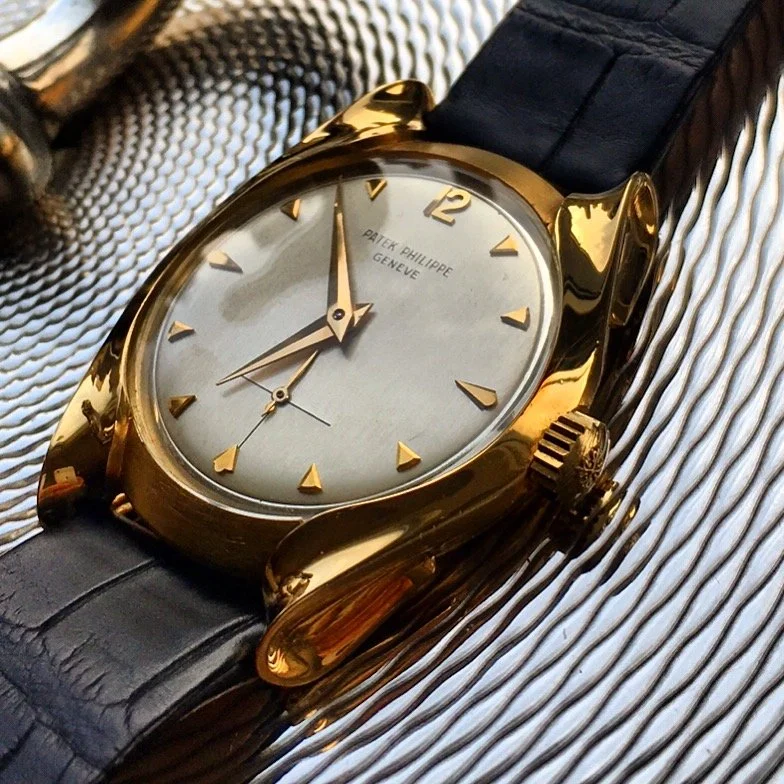
Patek Philippe ref. 2546
AI: Please tell us about your tracking down of the Patek Philippe reference 2546 and what it meant to you to finally acquire one after a decade of searching.
RM: I saw an image of the reference 2546 in the so-called bible; the Huber and Banbury book on Patek Philippe that illustrates comprehensively many references including archive images. Thereafter, the hunt began, although it never came up for sale at auction, minus perhaps once or twice. However, I received the auction catalogues in Uganda late, after the auctions, and this was before the days of the internet auctions.
Anyway, after over a decade of searching I saw one listed on the internet by a French dealer living in Hong Kong! As soon as it was morning there, I phoned him and managed to acquire it, even though it was expensive. It was certainly worth the wait as it came with a letter from Beyer who had sold it to an individual in Indonesia, which is where the dealer had acquired it! And it was a most stunning example of a most rare piece. More than a decade later, I acquired a rose gold version that also has a story!
Each watch I collect has a distinct and individual story to it, either about the watch itself or how it came to end up in my collection.
AI: I’ve read that your first Patek Philippe was the reference 3424 designed by Gilbert Albert. Why exactly did you pick that reference and what influence did Gilbert Albert, the jewellery designer, have in this choice?
RM: When I first saw the Gilbert Albert ref. 3424, it was carved in my dreams and heart thereafter! I could not afford such a watch at the time. It truly is a piece of art on the wrist (as I seek in the watches I collect). Gilbert Albert was ahead of his time when he worked at Patek Philippe, and Mr. Stern of Patek Philippe was a visionary – bold to produce this and other amazing designs which placed Patek at the forefront of the post-war Belle Epoch era of watch design.
AI: What other pieces by Gilbert Albert have attracted your attention?
RM: All of them! There is one critical one missing that I dream of having one day, the reference 3412.
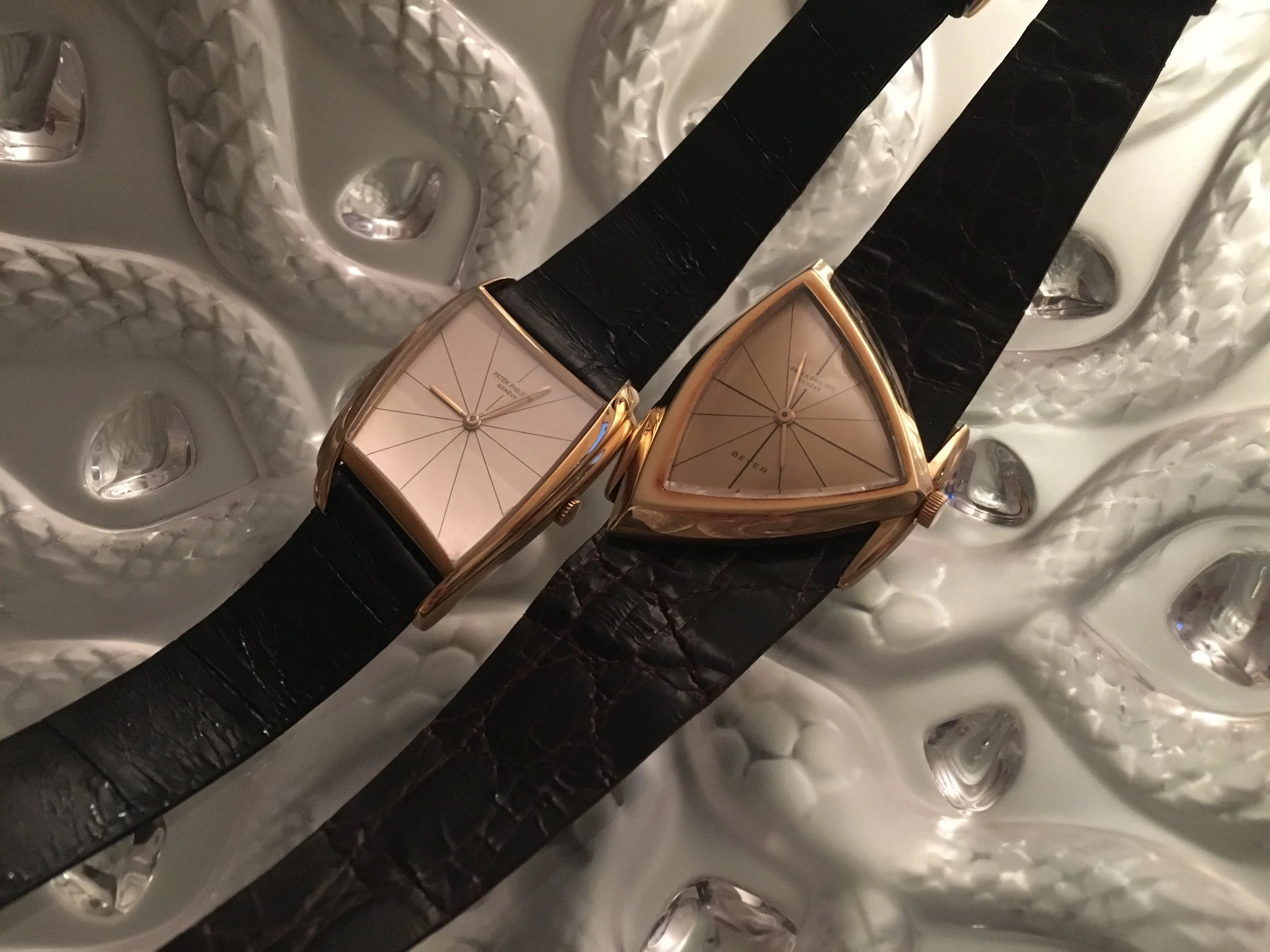
Patek Philippe ref. 3424 (right) and ref. 3412 (left)

Patek Philippe ref. 3412
AI: What do you think makes his design style unique?
RM: He was a creative genius in his field and pushed the boundaries of design. He was ahead of his time.
AI: Are there any other designers you admire when it comes to timepieces?
RM: Watch cases that were made until the 1970s, primarily by independent casemakers; individuals who supplied the large watch companies like Patek, Audemars, and Vacheron. Hence, why you can see common designs across brands from this era.
These casemakers are, in my humble opinion, the unrecognised heroes of fine horology. And besides a small stamp on the back of the caseback, there is little to show for them. Little has been written about them sadly. Amongst these are Markowski, Eggly, Wenger, Baumgartner, and many others.
AI: What is it about shaped Patek Philippes that attract your attention, versus similar timepieces from other, notable brands?
RM: I collect watches that are unusual and different primarily from Patek but also Audemars, Vacheron, and any others that may take my fancy; but as a collector I feel it is important to always have focus. Cartier has always been close to my heart, as in my mind, from its beginnings, Cartier has stood for design in whatever it created.

Two of Roni’s custom Cartiers
AI: What was it like to design the dials of your custom Cartiers? Was it a difficult undertaking at all?
RM: In the past, this was possible and it's only recently that the doors of custom designed dials have been opened again for those that meet the criteria, which includes being passionate for the brand, being a longstanding collector, and having a relationship with the Maison.
No, it's not a difficult undertaking if one understands the process and, more importantly, if one’s preferred design is in line with the brand's integrity. For example, proposing radical design preferences is unlikely to be considered and approved, and in fact is a waste of everyone’s time and effort.
AI: I have many rules I like to set for myself when it comes to collecting timepieces. How do you go about picking straps to go with the variety of watches in your personal collection?
RM: I feel with vintage timepieces, where the watches are relatively small, they are best suited to unstitched, unpadded, and matte finish straps with nice texture.
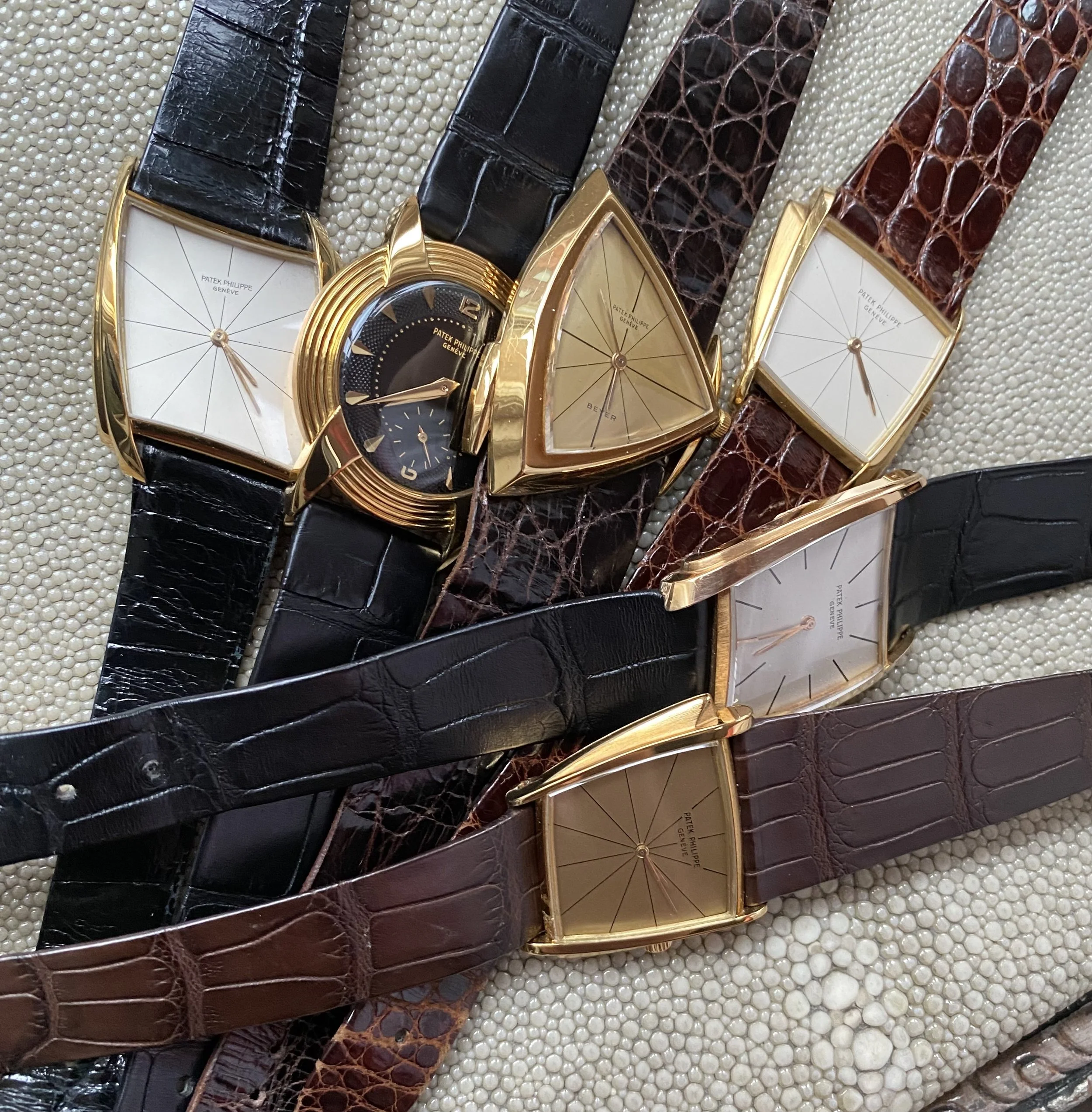
Several of Roni’s beautiful Patek Philippes
AI: As your personal collection has evolved over time, have you found anything new that comes from exploring brands like vintage Audemars Piguet, versus vintage Patek Philippe?
RM: Indeed! Everyday is a learning curve and the interaction on social media has led me to make friends the world over with this common passion. And through these wonderful individuals one attains previously unknown or new information on the brands and individual pieces. Each brand is very different and this very clearly comes across in the watches themselves, and how each brand walks the talk when it comes to its heritage and its relationship with collectors.
AI: What is the collecting scene like in Uganda? And how do you see it evolving in Africa as a whole?
RM: Unfortunately, there is no scene. The reality of it is that most of the continent is poor and such things in the real world are frivolous and irrelevant in this larger context.
AI: What are your thoughts on vintage watches becoming more mainstream – particularly insofar as the auction market is concerned?
RM: The issue with vintage watches is that there is only a finite quantity available and that too is very, very limited. Add to this the fact that collectors, as they mature in their passion, become more and more discerning and rarely sell. Thus, the quantity of quality vintage watches is limited whilst prices may well appreciate due to this, as they have in part recently. Vintage watches can never become too mainstream for these very reasons.
Thank you, Roni, for sharing your collection with us!
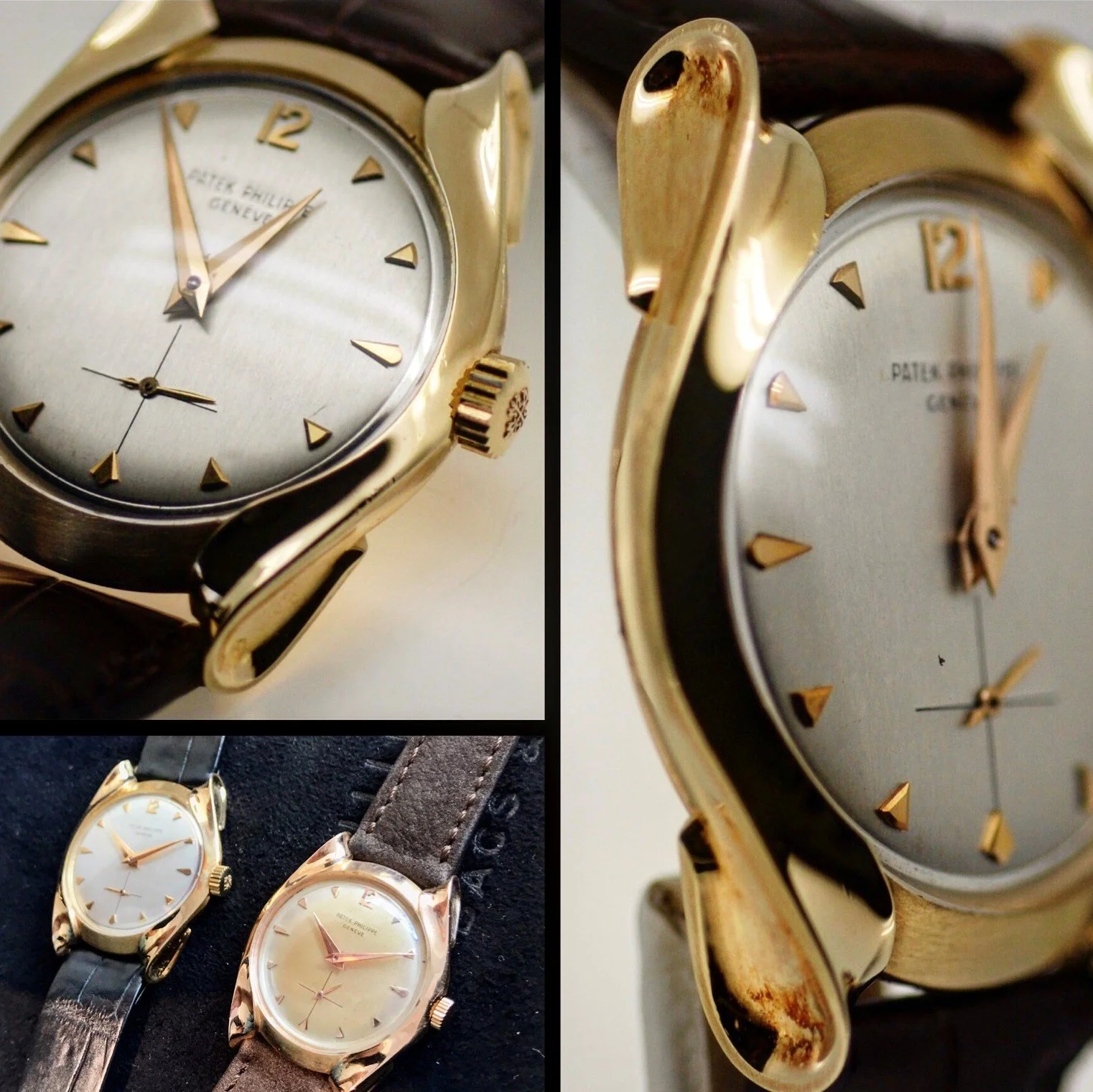
Another look at the Patek Philippe ref. 2546