
Today we chose someone who had a particular affinity for a very special watch brand. Many people call themselves watch collectors or watch nerds, but few go as far as writing a book about their favourite watch. Colin is one of those few who is slowing turning his hobby into a professional activity. With his first book complete and currently for sale, we got in touch and started talking about himself, his watch collecting journey, and, of course, vintage Rolex!

Colin’s Rolex ‘Nipple Dial’ GMT-Master ref. 16753
Andres Ibarguen: What is it about vintage Rolex, in particular, that attracted you to it? Have you ever felt the same way towards another brand?
Colin White: This is an interesting and nuanced question. As an older collector, I’m drawn to the uniqueness of each piece. Two identical references close in serial number range, can age entirely differently. Each with different character and wearing experience.
My interests lean more towards the aesthetic. Their imperfections, incompleteness and impermanence — or their Wabi-Sabi. I also love the way they’ve been restored, stabilized and repaired — or their Kintsugi. As you get more interested in these techniques and the more esoteric aspects, you begin to meet the people performing them — the skilled artisans performing repair and restoration.
This was not what drew me to vintage Rolex 20 years ago. Back then I was interested in technical variations, originality, and condition. Not to mention the amazing stories of human achievement they were associated with. These romantic stories are a very powerful draw and Rolex has an abundance of them.
I’m still fascinated by the sort of men and women who trek to the poles. Or row across the Pacific. Or swim the English Channel. Or climb into a claustrophobic metal can and descend to the bottom of the Mariana Trench!
Other watches that do this for me are the Omega Speedmaster Professional, the Heuer Carrera, Universal Geneve Polerouter, and Nina Rindt.
AI: When did you first get into Rolex? What’s the story behind your first Rolex?

Colin
CW: My father was a seafarer and wore a Sub 1680. He died when I was a young boy in 1978 and one of the few photos I have of him shows him at sea sporting his Submariner. He died under mysterious circumstances and his Submariner was never recovered.
It wasn’t until my late teens that I became aware of the weight of the brand and the significance of the reference. After all, every young boy wants to grow up to be like his dad, and I knew that one day I’d own one just like his.
The path to my first Sub was a long and winding journey that included sojourns into Casio, Seiko, Swatch, Tag, and Omega. This was during a time when watches had a more prominent role in society. It was quite some time before I had the means to commit to Rolex ownership.
AI: How did your passion for Rolex progress? Do you remember the moment you went from hobbyist to “I’m going to write a book about watches”?
CW: I’ve owned several Rolex references over the years. I succumbed to the obsessive tendencies many collectors describe as ‘The Sickness’. I yearned for a particular reference only to quickly tire of it and want something else. Many of the afflicted will claim it’s safer and cheaper than a mistress! Thankfully, with age the acuteness of my condition has abated.
Along the way I acquired a lot of junk including auction catalogs, scrap pages of magazine ads, countless bookmarks and links and of course a few watch books.
These books are coffee-table books. Large format, thick luxurious paper, and pictures. Lots of pictures. In fact, so many pictures there was little space for much else. Macro focus, studio lighting, and pristine museum grade or NOS condition. Any narrative is fluffy, full of gushy superlatives that read like Rolex adverts. They lack the nerdy details collectors crave, were not at all portable, and writing in them and making notes, felt like an act of vandalism!
I soon realized the kind of book I wanted didn’t exist so I set out to make my own — a workbook I could reference in a shop, make notes in the margins, and throw in my hand luggage. It turns out I was not alone, and people love it!

The Vintage Rolex Field Guide by Colin White
AI: What makes your book stand out from other books about Rolex?
CW: The Vintage Rolex Field Guide, Classic Edition is a cross between a Lonely Planet City Guide and Boy Scout Wilderness Survival Manual. Designed to be easy to reference for use in the field, and to keep you alive. I can’t think of another watch-book I could describe this way.
There is a Spanish translation in the works due this summer, in response to pleas from friends. My grasp of Spanish is minimal so it will be fun and interesting to figure out how to market this!
I’m also working on a companion edition — The Vintage Rolex Field Manual, Chevalier Edition. This is quite a different book. This is designed as a hard cover desk reference, with a lot more pictures. The philosophy around picture selection has been to focus on the real-life watches average collectors will encounter in the marketplace. Complete with the Wabi-Sabi and Kintsugi that I love.
For example, comparisons of good versus bad polishing, versus refinishing, and dial refinishing versus reluming, more information on bezels, and a comprehensive look at space-flown Rolex watches. Thanks to some celebrity collaborators there’s a bunch of new material I hope people will enjoy.
The economic timing might be sub-optimal for another new book on vintage Rolex. But that’s OK — my motives have always been about knowledge sharing and connecting with new people. There was never a big profit motive, and frankly there’s not much money in independent self-publishing anyway. Given this, I’m especially surprised at how well received it has been. The feedback has been extremely warm and generous.
AI: What excites you about the market for vintage Rolexes today?
CW: I think the speculative bubble has peaked and the hot money flowing into watches of average condition is slowly drying up. Provided average people aren’t decimated by any economic downturn, I think the collector community will continue to get bigger and younger. This makes me excited.
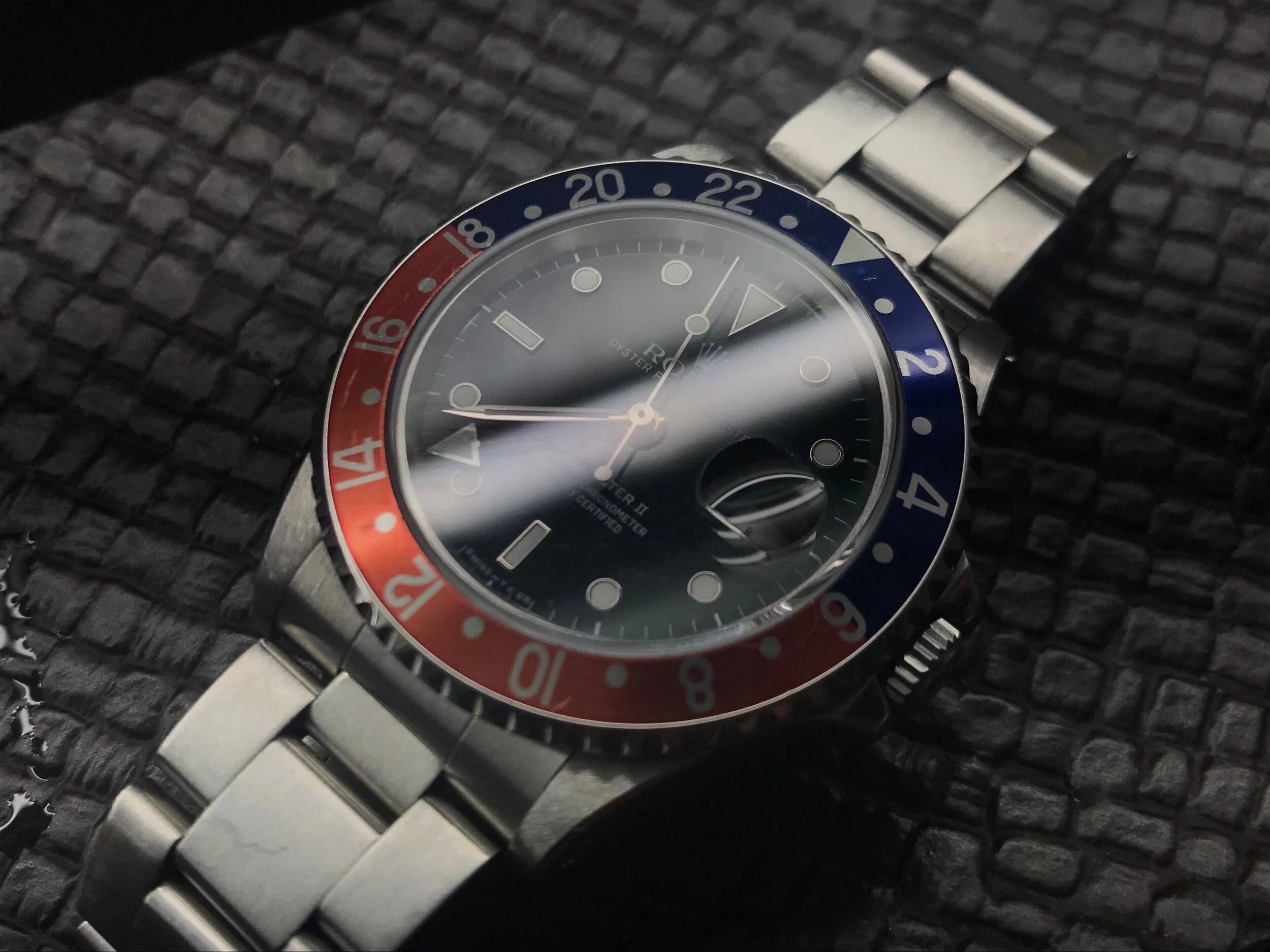
Colin’s Rolex ‘Pepsi’ GMT-Master II ref. 16710
AI: Do you think the grey market has affected the traditional market for vintage Rolexes? Are the same opportunities available online or are the best pieces still held by specialized dealers?
CW: Grey dealers are focused on new, but sometimes have vintage pieces in inventory accepted in part exchange. They usually pass these on through trade contacts to vintage dealers.
Vintage Rolex dealers spend an inordinate amount of time, effort and money sourcing inventory often from first owners, but usually from other dealers and elite collectors. It’s a pretty tight-knit community. The best examples will circulate among these professionals and are often sold on a concierge basis. Meaning you tell them what you want and willing to pay, and they’ll source it.
The examples you find at online auctions are usually average to below average condition. Pieces sold by jewelers are priced at retail. Those sold by collectors are priced all over the place, from crazy cheap to highly optimistic.
If you can stomach the risk and want good watches at good prices, the well-travelled watch forums still offer great opportunities.
So, to answer your question: no. I don’t think the grey dealers have had a big impact on the vintage market.
AI: How do you see the vintage Rolex market developing into the future, especially considering the impact of things like artificial scarcity on the reverence of certain newer models?
CW: In light of the current economic circumstances, the prospects for the Rolex market new or vintage, doesn’t look good. Demand will soften and artificial scarcity with it too.
My best guess is that we’re 6-9 months out (fall 2020) before professional dealers will come under pressure to liquidate inventory. When they start trying to unload, slow, or stagnant inventory, prices will soften. If you’re in good financial health, there’ll be bargains to find but many average collectors will see declines in the value of their collections. Hopefully they heeded common advice and bought their watches as fun, functional jewelry, and not as an investment asset.
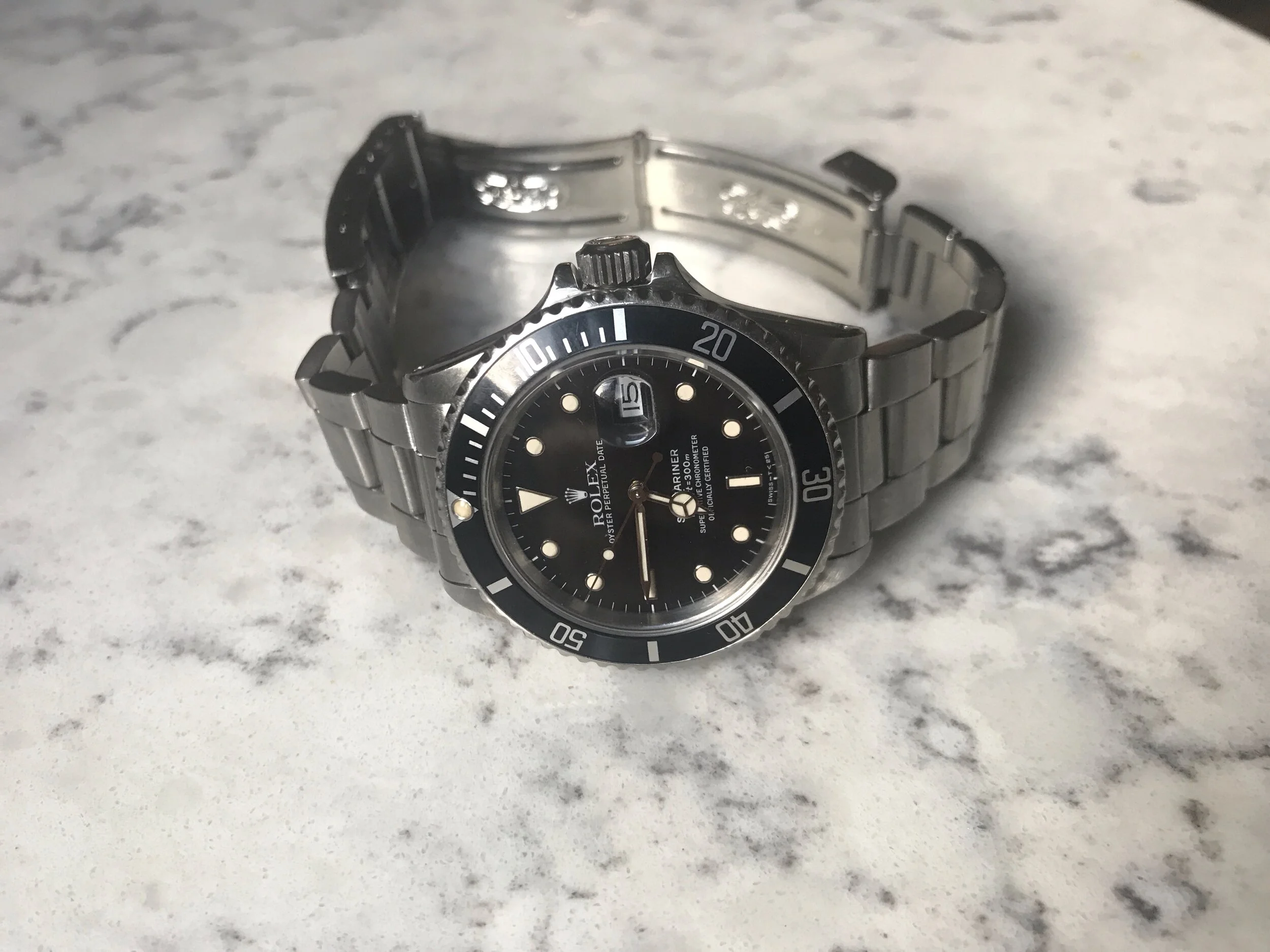
Colin’s Rolex ‘Triple Zero’ Submariner ref. 168000
AI: Having studied Rolex, what do you think it takes for another watch company to build a brand as impactful as Rolex? Is it still possible?
CW: It’s possible but an extremely challenging proposition. I think these four things will be crucial:
A design aesthetic that resonates with prevailing tastes. The bullish dinner-plate aesthetic is over, and we’re entering a period of discreet austerity.
High profile societal influencers and brand ambassadors. Not Insta-influencers but people that will become historically significant and generational role models.
Advertising and marketing acumen for a new age. Most watch brands are either underperforming or failing miserably. Few have the resources to match Rolex and will need to creatively innovate.
Time - to make an impact like that of Rolex, is going to take more than one block-buster watch. Or even a successful collection. It will take a series of acclaimed collections with as few marketing mis-steps as possible. An up and coming watch company will need to be able to sustain this consistent progress over many years.
AI: What do you think put Rolex on such a pedestal? What is it about their marketing strategy that’s put them ahead of brands like Omega and Grand Seiko?
CW: In modern times, Rolex has been consistently conservative with their collections. Nothing too fashionable and with few special editions. Their conservative timelessness has proven to be a long-term asset rather than an immediate competitive advantage.
They have been careful with their brand ambassadors and event sponsorship. Many of these choices have been a function of their considerable financial resources. This is thanks in part, to their private ownership structure. Their unique corporate structure and ownership should not be under estimated, and has played a significant role in their long-term success.
Positioning of the Tudor brand in the middle-market has allowed the Rolex brand to dominate the luxury market. Tudor has neutralized the competitive threat of Omega and Grand Seiko, allowing Rolex to associate itself with haute horology (many would say unjustifiably).
Despite the official Antique Restoration Department, Rolex have been ambivalent about their vintage markets. Unlike their competitors, they don’t offer archive extracts. While this can be a source of contention and controversy, it hasn’t harmed their desirability and collectability. While it’s hard to believe this was an intentional strategy, it has certainly fueled the mystery surrounding special and important references.
AI: Is there any new Rolex you see having the potential to become an important collectible one day? If so, why?
CW: If you believe the past predicts the future, then the lessons of the early Cosmograph, Sea-Dweller and Explorer II offers us some hints. On launch they were controversial and not all desirable, yet they went on to become some of the most collectible pieces.
You could draw these parallels with the modern-day Air-King. When this ceases production (which is probable in the near future) this could become a sleeper and a future collectible.
Many tell me their modern ceramic GMTs are future collectibles, but I’m skeptical. By the time these models cease production, high numbers will be in circulation. Advanced materials mean they’ll age well and wabi-sabi will be slow to form. While beautiful, I doubt they’ll eclipse their 1675 ancestor in terms of importance or significance.
AI: Do you have any grail Rolex, or any Rolex, that you’re currently looking for?

CW: I’m actually trying to reduce my collection but given what I said above about the market, I should probably put the brakes on that and just sit tight. Ideally, I’d like to get it down to a 1680/8 blue nipple dial and a 1675/8 brown nipple dial.
AI: What’s your goal with your book? Not everyone has what it takes to write a full book, much less about something as intricate as vintage Rolexes, why did you do it?
CW: My first goal was to share my knowledge and interest with others, particularly younger collectors. The sort of no-nonsense insider info, I wish someone had shared with me. By this measure it’s been a success. I’m tagged daily on IG with reader wrist-shots of their new acquisitions, and messages of appreciation for helping them find it. This is really heart-warming.
I’m also a life-long learner and enjoy a challenge. Learning the ins and outs of independent self-publishing has been one, and huge fun.
My next goal and challenge is to level-up, and produce the deeper Chevalier Edition and a Spanish language version of the Classic Edition. These will be my main projects for 2020.
Thank you so much for taking the time to do this interview, Colin. For anyone interested in his book you can find it on Amazon and find more information on his website.