
The History of Mystery Dial Clocks and Watches
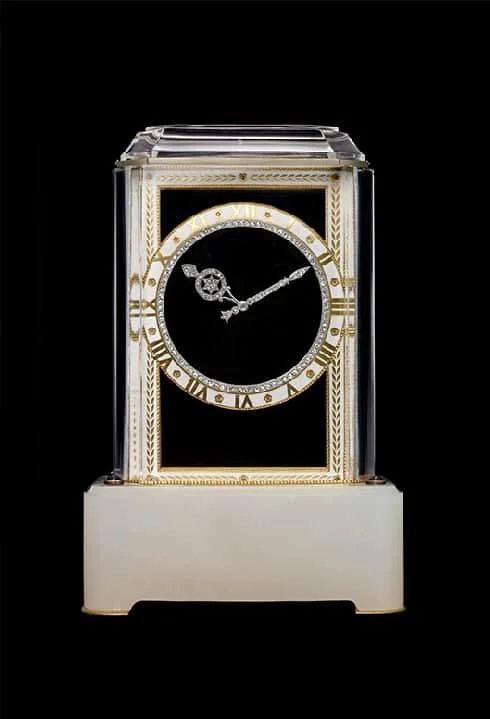
Cartier Model A clock, made by Cartier in the 1910s had the same mystery as the earlier clocks made by Jean-Eugène Robert-Houdin /Credit: Worn & Wound
There is many a complication or innovation in the watch world that has survived to this day, among them there are those that have even become integral to watch movements today. The mystery dial is, unfortunately, not one of those, as it is not particularly popular today and is really more of a gimmick. Now there are, of course, watches like the Omega La Magique, that are revered by vintage watch enthusiasts. But most mystery dial wristwatches or clocks, even those by renowned brands like Jaeger-LeCoultre, are simply not that sought after.
Jean-Eugène Robert-Houdin’s Mystery Clock
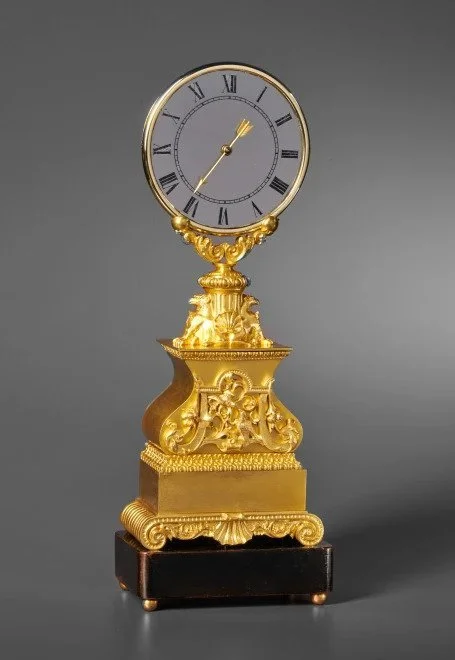
A Robert-Houdin Mystery Clock circa 1840 / Credit: Richard Redding Antiques
The origins of the mystery dial go back to the mid-19th century, with French magician Jean-Eugène Robert-Houdin. Jean-Eugène Robert-Houdin was one of the most famous magicians and illusionists of the 19th century and the namesake of Harry Houdini’s stage name, whose real name was Erik Weisz.
Jean-Eugène Robert was born in France in 1805 and was the son of a clockmaker. As a young man, when his order of books on horology was mixed up with an order of Scientific Amusements, he kept the books and started to nurture his new interest in ‘magic’.
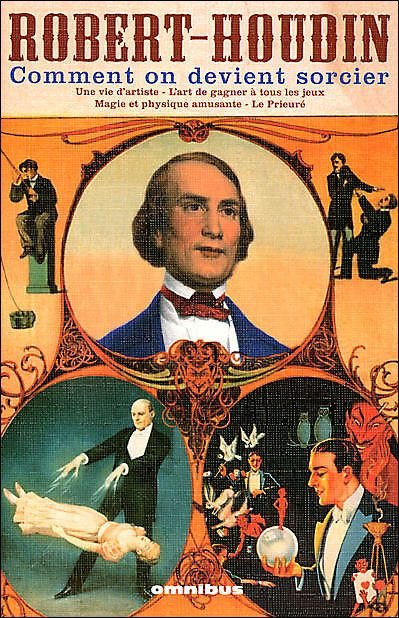
19th century Jean-Eugène Robert-Houdin poster
Robert-Houdin was a watchmaker full-time, and set up a workshop in Tours while he also practiced magic, largely at social events. When he met and married his wife, Josèphe Cécile Houdin, he took her maiden name, and became ‘Jean-Eugène Robert-Houdin’. Houdini was an admirer of Jean-Eugène and thus took his name as a homage later on. Thus, Jean-Eugène was both an accomplished watchmaker and magician, and he eventually combined these two passions in the late 1830s when he made his first mystery clocks – widely popular in Europe at the time including at the Exhibition of French Industry in 1839. While today, the Frenchman is more so known for his association with Houdini, he was also a renowned watchmaker at the time, and many of his mystery clocks have been sold in auction over the years, often for 5-figure sums.
The Rise of the Mystery Dial Watch

Jaeger-LeCoultre and Vacheron Constantin-signed Galaxy Mystery Watch / Credit: Connoisseur of Time
Inspired by the innovations of Robert-Houdin, several Swiss watch brands started to develop their own mystery dial wristwatches in the mid-20th century. Among them were Juvenia, who was supposedly first – registering the name “Mystère” in 1945, and Jaeger-LeCoultre, who perhaps made the most famous iterations of the mystery dial watch, with their LeCoultre Galaxy Mystery from the 1950s. Many of which were also signed by Vacheron Constantin, as they shared a distributor in the United States at the time.
Another, lesser-known mystery dial wristwatch from the mid-20th century was the Ernest Borel Cocktail, which has been revived by the brand in recent years as a homage to the original from the 1950s.
The mechanics behind mystery clocks or watches may seem complex, but that’s part of the illusion, the movement is simply hidden from sight, so the dial appears transparent and the hands seemingly move by themselves. Not such a mystery after all, but still a remarkable innovation at the time and a wonderful quirk to enjoy on a vintage timepiece.
By: Andres Ibarguen
Read more:
“Robert-Houdin: magician and inventor of the mystery clock.” Live Auctioneers, https://www.liveauctioneers.com/news/be-smart/robert-houdin-magician-and-inventor-of-the-mystery-clock/.