
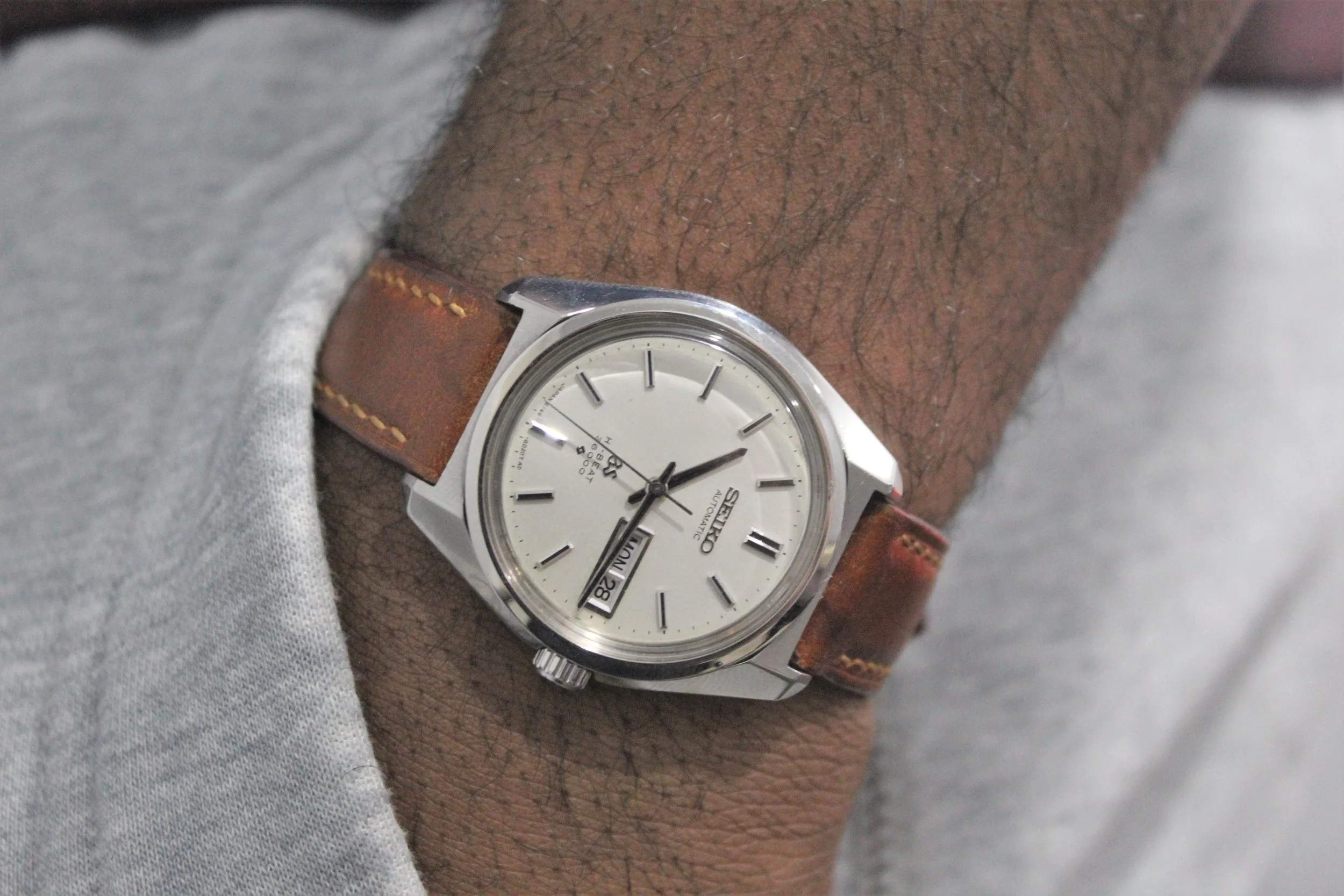
The luxury market, and the luxury watch market, have seen a lot of growth lately, even throughout COVID-19. While retail may have been negatively affected, online sales for luxury goods have soared and new markets are opening to much fanfare. According to a report by Bain, 2021 saw the luxury goods market rebound from a dip in 2020, growing by 29%. Young consumers, millennials, are expected to represent 70% of the market in the near future, with the market for second hand luxury goods growing significantly, by 65% since 2017, and online sales growing 27% from 2020.
The auction market has significantly influenced the larger luxury goods market, with people becoming evermore accustomed to hearing about a variety of objects selling at mouth-watering prices. And lately, not only physical objects but even things like NFTs. We spoke with Dr. Federica Carlotto, Programme Director of the MA in Luxury Business at Sotheby’s Institute of Art about some different trends in the luxury goods market as we go into 2022.
When asked about recent growth at auction houses across categories, Federica said, “Talking about the luxury market in general, there has been increased attention in two particular areas: pre-owned, which used to be considered ‘lesser’ or ‘second-hand’, but is seeing increased interest across categories and different products increasing in value; and auction houses getting closer to retailers and enlarging their customer base.”
“Auction houses have implemented a lot of new online and digital auction channels – even trying to improve UX to make the platform more appealing to customers. Many new customers that had not previously considered auctions are looking at them like ‘regular’ retail channels. Moreover, online retailers are moving into auctions themselves.”

Federica Carlotto
I then asked her if there was any particular sub-category that she saw expanding… “There are a lot of circularities in fashion – hard luxury items like watches and jewelry would benefit from this circularity as there is a distinction between collector’s pieces and entry-level pieces in the second-hand market. Fashion is changing people’s minds in terms of new and second-hand, it’s cool, people can call it vintage – with nostalgia being an important element. Manufacturing was also better in the past particularly when it comes to fashion and even watches, so collectors are attracted to the value of these pieces beyond the monetary value. Watches in particular were always made to last long. I’d also add that people are into the brands like Hodinkee and aBlogtoWatch, media brands in whatever space they’re in, and their sub-brands or branded products that they sell online. Effectively, bloggers are becoming retailers, auction houses too, and retailers are becoming bloggers and auctioneers.”
My next question was about circularity. “What impact does the idea of sustainability have? What other things are brands looking at when it comes to innovating?”
To which she responded, “People turning towards used and pre-owned for sustainable reasons is the official explanation, yes. But other aspects are simply that people like nostalgia – items that have history behind them etc. Others are also interested in the re-sale value. You well know that young people are constantly bombarded with messages for the latest, newest thing; older objects are more unique – there is an idea of being beyond time. In terms of luxury brands innovating, the most interesting ones are those that are trying to explore other contemporary ‘worlds’ like the metaverse, Gucci is trying this kind of thing. Getting into virtual products, brands are able to expand, Gucci, for example, is working with the metaverse and the relationship between new clients, physical with digital, holding events that are both physical and digital. Jewelry brands are also moving towards this, BVLGARI has a digital exhibition app. And beauty brands are also going in this ‘high-tech’ direction, getting into NFTs and the like. Animal Crossing is another example that has brands in it, with brands selling virtually.”

A vintage Omega De Ville Quartz ref. 192.0035 on its original bracelet and recently serviced, for sale on Toronto Vintage Watches.
On a more philosophical note, I inquired as to at what point do some of these objects become art in the context of the pre-owned or vintage market. Her opinion was that, “An object becomes art once it communicates something more than what it is physically, perhaps reflecting a historical concept like Louis Vuitton trunks – a nostalgic narrative. LV is an example of luxury or aspiration, and that underlying idea is what makes it art. The Cartier Saatchi exhibition of 1950s actors wearing Cartier watches and the Cartier Trinity ring exudes nostalgia and transports visitors somewhere else. These objects stand the test of time, famous people wear them and give inspiration.”

Finally, I asked, “Can the watch market expect to become more similar to the art market in the future? And what would you say to people who think that the incentive to gain high prices at auction or re-sale is diminishing the passionate nature of the watch or other luxury goods industries?”
Federica responded, “The art market is focused on collectors, for some it is all about speculation, resale value – other people are passionate about it and want to collect for passion, identifying a category and finding pieces that connect with them, not really linked to pricing. The value of the object is the place that the piece occupies in your collection. For some people in the watch world this could even be a Swatch that is only $50.”
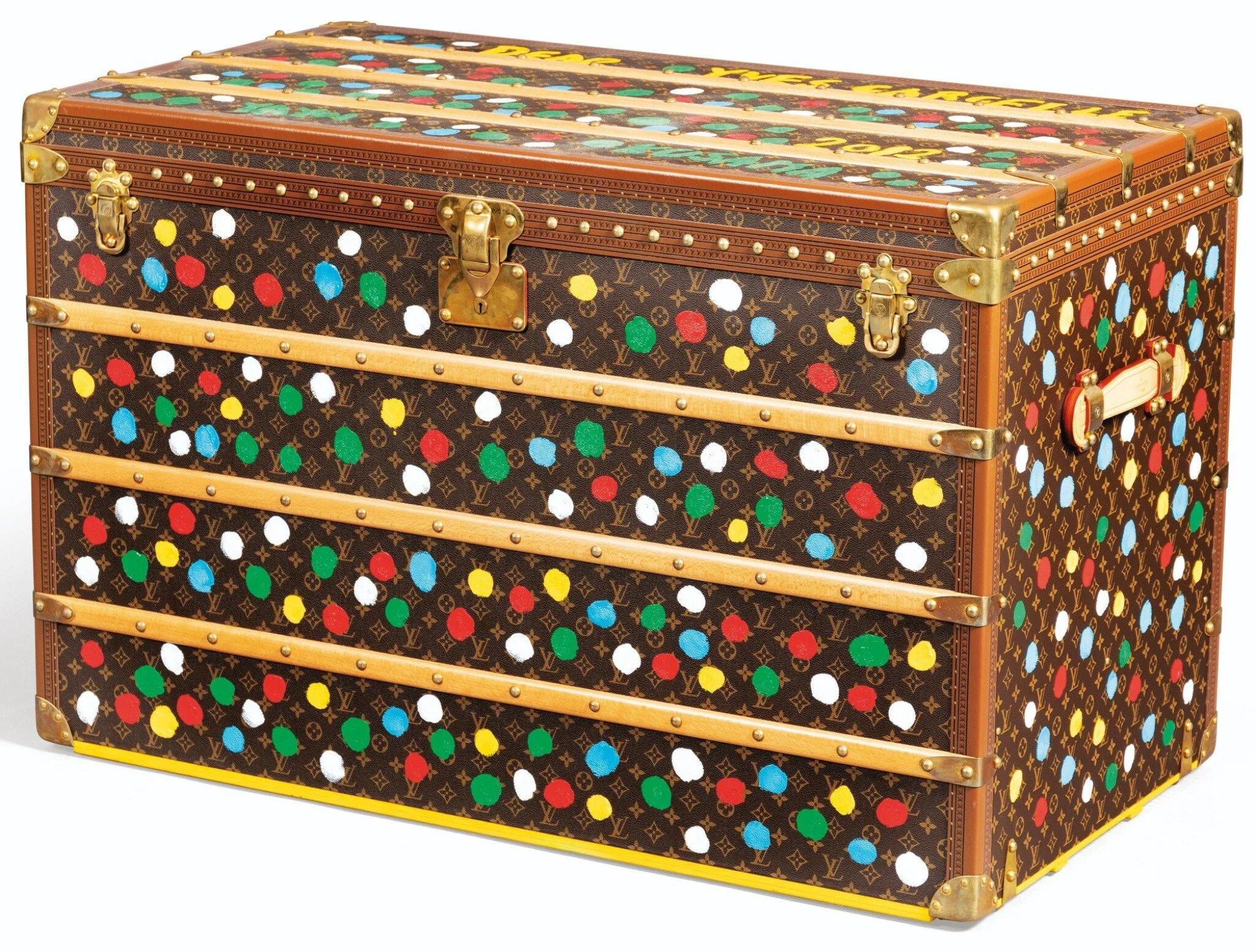
A Louis Vuitton trunk from the Yves Carcelle Collection sold by Sotheby’s
“In general, auction houses now are going towards investment pieces, the financial value or resale value is key. Art and fashion worlds are also going towards that financial focus, the watch world is going towards it as well as consumers themselves are after it. And I do think that auction houses and re-sellers in general are leading this trend. So yes, there will certainly be an increase of the investment mentality, but it is not just in the watch market, but a consumption trend in general that started with the art market. The auction houses made the first move and consumers followed this mentality – they came from the art world. To attract the young generation, the separation between art and luxury is being done away with. Not only for younger clients, however, as new geographies also have different interests often related to status. And then, COVID pushed the auction houses to go online and focus on this even more. Auction house newsletters, for example, are very close to the newsletter for your typical e-commerce company! So, I would say that auction houses are businesses after all and need new options to be able to reel people in. People want to say they bought the watch from a certain place and today branding extends even to the idea of buying something from somewhere like Sotheby’s. What customers are looking for is multi-layered and goes past the provenance of the watch, for example, itself. People want to appear to be connoisseurs and want to buy from certain places to seem that way – even Hodinkee can help you appear like you know the niche.”
Her insights are very interesting and seem to generally affirm what data from Bain and other sources tells us about the luxury goods market. That and intuition. When it comes to watches, we’ve seen them go from tools to accessories and it seems inevitable that they will next become commodities.
By: Andres Ibarguen