
When Taubert Fréres S.A. Sued Bréguet-Bréting Over Its Watch Case Design
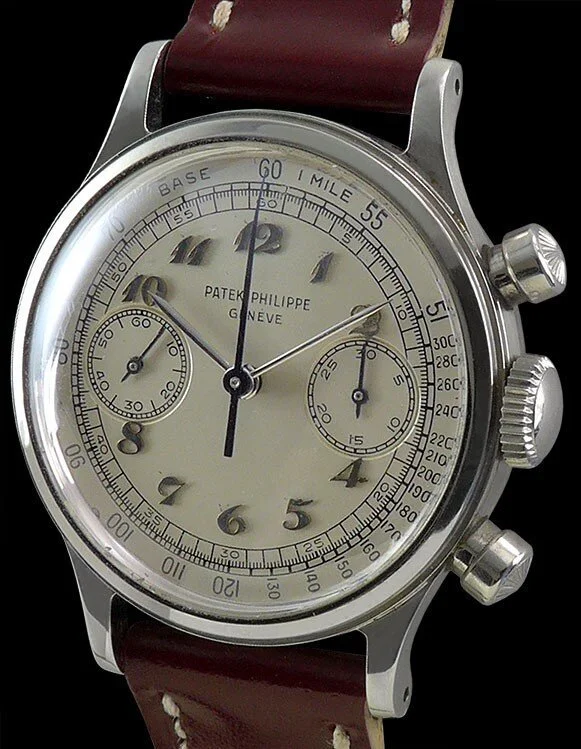
Patek Philippe ref. 1463 chronograph / Credit: Robert Maron
Recalling the past dispute between LVMH and Tiffany & Co., we wanted to take a look at a previous case between Bréguet-Bréting and Taubert Fréres S.A. regarding Taubert’s patent for a watch case over 70 years ago.
We previously mentioned Taubert when we covered the world’s first center chronograph by Mido. Taubert is an old casemaking company whose origins go back to François Borgel, a casemaker who invented a screwdown caseback in 1891 (one of the first after Dennison’s in 1872). Taubert et Fils was created from the remnants of Borgel’s company in 1924 and continued to make the ‘Borgel screw case’. They also had other developments in the late 1920s and ‘30s, among them several patents. One of those patents was CH 156807, which is the subject of the dispute between Taubert and Bréguet-Bréting (Fils de J.Bréguet-Bréting à Bienne). CH 156807 was a patent for a ‘boîte de montre hermétique’ or a hermetic watch case. This watch case was decagonal and by having 10 flat sides Taubert was able to secure the case in a more attractive fashion, using smaller apertures to lock it in position. They applied for the patent on May 8th, 1931 and it was accepted about a year later, on August 31st, 1932.
This design was deemed to be impractical and was revised shortly after its original release. This time the front bezel was made one piece and only the caseback was removable. As the movement could only be mounted from the back, it was put inside a carrier ring, and to keep the carrier ring in place an inner cover was added.
This particular case was extremely successful and is most notably seen on the Patek Philippe ref. 1463 – the brand’s first waterproof chronograph. Taubert also made cases for several other companies, mentioned in court documents from this case were Mido, Movado, and West End Watch Co. – the Swiss-Indian collaboration.

Patek Philippe ref. 1463 chronograph caseback / Credit: Robert Maron
However, despite Taubert’s success, Bréguet-Bréting still went forward and copied their casebacks, producing and selling them to their own customers. For 8 years since the patent was accepted in 1932, Taubert had had no infringements to fight. The first came in 1940 when Taubert started legal proceedings in the Commercial Court of Bern against Piquerez-Frésard, who was believed to have copied the Taubert decagonal caseback. In this first case, the Taubert claim over the patent was upheld and a settlement was reached with Piquerez-Frésard.
The case against Bréguet-Bréting arose in January 1941, when Bréguet-Bréting audaciously asked Taubert for tools to open the polygonal casebacks. To which Taubert responded that Bréguet-Bréting infringed on their patent by using those casebacks, and Bréguet-Bréting dismissed their response claiming that their casebacks had nothing in common with Taubert’s and that they had been producing watches for centuries…
So, once again Taubert found itself in the Commercial Court of Bern where they sought to order Bréguet-Bréting to pay 8,000 francs, stop the production of any more cases and destroy any existing cases, and publish the decision in relevant newspapers. The case dragged on for years in the court, even past the expiration of the original patent by Taubert in 1945! However, by late November 1947, a decision was made and the Bréguets were ordered to pay 45,000 francs to Taubert Frères S.A. In regards to the other demands made by the Tauberts, Bréguet-Bréting already had no stock and had stopped production of the cases, and further refused to publish the decision in the papers. Thus, Taubert was still awarded a larger sum for their trouble. Although who’s to say whether they really came out on top since Bréguet-Bréting had been producing these cases for some time before they were stopped. One win for Taubert was that several court experts testified that the Taubert design was superior to the Wildorf/Rolex one (a popular one at the time – the Oyster, of course) both aesthetically and technologically. Noting specifically that they could make thinner cases using the ‘Taubert method’.
Now, although this may not have been a landmark case the likes of Tiffany & Co. versus LVMH, it still serves to illustrate how contentious the watch industry can be at times. And oftentimes it is a big guy versus a little guy! Swatch Group just lost a long case against Vortic Watch Company, Rolex not too long ago sued and settled with La Californienne…a lot of lawyer fees go into protecting trademarked brand names and patented technology!
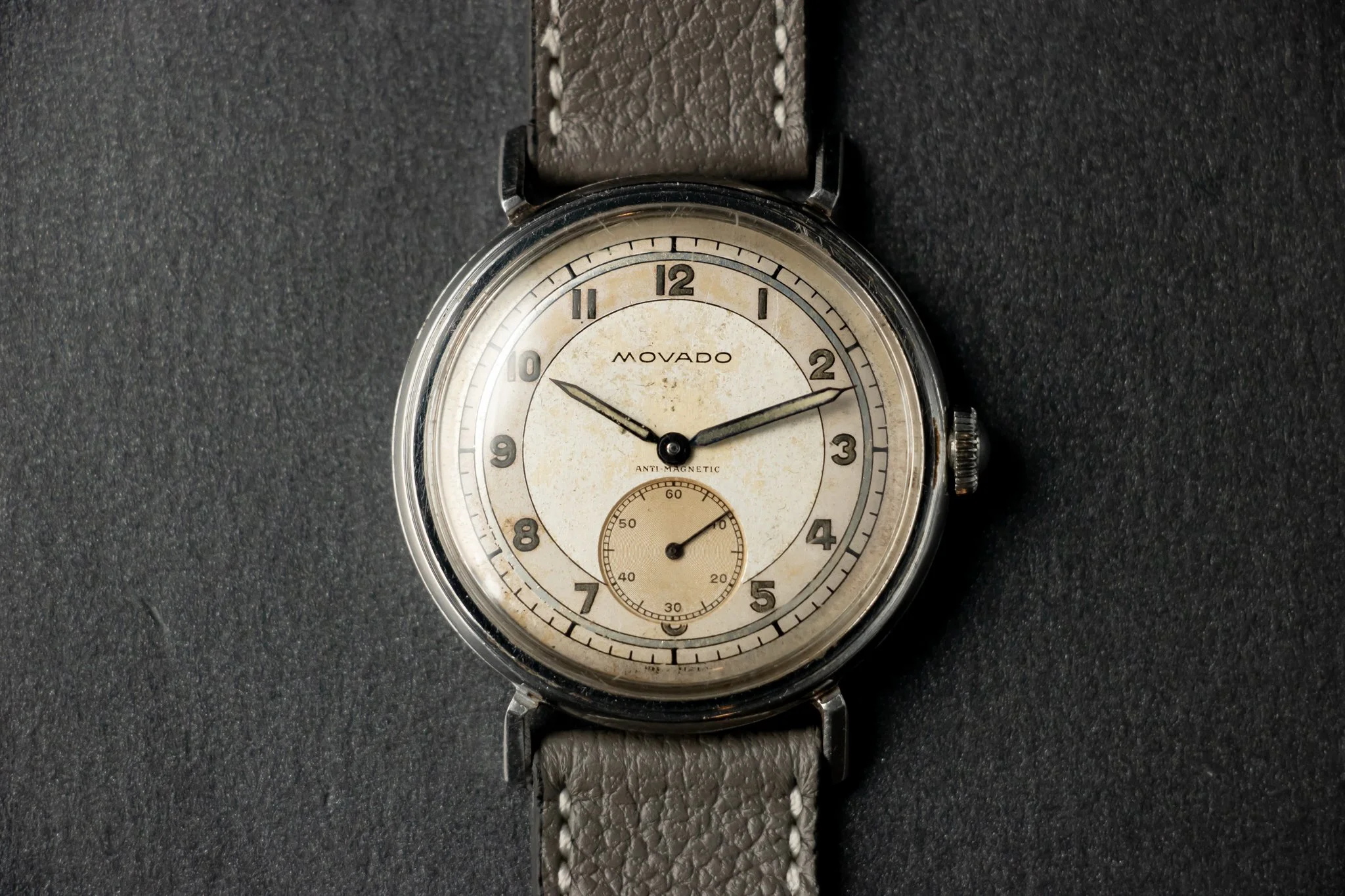
1940s Movado with a Taubert case / Credit: Stetz & Co.
A $16 billion merger is not common for the watch and jewellery industry and the outcome of this new dispute between Tiffany & Co. and LVMH can only be predicted by the legal experts.
Will Tiffany & Co. successfully argue that LVMH’s reasons for backing out of the deal were insufficient? Or will LVMH succeed in illustrating why they could no longer go forward with the transaction and should not pay any penalty?
By: Andres Ibarguen