
Canadian Railroad and Watch History
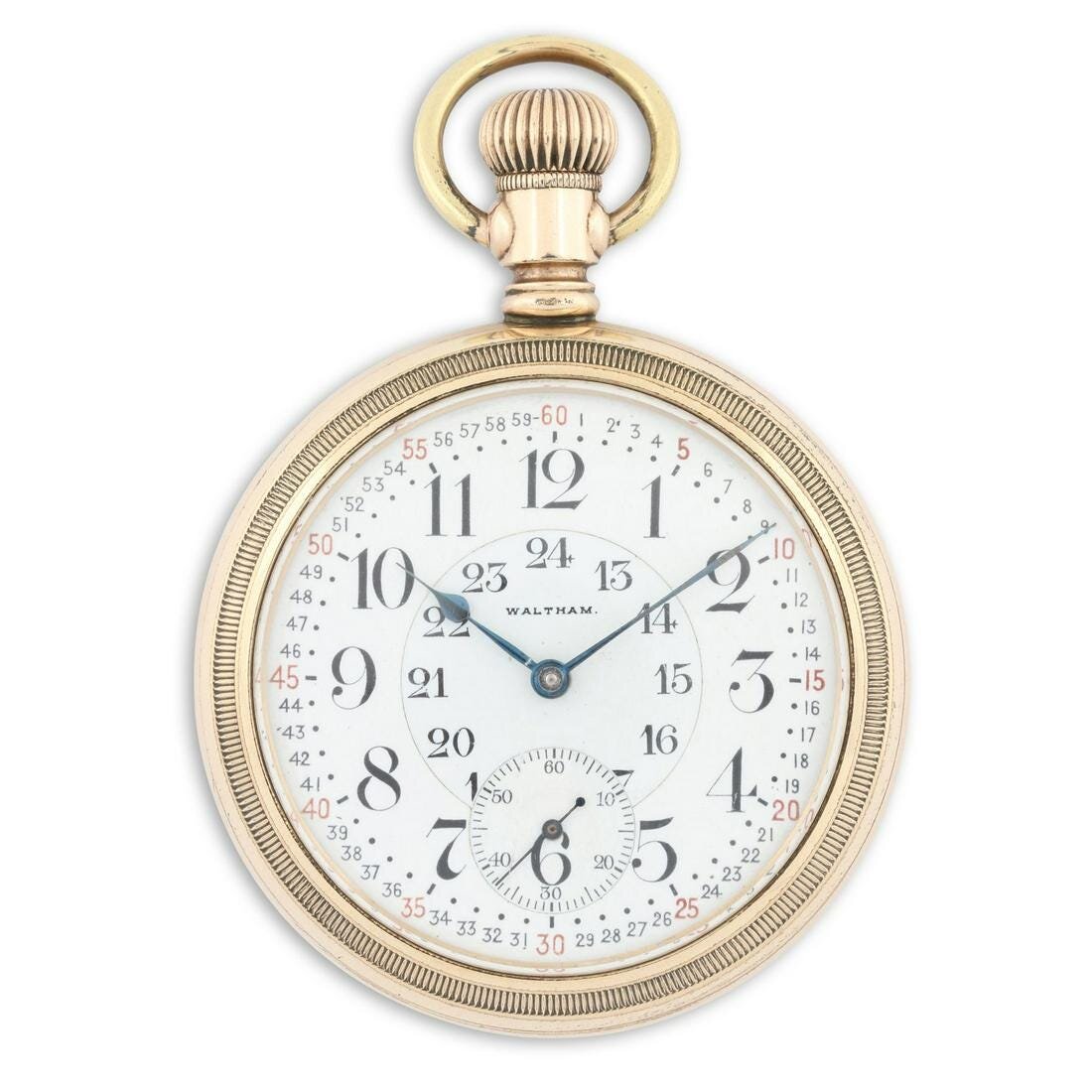
Between American watch companies like Waltham and Elgin, that first started making railway watches as early as the late 1860s, Waltham was the most notable supplier to Canada, making movement specifically marked for the CPR. Canada was a very important country for railroad watches as it was home to the Canadian Pacific Railway, a customer for American and European brands alike. The Canadian Pacific Railway was started in 1881 and completed in 1885, connecting the west coast of Canada to the more populous eastern region. Not only were American watches often on the wrists of Canadian train operators, but the railroad companies themselves had a long history of collaboration; generally in the form of American investment in a Canadian railroad. One example of this is the Great Western Railway, which started operations in the mid-1800s between Niagara Falls and Windsor.
The Canadian National Railway was another customer for watchmakers, it started in 1919 and was the longest railway in North America.
Apart from the watches specifically commissioned by the Canadian Pacific Railway, private label watches were also used in Canada and in the United States. These would’ve been companies like those of Richard Hemsley, former train inspector for the CPR and Grand Trunk railways turned jeweler and watch distributor.
Omega is a European company that made watches for the Canadian Pacific Railway. Omega itself references its 1963 Railmaster made for the CPR and there is also the story of Ball suing Omega that same year… Zenith was another that notably made the 16 S. Superior, with 23 jewels, for the Canadian Pacific Railway.

Zenith Superior Canadian Pacific Railway, note the ‘Canadian’ dial / Credit: Miller & Miller
One aspect of railroad watches that is a bit outside of the normal pocket watch talk is the system regulators themselves. These were large clocks used to regulate the timekeeping of the pocket watches that went out with the operators. Operators would get off after a run and check to make sure their own watch was in line with the one at the station. Seth Thomas was a producer of these clocks for Canadian railways, it refers both to the old brand and the watchmaker from Connecticut.
Another surprising addition to this list, this one from our neighbours to the south, is Bulova. Bulova made several Accutron watches for the Canadian Pacific Railway in the 1960s and ‘70s. The 214 and 218 are two predominant models that were worn by inspectors across the country. These turning-fork electronic watches were seen as both technologically innovative and highly reliable at the time.
The CN Railway also had/has a long list of watch suppliers, this has included companies such as Cyma, Girard-Perregaux, Wyler, Rodania, and Longines – among many others.
A Peak At Latin American Railroad Watches
In Latin America, railroad watches were also widespread, as were railways. In terms of collection, however, the watches were often as regional as the railways. Mexico, much like Canada, was supplied by American companies like Elgin, who produced pocket watches for official use on the Mexican railway.
In Colombia, instead, you can find tons of ads for ‘Reloj Ferrocarril de Antioquia’ on Colombian classifieds sites. The ‘Ferrocarril de Antioquia’ or Antioquia Railway is a historic railway in Colombia that dates back to the 1870s and took over 5 decades to finish construction. Antioquia was a sovereign state when it started constructing the railway. The railway is also accredited with helped Antioquia recover more quickly from the devastation of the Thouand Days’ War between 1899 and 1902.

Old ‘Ferrocarril de Antioquia’ Watches Ad / Credit: El Colombiano
The special edition Ferrocarril de Antioquia watches were distributed by local jewelers like Relojeria y Joyeria “La Perla”, which was common in Latin America but also in general where the government and wholesale watch purchases were concerned. They were Swiss Made watches, some of which were ordered from Moeris in Saint-Imier in the late 1920s/1930s.
Italian Railroad Watches

IWC pocket watch for Rete Mediterranea / Credit: Orologiko user
The first Italian railway was built in the Kingdom of Two Sicilies in 1839, the Naples-Portici line. Several railway lines were inaugurated while Italy was still divided into separate states. After the war of unification, new companies were created to manage the different railway networks. In 1884 a new convention created private companies that now managed these networks. IWC was an early supplier to one of these in the late 19th century. IWC itself purports that it sold over 7,000 watches through an agent in Milan to the Rete Mediterranea, as its exclusive supplier since 1891. This was all before the lines were nationalized in 1905. Another notable watch and railway partnership was that between Universal Genève and Ferrovie dello Stato, for whom Universal Genève produced tens of thousands of watches through the 1960s and ‘70s.
Turkish Railroad Watches and Russian Influence

Cortébert Turkish Railway watch marked T.C. Devlet Demiryollari / Credit: Heritage Auctions
The modern Turkish Railway system goes back to the 1860s with the construction of the Izmir-Aydin line. Being between the Black and Mediterranean seas has always made it an important transportation hub in the east. Having had railroad watches supplied from companies like Molnija (the Chelyabinsk Watch Factory) is exemplary of the countries’ diplomatic situation throughout the decades.

Molnija Turkish Railway watch with the Russian railway watch symbol the ‘winged wheel’
Another interesting piece of railroad watch history is the Cortéberts marked ‘T.C. Devlet Demiryollari’. That stood for the Turkish Railway company and were Cortéberts made throughout the mid-20th century and issued for official use on the railways. Cortéberts started off making pocket watches but also made regular wristwatches for the officials of the Turkish Railway system. Another supplier of note to Turkish Railways was Serkisoff. Serkisoff was a watch distributor from Istanbul who supplied the Railways with watches. Serkisoff eventually started to use Molnija as a supplier, who produced watches to the design specifications of Serkisoff/Turkish Railways.
Russian Railroad Watches

Molnija Serkisof Demiryolu Railroad Watch / Credit: Russian Watches Info
Russia predictably had their first railway before Turkey, with the Tsarskoye Selo Railway being ready for use in 1937. The Trans-Siberian Railway was another notable railway as it is one of the longest in the world and saw construction commencing in 1891.
Molnija was also an important supplier of watches in the Soviet Union, particularly serving the Department of Defense. Molnija made movements that were effectively identical to their Cortébert counterparts. The ‘original’ Molnija produced watches from the late 1940s until 2007 when it ceased production. Popular in there watches was the symbol of the Russian railroad watches: the ‘winged wheel’. Molnija’s were also made for export of course, including those for Serkisoff/the Turkish Railway that often used the Cal. 3602 movement (18 jewels). Marathon also sold Molnija watches under their own brand name in North America. Now, their first 15-jewel movement was produced from the late 1940s until the early ‘60s, when the 3602 was produced.
There were other factories apart from the Molnija one that also made railroad watches. Sekonda is a brand that made several USSR railroad watches. Sekonda was both a brand that made watches out of different Soviet watch factories but the brand was also used to export watches from a variety of factories.
Gostrest Tochmekh was another interesting figure in Russian railway watches, they imported Swiss ebauchés used for their Russian finished pocket watches. They specifically made watches for the People’s Commissariat of Railways.
Conclusion
What makes railroad watches so interesting to me is how widespread they were throughout the world, and how that leads to such unique and interesting combinations of signatures on movements, dials, and the watches themselves. There’s many countries, railroads and watches that I didn’t mention in this article and I can only imagine the watches I have yet to discover. In a historical sense, seeing how watches develop in parallel to general or economic history is very exciting. In this case railroad watches spread almost as fast as the railroads themselves!
By: Andres Ibarguen