
HOW DID VACHERON CONSTANTIN GROW FROM 1800-1900?

Vacheron Constantin pocket watch with a map of Italy circa 1824, Vacheron Constantin women’s wristwatch circa 1889, and a pantograph invented by Vacheron Constantin engineer Georges-Auguste Leschot
Vacheron Constantin, founded in 1755, is the oldest continuously operating watch manufacturer in the world and has a long history of innovation in the watchmaking industry. After surviving the French Revolution, Jean-Marc Vacheron’s grandson, Jacques Barthélémi Vacheron (1787-1864), assumed management of the family enterprise in 1810. The company started producing more complicated timepieces, such as musical watches with two different tunes, and began exporting products to France and Italy.
The new timepieces worked, and Vacheron began to see increased sales and popularity amongst Europe’s wealthiest consumers. They immediately became a favorite of Prince Charles-Albert of Carignano, the future king of Sardinia.
In 1820, Jacques Barthélémi Vacheron (1787-1864) and François Constantin (1788-1854), an experienced businessman, formed a partnership and changed the company's name to Vacheron et Constantin. The company also became known for its use of precious materials and its attention to detail, producing watches with intricate enamel work and decorative elements such as diamonds and pearls.

Vacheron Constantin pocket watch with a map of Italy circa 1824 / Credit: Vacheron Constantin
This yellow gold pocket watch is subtly decorated with a map of Italy, engraved and enameled using the champlevé technique. The attention to detail and perfection in the craftsmanship are characteristic of the Genevan decorative tradition. Following multiple releases, Vacheron & Constantin became known as artists as well as watchmakers thanks to the attention to detail and superlative design.

Vacheron Constantin Jumping Hours pocket watch (1824) / Credit: Vacheron Constantin
Vacheron Constantin developed an extremely innovative pocket watch design during the 1820s, fitted with a jumping hours display. This jumping-hours pocketwatch was among the first ever made in Europe during the 19th century that features a date complication, and it quickly became a trademark for the company.
In addition to its timepieces, Vacheron Constantin also made a name for itself in the field of watchmaking tools and equipment, producing high-quality tools and machines for the production of watches.

Pantograph – an instrument for copying designs on an identical, reduced or enlarged scale / Credit: Vacheron Constantin
The pantograph (invented by Vacheron Constantin engineer Georges-Auguste Leschot) enables the production of movements that possess interchangeable parts. In 1841, Georges-Auguste Leschot began working with the pantograph, and since essential components are now manufactured in a uniform process, Vacheron Constantin can raise the quality of all its watches. This technique was the first step towards interchangeable movement parts and it’s the pantograph won the Rive Prize’s gold medal in 1844 from the Arts Society for “the discovery of the most value to the Genevese industry.”
Vacheron & Constantin, who were always interested in scientific watchmaking, launched the pocket chronometer in 1869 and entered their watches in the inaugural chronometry competitions at the Geneva Observatory in 1872. They received distinctions at these competitions, and this marked the beginning of their pursuit of record-breaking achievements, which they continued to gather over the next century.
Vacheron Constantin lady’s watch was one of the first series-produced wristwatches in 1889. Quite notable, because right up until the early 20th century, pocket watches still had little competition to the hearts of consumers. In almost perfect symmetry, designers could not stand to see a crown on either side – so they came up with an idea to wind the movement by turning the bezel.
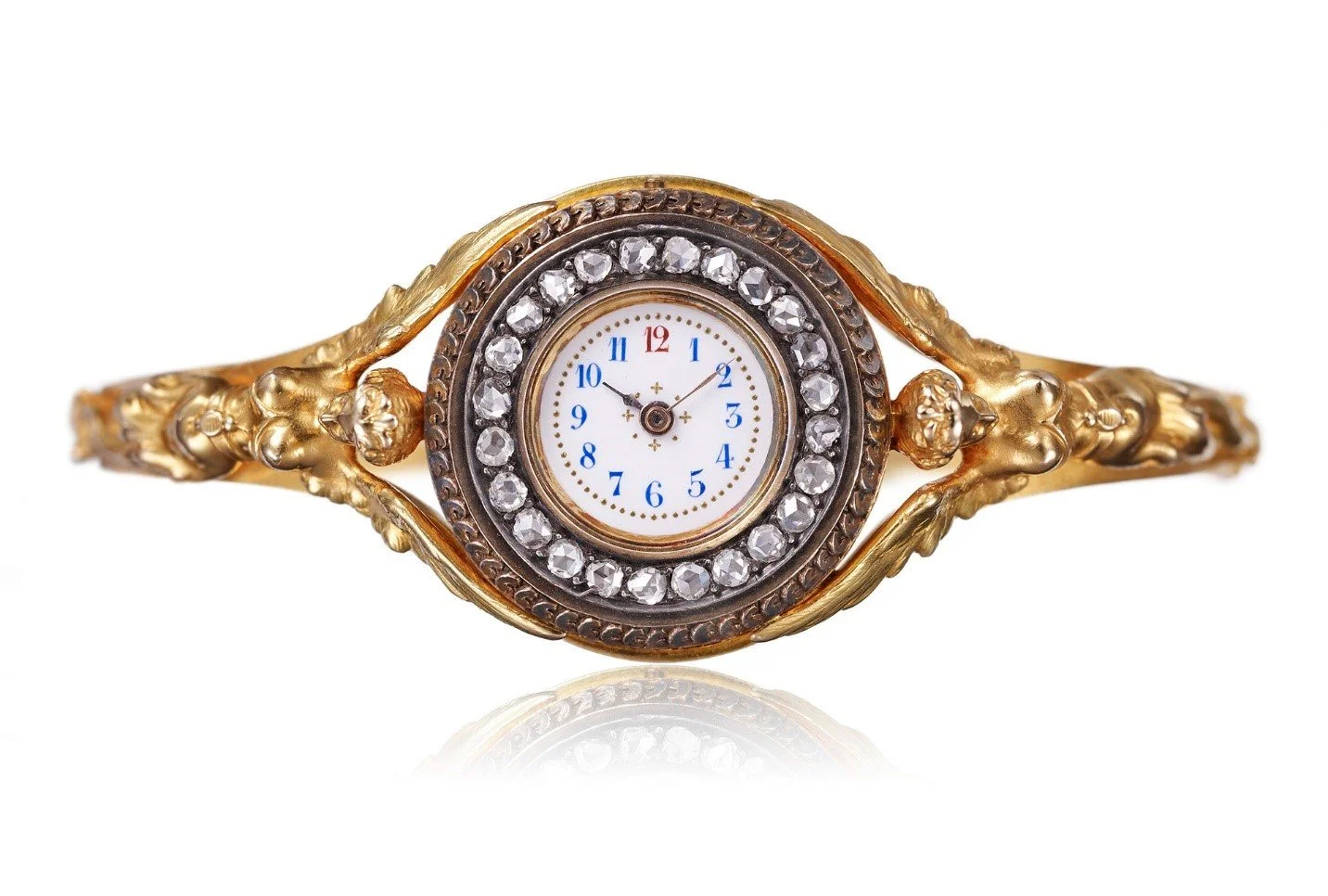
The oldest wristwatch by Vacheron Constantin, a lady’s wristwatch first previewed at the World’s fair in Paris in 1889 / Credit: Vacheron Constantin
Thanks to Vacheron’s interest in joining the Association for Research into non-magnetic materials before his death, ten years later, in 1885, the company created the world’s first nonmagnetic timepiece made from materials that could completely withstand magnetic fields.
Vacheron Constantin is a luxurious Swiss watch brand with a long history of innovation and excellence in the field of watchmaking. From the creation of the first non-magnetic timepiece to their numerous record-breaking achievements, Vacheron Constantin has consistently pushed the boundaries of what is possible in the world of horology.
Today, the brand continues to produce some of the finest and most highly coveted timepieces in the world, earning them a place among the most prestigious watchmakers in the industry. Whether you're a collector or simply appreciate the art of fine craftsmanship, Vacheron Constantin is a brand that is sure to impress.
By: Eric Mulder