Through a Podcast, Rolex Gives Its Perpetual Planet a Voice

(Photo: Planet Visionaries Podcast)

Rolex is producing a podcast through its Perpetual Planet Initiative, a sign luxury brands are increasingly turning to the popular format for storytelling.

“Planet Visionaries” is hosted by professional rock climber Alex Honnold, who opens its fifth season today with an episode titled “What Does It Take to Be Rolex National Geographic Explorer of the Year,” featuring this year’s laureates, wildlife filmmaker Bertie Gregory and penguin researcher Pablo García Borboroglu. The episode is available on all major podcast platforms. For the first time, the series will also stream on Rolex’s YouTube channel, where it is currently unlisted but accessible at this link.

Rolex’s philosophy has shifted from supporting explorers who seek discovery for its own sake to those working to protect the planet and its oceans. Future guests will include actor and climate champion Mark Ruffalo, wildlife photographer Cristina Mittermeier and conservationist Kris Tompkins.

The Rolex brand takes a visible role in Mr. Honnold’s podcast, appearing not only in the title logo but also in the show’s description for its conservation work. By producing “Planet Visionaries,” the watchmaker continues to align its storytelling with the environment rather than traditional marketing. The watches themselves are never mentioned; instead, Rolex highlights explorers and scientists rather than Testimonees to build its image as a brand devoted to conservation at a time when consumers increasingly align their purchases with company values.

Rolex’s Financials Reveal Robust Growth Down Under

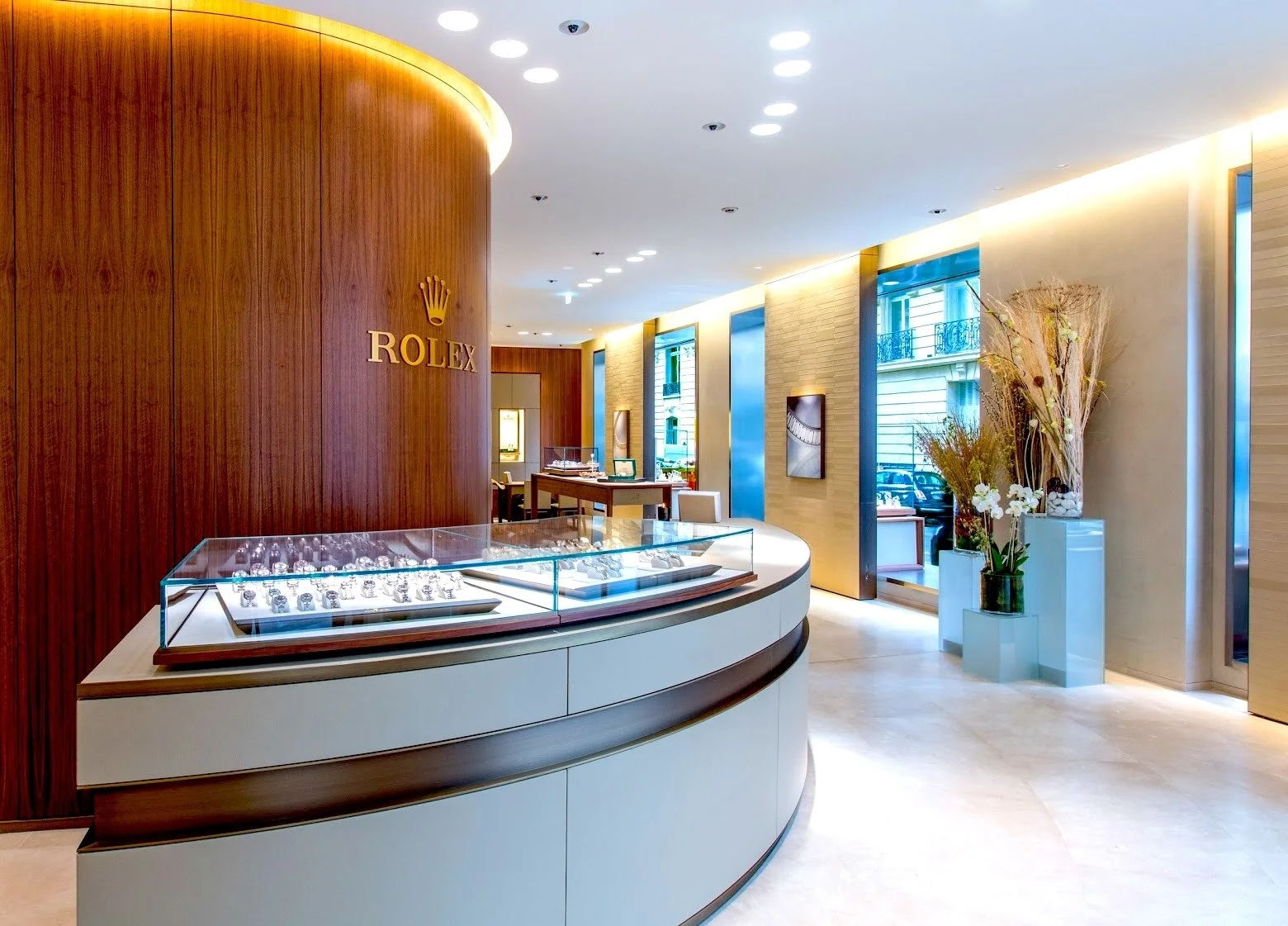
Rolex Sydney boutique. (Photo credit: Rolex)

Australia is among the few countries that require companies to file annual financial reports. For Coronet, this offers a rare glimpse into Rolex’s operations in one of the fastest-growing regions for Swiss watchmakers. This magazine reported earlier this month on Rolex’s financials in the United Kingdom.

Rolex Australia Pty Ltd, a subsidiary of Rolex S.A., reported revenue of A$414.4 million for the year ending Dec. 31, 2024. To compare, Rolex in the U.K. reported flat revenue at £701.5 million, about A$1.43 billion. While the U.K. total is roughly three and a half times larger, it lacked the 11% growth recorded in Australia.

Australia is quickly emerging as a new growth frontier for Rolex, supported by younger consumers as China’s luxury demand remains tepid and U.S. tariffs add uncertainty. The wealth of Australia’s richest households has nearly tripled over the past two decades, according to the Australia Institute. Oceania also stands out as the only region worldwide to record a year-over-year increase in Swiss watch shipments, according to the latest data.

Rolex Australia reported a profit of A$29.3 million, representing a margin of 7.1%, a solid figure for a luxury-goods distributor. The result marks a turnaround from the A$1.9 million loss the year before, when Rolex made a major investment in its new Oceania headquarters in Melbourne, which also houses a state-of-the-art watchmaking training facility.

Can Rolex Bring Back the Padellone?

Rolex 8171. (Photo credit: Hodinkee)

In a recent patent filing, Rolex appears to be revisiting one of the most storied designs in its history. The document, made public last week and first reported by Nick Gould, describes a triple-calendar mechanism with day and month windows at 12 o’clock and a central date hand, a configuration reminiscent of the brand’s early-1950s models. “Additionally or alternatively,” the patent says, “there can be a moonphase indication, for example.”

From Rolex’s patent published Oct. 16, 2025. (Rolex via USPTO)

This magazine reported in September that Rolex had trademarked the word Padellone, a rare move by the brand to formally claim ownership of a collector’s nickname for the triple-calendar moonphase reference 8171, produced only briefly in the early 1950s.

Last year, Coronet also reported on a Grande Date mechanism patented by Rolex; the year before, a perpetual calendar system. Patent filings are rarely reliable indicators of what’s next at Rolex, but they’re the latest sign the brand is investing in research and development to bring iconic designs into the modern era. A Rolex triple calendar in yellow gold from 1953 sold for more than €4 million at auction earlier this month.

With the 1908 and the Land-Dweller, the brand has introduced two entirely new lines of Classic watches in just two years, a sign of shifting tastes among Rolex buyers. Both have been successful releases, defying typical market trends for value retention in dress pieces. By contrast, Patek Philippe’s dress collections trade at roughly 40 percent below retail.

Once Overshadowed, Rolex’s Dress Watches Rival in Value Retention

Average value retention by collection. (Credit: WatchCharts)

The analysis of value retention by collection has long shown a clear hierarchy within the Rolex lineup. But today, the ranking of the brand’s Classic line relative to its Professional models is unusual and worth writing about. The value retention of dress watches at Rolex is rare among industry peers and is the latest sign that consumer tastes may be shifting as the brand’s strategy to beef up its Classic line begins to resonate with buyers.

Rolex remains the only major watch brand whose models, on average, continue to trade above retail prices. WatchCharts, which provides the data, defines value retention as the premium a watch commands on the secondary market. For Rolex, it stands at +15%, driven in part by models from the Classic line. By comparison, Patek Philippe and Audemars Piguet see premiums concentrated mostly in their sports models, while most other brands trade at discounts exceeding -30% relative to retail.

At Rolex, the Land-Dweller, its latest model from the Classic collection, now tops the chart by a wide margin, a position usually held by Professional models. The Day-Date drops only -1% on average, a remarkable result given it is offered exclusively in precious metals, while the 1908, Datejust and Sky-Dweller show positive premiums. In contrast, Patek Philippe’s dress collections trade at more than -40% below retail. It is a testament to Rolex’s strength in the secondary market that both its dress and sports watches continue to hold value so well.

As Swiss Currency Rises, Pressure Builds on Rolex Prices

Swiss franc against US dollar. (Source: LSEG)

All eyes are on gold prices and U.S. tariffs to gauge what Rolex may do on Jan. 1, when it is expected to update its global price lists. Yet the rise of the Swiss franc, an often overlooked factor, may prove as important for 2026 pricing across the collection, not just for gold models.

Over the past 12 months, the franc has gained about 14% against the U.S. dollar, a sign that the Swiss currency, like gold, serves as a safe haven in times of economic uncertainty. But in a bit of good news amid the tariff stalemate, a new agreement between Switzerland and the U.S. Treasury gives the Swiss National Bank greater freedom to curb the currency’s rise, which hurts exports.

The Swiss National Bank has recently purchased five billion francs of foreign currencies to weaken the franc and with this new agreement is expected to do more. Still, for Rolex, the currency’s strength, along with record gold prices and high tariffs, makes a January price increase all but inevitable. And with each rise, Rolex availability at U.S. boutiques moves one step closer to returning to normal levels.

Inside a Rare Rolex Collection in England

(Photo credit: Tim Vaux/Hodinkee)

On Monday, watch magazine Hodinkee published an in-depth look at the private collection of British Rolex enthusiast Mike Wood, accompanied by detailed pictures. The article is well worth a visit.

The exhibition, which was open only to invited guests, brings together more than 200 Rolex watches. Titled “For Exhibition Only,” the showing borrowed the name from the tag Rolex places in dealer windows for watches not for sale. Wood said his goal was to let younger collectors see pieces they might never encounter otherwise.

Hodinkee’s photo report by Tim Vaux highlighted both the rarity of the watches and the breadth of the Englishman’s collection. The exhibition followed Rolex’s evolution from early waterproof Oysters to professional models like the Submariner and COMEX Sea-Dweller, and on to aviation pieces such as the GMT-Master, as well as classics including the Explorer and Daytona.

Link to the article

(Photo credit: Tim Vaux/Hodinkee)

Rolex Puts Down Roots in Bulle With a Discreet Donation

Bulle, Switzerland. (Photo: Yannick Romagnoli)

The Hans Wilsdorf Foundation is known for supporting local projects, and Rolex for sponsoring major events. This time, Rolex is giving quietly to support the renovation of the public library and museum in Bulle, with no sponsorship and no advertising attached, the latest sign the brand is putting down roots in the community that will soon host its newest manufacture. Announced earlier this month during a town meeting, the 3 million-franc contribution drew applause from legislators surprised by both its timing and its scale, according to La Liberté, a county newspaper.

When the expansion of the Musée gruérien and the city library was approved by voters in 2024, officials pledged to seek outside funding. During the Sept. 9 groundbreaking of Rolex’s new site, a city council member presented the project directly to the brand’s chief executive and chief financial officer. The effort paid off: less than three weeks later, on Sept. 24, Rolex confirmed its donation.

City officials said the gift comes with no conditions attached. A spokesperson for the city of Bulle described Rolex’s support as a gesture of goodwill to mark its commitment to the local community.

Rolex Vintage Market Shows Strength With €4 Million Sale

Rolex Ref. 6062. (Photo credit: Monaco Legend Group)

A circa 1953 Rolex reference 6062 in yellow gold with a black dial sold this weekend at Monaco Legend Group’s “Exclusive Timepieces” auction for €4,250,000 in the latest sign of Rolex’s resilience in the vintage watch market. Including fees, the final price reached €5,330,000. At the same sale, a 1971 Rolex Daytona reference 6263 “Paul Newman” topped half a million euros.

Before the auction, Monaco Legend Group had listed the 6062 with the unusual estimate for a watch, “in excess of €3 million.” This exact piece last appeared publicly in 2006, when it sold for CHF 469,700 at Antiquorum — roughly one tenth of the price — a sign of how dramatically Rolex values have evolved over the past two decades. Coronet can confirm that Rolex was not the buyer of the 6062, though the brand has acquired rare pieces at auction in the past.

In the world of Rolex, complication is rare. But the 6062 manages to feature a triple calendar and a moonphase, all housed within a 36mm Oyster case. It would take the brand more than 60 years before it revisited the moonphase with the Cellini in 2017.

Rolex Adds Lavender and Pink Dials to Its Biggest Oyster Perpetual

(Watch photo credit: Rolex)

In a rare move outside the spring release cycle, Rolex quietly added candy pink and lavender dials to the Oyster Perpetual 41 on Friday, the first time either color has appeared in the 41mm size. Both shades had previously been offered in smaller versions of the model.

Rolex’s move comes as the traditional lines between men’s and women’s watches continue to blur. The 41mm case has long been associated with male wrists, while pink and lavender have been favored by female clients. “This unisex trend has been quite obvious for sometime,” a Rolex representative in Geneva told Coronet. By pairing the largest OP size with these two tones, Rolex seems to acknowledge size and color are no longer gender-coded but expressions of taste.

This magazine speculated last month that Rolex would expand the OP line this fall, as the 41mm version had offered only six colors, compared with nine for the 31mm and 36mm sizes. Just last week, a 41mm OP in lavender was spotted by a Reddit user at an official retailer in Hong Kong, as reported by Coronet, before the post was quickly removed.

Rolex to Sponsor Robert Redford’s Sundance Festival

(Photo credit: Sundance Institute)

Rolex will soon announce a multiyear partnership with Sundance, the world-renowned film festival founded by Robert Redford and held each January in Park City, Utah. Under the agreement, Rolex will serve not only as the official partner but also as the exclusive timepiece of Sundance’s feature film program. The collaboration includes direct financial support and grants tied to the institute’s core initiatives, including its long-running directors’ and screenwriters’ labs.

The partnership comes as Sundance prepares for its final festival in Park City, scheduled for Jan. 22 to Feb. 1. The 2026 edition will honor the festival’s legacy and its late founder before the event relocates to Boulder, Colo., beginning in 2027.

Rolex already maintains a strong presence in the film industry through its sponsorship of the Oscars and its partnership with the Academy Museum of Motion Pictures in Los Angeles. Those relationships align the brand with established filmmakers and Hollywood. By signing with Sundance, Rolex is focusing on independent film and the development of emerging talent.

The Datejust Leads Rolex CPO Sales

Rolex CPO watches at Bucherer’s in Geneva. (Photo: Rolex)

The Datejust collection is leading Rolex’s Certified Pre-Owned market, well ahead of the Submariner, GMT-Master and Daytona; that’s according to the latest WatchCharts and Morgan Stanley report released Thursday.

The Datejust’s lead — more than double the sales of any other Rolex model in the past three months alone — is the latest sign that CPO buyers might skew more mainstream than collectors. It may also reflect higher trade-in rates rather than demand alone. After all, the Datejust remains Rolex’s most versatile line, with both the deepest supply and the widest resale market, from younger first-time buyers to retirees.

Estimated 3Q25 sales volume and median price for global Rolex CPO inventory by collection. (Data: WatchCharts / Morgan Stanley)

Despite a volatile economic backdrop marked by war on Europe’s borders, a strong franc, higher gold prices, stagnation in China and weakening consumer sentiment, retailers’ participation in Rolex’s CPO program continues to expand, up more than 300% in the past year, according to WatchCharts.

Today, more than one-sixth of Rolex’s global retail network offers CPO pieces, mostly in Europe and the United States, with stores also in the UAE, South Africa, Lebanon, Hong Kong, and Japan. The U.K. leads per capita, with more certified pre-owned watches relative to its population than any other market, more than double Germany’s ratio and triple that of the U.S.

Rolex Will Bring GMT Showcase to Singapore

(Photo credit: Instagram/@chillguyyyyy_)

Rolex might not have a museum, but it’s making use of its rare collection of vintage watches by exhibiting them around the world. The brand will spotlight the evolution of the GMT-Master in Singapore for two weeks, from Oct. 24 to Nov. 2, following earlier stops in Hong Kong and Macau. The exhibition, organized by Rolex and a local retailer, is similar to the one at Watches and Wonders Geneva in 2024. It features a series of thematic panels, rare GMT models and a short documentary film.

The event, titled Time Zone to Time Zone, explores the GMT-Master’s history, from earlier models worn by Pan Am pilots and NASA astronauts to its current status as a symbol of travel. As with previous exhibitions, visitors must book time slots online for admission.

The traveling display is the latest example of how Rolex draws on its adventure-filled competitive advantage, even as the brand leans further into luxury with each release. The push-pull between tool-watch narrative and high-end luxury isn’t unique to Rolex. Each year, Swiss brands ship fewer but pricier watches, according to the Federation of the Swiss Watch Industry which tracks exports.

Still, as Rolex’s new releases have become more opulent, the brand is dialing up its storytelling, through the publication of books and exhibitions showcasing historically significant models recently acquired at auction.

Rolex Files to Protect a Marking Few Have Seen

(From Swissreg.ch)

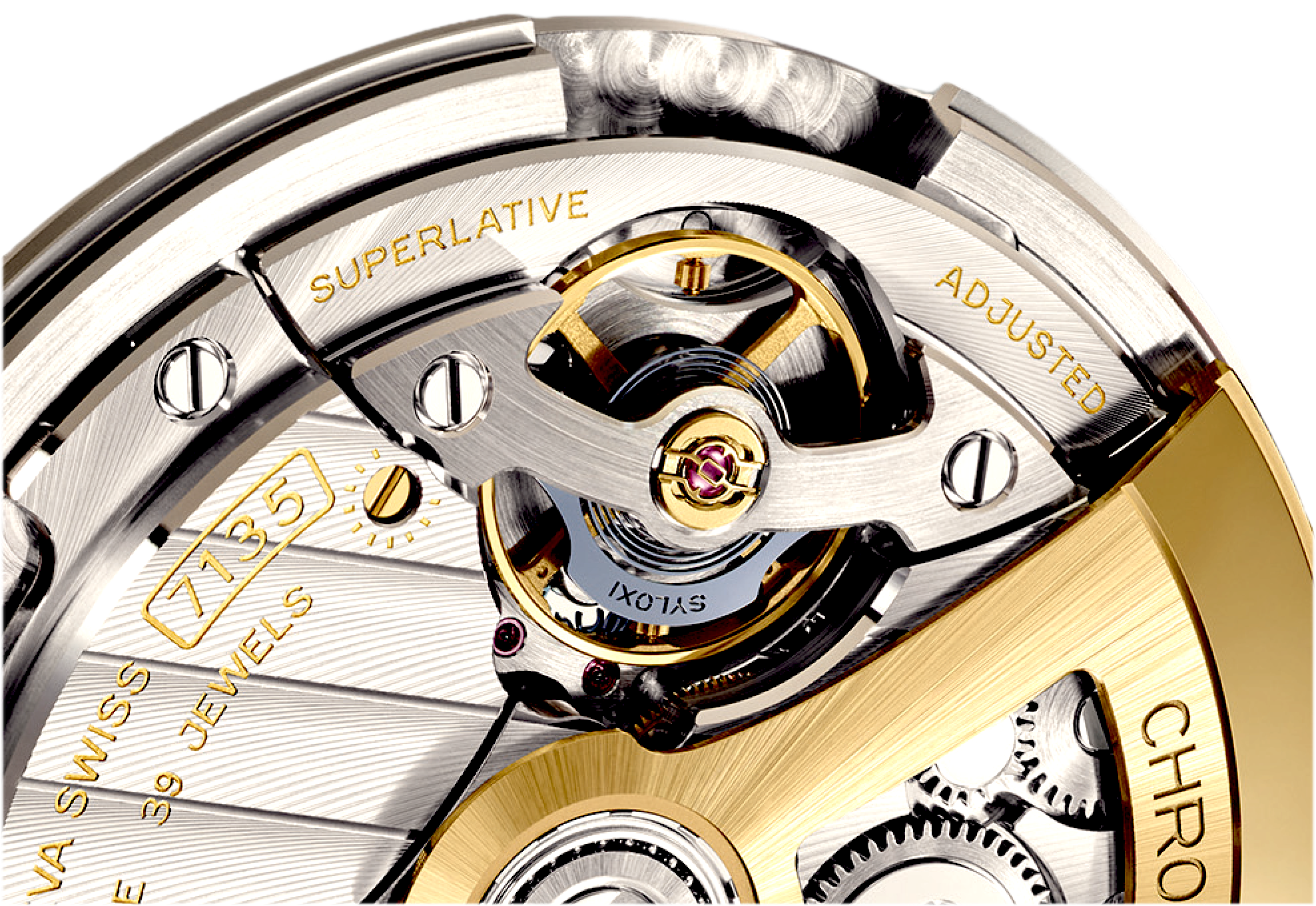
Two years after first using the designation, Rolex has decided to trademark “Superlative Adjusted,” in the latest sign the brand is planning to make the rating a more prominent — and protected — part of its vocabulary.

While invisible to most Rolex wearers, the designation is familiar to those with models featuring display case backs, as “Superlative Adjusted” is engraved on the bridge. Since 2023, the engraving has also been present on other Rolex movements without transparent backs.

The trademark application, which was filed Thursday by Rolex’s Marques et Domaines department, may simply want to protect a phrase few Rolex owners will see. But it is likely the brand expects long-term value in it, especially if it has plans to expand its lineup of open-movement models.

The trademark filing is the latest step in the evolution of the term “Superlative,” which first appeared on Rolex dials in the 1950s. In 2015, Rolex redefined the rating, setting stricter standards of −2/+2 seconds per day. The newer “Adjusted” language may be the brand’s way of highlighting the human element of fine-tuning and calibration over industrial processes.

(Photo credit: Rolex)

Rolex’s Reputation Tested Further in France After Retailer Fined

Arije Boutique Rolex Etoile. (Photo: T. Campion/Rolex)

A Paris jeweler operating a Rolex boutique has been fined €240,000 and given a 12-month suspended trading ban by French regulators for serious anti–money-laundering failures.

The news comes as Rolex weighs tightening control over retail to limit reputational risks after acquiring the world’s largest Rolex retailer, Bucherer, while simultaneously facing ongoing legal challenges in France.

According to a Ministère de l’Économie et des Finances notice, the sanctions were issued following an investigation that uncovered nombreuses lacunes, or numerous lapses, in risk assessment, weak client identification and insufficient oversight of large cash transactions. They include one €300,000 cash payment, well above France’s legal limits of €1,000 for residents and €15,000 for non-residents.

French regulators described the retailer’s internal controls as deeply deficient. The retailer, Arije, is a longtime Paris jeweler that operates a Rolex flagship boutique near the Champs-Élysées, as well as Arije Saint-Germain des Prés.

For Rolex, the case adds to mounting legal pressure in France, as it is still dealing with a €91.6 million fine from the Autorité de la concurrence for prohibiting its retailers from selling watches online, a ban deemed anticompetitive. As of today, Rolex is appealing the decision and continues to forbid online sales by its official retailers in France.

A Lavender Mystery in Hong Kong’s Rolex Window

(Photo credit: Reddit/@Automatic_Week_1848)

A Reddit post on Friday by a user named Automatic_Week_1848 shows a Rolex Oyster Perpetual with a lavender dial displayed in the window of an official Rolex retailer (pictured).

The image, taken at the Oriental Watch Company in Hong Kong’s Hysan Place mall, according to the poster, shows the lavender watch set on a Rolex stand. The intrigue? The watch appears to be 41mm in diameter, a size in which Rolex does not currently offer the lavender dial. At least, officially.

This magazine has speculated Rolex may expand the Oyster Perpetual line this fall, as the 41mm currently offers only six colors, compared with nine for the 31mm and 36mm versions. The lavender dial is currently offered in all four sizes except the 41mm.

So, is the watch in the photo a 41mm? The double-baton indices at 9 and 3 o’clock and the more pronounced winding crown suggest a larger case, while the hour markers at 11 and 1 extend noticeably beyond the Rolex coronet, a tell-tale sign of the 41mm case.

What’s puzzling is Rolex’s official website does not list the lavender dial among the 41mm options. So, the photo taken in Hong Kong could be a simple optical illusion — or a glimpse of what’s to come.

Side by side: the 36mm (left) and 41mm (right) Rolex Oyster Perpetual. On the 41mm, the hour markers at 11 and 1 o’clock extend past the Rolex coronet. (Rolex)

In a Year of Tariffs and Rising Gold, Rolex Holds Firm on Prices

Average US retail price increase percentage by brand in 3Q25 and YoY. (WatchCharts/Morgan Stanley)

Several major Swiss watch brands have raised U.S. retail prices in response to the 39% tariffs introduced in August, but Rolex has not. According to recent data from WatchCharts, Patek Philippe increased prices by about 15% on average, and Cartier and Omega by 8%, when comparing prices between July and now.

While Rolex’s average prices are up nearly 9% year over year, the brand has left them untouched since President Trump took office, a sign of its long-term approach as the Swiss industry navigates export costs and a rising gold market.

Gold prices have climbed more than 50% since the start of the year, their strongest run since 1979, adding pressure to production costs for precious-metal models across Rolex’s catalog. To make matters worse, the Swiss franc has strengthened against the U.S. dollar by double digits over the same period, further increasing the cost of exporting to the American market.

Next month, the U.S. Supreme Court will hold oral arguments on whether Trump’s tariffs are legal, possibly leading to a ruling before the end of the year. The U.S. Trade Court and a federal appeals court have already found most of the tariffs unlawful. If luxury brands overshoot on pricing, their image of exclusivity may suffer if they’re later forced to adjust prices downward.

In that respect, Rolex is choosing to wait, at least until Jan. 1, when the brand typically resets its global price lists for the new year and a price increase now appears all but inevitable.

Riding Record Revenues, Rolex Plans to Rebuild Its German Home

Rolex Germany headquarters in Cologne, in an undated photo. “ROLEX” lettering has been removed. (Photo credit: Raimond Spekking)

In the latest sign that record revenues and strong demand are prompting the brand to upgrade its property, Rolex Deutschland GmbH, the wholly owned subsidiary responsible for distributing Rolex products across Germany, plans to demolish and rebuild its headquarters in Cologne. The Rolex lettering on the building dating back to the 1970s has already been removed, and BB Bank, which occupies the ground floor, told customers last month it will relocate between April and May 2026 because of the renovation.

In a meeting with Cologne’s design advisory board, Rolex said its headquarters, with ceilings just 2.65 meters high, is too outdated and falls short on modern safety, soundproofing and accessibility standards. A presentation to the board, which includes architects and local officials, showed plans for a brighter building with a larger glass façade and a more open ground-floor colonnade replacing the current walkway.

The project’s proximity to the 17th-century listed Church of St. Mary’s Assumption has prompted talks with church and heritage officials. Rolex has filed a preliminary permit and will temporarily move about 150 employees and its training center to Deutz, a Cologne district across the Rhine.

Coronet reported that Rolex is also building a flagship boutique in Düsseldorf, set to open in 2027 under the management of Bucherer. The Rolex USA headquarters is being rebuilt in Manhattan. In Bulle, Switzerland, Rolex is adding a 1-billion-franc manufacture.