Rolex in a Transatlantic Rivalry, This Time on the Green

(Photo credit: Rolex)

It’s Team Europe against Team USA on Sept. 26-28. No, this isn’t geopolitics; it’s the Ryder Cup, golf’s biennial team competition, and this year, both captains are Rolex Testimonees.

For Rolex, the calendar never stops; its sponsorship carries from one sport to the next. After a strong tennis season, Rolex is shifting its focus to golf again, marking 30 years with the Ryder Cup, a partnership it said in a press release reflects “integrity and respect,” values that echo at a time of tension in U.S.–Europe trade and defense.

In the same statement, Rolex recalled the 1969 Ryder Cup, when Testimonee Jack Nicklaus conceded a short putt to Tony Jacklin to secure a tie rather than an American win, an act of sportsmanship that “remains one of the most admired gestures in sport and reflects the enduring commitment Rolex has made to upholding golf’s finest traditions,” the brand said.

Rolex will promote the Ryder Cup on its social media channels with a campaign video to be released ahead of the matches. The spot, featuring the Day-Date 40 in yellow gold with a green ombré dial, is currently unlisted on YouTube but can be viewed at this link.

At Trump Meeting, Rolex Had More than Its Watches at Stake

Trump and Dufour. (Photo credit: Cristobal Ulashkevich)

Last week’s meeting between Rolex CEO Jean-Frédéric Dufour and President Donald J. Trump at the US Open was a calculated gamble, a reputational risk for a brand that guards its image closely. In Coronet’s view, it stands as the biggest Rolex story since Watches and Wonders, with a Rolex CEO smiling alongside a polarizing president.

For Dufour, a concern looms larger than Rolex’s own watches. The brand owns Bucherer, including Tourneau in the U.S., a network of more than 30 luxury watch stores. Unlike Rolex, which always sells, these retailers also rely on other Swiss brands, and that’s where a 39% tariff would hit hardest.

Bucherer boutique in Las Vegas. (Photo credit: Bucherer)

Rolex is in a unique spot. Its own demand is strong enough to absorb the tariff and offset it worldwide. But its retail network acquired just two years ago depends on the wider Swiss industry. That’s why the Trump meeting mattered for Dufour, whose concern was how punitive tariffs could ripple through Bucherer’s U.S. retail arm.

For Rolex, the fight over tariffs was less about its own watches, which remain waitlisted across the globe, and more about protecting its growing retail business, which carries brands far harder to sell than a Daytona or Submariner.

On the Red Carpet, a Rare Glimpse of Rolex’s 1908

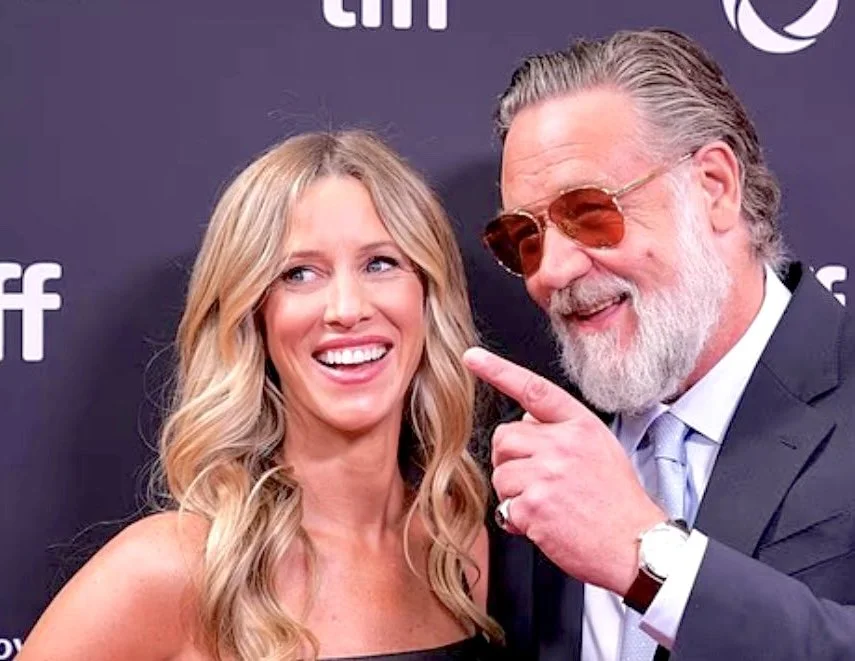
Britney Theriot and Russell Crowe. (Photo credit: X/@russellcrowe)

Academy Award winner Russell Crowe wore a Rolex 1908 with an ice-blue guilloché dial at the Toronto première of Nuremberg earlier this week.

While Coronet doesn’t typically chronicle the wearing habits of celebrities, a Rolex 1908 on the red carpet is a rare sight. It’s one of Rolex’s newest lines, first introduced in 2023 and updated in 2024 with this dial.

What’s even more unusual is the actor tweeted about the timepiece. He posted a couple of wrist shots of the platinum Rolex though he stopped short of mentioning “Rolex” in the tweet.

The 1908 doesn’t usually draw as much attention as the brand’s other lines, such as the Daytona and Day-Date, which tend to be fixtures among celebrities.

(Photo credit: X/@russellcrowe)

Rolex’s Meeting With Trump Still Shrouded in Silence

(Photo credit: Corey Sipkin/UPI)

Five days after Rolex chief executive Jean-Frédéric Dufour appeared alongside President Donald J. Trump, no details have emerged on what was discussed between the two leaders.

Though Rolex has always been discreet, such complete airtight silence is rare for the brand, which is used to seeing its new models leaked before they are announced. Yet this time, one of the most important Rolex stories of 2025 remains a mystery.

The meeting was unusual for Rolex, a brand that rarely strays into political territory. To be sure, it’s not the first time a Rolex executive has met with a U.S. president. Still, what makes this story unique is that it involved a polarizing political figure whose presence carries risks for a brand that guards its reputation closely.

Rolex may not want to publicize the encounter. Le Temps, a major Swiss daily funded by the Hans Wilsdorf Foundation, made no mention of the meeting in print or online, even as it reported Trump’s attendance at the US Open. Incredibly, five days on, no one knows what the two men discussed, or if tariffs were even mentioned.

Rolex’s Formula for Innovation: Funding Science Education

(Photo credit: Rolex)

Rolex will fund a 13th academic chair at the École Polytechnique Fédérale de Lausanne, to be established in 2026 at the school’s Neuchâtel campus. EPFL, Switzerland’s federal institute of technology, is regarded as one of the world’s leading universities in science and engineering, often compared to MIT for its research and innovation.

The new chair will focus on surface science and tribology. The study of friction, wear and lubrication are key to watchmaking. The announcement is the latest sign of Rolex’s investment in top engineering schools and research to foster innovation.

Since the 1970s, Rolex has expanded its research by working with scientists as well as traditional watchmakers, mechanics and engineers, often turning to EPFL for its expertise in physics, materials science and microtechnology.

Rolex says it draws much of its engineering talent from the school and supports doctoral students in applied science research. The brand has also entrusted a number of projects to EPFL’s research departments.

Acting Alone, Dufour Risked Rolex’s Image in a Bid for Access

(Photo credit: Jake’s Rolex World)

When Rolex CEO Jean-Frédéric Dufour appeared next to President Donald J. Trump last Sunday, the image startled even the Swiss. Rolex, it seemed, had acted alone.

Rolex did not coordinate with the Swiss government, and Bern did not ask Dufour to lobby on its behalf or to use the US Open as a platform for talks, according to a report from the Neue Zürcher Zeitung.

Still, Dufour managed to get closer to Trump than the Swiss had in weeks. Just days earlier, Economics Minister Guy Parmelin led a delegation to Washington but left without a meeting with the president, settling instead for talks with senior cabinet officials.

At the US Open, Dufour knew the risk. Standing with a polarizing president could jeopardize one of Rolex’s most valuable assets: its image, cultivated over years through programs like the Perpetual Planet Initiative and Testimonees such as environmental activist Leonardo DiCaprio whose ideals stand in contrast to Trump’s policies.

Yet, of all Swiss watchmakers, Rolex is best positioned to absorb the 39% tariffs, thanks to still enormous U.S. demand and eager buyers in the Middle East and Asia. That is not the case for mid-sized and smaller brands, which face far tougher odds. Dufour chose to take the gamble, seizing a rare chance to meet with Trump and perhaps shift the status quo.

Rolex Readies Accessories Section Online

(Photo credit: Rolex)

Rolex is preparing to introduce a “Rolex Accessories” section on its website, the brand’s first addition since it launched the Rolex Family pages last spring. The section will begin with 18-carat gold cufflinks, items that until now have been available only through select retailers. By listing them online, Rolex gives the accessories broader visibility and a stronger sense of legitimacy.

The move is not unique in the industry, even in the haute horlogerie. Patek Philippe maintains a “Jewelry & Accessories” section on its website that includes cufflinks, rings and earrings. Rolex’s new section is the latest sign it sees demand for jewelry items that extend beyond watches.

Rolex cufflinks are offered in yellow, white or Everose gold and priced above $5,000. They carry the brand’s familiar symbols — the crown, the fluted bezel, the watch hand — and help draw the eye to the cuff while the timepiece complements the wrist.

At the US Open, 2 Finalists Make Rolex History

Jannik Sinner at the US Open in 2025. (Rolex)

When Jannik Sinner joined the Rolex Family in 2020, the 18-year-old Italian had never advanced past the second round of a Grand Slam. Carlos Alcaraz, signed at the same age two years later, had not gone beyond the third.

Now, the two will meet in the U.S. Open final on Sunday, their third final of a Grand Slam tournament in just three months and their fifth championship final of 2025. No pair of Rolex ambassadors has ever faced each other this often in a single season.

Carlos Alcaraz at Roland Garros in 2025. (Rolex)

The game on Sunday highlights Rolex’s knack for spotting talent. The brand has backed young champions, including Roger Federer and Iga Świątek, well before they reached the top. By signing Sinner and Alcaraz early, Rolex positioned itself at the center of tennis’s most compelling new rivalry.

Much of that vision comes from Arnaud Boetsch, Rolex’s global communications director and a former ATP pro. Since joining Rolex two decades ago, he has made crucial partnership calls, including bringing Federer back in 2006 after a brief departure. If Rolex’s image and reputation are its greatest assets, then hiring Boetsch may have been Rolex’s real ace.

A New Chapter for Rolex as HR Chief Departs

Carole Decosterd

Carole Decosterd, head of Human Resources at Rolex SA, has stepped down after nearly three decades with the company.

As Rolex’s directrice des ressources humaines, she oversaw 10,000 employees in Switzerland and 15,000 globally, drawing on the skills of more than 150 métiers, from traditional watchmaking to gem-setting and advanced engineering.

A trained lawyer, Decosterd joined Rolex in the mid-1990s and first led HR in Bienne, where she built a broad network within the industry. Alongside her role at Rolex, she served as vice-president of the Association Patronale de l’Horlogerie et de la Microtechnique and sat on the company’s pension fund foundation board.

In July 2011, she replaced Christophe Bally as head of HR in Geneva, responsible for the organizational development across four sites with a company culture rooted in excellence and discretion.

Decosterd’s departure comes as Rolex prepares a major expansion in Bulle, with 2,000 new hires planned, a test of whether the brand can grow its workforce without compromising the reputation for quality.

Rolex Explores a Different Approach to Watch Energy

(European Patent Office)

A patent published this week by Rolex describes a new way to store energy inside its mechanical watches, aiming to stretch performance without sacrificing design.

At the core of the filing is a reimagined mainspring constructed from repeating, linked sections rather than one continuous piece. The idea is to squeeze more energy into the same space, giving Rolex room to slim down cases or extend running time.

In older systems, the power that comes off the spring can change depending on how tightly it’s wound. The new version smooths that out, according to the patent, by shaping the links and curves in a way that delivers a steadier push of energy. The goal is to make the spring store more energy in the same space, so the watch can run longer or power additional functions without increasing the size of the barrel. It also means the watch can run more evenly, keeping better time without the usual dips and spikes in accuracy.

(European Patent Office)

Rolex acquired the patent from four Dutch inventors at a Delft-based firm that designs components for mechanical watches aimed at high-end brands. If adopted, it would mark another incremental step in Rolex’s pursuit of mechanical accuracy.

A Rare Window for Rolex Buyers as Tariffs Swell Inventories

Rolex’s boutique in Beverly Hills. (Photo credit: Gearys)

Watch brands racing to get ahead of U.S. tariffs have front-loaded shipments into the country. The result is that inventories will be fuller than they’ve been in a long time, even if retailers will likely meter sales to preserve an air of scarcity.

Rolex retailer Watches of Switzerland said Wednesday it still expects revenue to grow 6% to 10% through April 2026, as partners built up stock to offset tariffs. The Federation of the Swiss Watch Industry reported a similar trend, with July exports to the U.S. surging a staggering 45% year-over-year, as brands rushed shipments ahead of the levies.

Swatch Group chief executive Nick Hayek last week confirmed the company now holds roughly six months of inventory in the U.S. At Breitling, CEO Georges Kern said they too shipped “lots of stock before the official announcement.”

It’s likely Rolex employed the same strategy and loaded up its American retailers. For buyers, that means stock is higher than it’s been in years. With extra inventory in place, shoppers may find more options heading into the Christmas season.

In Geneva, Two Faces of Hans Wilsdorf’s Legacy

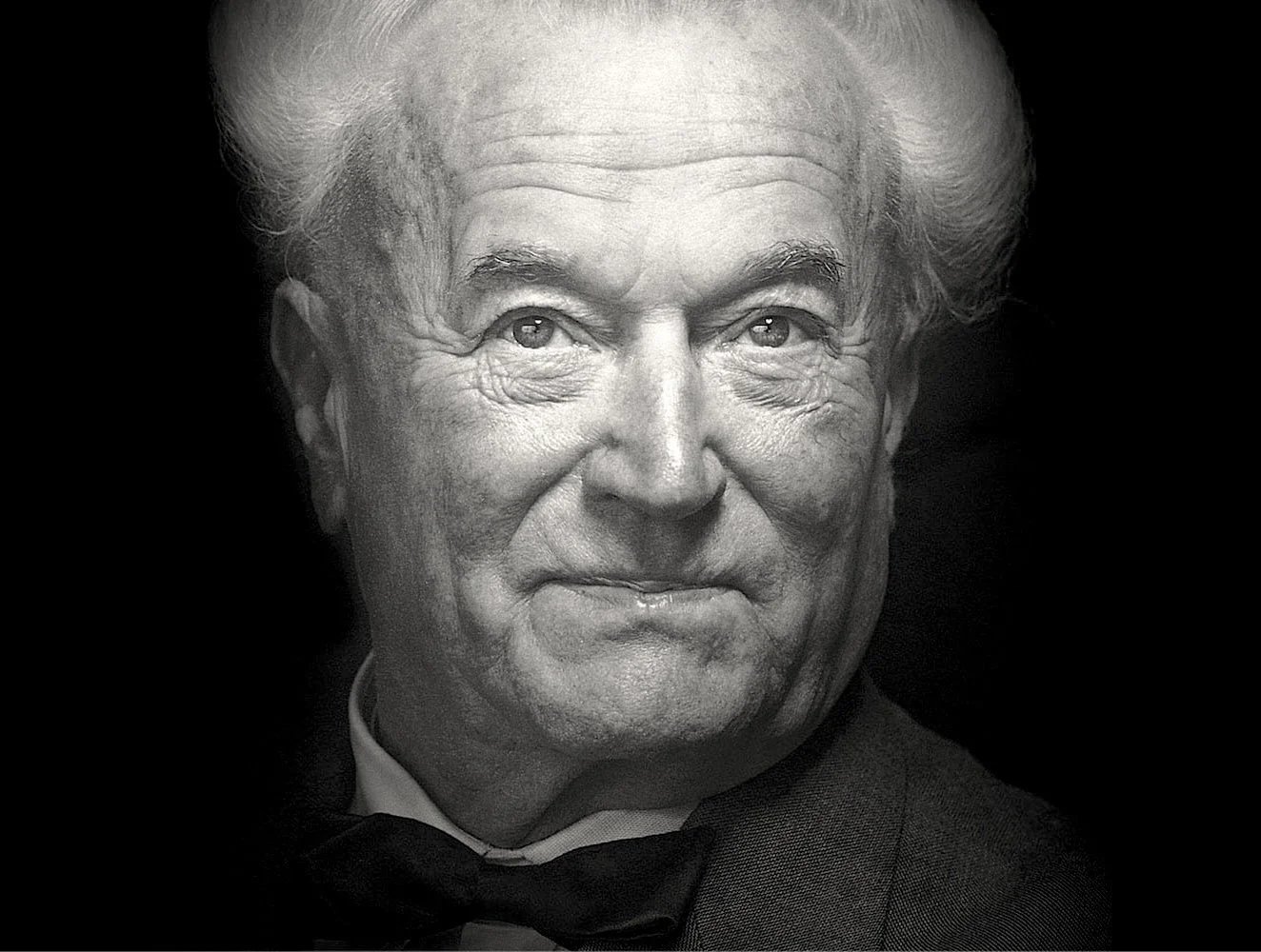
Hans Wilsdorf

In an interview with Swiss magazine Blick published Monday, Hans Wilsdorf Foundation general secretary Marc Maugué said the organization distributed more than 500 million francs in aid last year. The foundation has declined tax-exempt status for the past five years and pays about 75 million francs in taxes annually. Its latest purchase, Geneva’s RTS tower, cost 150 million. The total value of its real estate holdings is less than a billion francs.

Rolex and the Hans Wilsdorf Foundation share a founder but little else. Rolex guards its figures. The foundation publishes them. But the differences extend beyond disclosure.

(Data: Hans Wilsdorf Foundation)

The Hans Wilsdorf Foundation’s motto, “Le bien ne fait pas de bruit et le bruit ne fait pas de bien” (“Good does not make noise, and noise does no good”), underscores its discretion when it comes to public presence. That stands in contrast to Rolex, a company that thrives on visibility, sponsorships and products increasingly designed to be seen.

Rolex seeks out champions and virtuosos who embody excellence. The foundation looks for orphans in need of shelter, students short on tuition and local groups struggling to survive. Maugué noted, with modesty, that Geneva would scarcely change if the foundation disappeared. Rolex, by contrast, presents its watch as an essential emblem of achievement. For Rolex, visibility is everything. For the foundation, invisibility is the point. Together, they are the two faces of Hans Wilsdorf’s legacy.

After Federer Era, Rolex Pins Hopes on Sinner

(Photo credit: Instagram/@janniksin)

Rolex’s tennis roster is enjoying a strong season, collecting multiple Grand Slam wins. Italy’s Jannik Sinner, now world No. 1, took Wimbledon over fellow Rolex Testimonee Carlos Alcaraz. On the women’s side, Iga Świątek claimed the trophy wearing a Rolex Datejust, underscoring the brand’s reach at the top of the sport.

For Rolex, Sinner is the prize. At 24, he offers discipline on court and approachability off it, qualities the brand has leaned on since Roger Federer retired. Rolex recently devoted a 10-minute film to him in its documentary series on company ambassadors.

In New York for the U.S. Open, Sinner has become a regular at Osteria Delbianco, an Italian restaurant in Midtown. He was spotted there this week wearing a Rolex Daytona; it was a Submariner the year before. Such visibility matters: unlike Leonardo DiCaprio who rarely wears the product in public, Sinner does; he has been wearing the Daytona since his win at the Australian Open, in Jan. 2025. With youth, marketability and major wins, he represents Rolex’s best chance at a Federer-like successor.

Jannik Sinner at Osteria Delbianco in New York in Aug. 2025. (Photo credit: Instagram/@osteriadelbianco)

Rolex Loses Infrastructure Veteran Amid Expansion

Rolex’s future site in Bulle. (Photo: Chloé Lambert)

After more than three decades at Rolex, Hubert du Plessix is stepping down as senior vice president, closing out a 35-year tenure leading the brand’s Infrastructures & Investissements division.

Du Plessix studied law in Paris and spent a short stint in London before moving to Switzerland, where he rose to Rolex’s top ranks. Since joining the company in 1990, he has overseen the brand’s investments and infrastructure, including management of Rolex’s facilities, headquarters and new construction projects. As reported by Coronet, the brand owns significant real estate in Switzerland and abroad.

Du Plessix’s departure comes as the brand pursues one of its most ambitious projects: the construction of a new, one-billion-franc manufacture in Bulle.

Du Plessix’s influence has extended well beyond Rolex. As president of the Swiss Exhibitors Committee at Baselworld, he made headlines in 2020, when a leaked letter revealed his push for MCH Group to refund exhibitors, warning that without fair treatment Baselworld was headed for collapse.

Rolex to Back Geneva’s Future Tallest Tower

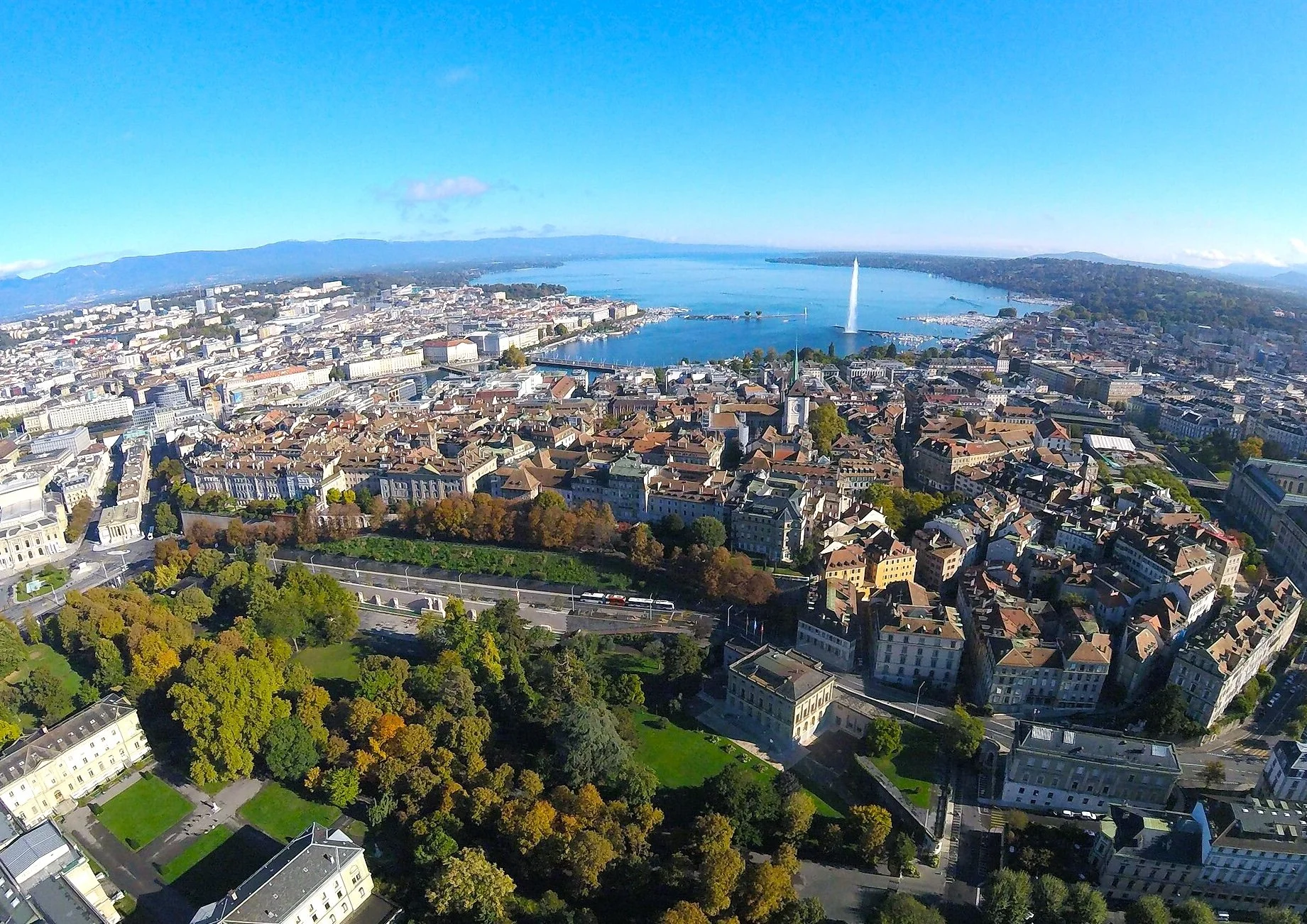
Geneva, Switzerland

Rolex is preparing to leave its most visible imprint yet on its hometown, as it plans to finance the tallest of two planned towers in the Praille-Acacias-Vernets district, a redevelopment zone on the edge of the city that is set to reshape the local skyline.

At 175 meters, the tower financed by Marconi SA, the real estate arm of Rolex SA, will be the tallest building in Geneva and among the highest in Switzerland. A second tower, at 170 meters and backed by an unnamed Swiss real estate group, will rise beside it.

The project is intended not for offices but for housing, with about 600 apartments and 70 percent of the space dedicated to residences. Public terraces atop both towers will open Geneva’s skyline to residents and visitors alike.

For Rolex, the investment underscores a deeper connection to the city where it has anchored its global headquarters for more than a century. An architectural competition is expected to open later this year, with completion projected around 2035.

First Book to Headline Rolex Land-Dweller

(Photo credit: TeNeues)

German watch writer Gisbert L. Brunner has returned with “The Watch Book Rolex: Next Generation,” a book to be released this fall in both German and English. The 256-page hardcover, published by teNeues, features nearly 200 images and explores Rolex’s rise through its tool watches, as well as the brand’s influence in culture.

Brunner’s earlier volume on Rolex sold more than 70,000 copies, according to Wichtschafts-Woche, a German magazine. The new title arrives just months after Rolex unveiled the Land-Dweller, its most significant new line in a quarter century.

(Photo credit: TeNeues)

For Brunner, the Land-Dweller typifies the “Rolex principle.” At first glance, it takes cues from a 1974 design, but inside it carries 32 patents and the new Dynapulse silicon escapement, marking a rare step-change in the brand’s restrained evolution. By emphasizing continuity in appearance while engineering innovation behind the dial, the book argues, Rolex continues to reinforce its standing as the most enduring name in luxury watchmaking.

“The Watch Book Rolex: Next Generation” will be available in the U.S. in late October on Amazon.

Rolex Files Trademark for In-House Film Company

Rolex on Aug. 20th filed a trademark application for “The Rolex Film Company” with the Swiss Institut Fédéral de la Propriété Intellectuelle, the latest sign the brand is growing its media efforts in-house — with protections covering films, documentaries and other audiovisual content.

Rolex in May began promoting its new "exclusive documentary series" on the Rolex Family which profiled individuals associated with the brand through short videos on Youtube. Its latest, released just Tuesday, is a 10-minute video on Jannik Sinner and his return to tennis after a three-month suspension.

Last year, Rolex helped produce “Federer: Twelve Final Days” for Amazon Prime Video, a documentary that chronicled the closing chapter of brand ambassador Roger Federer’s career.

The new trademark suggests Rolex has created an in-house unit for film productions, a rare move for a watch company, aimed at giving the brand greater control over how its timepieces and the stories of success around them are told.