
Another recommended story by one of our readers, about a technology easily confused with kinetic movements and many other quartz iterations, and most often seen on a Seiko; a brand guilty of developing so many novel watch technologies for us. Not only is Seiko known for initiating the Quartz Attack in 1969 with the Seiko Astron, but they’ve also developed the Spring Drive, a number of proprietary mechanical movements, solar-powered movements, and more. Today, however, we explore another, quirkier, Seiko invention...the meca-quartz.
The meca-quartz movement may be used by many brands like Dan Henry and Autodromo today, but its origins for ack to 1982 and the Seiko Caliber 7A28. When the first 7A28 watch was introduced it was the first analogue display watch with a quartz chronograph movement that was ever made. Which was simply a mechanical chronograph powered by a quartz battery with an analogue display. However, being first did have its benefits for Seiko and 7A28s have been since used by the military, appeared in films like James Bond, and were even released in a version designed by Giorgetto Giugiaro.
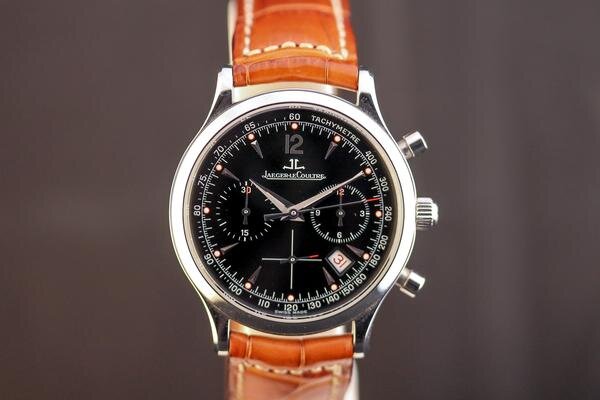
The Seiko meca-quartz is definitely a horology icon, but they weren’t the only ones to get in the hybrid game. In 1987, Jaeger-LeCoultre released the Caliber 630, which hosted two motors: one for the hands and one for the mechanical chronograph; which, like with the Seiko and others today, was essential for maintaining the mechanical chronograph feel while having all the ‘advantages’ of a quartz battery. Jaeger’s movement was pretty famous and was even used by IWC for their 1988 meca-quartz Pilot’s Watch.
Ultimately, especially when considering that the RAF were one of the first to order a 7A28 from Seiko for their pilots, its no wonder new brands that associate themselves with aerospace or automotive history are more than happy to use these movements. Not only are they good, cheap, and readily available; but they are full of history…horology history that is.