
An Brief Overview of the Geneva Seal
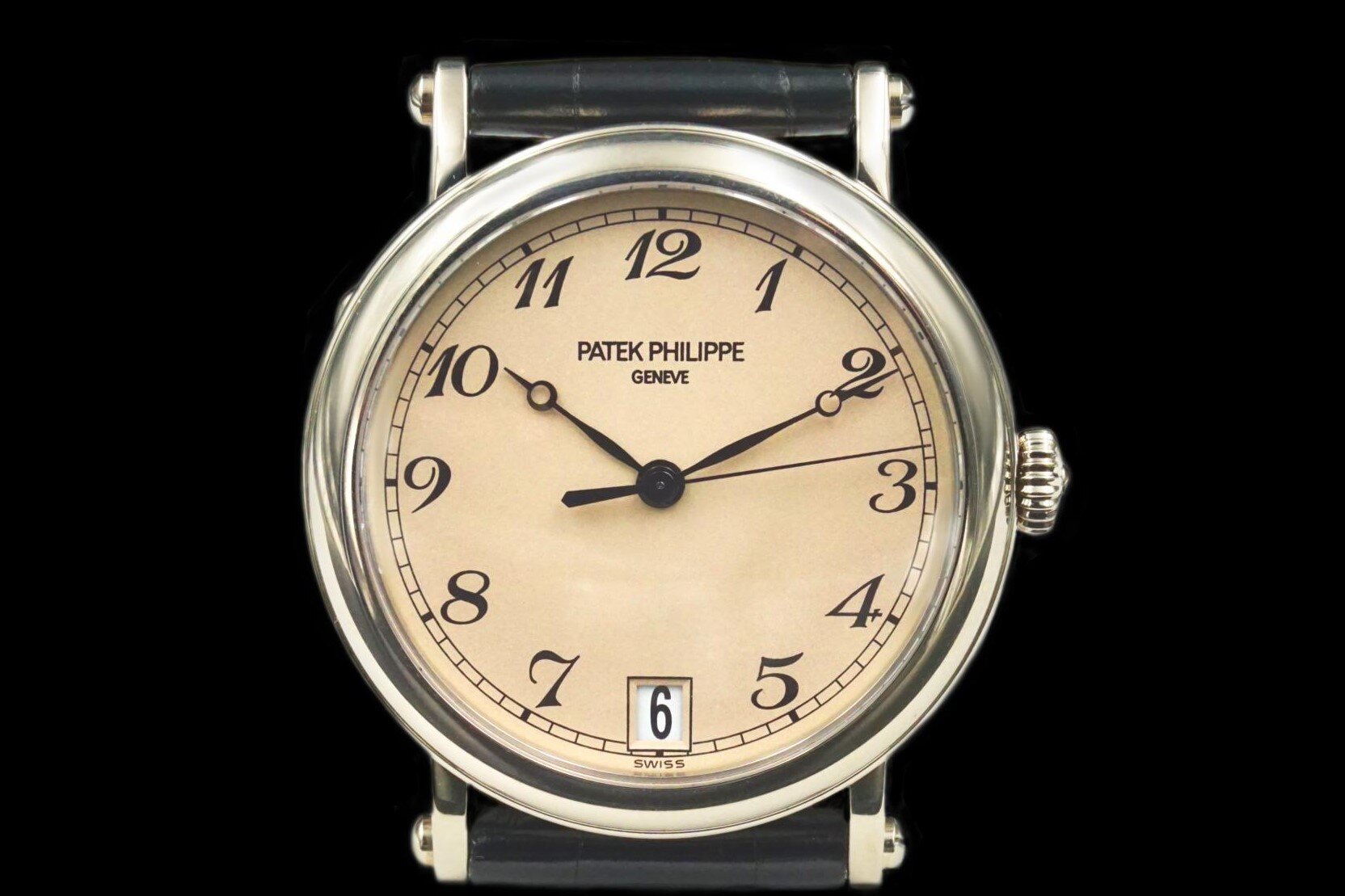
Patek Philippe ref. 5053-001G / Credit: Michael Ashton Watches - Preview picture credit: Golden Time Co
The Geneva Seal or Poinçon de Genève, an ancient symbol in the world of horology. Understanding things like the Geneva Seal is becoming ever more important in a global industry where the counterfeit market is ever growing.
In the early 1880s, as Switzerland was coming into its own as the horology capital of the world and competition was increasing between different cantons, the idea to develop a hallmark, protecting the integrity of artisans in the Canton and Republic of Geneva, started to gain popularity. The idea for the Geneva Seal was not only to assure the quality and reputation of products made in the Republic, but also to ensure that talented artisans stayed in the city. Therefore, on November 6th, 1886 the first law governing the Geneva Seal was passed. It was underwhelming to say the least, stating that watchmakers could voluntarily submit their watches to an official office that would examine their products. Between the law’s inception and the end of World War I an average of less than 500 watches were submitted to the office annually, mostly by individual watchmakers instead of companies. A large part of the problem was determining what a watch from Geneva was in the first place, and after much deliberation it was decided that these criteria would be based not only on where the watch was produced, but also on the quality with which it was made.
During the interwar period the Geneva Seal saw a decline as only a few manufacturers dominated the production market. Patek became the lifeblood of the Geneva Seal, with its inspected watches increasing from 5% in the early 1920s to 80% after 1934. The Geneva Seal saw little use until the Quartz Attack, and only after did other brands start having their watches certified.
Since the 1990s the institution has certainly started to regain prominence, with new and emerging brands using it as a mark of credibility. The Geneva Seal has never been a stagnant institution, as the industry changes around it so have its standards, with the latest update in 2014.