
An Alternative History of the Universal Genève Polerouter
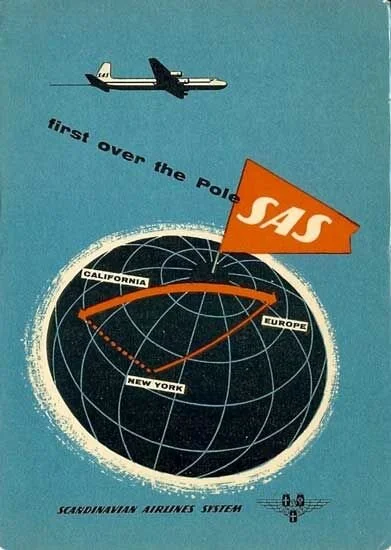
Old SAS ad depicting the legendary ‘poleroute’
We previously discussed the Universal Genève Polerouter and its significance for its link to the first Polar flight, but why was the first Polar flight so important? If anything, it was just a new route. Sure, it saved time and money, but what were the geopolitics, if any, behind this advancement?
Russia, as we’re all aware, used to be called the Soviet Union, and throughout the Cold War Russian/Siberian airspace was highly restricted, essentially completely off limits for non-Soviet airlines. This was problematic for us over here in the West because we wanted to trade with East Asian countries like Korea, Japan, and China. Moreover, the West Coast of the US and Canada was pretty hard to access from overseas (Europe) since airplane technology had yet to allow for nonstop flights of such distances. This was also around the time when many Asian countries were starting to experience high economic growth. In fact, even today Russia only allows one airline from each country permission to fly over Siberia. So, what was so important about the Scandinavian Airline Systems’ 1952 Copenhagen-Los Angeles flight? You probably guessed it by now; flying over the arctic allowed a voyage that once would’ve taken days to be cut down to mere hours, increasing access to the West Coast of the US and Canada from Europe and decreasing costs for shipping and trade between Europe and East Asia. It was truly remarkable, and quite the blow to the USSR, that had maintained its airspace monopoly for decades at that point.
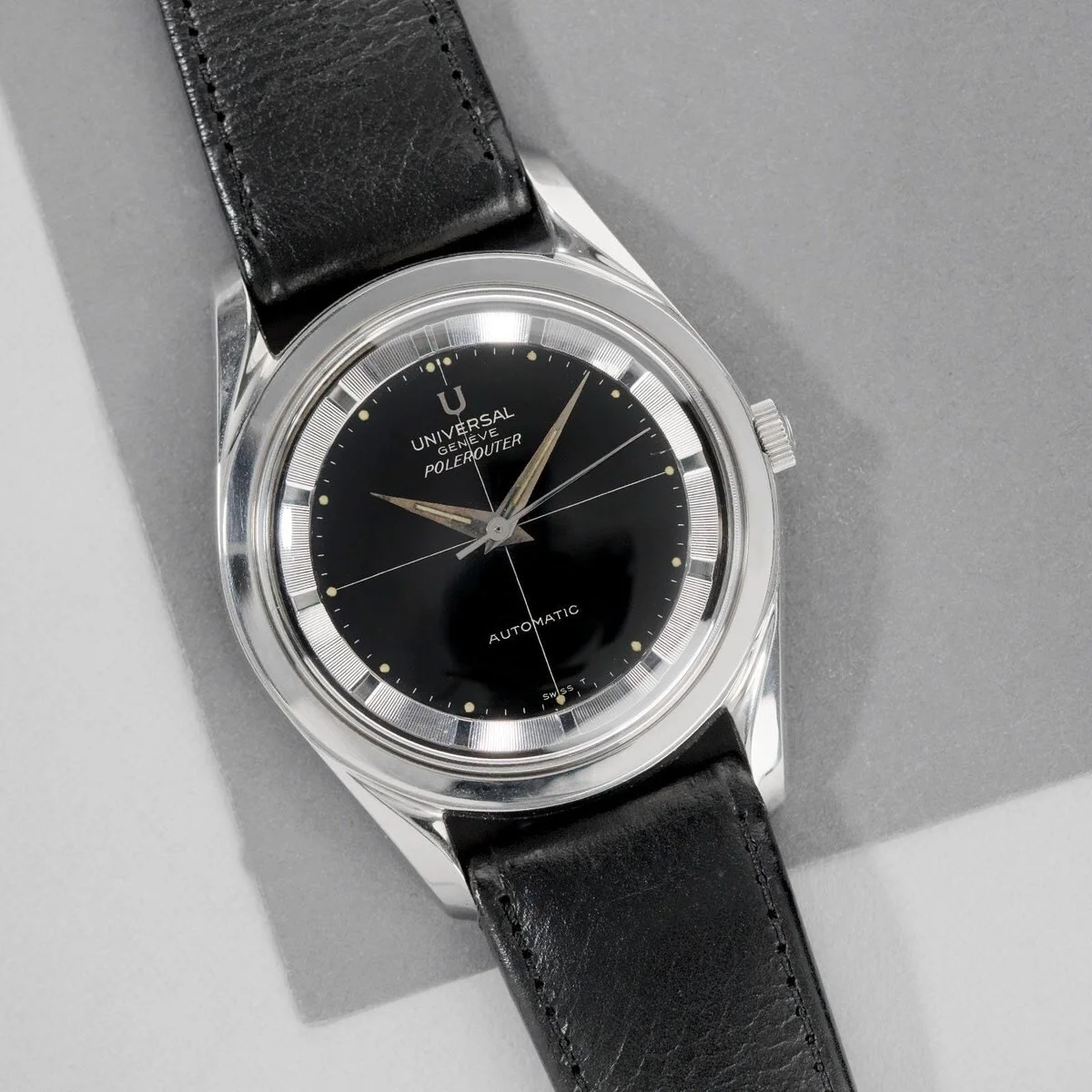
Universal Genève Polerouter gilt dial / Credit: Bulang and Sons
We often try to understand what a particular watch represented about a certain period in history, usually in terms of culture. But we should challenge ourselves to go deeper and try to understand what underlying trend a brand may have been trying to associate itself with through its endorsements. When the SAS crew landed in Los Angeles and put on their Universal Genève Polerouters on that fateful day, they were not just making a fashion statement, but a geopolitical one. They were standing up against the USSR and standing up against tyranny and oppression.