
Doxa Dive Watch History
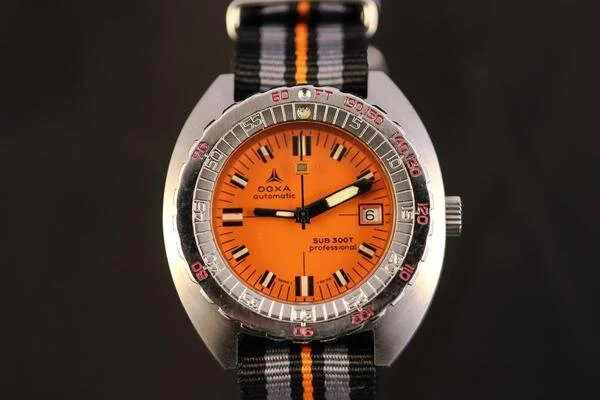
Doxa Sub 300T Professional / Credit: AnalogShift
Rarely named among dive watch greats like Rolex and Panerai; Doxa wasn’t the first dive watch manufacturer, and arguably isn't the best; but their dedication to details and innovation has given the company a prominent place in the minds of divers and watch collectors alike.
Doxa was founded in 1889 by George Ducommun, who began working as a watchmaking apprentice at age 12. Born into a poor family of 13 children in the Jura Mountains, Ducommun got into the watch business, opening a watch repair shop at the age of 20. He was ambitious from the beginning, as he often made his deliveries in person and on foot, even through the snow. Eventually, Ducommun grew tired of repairing watches and sought to make his own. It took a while, but in 1910 Ducommun registered the name Doxa, which means ‘glory’ in Greek, and devoted himself completely to growing his business.
Ducommun started off making cockpit clocks for the budding racing and pilot markets. He perfected an 8-day reserve watch movement he had patented in 1908 and struck a deal with Bugatti to include them as part of their car's equipment. Then, as diving was popularized in the 1960s, Doxa launched a research project in collaboration with Urs Eschle and Claude Wesly to study the development of high-quality dive watches. The result of this research was the launch of the Doxa Sub 300T, presented at Baselworld in 1966. The watch featured its iconic orange dial, case and bezel, and was 300m water resistant, becoming the focus of Doxa's collection.
Doxa's diving legacy has continued to this day, their tools used by professionals and amateurs alike; among them Jacques Cousteau. Today, Doxa still makes dive watches, and has a collection that features models like: the Professional (orange dial), the Sharkhunter (black dial), and the Carribbean (blue dial). George Ducommun’s dedication eventually proved worthwhile, as his financial success allowed him to purchase the Chateau des Monts, today home to the Watch Museum of Le Locle.