
We previously discussed Breguet’s early years and how he got into watchmaking. Today we take a look at his life as a professional watchmaker, starting with a very important date – his first marriage.
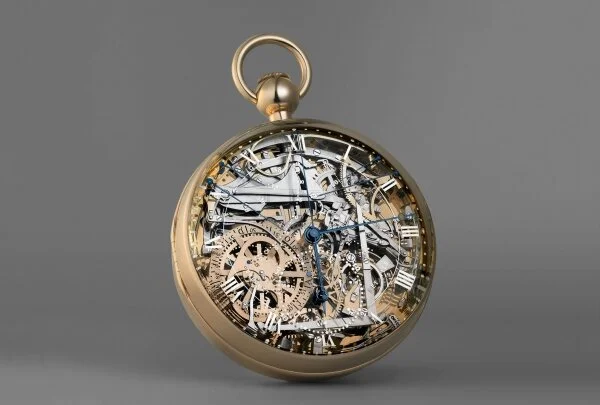
In 1775, a 28-year-old Abraham-Louis Breguet married Parisienne, Cécile-Marie-Louise L’huillier. At the same time, liberal reforms by Louis XVI were underway and favourable towards Breguet’s watchmaking business. The newlyweds moved into an apartment in Île de la Cité, an area known for watchmakers and workshops for precision instruments. Berthoud and Lépine were known to have workshops there; who, along with many other watchmakers were often concentrated around place Dauphine. These watchmakers were friendly towards each other, often sharing suppliers and techniques. Unfortunately, these middle years were not so easy on Breguet, as after the birth of his first son, Antoine-Louis, Breguet and his wife had two miscarriages, before Cécile herself succumbed. However, there was still professional success to be had in this period; in 1780 he started to sell his ‘perpétuelle’ commercially, gaining favour with aristocratic clientele. In 1783, he also developed the new standard for repeater watches; replacing the bell with a gong spring, which significantly reducing the thickness of the watch. Breguet was also among the first French watchmakers to introduce the lever escapement to continental Europe. All the innovation made Breguet a fairly prominent figure at the time and is largely the basis for status today. He not only developed mechanisms but also introduced aesthetic features like the use of enamel and ‘Breguet Numerals’. Simultaneously, Breguet was moving up in court, with Louis XVI buying a timepiece from him in 1784 and Marie-Antoinette also indulging, buying several timepieces over time.
Today, Breguet is most certainly recognized for their high-end (or high-price) timepieces and their history of association with the aristocracy and elite. However, the foundation of the brand, the technical prowess of the company’s founder, should not be diminished.