
A Seiko Chronograph Made for the Olympic Games
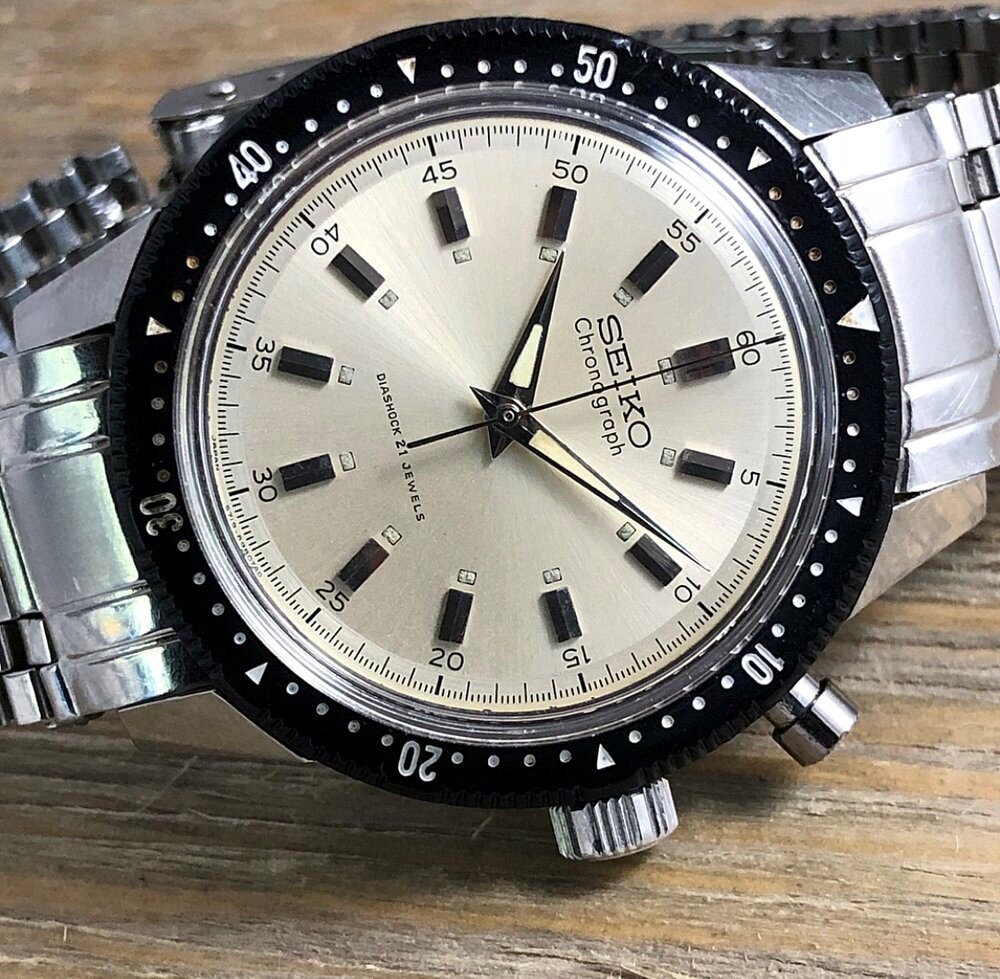
Seiko Cal. 5719 Monopusher Chronograph ref. 45899 / Credit: Hub City Vintage
Japan and the Japanese watch industry were severely impacted as a result of WWII. So, it was especially significant that Tokyo was chosen to host the 1964 Summer Olympics. It symbolized the start of a new era for Japan and for Japanese watchmakers to be in the world’s spotlight. Seiko, chosen to be the Official Timekeeper began to prepare for the games in 1961.
Seiko developed several watches for the Olympic Games. First was the Seiko Cal. 6217 World Timer, and next was our subject, the Seiko Cal. 5719A (45899) monopusher chronograph.

Seiko World Timer 6217-7000 and Seiko 5719/45899 Monopusher Chronograph advertisements / Credit: DC Vintage Watches
The Seiko 5719/45899 Monopusher Chronograph was only released briefly during and after the Olympics. The 5719 also had two variants, the 5717 and the 5718. The Seiko Cal. 5719 was a manual winding column-wheel movement and had only one pusher for all of the chronograph functions. The pusher would start, stop, and reset the chronograph with no chronograph sub-dial, instead tracking elapsed time on the rotating bezel.
The variation to the Seiko Cal. 5719 chronograph, the Cal. 5717, included the date function. The Seiko Cal. 5718 was a much more complicated model, it had a ‘lap counter’ from 0 to 99 at 12 o’clock while the sub-dial at 6 o’clock had both the ‘seconds hand’ and the chronograph register. It also had two chronograph pushers and two additional pushers on the left that adjusted the counter. On top of their mechanical significance, these Seiko ‘Olympic’ watches also had the torch on the caseback, to commemorate the 1964 Tokyo Olympics.
Just a mere 5 years after the Cal. 5719 chronograph’s release, Seiko released the Cal. 6139, their first automatic chronograph movement. The Seiko Cal. 6139 chronograph was one of the first automatic chronographs to hit the market during a year filled with competition among watchmakers to release the world’s first self-winding chronograph. This would then be followed by the release of the legendary analog quartz chronograph in 1983, the Seiko Cal. 7A28. Thus, the Cal. 5719 was the impetus of Seiko’s journey with chronographs; not something they are particularly known for, but still something they did remarkably well for a time in the 20th century.
By: Eric Mulder
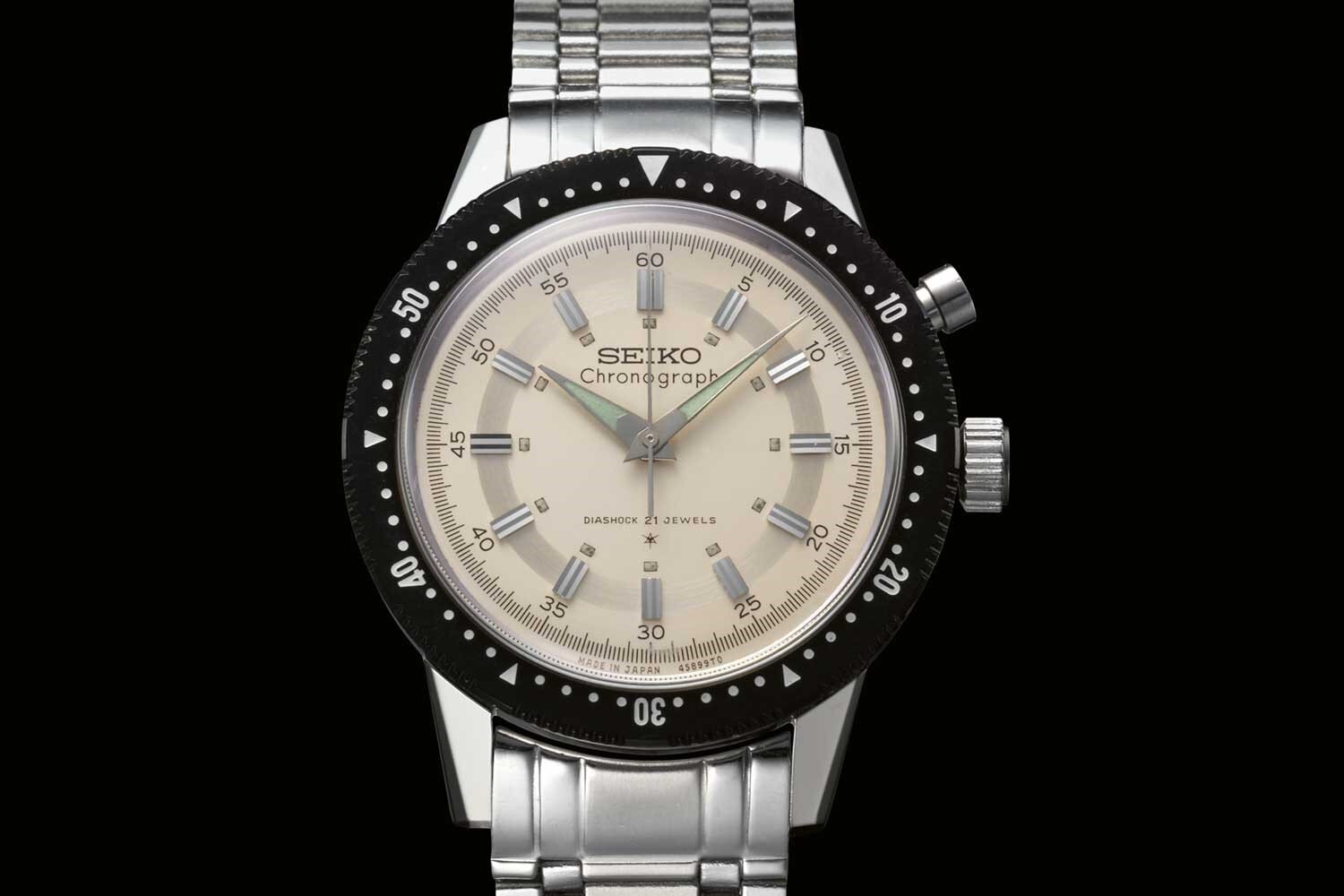
Seiko’s Cal. 5719 monopusher chronograph / Credit: Revolution Watch
Read more:
“May 1964 Seiko 5719A/45899 Mono-Pusher Olympic Chronograph.” DC Vintage Watches, https://www.dcvintagewatches.com/product-page/may-1964-seiko-5719a-45899-mono-pusher-olympic-chronograph.