
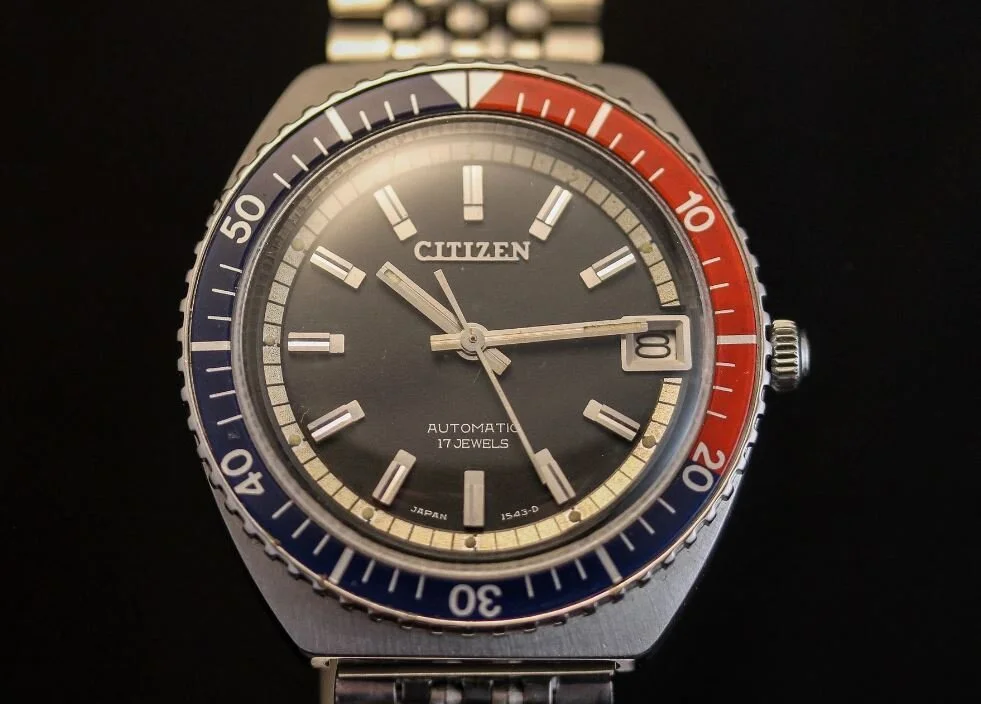
As the two preeminent Japanese watchmakers, Citizen and Seiko have competed for over a century to win the hearts of both Japanese and global consumers. And while we’ve talked a lot about Seiko, Citizen is arguably just as innovative and perhaps popular as Seiko today.
Citizen was founded in 1918, as Shokosha Watch Research Institute by Kamekichi Yamazaki. Yamazaki led Yamazaki Shoten, a metals business focused on watches, and was Chief Secretary of the Tokyo Commercial and Industrial Timepiece Cooperative. Citizen itself was founded in 1930 by Yamazaki, Yosaburo Nakajima, and Ryoichi Suzuki. Both of the two other men had worked in the watch industry before, Nakajima became Citizen’s first President and Suzuki became its first plant manager. The name “Citizen” came from Tokyo’s Mayor at the time, Count Shinpei Goto, who was a friend of Yamazaki’s. He named their first watch “Citizen”, as a symbol of his wish to make it a widely worn timepiece. Their first timepiece was released before Citizen was formed, in 1924, when they were still the Watch Research Institute. They produced a timepiece which used the Citizen Caliber 16 and was allegedly first given to the emperor as a gift.
In 1931, Citizen released its first wristwatch, the Model F, which had a production run of 26 years, lasting until 1957. The Model F was followed by Citizen’s first women’s wristwatch, the Model K, in 1935. The 1940s were quiet, however, the 1950s saw the company release the first Japanese calendar watch, the Citizen Calendar, released in 1952. Citizens kept their innovative streak up throughout the 1950s, releasing an alarm and shock-resistant watch, but more notably, Japan’s first waterproof timepiece in 1959.
Ultimately, in the first half of the 20th century, Citizen had a lot of firsts before Seiko, and with its release of the most accurate watch in the world, it’s just another reminder of the rivalry between the two Japanese greats.
By: Andres Ibarguen