
History of the Seiko Elnix and Early Seiko Electronic Watches
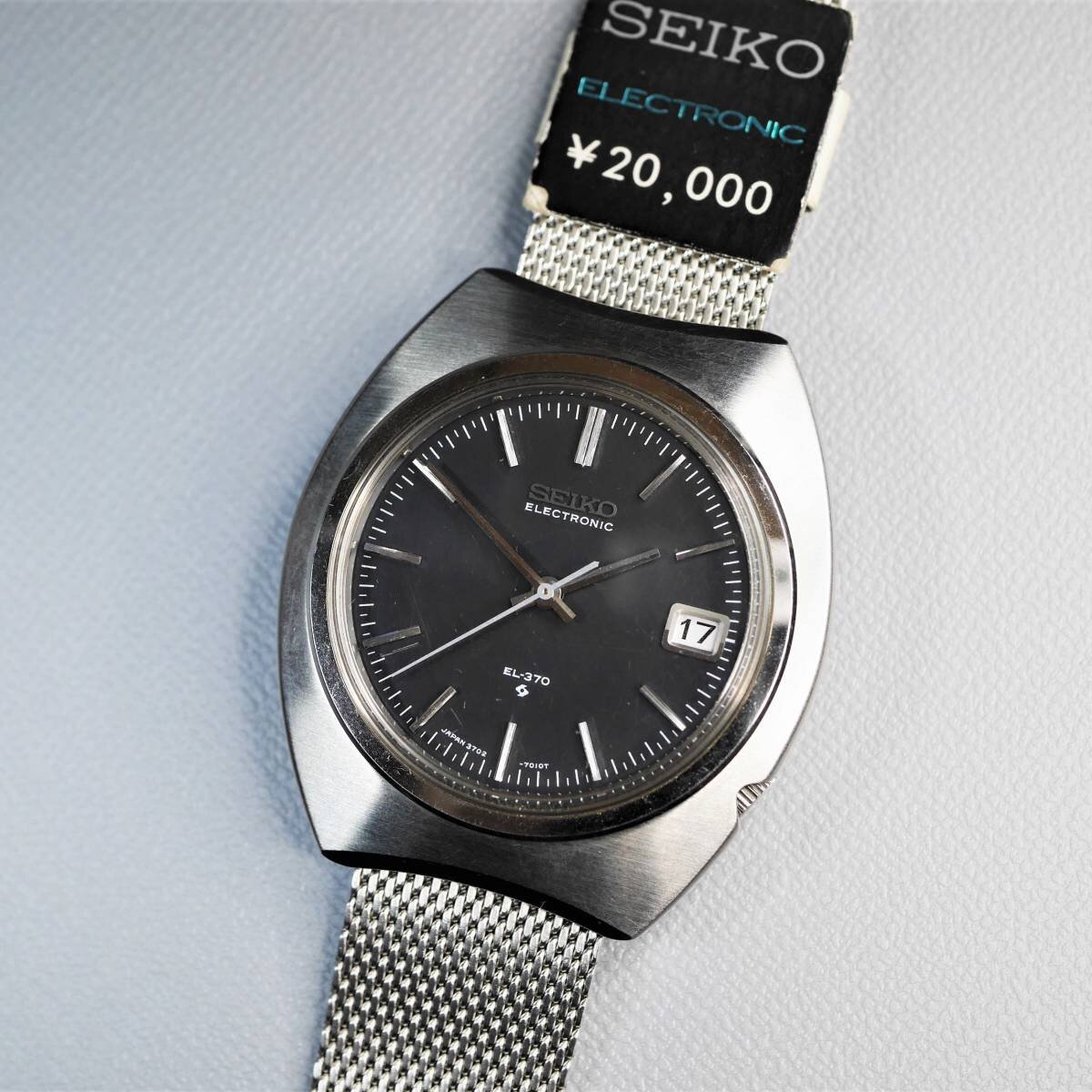
1971 Seiko Electronic 3702-7000 ref. 37ELC-012 / Credit: Craig Henn/@horacehenn
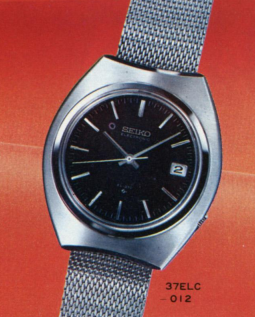
Seiko Electronic ref. 37ELC-012 from the 1971 JDM brochure
The Seiko Cal. 35A (or 35SQ) is widely known as the world’s first commercialized quartz movement, released in 1969 in the first commercial quartz watch – the Seiko Astron. The ‘35A’ is known as the watch movement that upended an industry and changed watch technology as we know it. Before that, however, there were already electronic movements. Notably, Bulova with its turning forks, and eventually Seiko producing electronic watches in the early 1970s under the name ‘Elnix’.
Seiko’s early quartz history goes back in the late 1950s, just after the post-war recovery period, with the production of a quartz clock, this led to the development of the Crystal Chronometer in the mid-1960s, and winning awards at the Neuchâtel Observatory competition for its quartz pocket watch in 1967. At which they also presented a quartz wristwatch. That wristwatch is presumably that that first housed the first 35SQ movement, made in 1967 for the competition and only commercialized two years later.
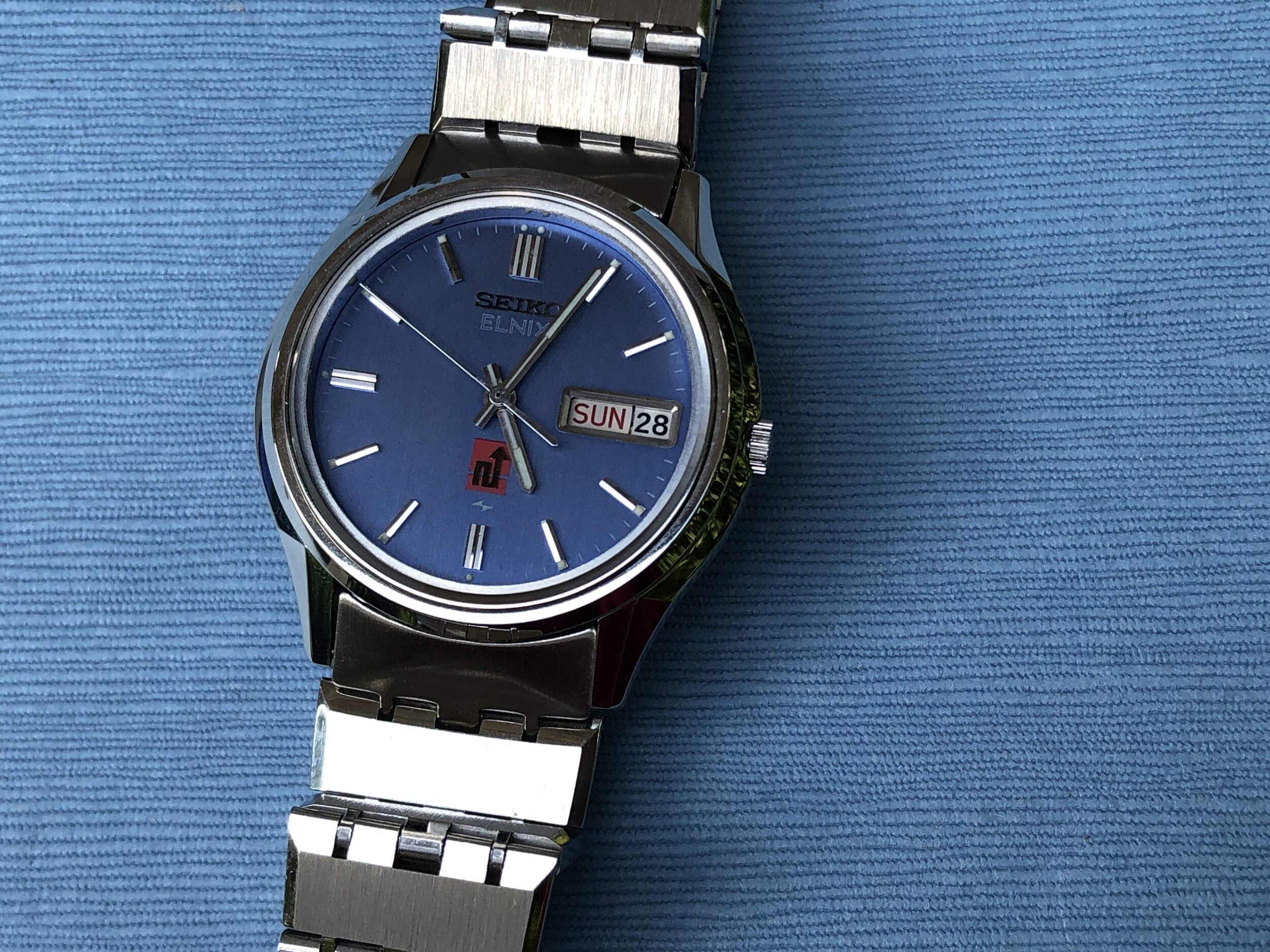
NOS 1973 Seiko Elnix 0703-6010 ref. 07ELW-014 / Credit: Vintage Seiko NL
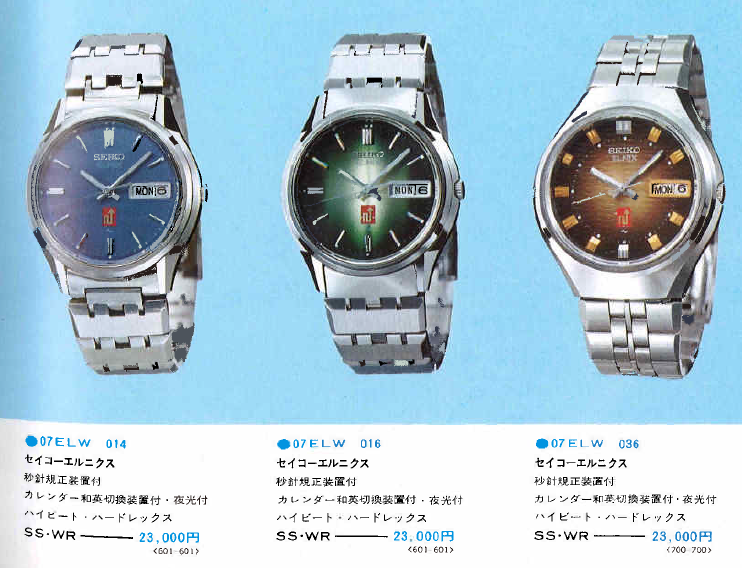
Seiko Elnix ref. 07ELW-014 from the 1974 JDM Seiko catalogue
Now, the Elnix’s history also starts in the late 1960s. Around this time, looking through the Seiko catalogues, you can see that the electronic watches started to be branded as Elnix only in 1974. Before that you can see that for several years Seiko already produced the electronic EL-330 and 370 models, that became the Elnix in the latter half of the 1970s, with the ‘07’ (0702/0703) movement that was first produced in 1973 as the first Elnix.
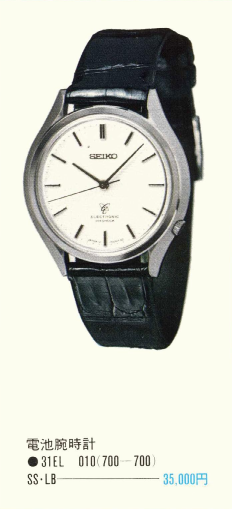
Seiko ref. 31EL-010 from the 1969 JDM Seiko catalogue
Seiko’s electronic movements, in general, go back to the ‘31’ series. There are four others including the ‘32’ and the aforementioned ‘33’ and ‘37’ series, plus the final ‘07’ Elnix series in 1973. The ‘31’ first appears in the 1969 catalogue (although it was released in 1968), while the ‘37’ came second appearing the 1971 catalogue and brochure, and the ‘33’ appears in the 1972 supplemental catalogue.
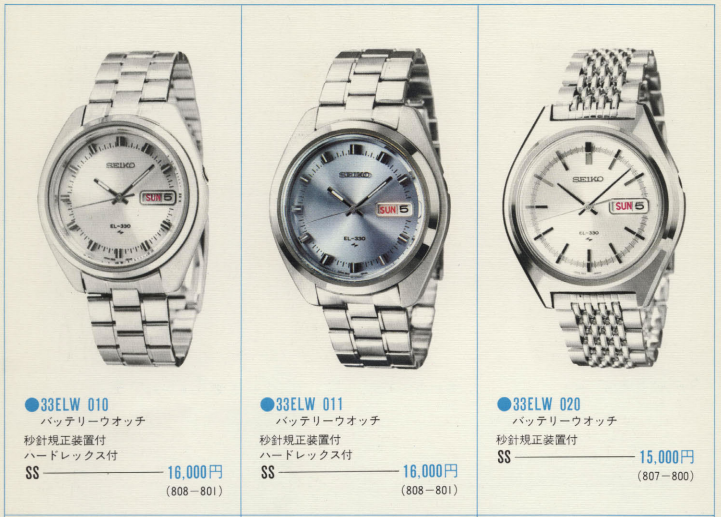
Some EL-330s from the 1972 supplemental catalogue
Of those, only the last and fifth is the Elnix, produced for a short period in the mid/late-1970s. The Elnix in particular can be seen as Seiko’s answer to Citizen’s Cosmotron. Although Seiko may be the dominant brand today, at the time its position was not as secure. Seiko also made several electronic pocket watches, in fact the EL-320 can be seen in the 1972 Seiko luxury catalogue in a pendant watch. This was the same year in which Seiko released the world’s first women’s quartz wristwatch.

Seiko ref. 32EL S-400 from the 1972 luxury catalogue
Seiko electronic watches may be very intriguing and collectible pieces today, but according to the company itself, after the development of the 3100 they were already abandoning the technology to redirect efforts towards quartz – specifically commercializing a quartz watch within a year; by 1969. In retrospect, a good decision by Hattori.
By: Andres Ibarguen
Read more:
“The remarkable achievement of the Seiko Quartz Astron lives on.” Seiko Watches, https://www.seikowatches.com/us-en/products/astron/special/story_qa50th_1/.
See the different JDM Seiko catalogues from 1969 to 1974, available online or by request (e-mail).

Here’s an electronic Citizen Cosmotron currently on sale here.
Editor’s note (20/02/2021): an earlier version of this article implied, in the opening paragraph, that the Elnix movements were turning fork. It has since been updated to be more clear. Thanks to the reader who pointed it out.