
Seiko Disrupting the Watch Industry
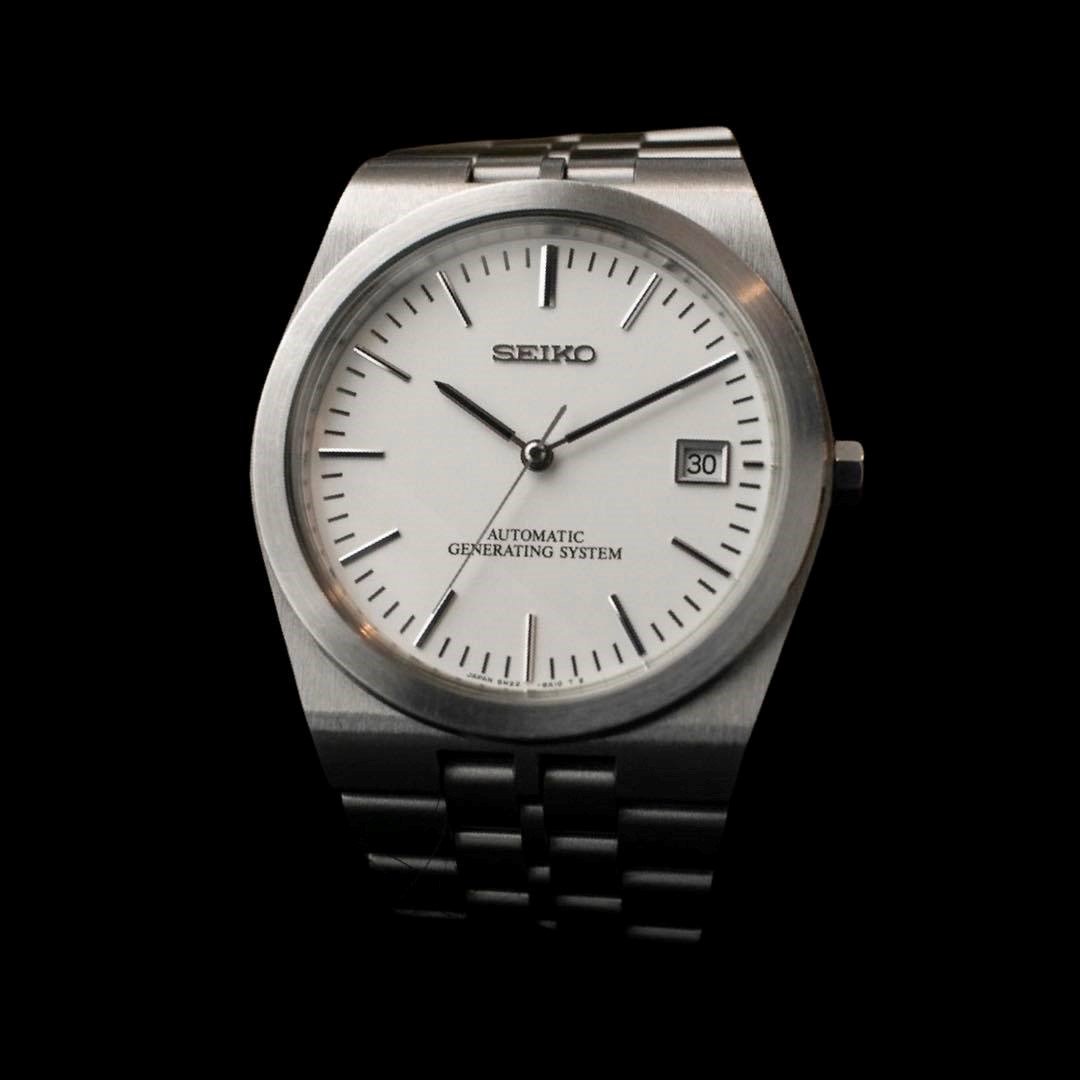
Seiko A.G.S. 5M22-8A10
Seiko’s founder, Kintaro Hattori, always had a vision that Seiko should always be ‘one step ahead of the rest’. Thankfully, watchmaking is a playground that offers endless avenues for creative minds to express themselves. Seiko, through the years, has been a leader in technology and design, continuing to do so in modern times.
In the mid-1980s, the quartz revolution had successfully dominated the watch market, which in turn became saturated. Technological breakthroughs caused quartz watches to flood the market, but they were now much cheaper and seen as commodity items. Massive amounts of quartz watches had been produced, and in turn, disposed of each year - including their lithium batteries. This created a new challenge for watchmakers, how do we reduce the environmental impact of this new technology?
Seiko Kinetic History
Going back to 1986, at Baselworld, Seiko introduced the first Kinetic prototype: the ‘AGM’, the first watch to convert kinetic motion into electricity. A couple years later, Seiko released the first commercially available kinetic watch, the ‘A.G.S.’, or Automatic Generating Quartz. This would spark the introduction of the kinetic product line for Seiko, which would end up selling over 8 million watches by the turn of the century.
Seiko officially changed the name of the A.G.S. collection to ‘Kinetic’ in 1997, which is what it has been called since. In 2022, you can still find kinetic powered timepieces in the Seiko Premier collection. Although, they are seemingly being phased out, with direct competition coming from the Seiko Spring Drive collection, which also offers a direct fusion between mechanical and quartz.
What Is the Seiko Kinetic?
Like mechanical and quartz, kinetic is a drive system for a watch’s movement. You can think of the Seiko Kinetic as the fusion between an automatic and quartz movement, in which a capacitor is charged instead of a spring. The Seiko Kinetic is a watch with an oscillating weight which converts the wearer's motion into electricity and powers the quartz movement.
How Does the Seiko Kinetic Watch Work?
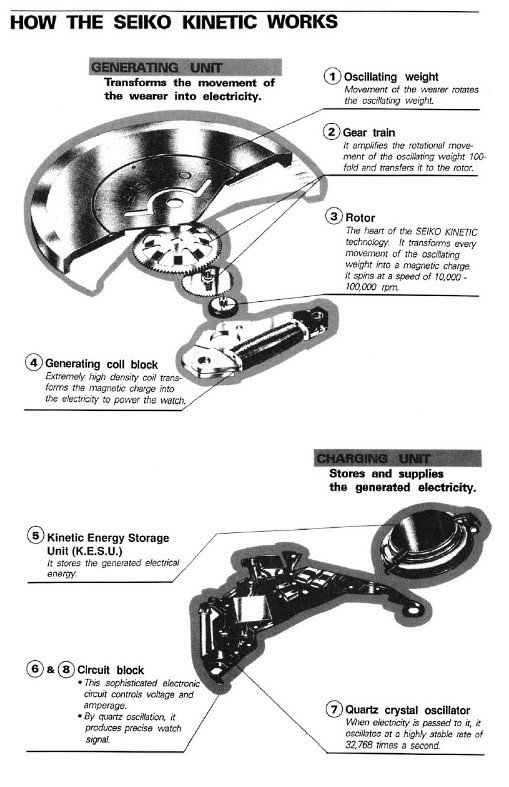
How a Seiko Kinetic works / Credit: WatchUSeek user
The Seiko Kinetic is driven by the movement of the wearer. This is possible by having an internal electrical generator, which gets powered through the kinetic movement of the user’s wrist. The generated electricity gets stored inside a rechargeable battery which requires less maintenance than a typical battery cell in quartz timepieces. This was key to the question of sustainability which arose in the 1980s, when so many lithium batteries were being used then disposed of in quartz watches.
The History of Seiko Kinetic Through 5 Milestone Seiko Watches
The Seiko Cal. 8T23 (1986)
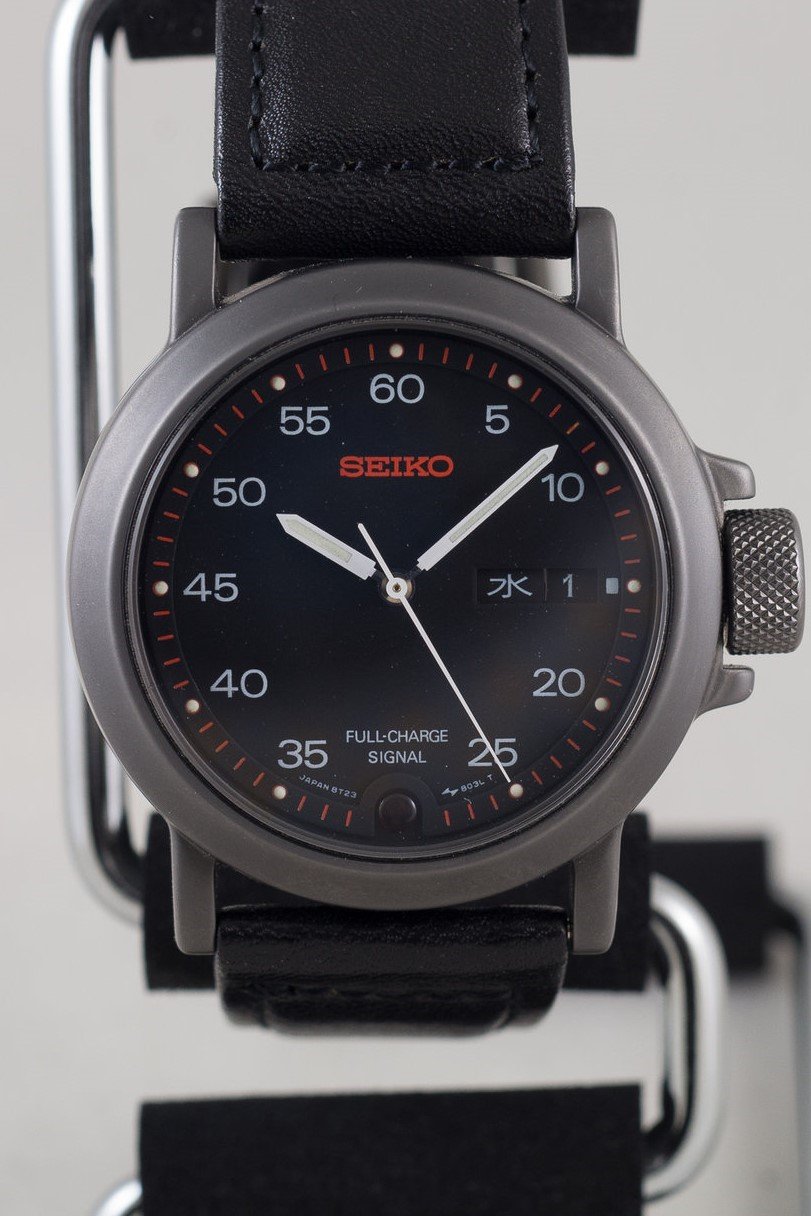
The Seiko ref. SBAD003 with the 8T23 movement / Credit: Plus9Time
The world’s first manual winding quartz movement was Seiko’s Cal. 8T32, released by Seiko in the late 1980s. The wearer would be able to wind the crown and turn a small electrical generator, which charged a capacitor.
This timepiece would be discontinued a year later, as it was not commercially viable due to a variety of reasons. Without going too much in depth, one of the main reasons was an astonishing 3-minute winding time for 75 hours of power reserve.
Though ultimately a commercial failure, Seiko can adapt and create new conceptual and physical models through an iterative learning process. Almost all innovations are the result of previous learning failures.
The Seiko A.G.S. Cal. 7M22 (1988)
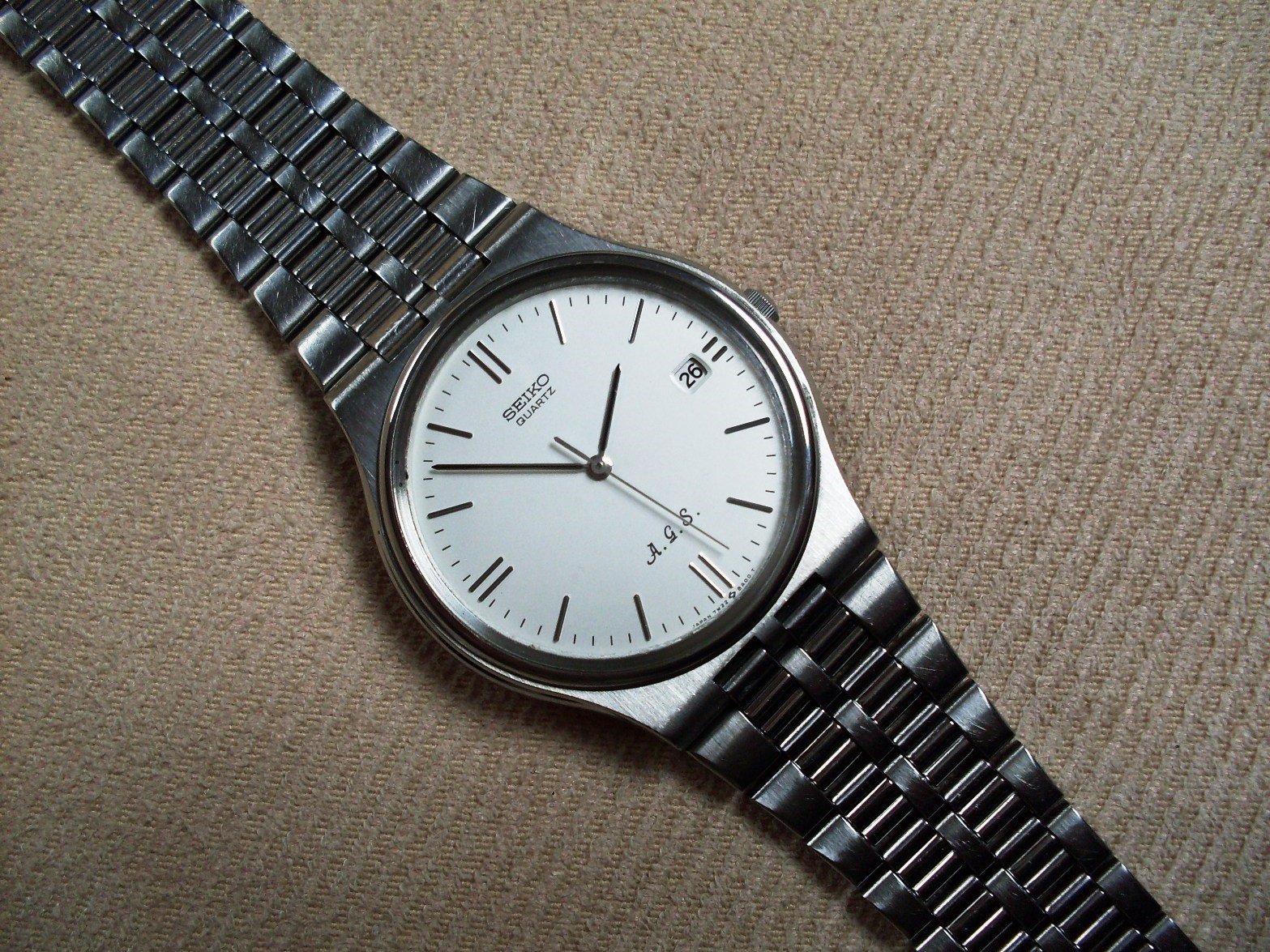
The Seiko A.G.S. 7M22-8A10 / Credit: The Watch Site user
Building off the 8T32 movement, Seiko released its A.G.S. technology in 1988. Since the introduction of quartz technology, Seiko had been striving to create ‘no battery’ watches. This is exemplified through their solar powered watch in the late 1970s and their 8T32 movement released previously. However, it is important to note that you still needed to replace the rechargeable battery cell once there were no charging cycles left. You could expect to change the battery every 10 years versus about 2 years for a standard cell, however, these time spans did vary.
The Seiko Kinetic Chronograph Cal. 9T82 (1999)
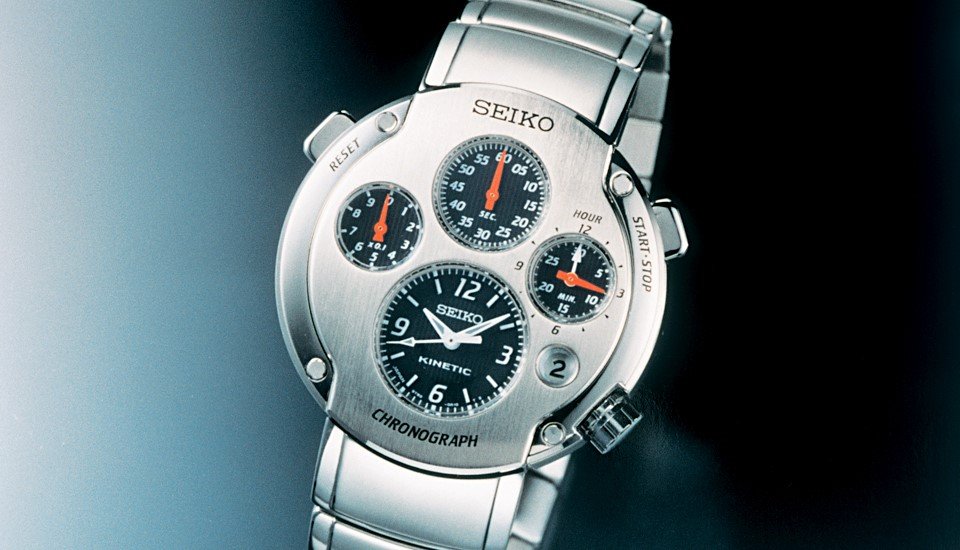
The Seiko Kinetic Chronograph Cal. 9T82 / Credit: Seiko
Seiko’s kinetic driving watches were, for the first time, being used in a chronograph movement by the late 1990s, through a fusion of electrical and mechanical watchmaking. This release also included some unique new features such as a zero-resetting function and a movement which protects the timepiece from dust.
The Seiko Premier Kinetic Perpetual (2005)

The Seiko Premier Kinetic Perpetual watch / Credit: aBlogtoWatch
The Seiko Kinetic Perpetual has the accuracy of quartz, the functionality of mechanical perpetual calendars, and the inexhaustible source of energy through kinetic motion.
With a full charge, this watch has an amazing 4-year power reserve. This is possible through its unique power reserve function and ‘auto relay’ mode. The first function allows the watch to go into a ‘sleep mode’ after 72 hours of no usage, which preserves a significant amount of its energy. The auto relay function continues keeping track of the correct date and time. To start it up again, you just shake the watch, and the date and time will revert back to their correct position. It also features a perpetual calendar which will remain correct until February 28th, 2100.
The Seiko Velatura Kinetic Direct Drive (2007)
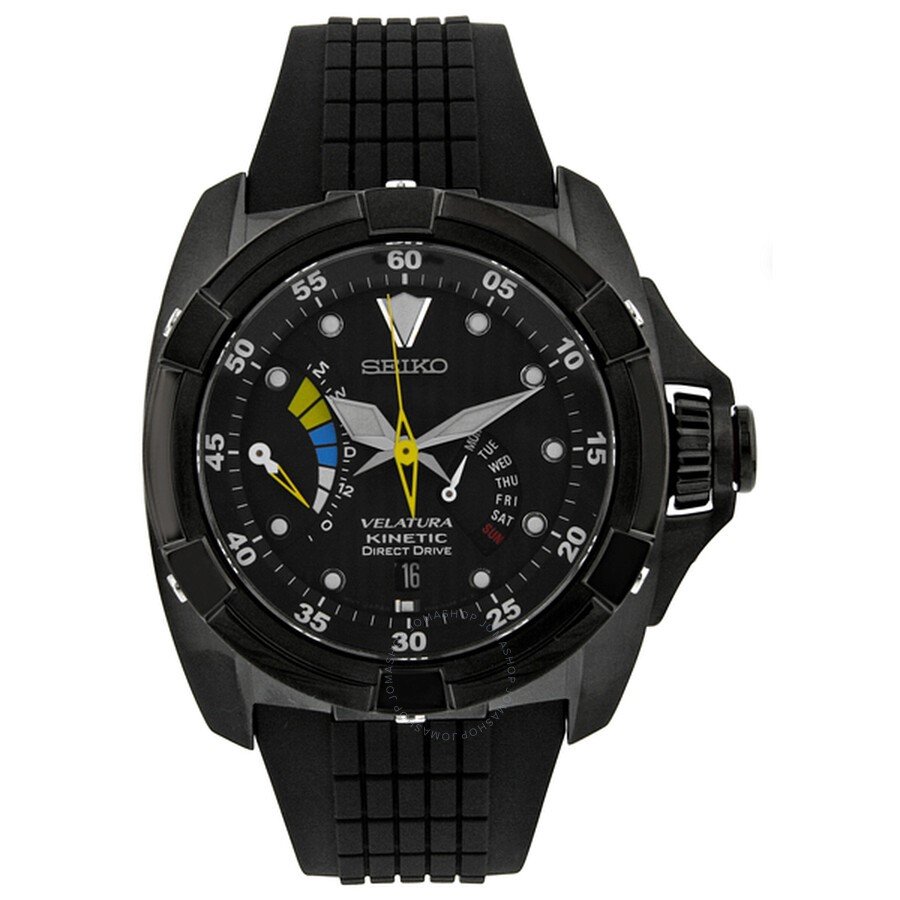
The Seiko Velatura Kinetic Direct Drive ref. SRH013 / Credit: Jomashop
Manual wind was once again introduced to the Seiko Kinetic movement in the early 2000s. The Seiko Kinetic Direct Drive introduced the ability to ‘top up’ the charge through winding the crown, with the power reserve indicator on the dial. In the above image, the white block beside 12, would indicate a 12-hour power reserve, while the yellow block beside “M” indicates one month of power reserve.
This was the embodiment of Seiko’s self-described ‘emotional technology’, in which they put extra emphasis on the ecological impact of the time piece. This was ultimately the answer to the challenge for watchmakers in the mid-1980s: how to reduce the environmental impact of this new, abundant, quartz technology?
By: Eric Mulder
Read more:
“‘One step ahead of the rest.’ The 160th anniversary of Kintaro Hattori’s birth is marked with a special Astron GPS Solar watch.” Seiko, August 9th, 2020, https://www.seikowatches.com/global-en/news/20200908.
“Kinetic.” Seiko, https://www.seikowatches.com/ca-en/customerservice/knowledge.
“Our Heritage.” Seiko, https://www.seikowatches.com/global-en/special/heritage/.
“What is ‘Kinetic’?” Seiko, https://www.seikowatches.com/global-en/customerservice/faq/general-information-5.
Kabel, Anthony. “World's first hand wound quartz - Seiko 8T23.” Plus9Time, December 28th, 2017, https://www.plus9time.com/blog/2017/12/28/worlds-first-hand-wound-quartz-seiko-8t23.
Djuricic, Boris. “Seiko Premier Kinetic Perpetual Calendar Watch.” Watch Analyzer, June 10th, 2011, http://www.watchalyzer.com/seiko-watches/premier/seiko-premier-kinetic-perpetual-calendar-watch/.
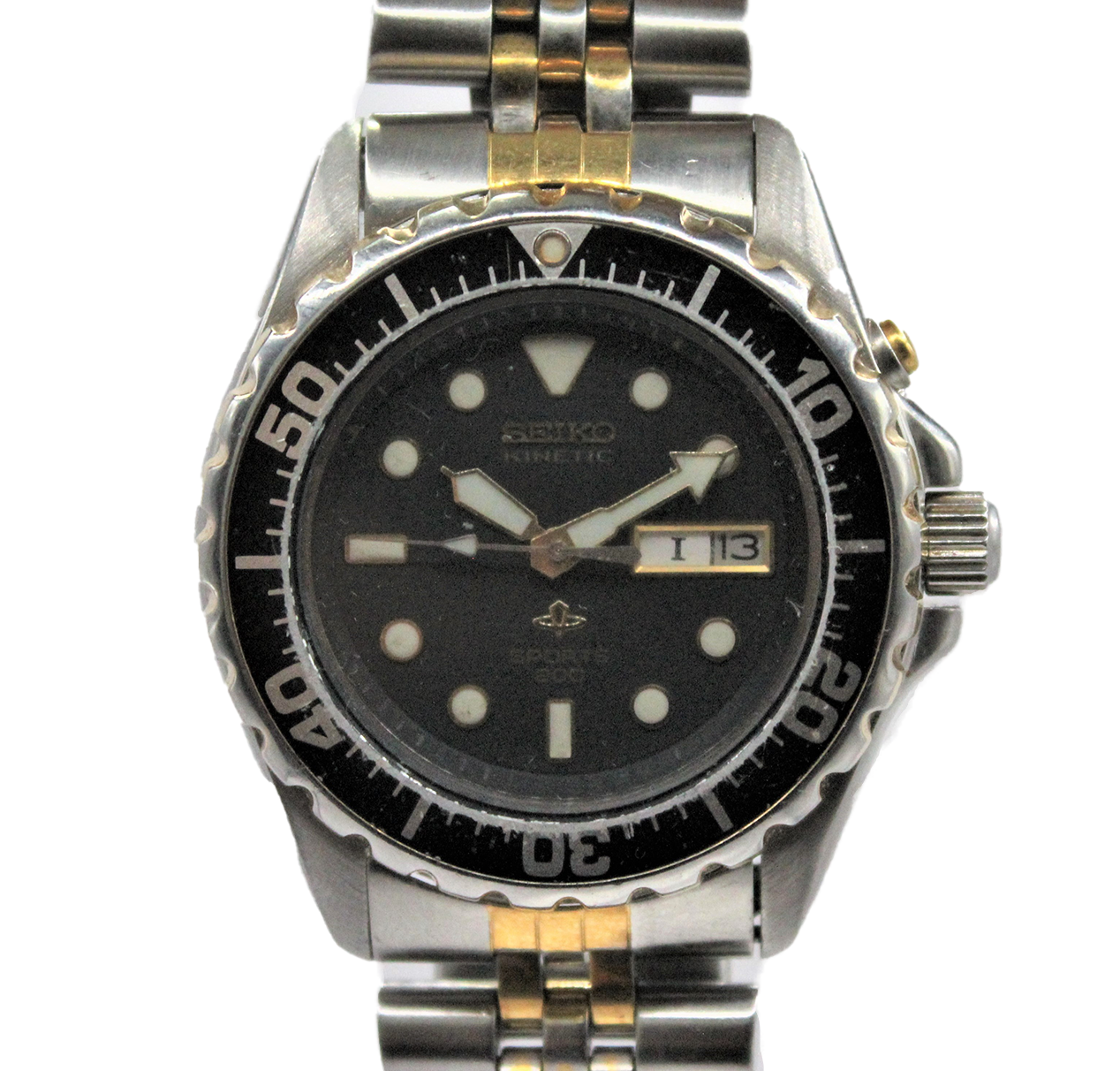
A vintage Seiko Seiko Kinetic Diver 200M ref. SKJ004 on its original bracelet, for sale on Toronto Vintage Watches.