
Open casebacks—an ergonomic way to see the true beauty of the mechanics inside a watch.
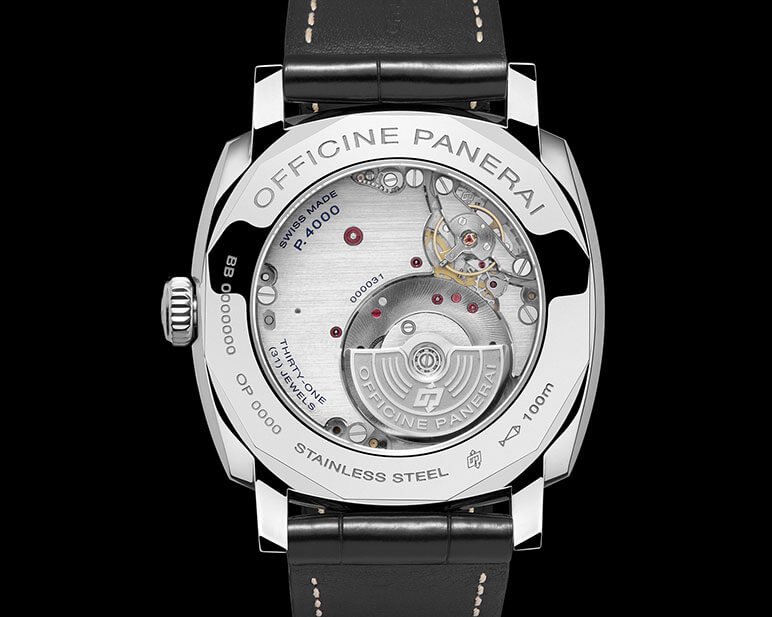
The Panerai Cal. P.4000 inside a Panerai Radiomir 1940 3 Days / Credit: FHH Journal
The see-through caseback has existed since the early 1900s, starting with pocket watches, and continues to develop more as watchmaking evolves. The genuine dispute regarding the display caseback is where, or when, a timepiece should display its movement. Is it meant for more high-end, luxury pieces, or does it equally have a place in more budget-friendly spaces? Speaking to others in the watch collecting community reflects this great imbalance in terms of what kind of watch deserves a display caseback. You could argue all day about what does and doesn't need a display caseback, unfortunately, I find my personal opinion falls in the camp of loving a display caseback on a variety of timepieces.
When diving into this hobby, there is always that first sense of seeing a mechanical movement work. This curiosity engulfs you while you sit there and watch the regulator move, all the mechanical parts intrinsically ticking, keeping such accurate time – and all without the use of a battery. The only thing powering that little time-keeper is physics, engineering, and gravity. Of course, I am talking about the beginning of this hobby when you get your first watch with a display caseback and get the opportunity to see the magic in action. There is a naive sense of enjoyment seeing that for the first time, but as you move into more luxury and high-end timepieces with gorgeous movement decoration and finishing, the natural, industrial, and basic-looking movements don't catch your attention as much. Once you enter the land of, say, A. Lange & Söhne, the display back on a Seiko 5 will naturally be less interesting.
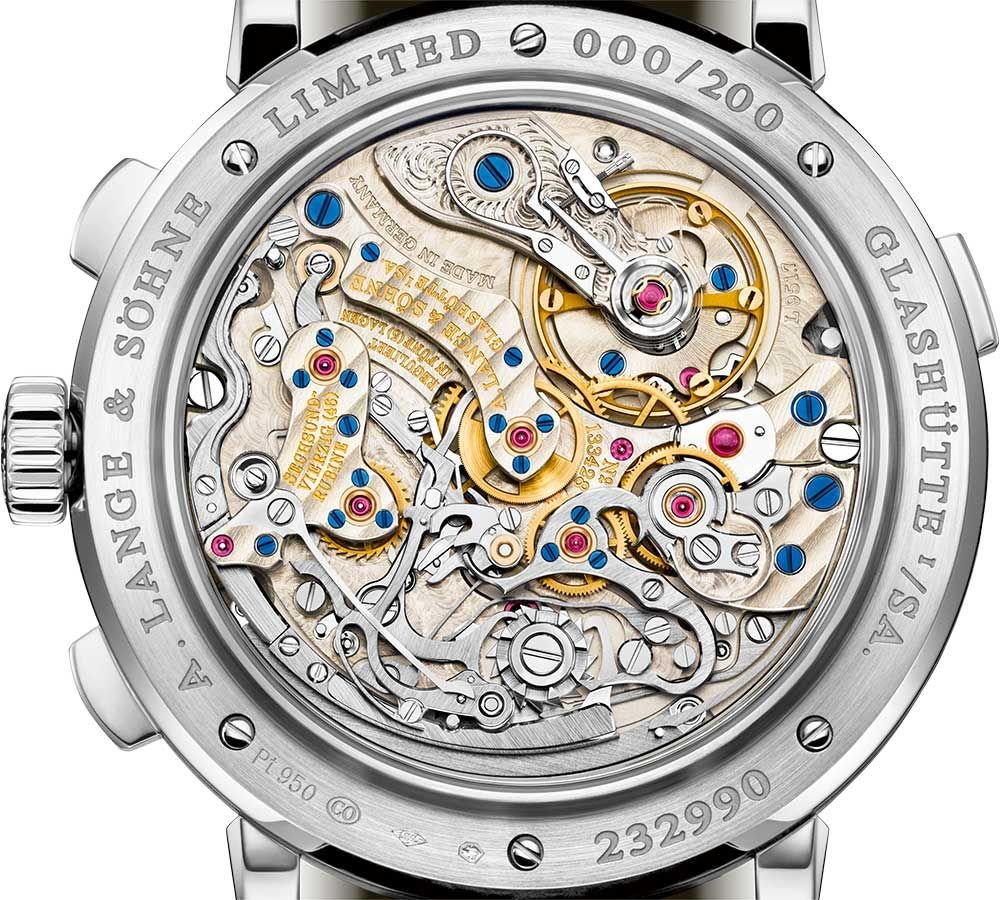
A. Lange & Söhne Datograph
I can appreciate the gorgeousness of a high-end Swiss or Glashütte movement, with beautiful decoration, plate and rotor finishing, and engraving from a personal standpoint. Still, there is something about seeing your basic NH35, Miyota 9015, and many others, that hits and brings back that whimsical sense of curiosity – as if I am rediscovering it for the first time. Even look at the Sea Gull 1901ST, a perfect example of a budget, manual-winding movement that is also beautifully decorated. Something which can be appreciated and not break the bank.
Finally, when talking about display case backs, the argument or debate over the loss of water resistance or hurting the overall specs of a watch to me is bogus. And if it's not your thing, then good for you, move on to something you love. For me and many others, not from a water resistance rating or specs perspective, a display case back is a fantastic example of what human engineering and mechanical evolution are capable of from a micro-mechanics perspective.

Carl F. Bucherer Manero
From the Seiko 5 and microbrands to Glashütte watchmakers, Patek Philippe, and Audemars Piguet; watch movements are under-appreciated no matter the price range. Taking something so small without any electronic help, that relies strictly on momentum from a series of tiny gears and the force of gravity for accurate timekeeping, is an incredible feat, no matter how raw or decorated it is. In short, I always appreciate the time and effort that goes into creating our beloved timepieces, no matter the cost. We should be grateful to wear such incredible displays of horological evolution at any price range every day, and it should show more.
By: Tyler Frederick
Check out Horology Obsessed for more information about watch news, new releases, and reviews.