
Rolex lightens up. (Photo credit: Rolex)
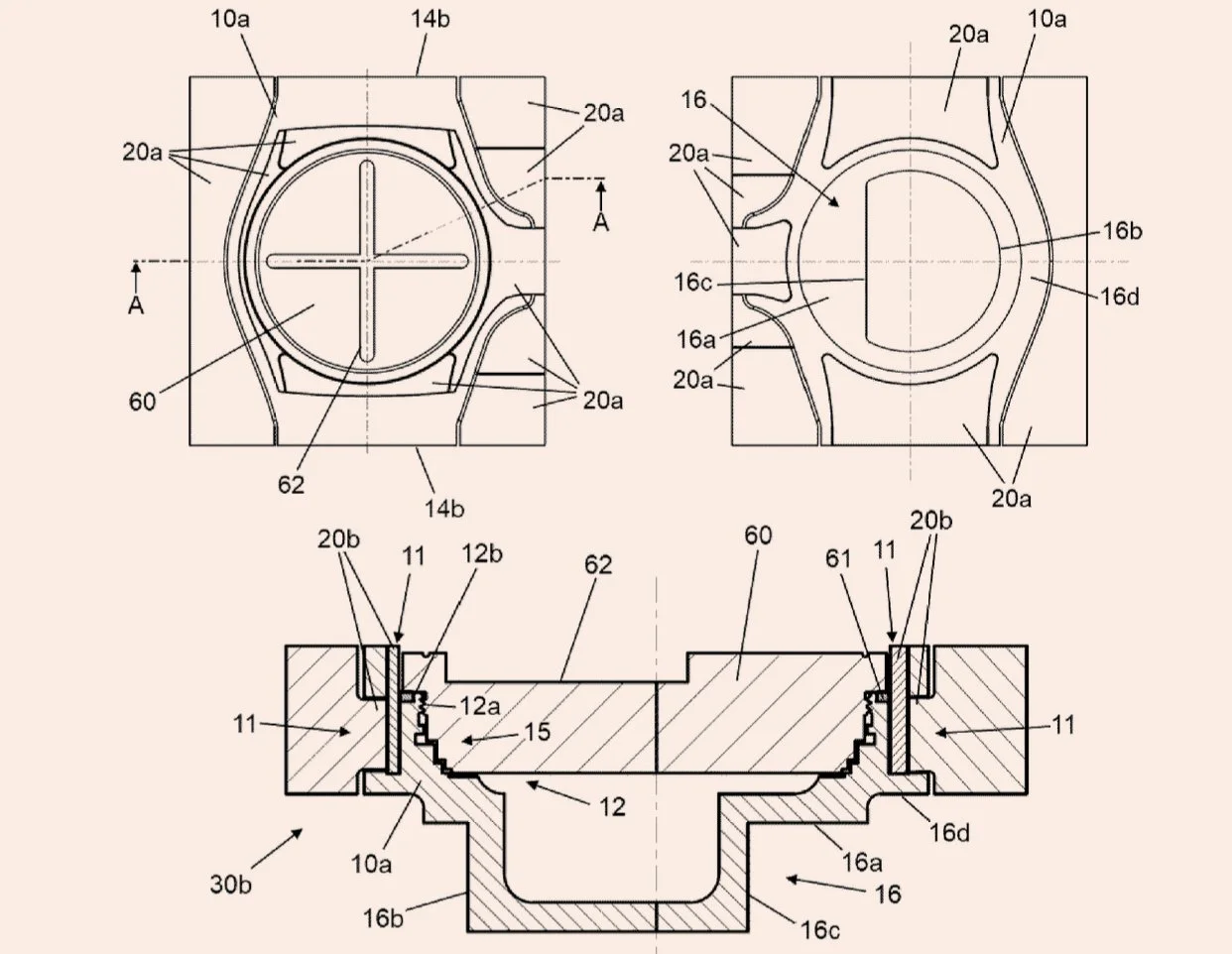
According to a patent published Wednesday, Rolex may be rethinking how it has built watches for the past century with a radically different case construction. Instead of machining the case from a solid block of metal, Rolex proposes a composite architecture built around a rigid “skeleton” filled with inserts made from another material. Rolex says the goal is to create a watch that is lightweight, durable and visually appealing.
The patent, which was first discovered by Nick Gould, is the latest sign Rolex is investing in composite case technology, potentially for future ultra-light watches or high-performance models. The comparison with Richard Mille, which has helped legitimize ultra-light, high-tech composite watches in haute horlogerie, is difficult to avoid.
“In summary, the invention makes it possible to combine two major objectives ... that had not previously been achieved,” the patent read. “It allows for the creation of a component that is both lightweight and mechanically robust, while also being aesthetically attractive.”
The patent is interesting because Rolex appears to be exploring materials rarely associated with the brand’s typical case construction. The skeleton — the frame supporting the crystal, caseback, bezel, crown and bracelet — could be made from titanium, titanium aluminide, ceramic or other metals and composites, while the inserts may use high-performance thermoplastics.
This is not the first time a watch brand has used composite materials. But most composite watches still rely on traditional case construction inside, whereas Rolex appears to be rethinking how the entire watch case is built. The patent goes beyond using composites for the exterior shell, with a new architecture built around a rigid frame and fused inserts, closer to aerospace engineering than watchmaking.