
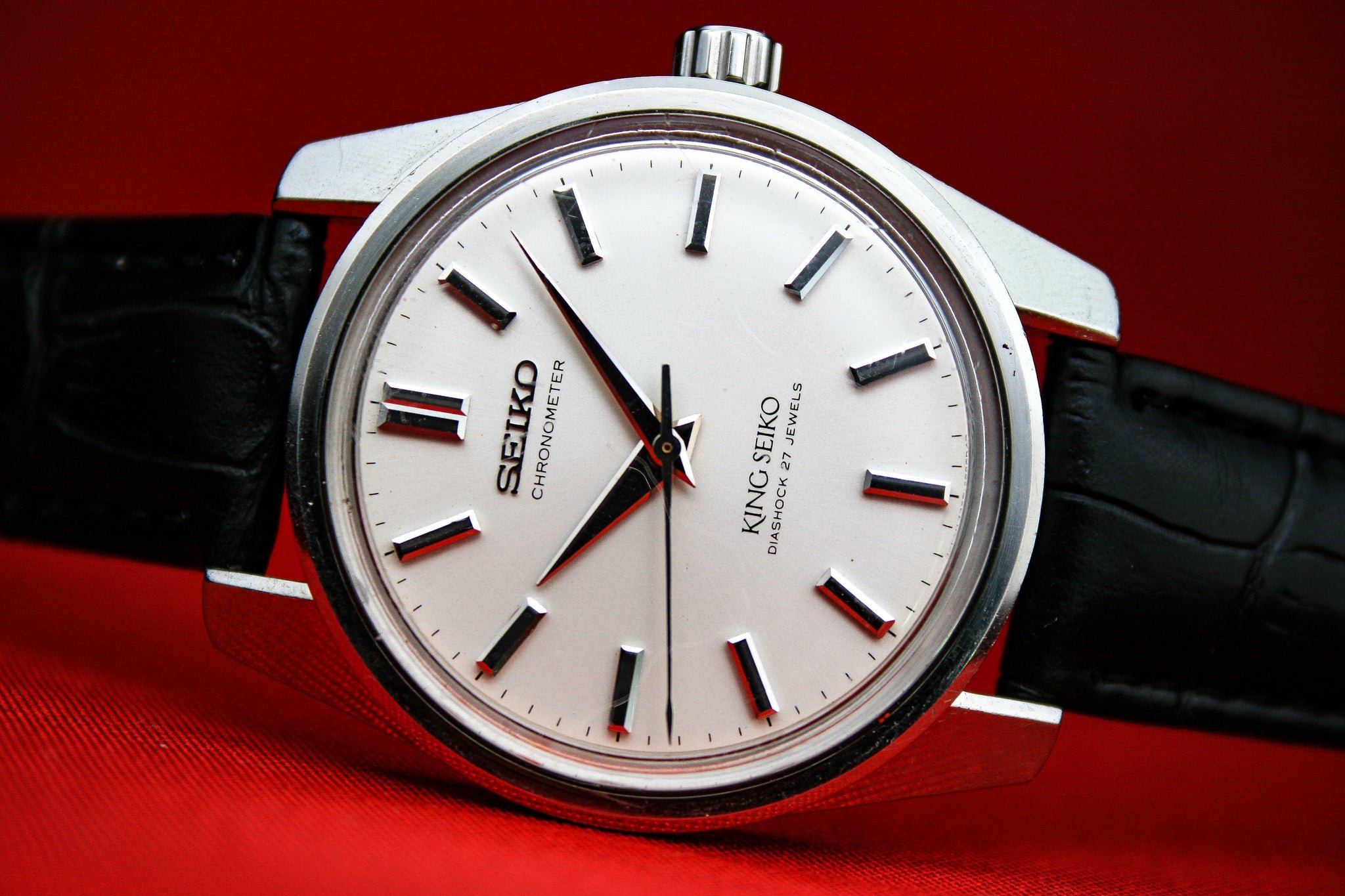
The King Seiko, the vintage Seiko series that rivaled the Grand Seiko in the 1960s and ‘70s and was produced mostly by Suwa Seikosha’s counterpart, Daini Seikosha, is known for its sharp design and high-quality movements. While it has been revived by Seiko recently, to much praise from Seiko collectors, in my opinion, the vintage King Seiko still reigns supreme. It’s widely known that King Seiko was a step under Grand Seiko when it came to accuracy and finishing, but King Seiko still packed a serious punch – in particular with regard to their chronometer movements. Let’s explore.
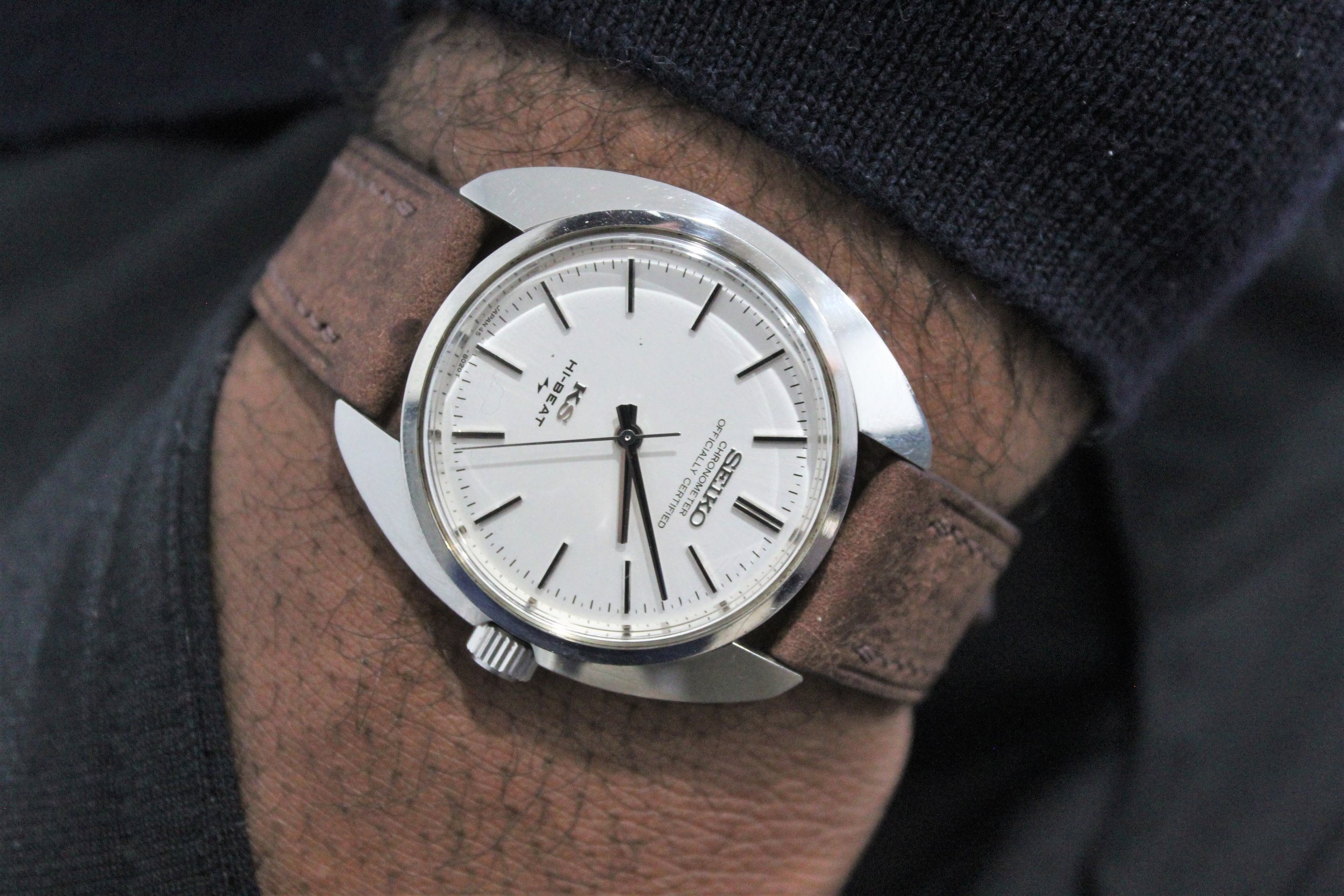
1970 King Seiko Hi-Beat Chronometer 45-8010 / Credit: Toronto Vintage Watches
Four different models of the King Seiko were chronometers, or rather were marked “chronometer” on the dial: the 44KS, 45KS, 56KS, and 52KS. First up, the 44KS (model number 44999/4420-9990, above) was the second King Seiko, a manual winding watch with a 18,000 bph rate, released in 1964. It followed the original, first King Seiko’s release in 1961. The next King Seiko chronometer to be released was the 45KS. There were two different versions of the 45KS chronometer, the regular King Seiko Hi-Beat Chronometer, with a 36,000 bph rate, and the King Seiko Superior Hi-Beat Chronometer. The 45KS chronometers are my favourites, as they combine the sleek look of the Grammar of Design-styled King Seikos with a 36,000 bph rate hi-beat movement and chronometer grade accuracy.
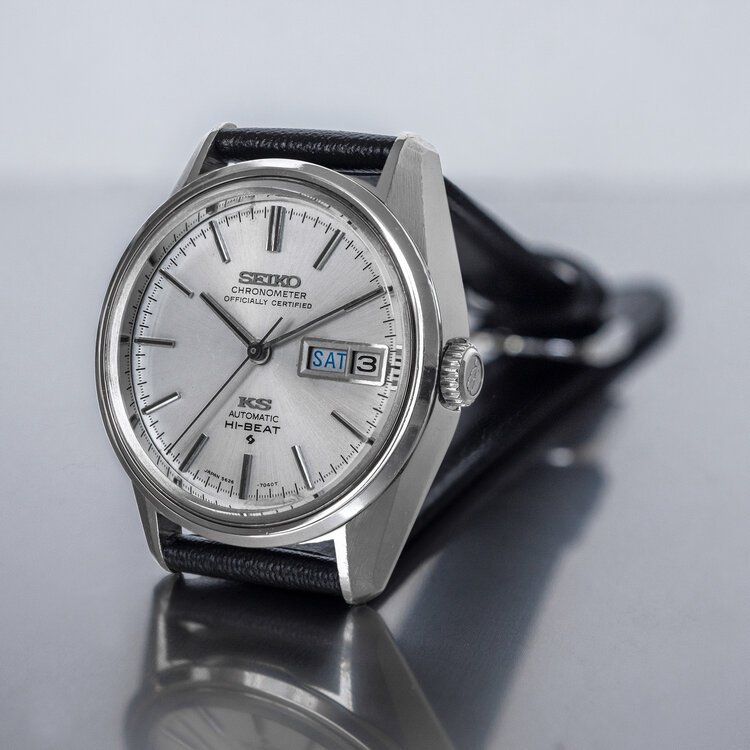
1973 King Seiko Hi-Beat Chronometer 5626-7041 / Credit: From Time to Times
Now getting to the King Seikos made mostly in the 1970s, we come to the first and only King Seiko model made by the Suwa Seikosha factory instead of Daini Seikosha – the 56KS! The 56KS was special for a couple reasons; first, it was marked “Hi-Beat” although instead of a 36,000 bph rate it was only 28,000. Second, the 56KS, like the 56GS, was industrially produced, unlike previous models that still had some manual work done on them. Moreover, these models were made for everyday use, so despite being automatic, they were actually extremely thin timepieces. The 56KS chronometer also came in ‘Superior’ versions. These were also the first automatic King Seikos and were produced between 1968 and 1975.
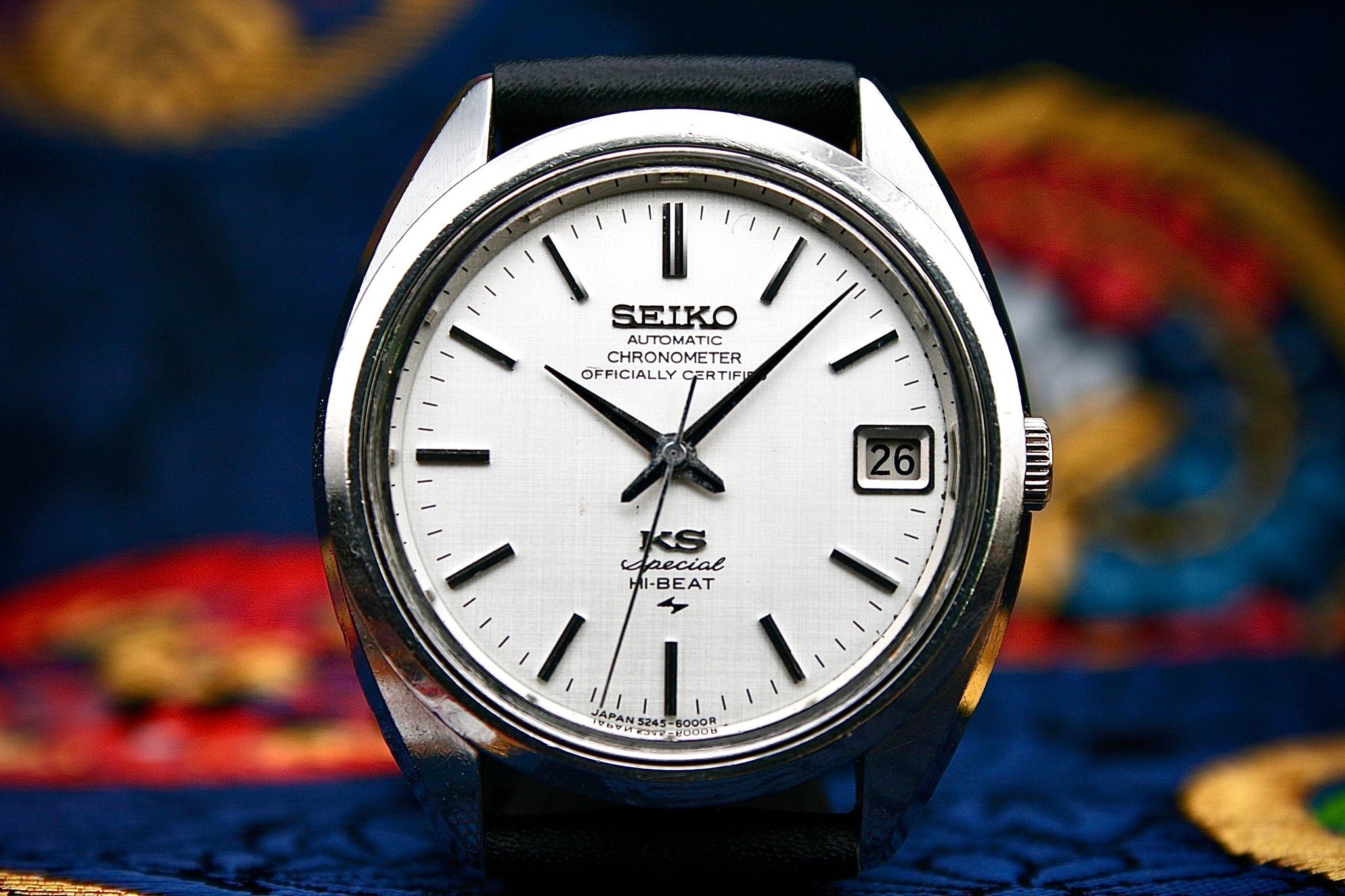
1971 King Seiko Special Hi-Beat Chronometer 5245-6000 / Credit: VintageGSKS
Finally, there’s the 52KS, the last King Seiko to be released, being produced between 1971 and 1975. This was one watch that had a lot of writing on the dial, it was not only marked “Chronometer” and “Hi-Beat”, but also marked “Special” and “Automatic”. The 52KS, like the 56KS, was a hi-beat watch, but with only 28,000 bph.
Surprisingly, King Seiko chronometer models are actually far more common than with Grand Seiko. The majority of vintage King Seiko movements had chronometer grade versions, with some models even having regular and ‘Superior’ chronometers. Just one of many ways in which King Seiko differed from, and was perhaps even better than, Grand Seiko.
By: Andres Ibarguen
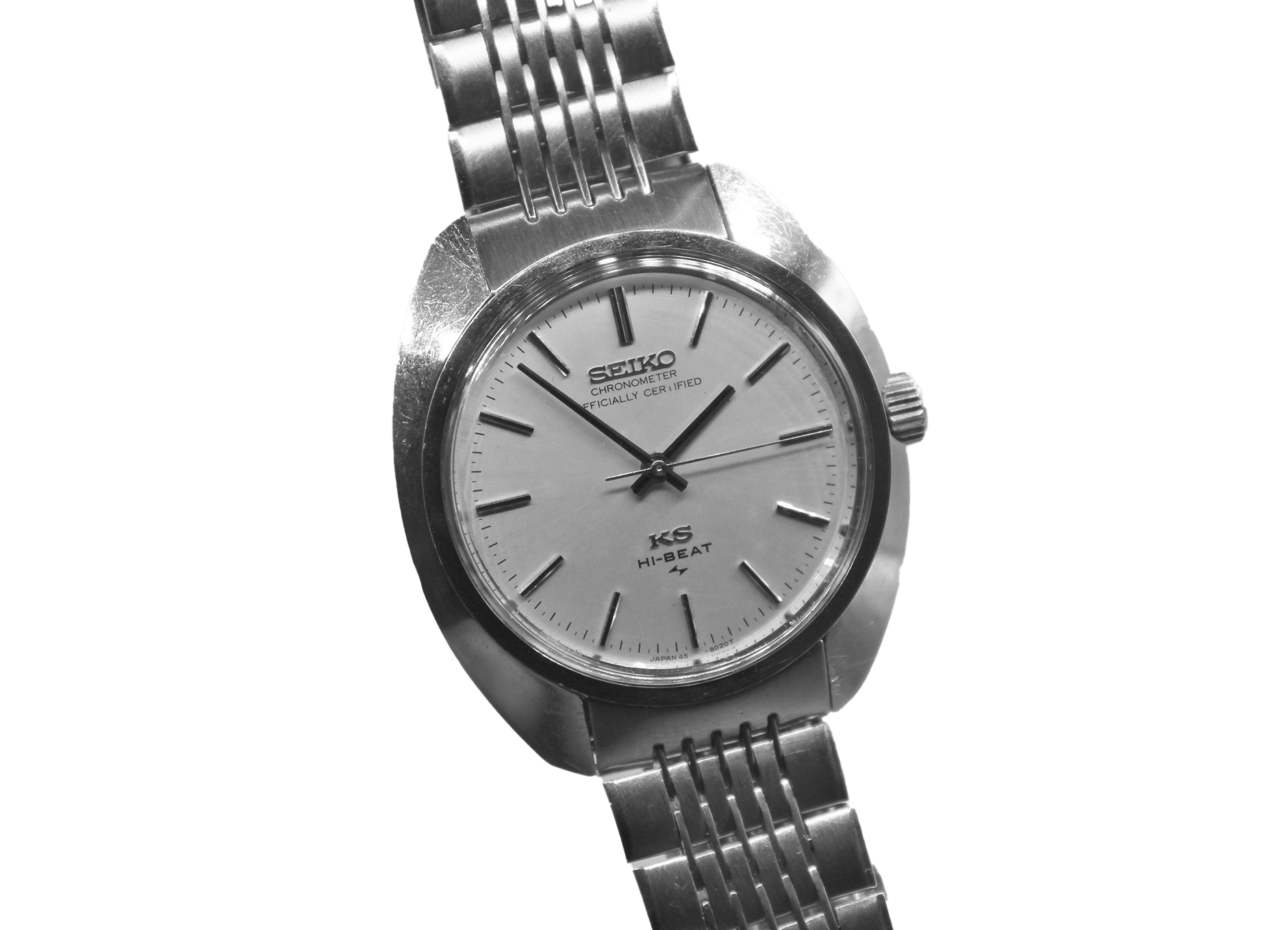
A vintage King Seiko Hi-Beat Chronometer 45-8010 on its original bracelet. For sale on Toronto Vintage Watches.