
The Watchmaker for Patek Philippe

Victorin Émile Piguet
As watch collectors we naturally idolize certain figures and brands in the watch industry. Maybe it’s Nick Hayek Jr. or even Richard Mille. There are so many important names in watch history, but many are overshadowed by more recent accomplishments. One such man is Victorin Émile Piguet, who is credited with being instrumental to the development of the Patek Philippe Henry Graves Jr. Supercomplication watch.
Victorin Piguet was born in 1850 in Le Chenit, Vallée de Joux to a father who was a watchmaker, and quickly took up the craft in his youth. He founded ‘Victorin Piguet et Frères’ with his brother Alfred, who was also a watchmaker, and taught at the watchmaking school of Geneva in the latter half of the 19th century. His company specialized in highly complicated timepieces and he gained a reputation for being an excellent watchmaker. After his stint in Geneva, he moved back to the Vallée de Joux to continue his business. In 1920, he turned his company over to his sons, Jean-Victorin and Paul Piguet, who throughout the 1920s and ‘30s were extremely important suppliers for Patek Philippe. This is also when their firm was commissioned to work on the Patek Philippe Supercomplication – which both fathers and sons worked on for several years.
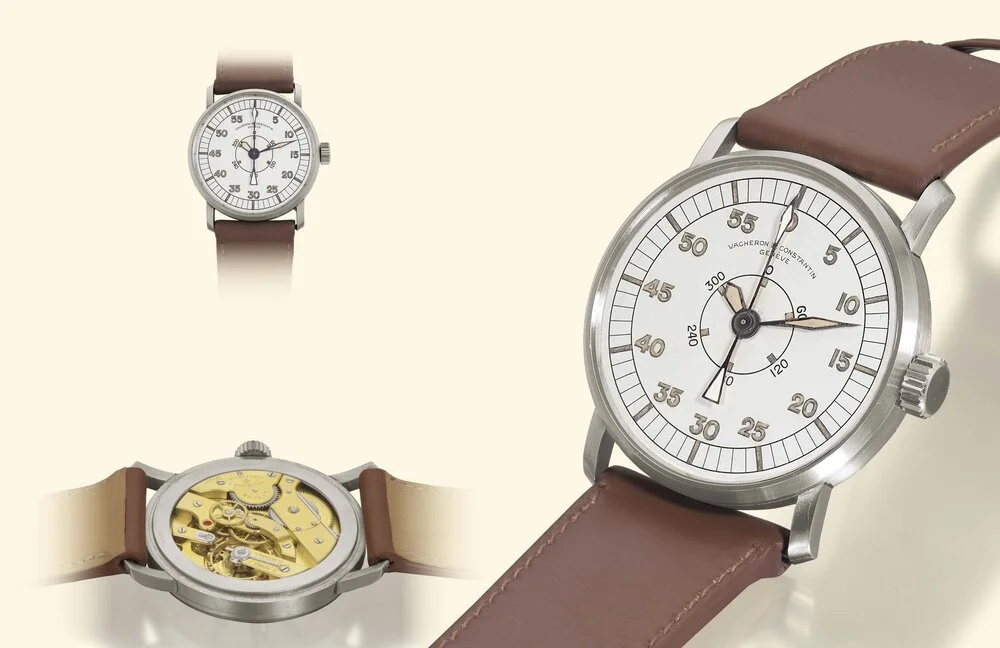
1936 Vacheron Constantin Aviator’s Degree / Credit: Antiquorum
The company (now called ‘Les fils de V. Piguet’) naturally had clients apart from Patek Philippe and was also known for their work with Vacheron Constantin. Piguet is said to have worked on Vacheron’s 1936 Aviator’s Degree watch – only two of which were ever made. Victorin Émile Piguet died in 1937 and after Jean-Victorin’s death his son Henri-Daniel took up the helm of the family business, continuing to work for renowned brands, including Audemars Piguet; along with Vacheron and Patek.
And so, despite coming before many of the great masters that are more popular today, Victorin Piguet is still one of the most important watchmakers of the 20th century. His work with Patek and other brands, but also being the head of his own family (dynasty) of watchmakers, is a contribution to horology that will live on in its annals.
By: Andres Ibarguen