
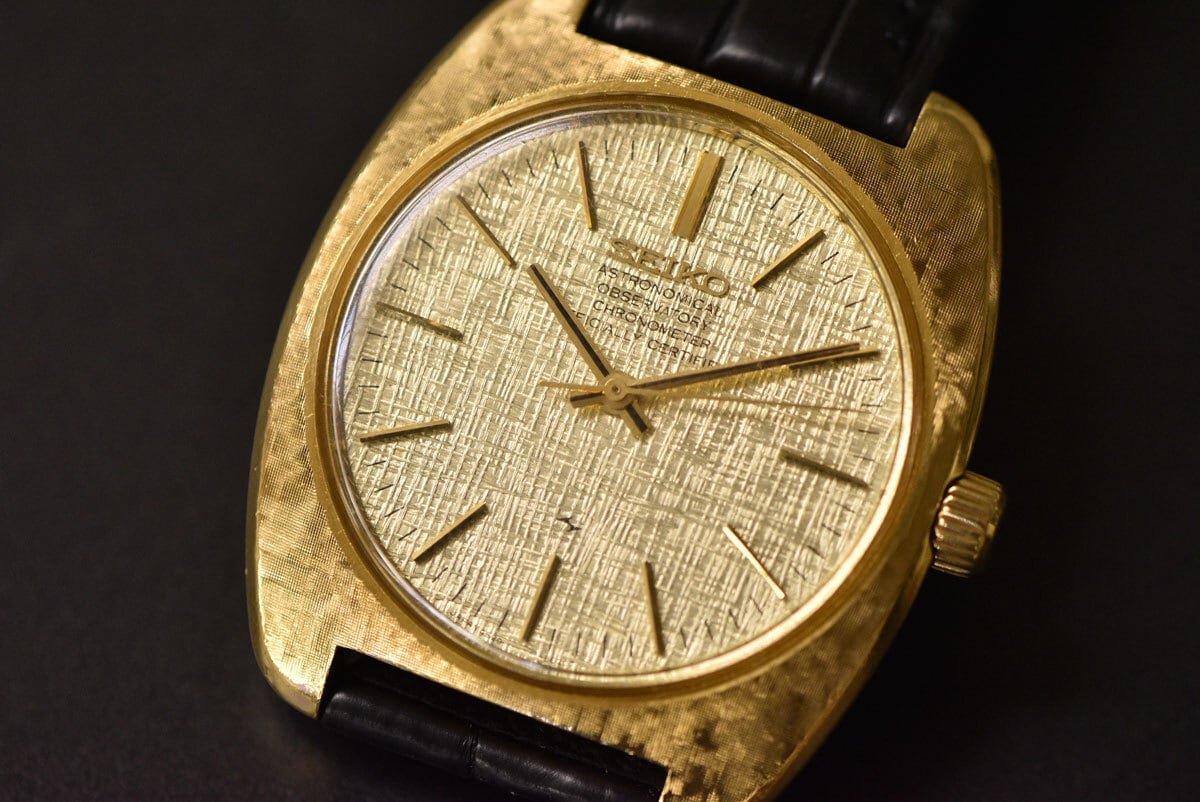
Seiko first participated in an observatory chronometer competition in 1963, as Suwa Seikosha with their quartz crystal chronometer clock, placing 10th in the marine category of the Neuchâtel Observatory competition. These were prestigious events in the watchmaking world at the time and this marked the first time a non-Swiss company placed in the top ten. Seiko’s first attempt with a mechanical watch was far less successful and it took several years for their mechanical timepieces to start placing at the top of the ranking, beating out their Swiss counterparts.
When they got there, when Seiko’s mechanical movement started to beat out many of the Swiss’, the competition was cancelled only a couple years later. Seiko placed 2nd and 3rd after Omega in the 1966 competition, instead deciding for the Geneva Observatory competition in 1967, with the competitions cancelled entirely by 1968. Although Seiko won out in the mechanical category, the Centre Electronique Horloger’s Beta 21 movement won overall.
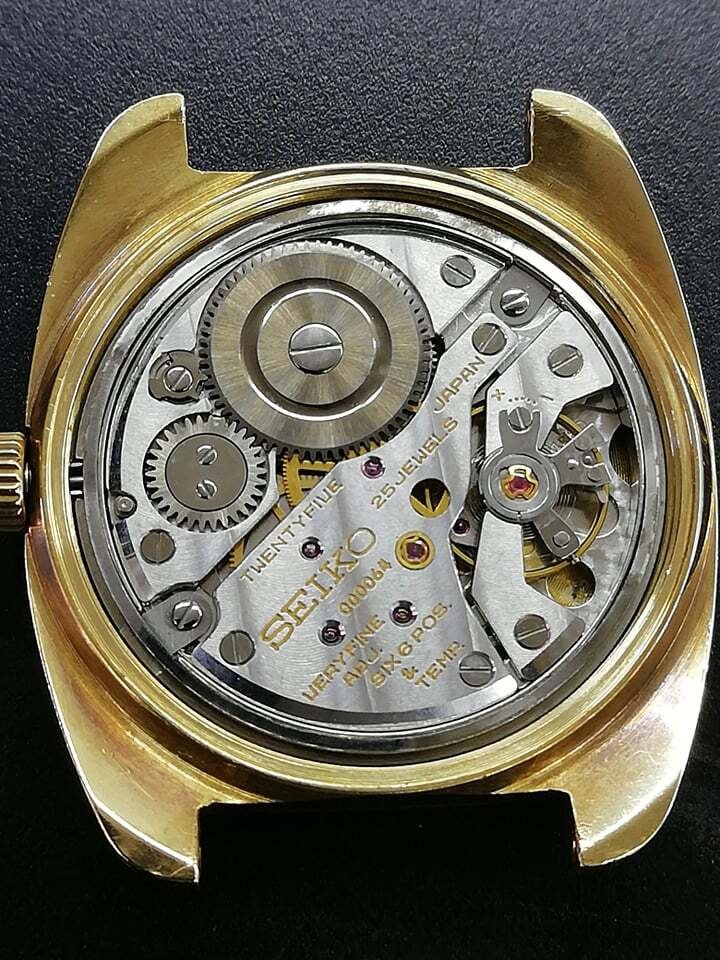
Seiko Astronomical Observatory Chronometer 4520-8020 movement / Credit: Timegarden
Luckily, Seiko, specifically Daini Seikosha, still submitted watches to the Neuchâtel Observatory for chronometer certification in 1968, which is what gave rise to the Astronomical Observatory Chronometers – the Seiko 4520-8020. These were 18k yellow gold wristwatches powered by the manual winding 4520A caliber, with 25 jewels and a 36,000 bph rate. Some of these Astronomical Observatory Chronometers were marked “4580” on the movement and “4520” on the dial, the 4580 corresponding to the Daini Seikosha V.F.A. Grand Seiko caliber. These are some of the few observatory chronometer competition watches ever to be commercialized, and originally sold for ¥180,000. 73 out of 103 of the Cal. 4520 models passed chronometer certification in 1968, 25 out of 30 Cal. 4580 models passed in 1969, and 128 out of 150 passed in 1970, for a total of 226 being sold to customers – also making these Astronomical Observatory Chronometers amongst the rarest vintage Seikos out there. If you’re one of the lucky people to find one of the surviving 226, be sure to treasure it.
By: Andres Ibarguen
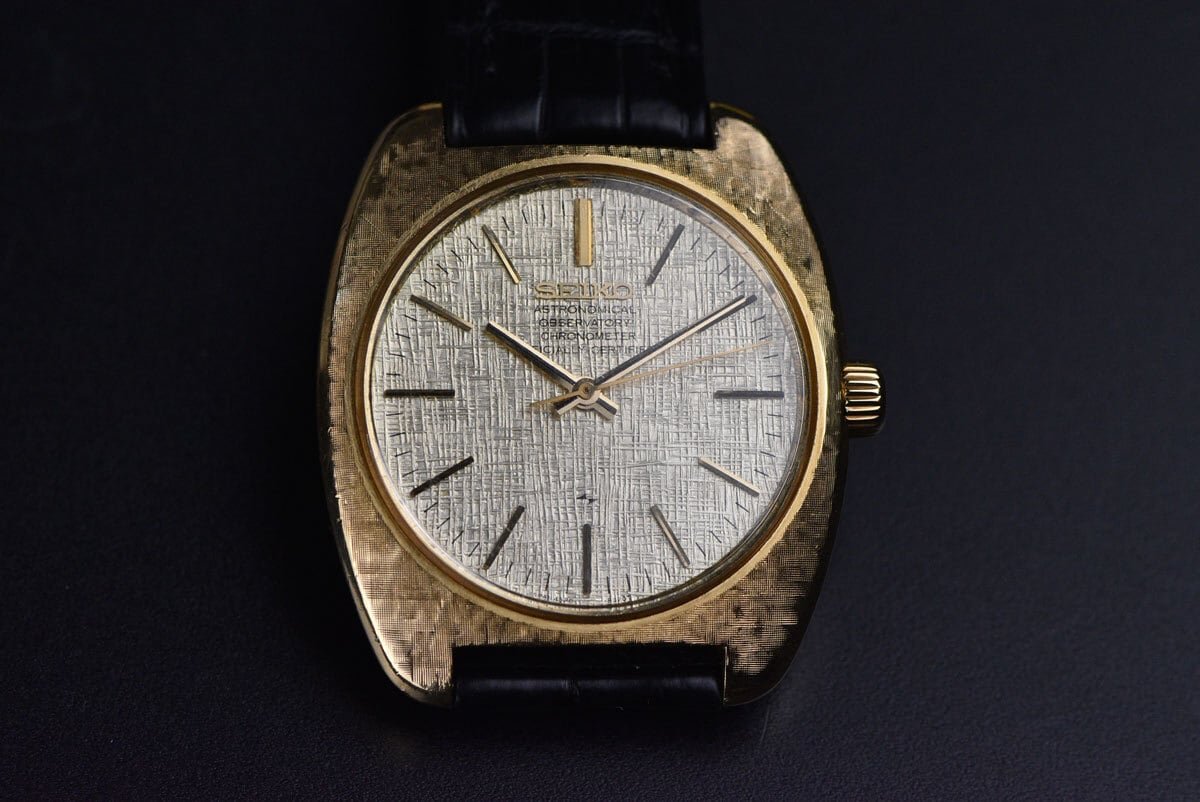
Seiko Astronomical Observatory Chronometer 4520-8020 / Credit: Timegarden
Read more:
Jx, Su. “In-Depth: Seiko’s Legendary History in Observatory Chronometer Trials.” Watches by SJX, June 29th, 2013, https://watchesbysjx.com/2013/06/explaining-seikos-legendary-history-in-swiss-chronometer-trials-with-live-pictures-of-its-landmark-astronomical-observatory-chronometer.html.
Kable, Anthony. “Seiko Astronomical Observatory Chronometer.” Plus9Time, June 15th, 2018, https://www.plus9time.com/blog/2018/6/14/seiko-astronomical-observatory-chronometer.
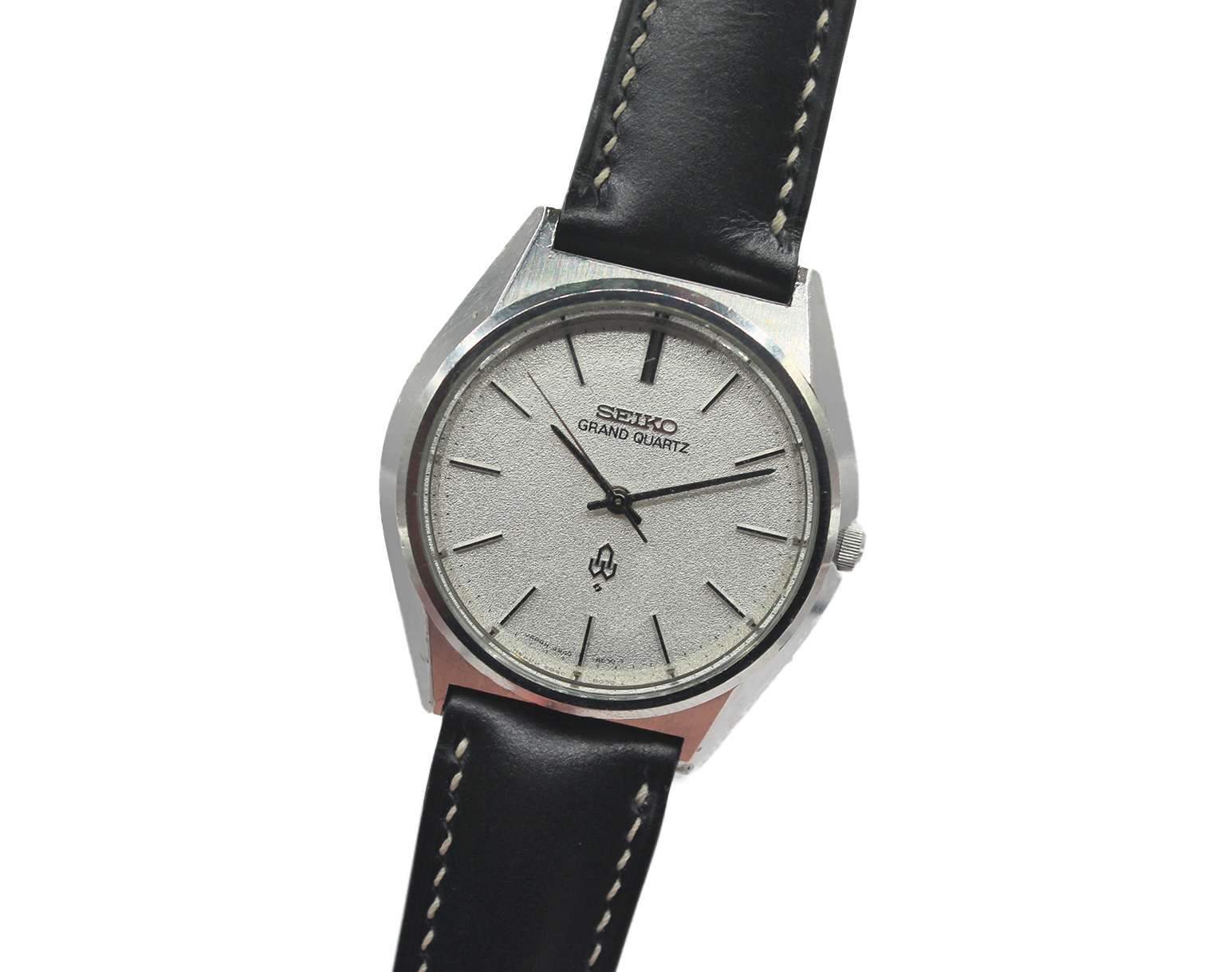
A vintage Seiko Grand Quartz 4840-8041 for sale on Toronto Vintage Watches. Click here.