
THE ROLEX FOR THE STARS
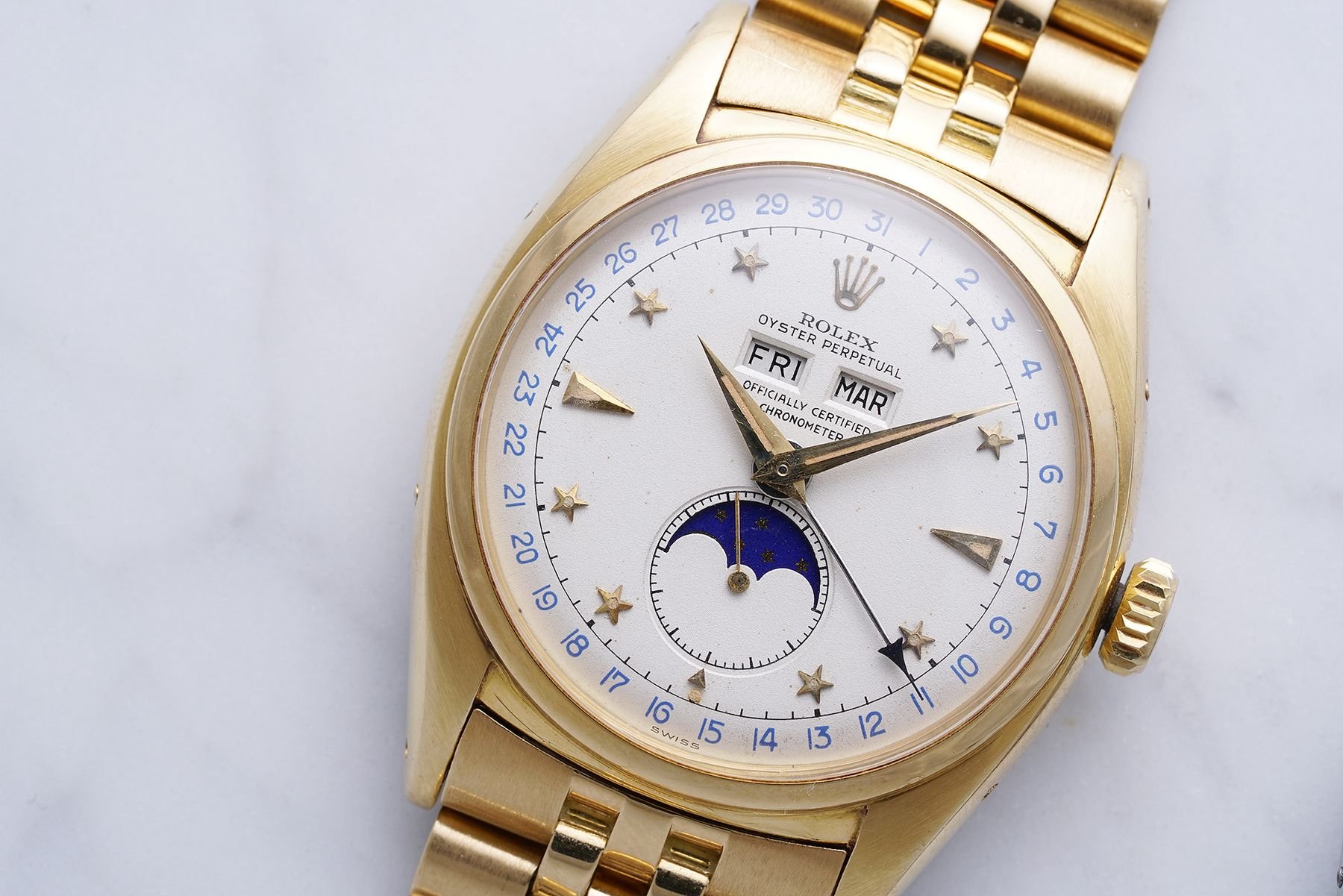
Rolex ‘Stelline’ Ref. 6062 / Credit: Phillips
Unlike most other luxury watch brands, Rolex’s focus on tool watches means they aren’t known for making highly complicated timepieces. But of the few times they have forayed into the dark art of haute horlogerie, the product has been remarkable. In the case of the Rolex ‘Stelline’ ref. 6062, it regularly sells for 6-figures at auction – sometimes even more.
The Rolex ‘Stelline’ ref. 6062 was released in 1950 at Baselworld and produced in relatively limited quantity, with only a few hundred speculated to have been produced in total, in various metals like stainless steel, yellow, and rose gold. The name ‘Stelline’, in Italian, refers to the stars that adorn the watch’s dial, a design choice that has largely contributed the how the watch has resonated with collectors over the years.
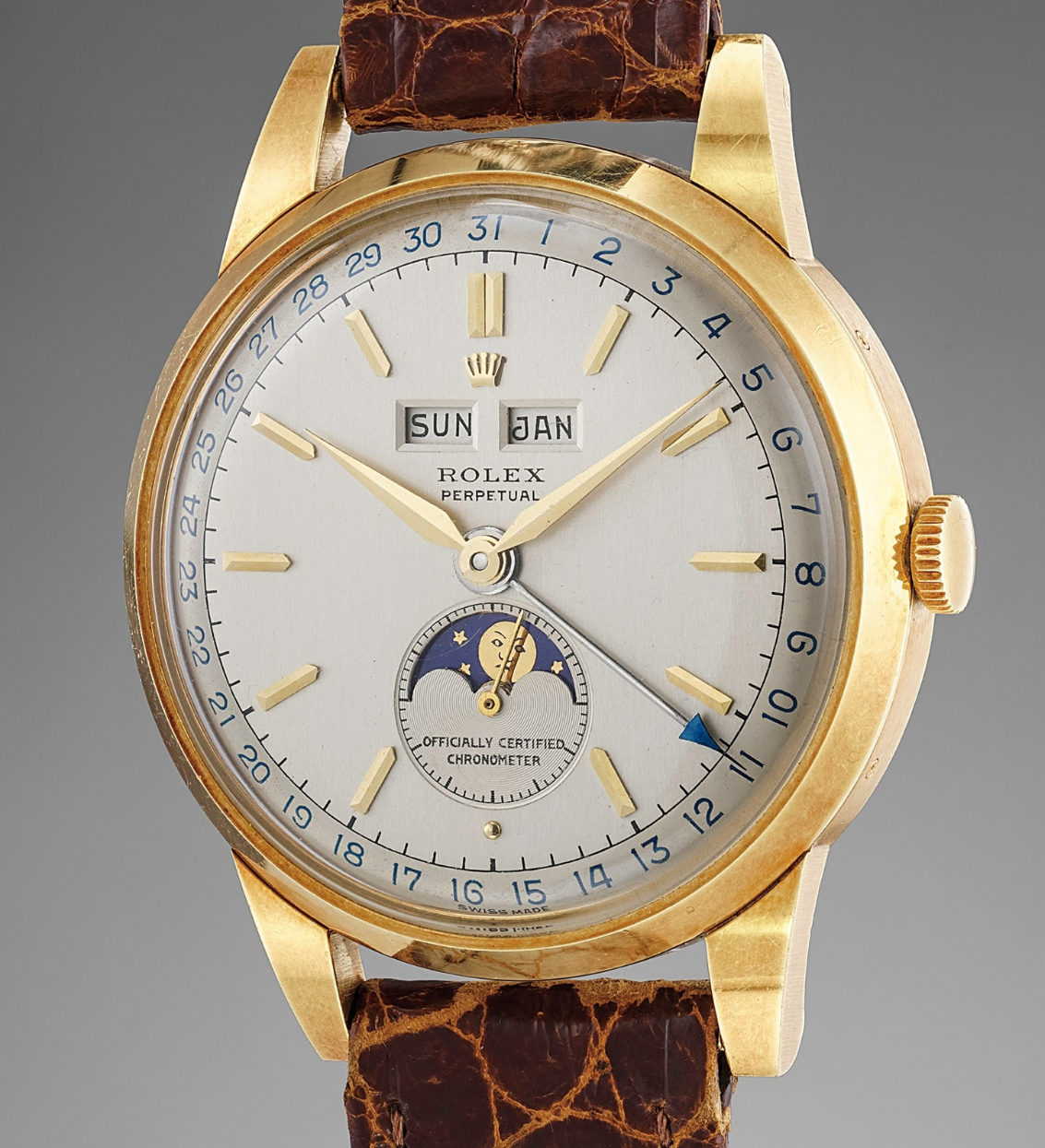
Rolex ‘Padellone’ ref. 8171 / Credit: Phillips
The ‘Stelline’ is a triple calendar, self-winding moonphase wristwatch, that is often compared to the Rolex ref. 8171, which also carries an Italian nickname: ‘Padellone’, and was the only other triple calendar moonphase watch Rolex made during the mid-20th century. However, in contrast to the ref. 8171, the ‘Stelline’ is notable for being housed in an Oyster case, made by Gay Frères, giving the watch a more intrepid feel and meaning that it was pretty rugged, especially when considering the complications. This ruggedness includes being waterproof, as the Rolex ‘Stelline’ has a screwdown crown. Although, the ‘Stelline’ was smaller than the ‘Padellone’, at 36mm vs. 38mm, and also lacked the two-tone dial of its counterpart. Generally, however, both tend to go for handsome prices at auction, as their rarity and unique disposition the two complicated Rolexes made during the 1950s, makes them so desirable. In April 2019, a rose gold ‘Stelline’ sold for 975,000 CHF at Christie’s, including 175,000 of buyer’s premium.
By: Andres Ibarguen