
Ukiyo-e Dials Appeared on Seiko Watches in the 1960s to 1970s
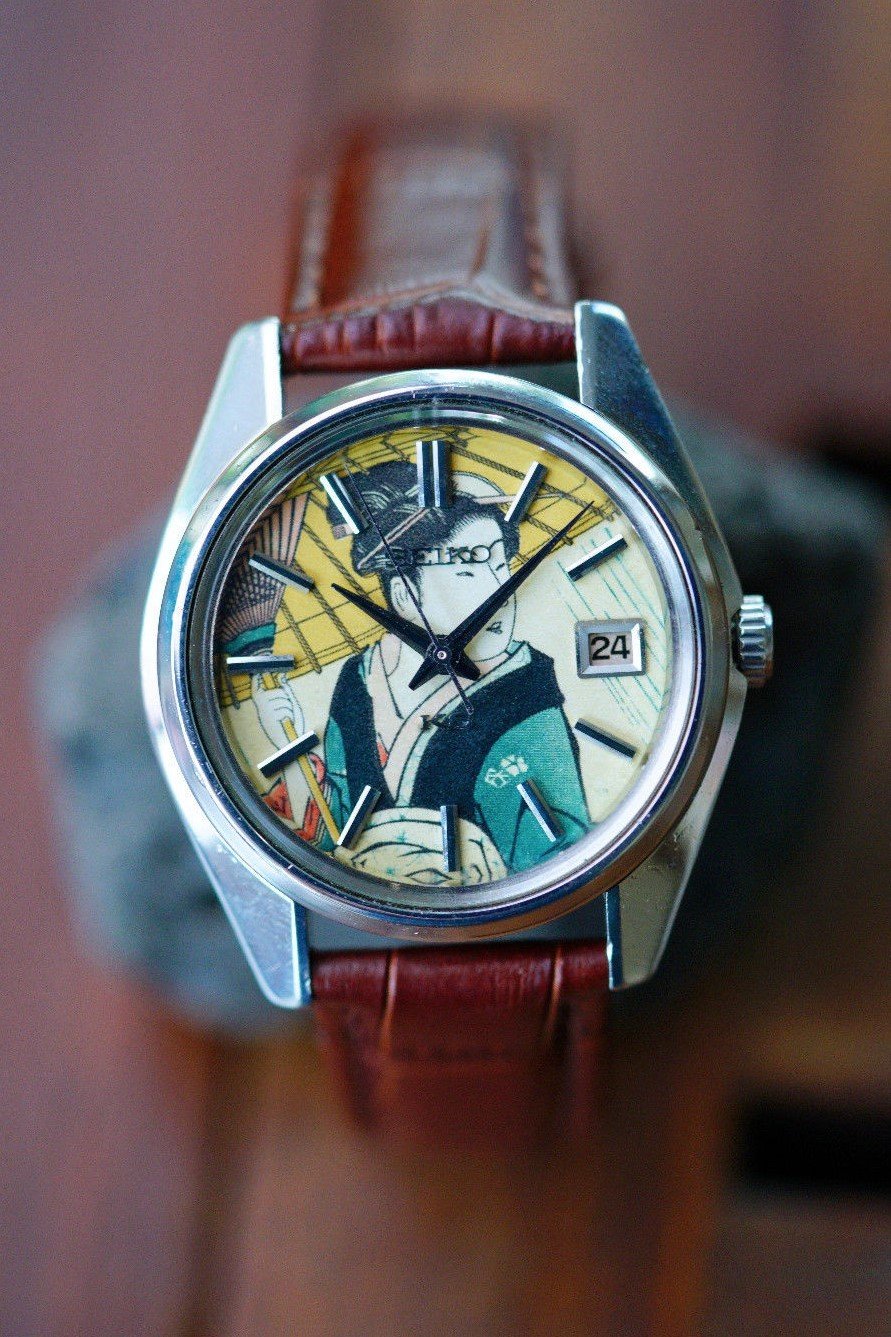
Vintage King Seiko 5625-7000 with an ukiyo-e dial
Ukiyo-e dials are speculated by some to have originated in the late 1960s and early 1970s, but were likely made more recently. The designs were based on art from the Edo period. The Edo period, also known as the Tokugawa period, was from 1603-1867. This was the final period of traditional Japan, a time of internal peace, political stability, and economic growth under the shogunate founded by Tokugawa Leyasu.
After reading through several forums, it is widely accepted that there was or is a Japanese retailer or retailers who carefully adds these images to the dial. However, I have yet to find a definitive answer on exactly who did it, when they did it, and how many of these vintage Seikos have these rare dial designs.

Vintage King Seiko 5625-7000 with an ukiyo-e dial – this dial was based off vintage Japanese postage stamps / Credit: Carousell user Yjtan402
The above 56KS has the ukiyo-e dial of a lady holding on an umbrella in the rain. The original artwork was done by a Japanese ukiyo-e artist named Torii Kiyonaga back in 1783. In the year 1958, on the 175th anniversary of the artwork, the Japan Post released commemorative postage stamps of the art. The images on these postage stamps are what you will find on the dials of these special Seikos.
The portrait on the Seiko Lord Matic below was done by Tōshūsai Sharaku, who was a famous Japanese ukiyo-e print designer, known for his portraits of kabuki actors in the 18th century. His work has come to be considered some of the greatest in the ukiyo-e genre, although he only had a 10-month stint, where he produced over 140 prints and then seemingly disappeared.
It is quite interesting to think that the Japanese could have been modding King Seikos and Seiko Lord Matics as far back as the 1960s and 1970s. These ukiyo-e dials would replace the original dials while still keeping the Seiko logos legible. After being initially turned off by modifications to timepieces in any way, shape, or form, the ukiyo-e dials have made me start to think that tasteful mods are a great addition to the watch community.
While I still have many unanswered questions regarding the direct origins of Seiko ukiyo-e dials, I do have a greater appreciation for Japanese culture after learning about the ukiyo-e genre from the 18th century and theTokugawa period.
By: Eric Mulder

Vintage Lord Matic with an ukiyo-e dial / Credit: Reddit user Vanquish
Read more:
“Tokugawa period.” Encyclopedia Britannica, https://www.britannica.com/event/Tokugawa-period.
Marshall, Colin. “Japanese Kabuki Actors Captured in 18th-Century Woodblock Prints by the Mysterious & Masterful Artist Sharaku.” Open Culture, June 14th, 2017, https://www.openculture.com/2017/06/japanese-kabuki-actors-captured-in-18th-century-woodblock-prints.html.

A vintage Seiko Grand Quartz 4840-8041 from 1976, for sale on Toronto Vintage Watches.
Editor’s note (28/02/2022): After feedback from some readers, this article was updated to better reflect the speculative nature of the origin of these dials. Specifically when they were redone.