
A Historical Look at Vintage Seiko Quartz Watches
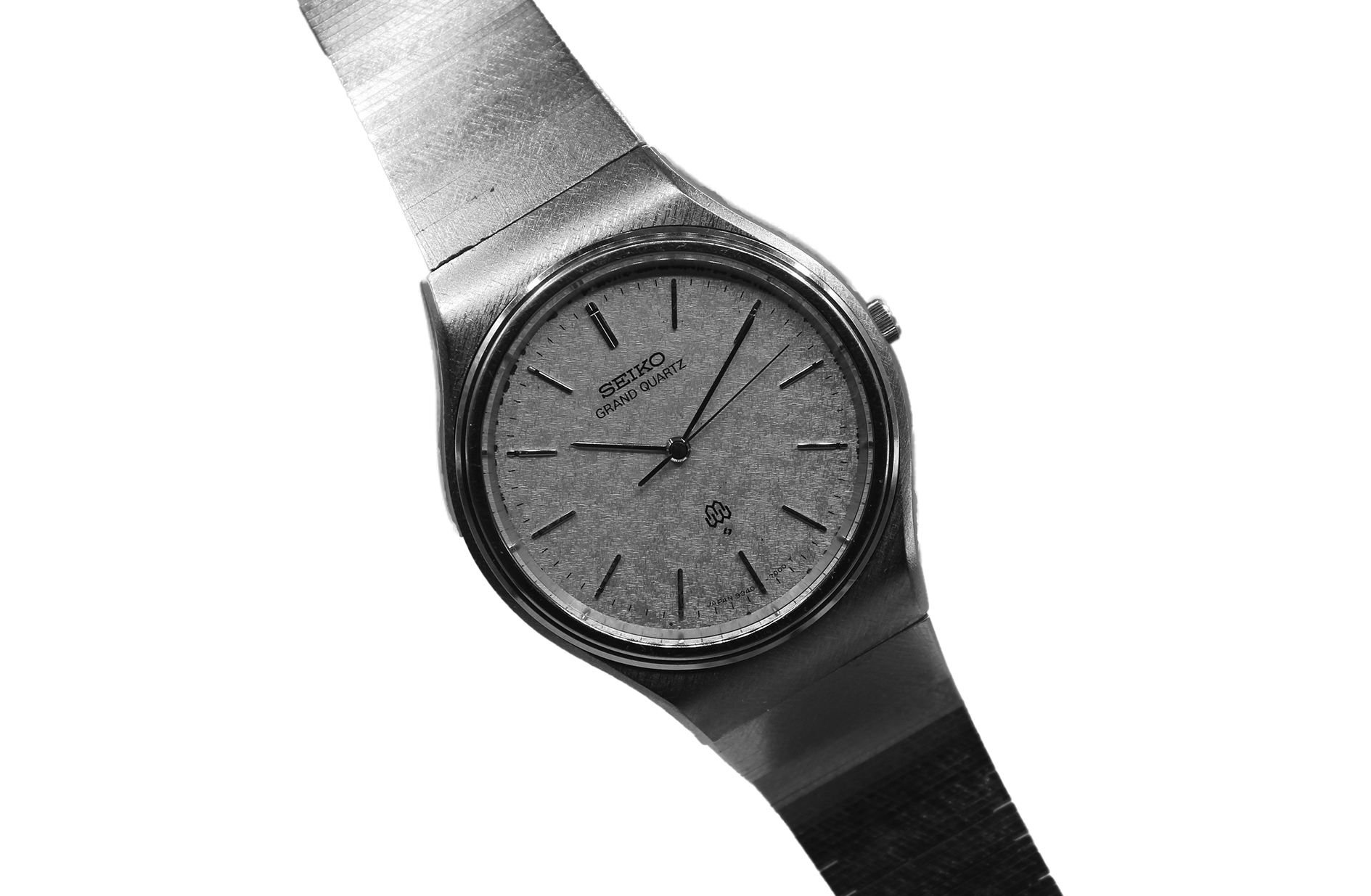
April 1979 Seiko Grand Twin Quartz 9940-7000 on its original bracelet/ Credit: Toronto Vintage Watches
As the world got accustomed to the novel new watch technology dominating the market in the late 1960s and early 1970s, Seiko was busy itself developing the Superior, Grand Quartz, and King Quartz lines. These new collections that replaced the mechanical Grand Seiko and King Seiko collections came about in the mid-1970s and were produced until the early 1980s. Notably, quartz Grand Seiko watches didn’t appear until the late ‘80s.
The first Seiko Grand Quartz was released in 1975 and was the 4843. This movement had an accuracy of ±5 seconds per month and a day/date display. It was generally priced above the automatic Grand Seikos which cost less than 500,000 yen – the Grand Quartz prices ranged from around 500,000 yen to over 1 million yen! Previously, other elite quartz watches had been released by Seiko under the ‘Superior’ name. These came out in 1974 as the 3883 and had an accuracy of ±2 seconds per month, with the quartz crystal oscillating at a frequency of 16 kHz. And as quartz watches were more expensive than mechanical ones at the time, these watches were priced at over 200,000 yen! This only increased as the 3883 was soon improved by the 4883, which had an accuracy of ±1 second per month.

Seiko Superior Twin Quartz 9481-5000 on its original bracelet / Credit: Toronto Vintage Watches
On the other hand, Seiko King Quartz watches were less accurate than the Grand Quartz, with an accuracy of only ±10 seconds per month! Thus, the Superior line was the best quartz series produced by Seiko at the time, followed by Grand Quartz and King Quartz. The Superior Twin Quartz movements, for example, had annual accuracies of an incredible ±5 seconds per year! Grand Twin Quartz and King Twin Quartz had accuracies of ±10 and ±20 seconds per year, respectively. These ‘Twin’ movements were released in the late 1970s (1978 and 1979) and were the absolute cream of the crop as far as Seiko Quartz was concerned. The Twin worked by having one quartz oscillator for time and another for temperature. Adjusting for temperature was what allowed for such high levels of accuracy from the movements as previously temperature changes caused the oscillation of the quartz to vary as well.
Apart from these higher end quartz watches there was also some more average quartz, like the 8123, for example, that were also very popular at the time. However, the key takeaway here is the diversity and beauty that comprises the world of vintage Seiko quartz. It is nothing to ignore. Some of these quartz watches were priced near the same as vintage Rolexes and were among the most expensive offerings Seiko had. Their accuracy was unmatched and lives on today in Seiko’s newer quartz movements, like the classic 9F.
By: Andres Ibarguen