
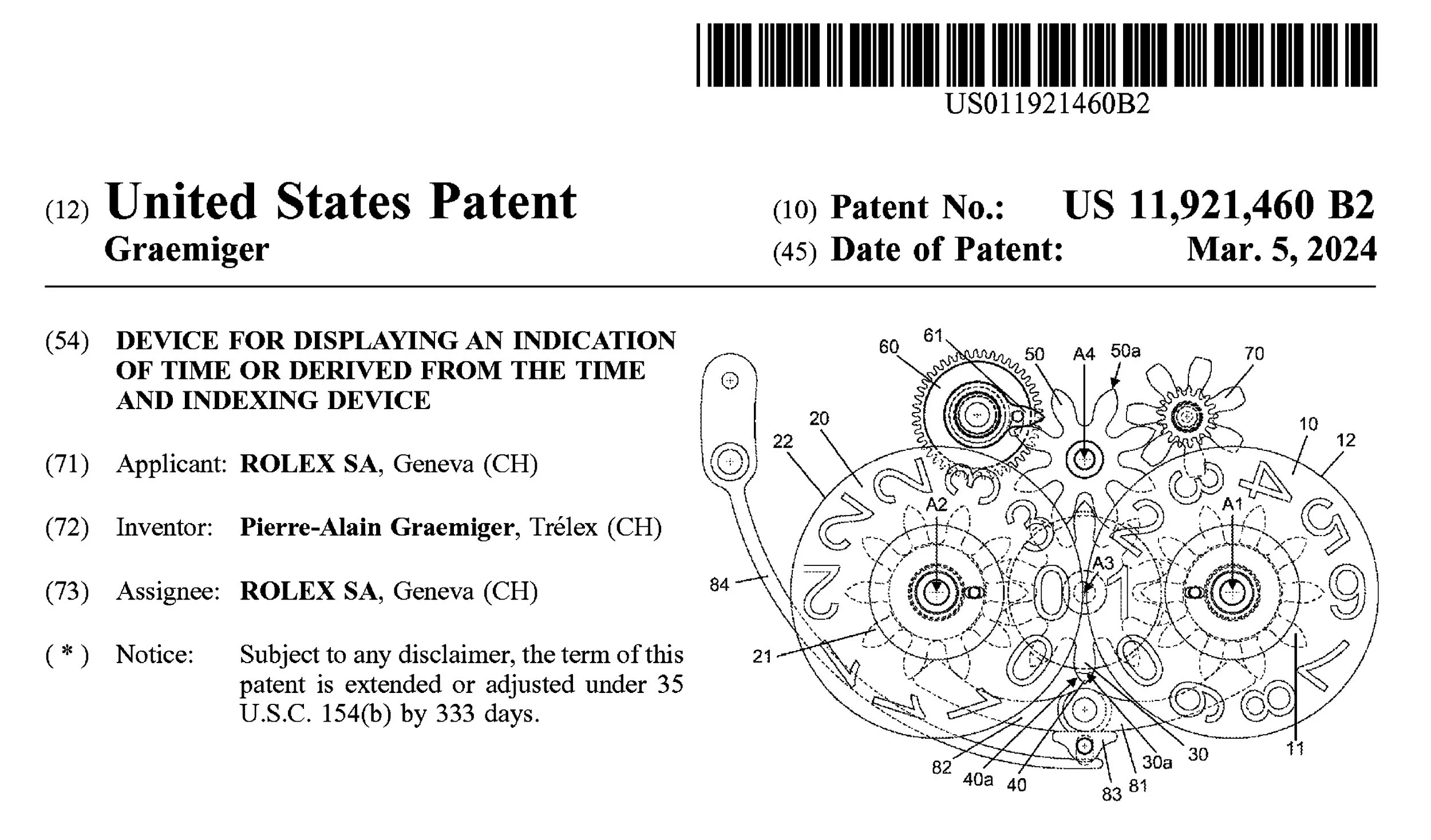
Date with destiny. (Image source: Rolex via USPTO)
A patent filed by Rolex shows the brand could be using a Grande Date complication soon.
In the past, Rolex has been reluctant to use a Cyclops for its non-Oyster watches to indicate the date, such as the Cellini. The Cellini Date had a round sub-register at 3 o'clock with 31 graduations while the Cellini Moonphase used a separate hand to display the date on its outer dial.
If the 1908 line is expanded to include more complications, Rolex's patent points to a Big Date display, which was first invented by A. Lange & Söhne in 1994. In its patent, Rolex said it created a Grande Date complication that minimized amplitude loss, especially when the two distinctive apertures move at the same time, such as from 31 to 01.