
I think we can agree that when it comes to watchmaking, you don’t typically think Italian. As it turns out, Italy has a rich history of watchmaking, which has often been overshadowed when people discuss famous watchmaking countries, like Switzerland, Germany, or Japan. Therefore, I compiled a short list of my top three vintage Italian watch brands, and why they are important.
Panerai Watches
Panerai is a famous Italian watch brand with its origins in Ponte alle Grazie in Florence. First opening up in 1860, Panerai initially started off as a watch store and workshop, as well as Florence’s first watchmaking school.
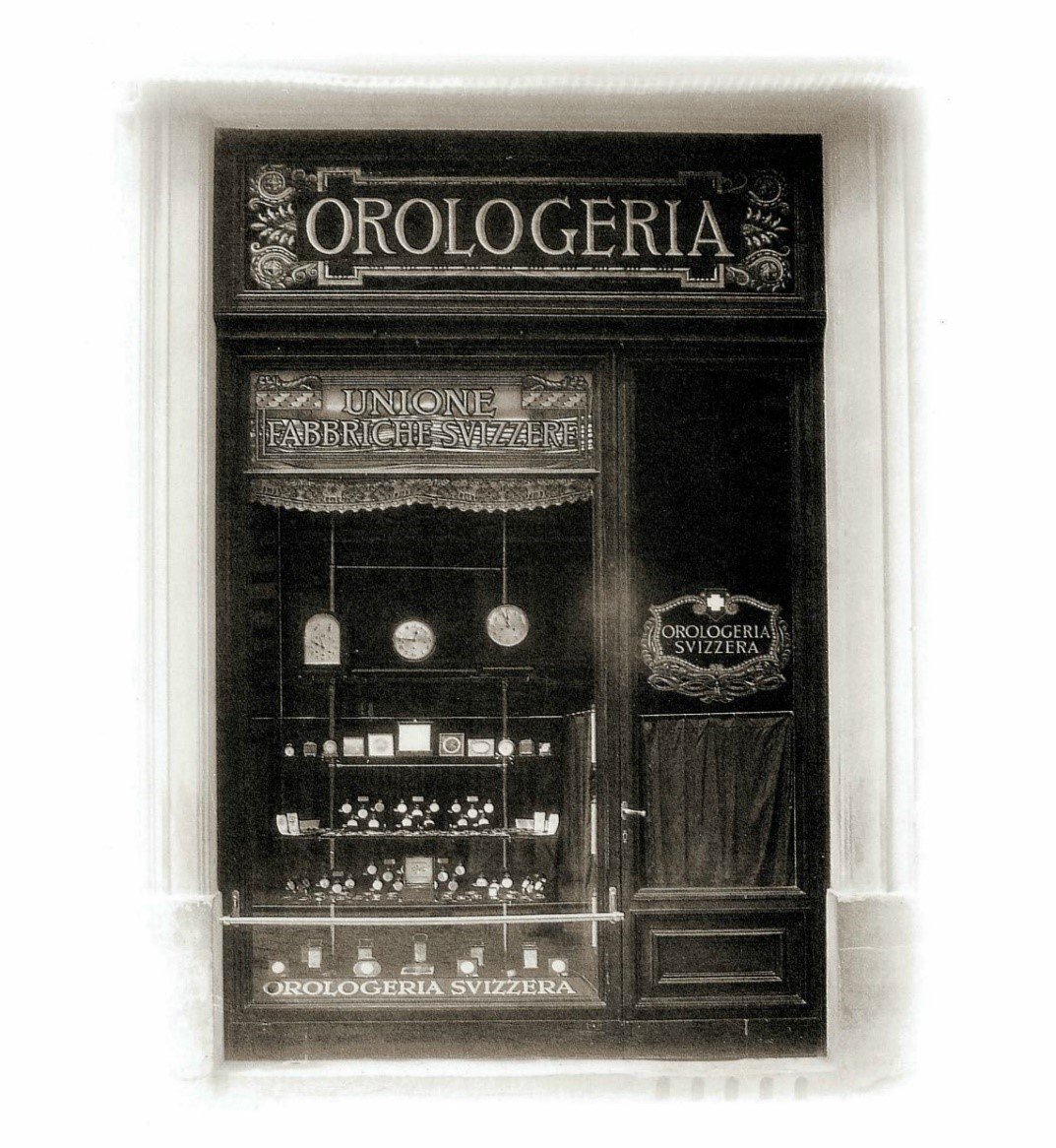
From 1876 to the 1920s, Panerai had many locations throughout the city of Florence. It finally settled on a shop in historic Palazzo Arcivescovile in Piazza San Giovanni, in the center of Florence. It proudly displayed the name “OROLOGERIA SVIZZERA” above the storefront, reflecting the high quality of the watches they sold.
Why Is Panerai Important to Italian Watchmaking?
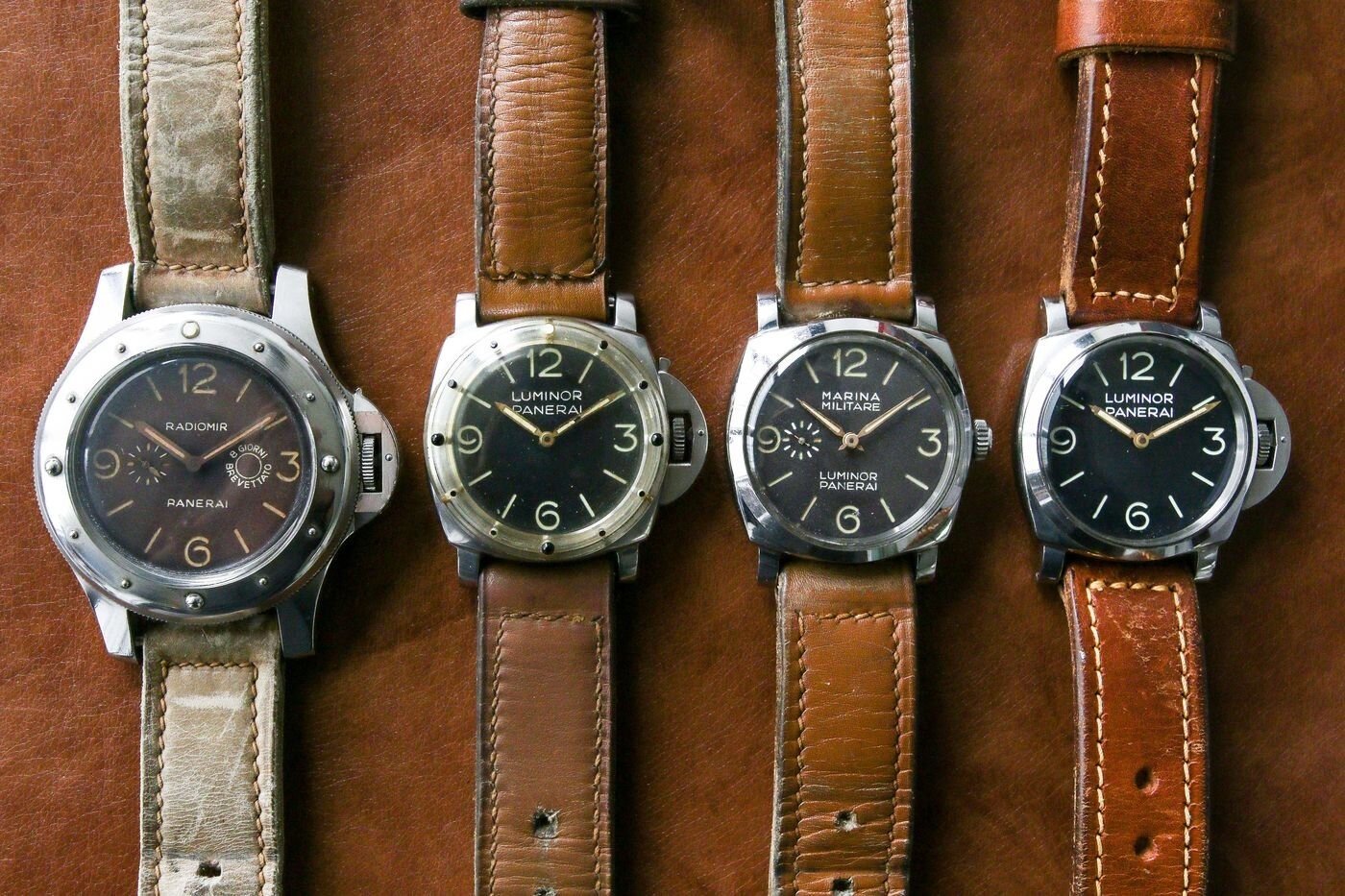
Guido Panerai (1873–1934), grandson of Panerai’s founder, started supplying the Regia Marina or Italian Royal Navy in the early 20th century. In 1916, in order to meet requirements of the Regia Marina, Panerai developed a radium-based paste to make their instruments shine brighter. This is how the Panerai Radiomir paste was born, the beginning of the watch model that would be a centerpiece in Panerai’s catalogue going forward.
In 1936, the first Panerai Radiomir prototype was developed and assembled by Rolex for the company, made for the Italian Royal Navy. Just a year prior, the navy would start developing underwater assault vehicles and training operators. To help aid this new program, a number of dive watches were created and tested. The standout model was the Rolex Panerai ref. 2533, again made by Rolex for Panerai. This model was then followed by the Rolex Panerai ref. 3646, which you might recognize as the archetypal Panerai Radiomir or ‘Radiomir 1940’ vintage pieces.
Credit: Ferno Time
After the Second World War, realizing the health implications of radium used in their products, Panerai switched elements. They trademarked the named ‘Luminor’ in 1949, beginning experiments on this tritium-based lume that would replace the Panerai Radiomir in the 1960s. It was during this time that the dangerous health effects of radium became better known, and creating a replacement for the element became critical. All of this eventually led to the release of the Panerai Luminor wristwatch.
Throughout the 1950s and 1960s, Panerai continued upgrading their dive watches for the Italian Navy. A few of these innovations would include different calibrations, large dial sizes, water resistant signal lights to compensate for the increased pressure at significant depths, and a new crown guard. Panerai continued producing watches for the Italian Navy well into the 1980s, and can be considered a major player in developing the dive watch market throughout the 20th century.
Panerai is one of the original military dive watch suppliers, and proudly maintained a history of Italian family ownership until their acquisition by the Richemont Group in 1997. A paramount figure when looking back to water resistant vintage Italian watches.
Gucci Watches
Gucci, the iconic fashion brand, was founded by Italian businessman Guccio Gucci. In 1906, after returning to Italy from his travels, he founded the House of Gucci where he sold travel items and artisanal goods.

The House of Gucci on Via della Vigna Nuova in Florence, Italy in the early 1920s
In the early 1920s, Guccio founded the House of Gucci on Via della Vigna Nuova in Florence.⁷ Guccio proved to be an extraordinary craftsman, and this is the period in which he started producing luxury goods marketed only towards the wealthiest Florentines. A second store was opened on Via Condotti in Rome in the late 1930s, near other companies such as Bulgari and Enrico Cucci.
After expanding their product line in the 1930s and 1940s, Guccio passed away in 1953. After Guccio’s passing, his three sons took ownership of the company and continued expanding their international retail presence and product line. This new expanded product line then included fine jewellery and luxury watches.
Why Is Gucci Important to Italian Watchmaking?
After Seiko released their Seiko Astron initiating the Quartz Crisis in 1969, the watch world was hit hard. The Quartz Crisis wreaked havoc on the industry throughout the 1970s – until a new revolution was to emerge.
By the 1980s and 1990s, fashion watches were now starting to go mainstream, with big players such as Swatch and Fossil leading the charge. These companies shifted the focus away from internal technology and function, to the watch’s aesthetic. Thus, a new market was emerging, and many were starting to wear multiple watches throughout the week to match their various outfits, Swatch being a notable example for these types of vintage pieces. Luckily, Gucci had already been in this segment of the watch market for quite some time, and had many of their timepieces equipped with the cost effective quartz movement.

Gucci interchangeable bezel bangle watch circa 1980s, one of the archetypal vintage Gucci watches / Credit: Catawiki user
In 1997, Gucci acquired the operating assets of Severin Montres Group, a leading manufacturer of timepieces, and curated their first watches. In the next few years, Gucci would continue their buying spree to companies such as Yves Saint-Laurent Couture, Sanofi Beauté, and a majority stake in Sergio Rossi. The plan to further dominate this market was amplified in 2000, when it acquired Boucheron International Group. They would then secure the rights to sell Yves Saint-Laurent Couture watches.
These developments were pushing Gucci towards their ultimate goal of becoming a leader in the worldwide watch market. These acquisitions, along with their initial releases, helped Gucci develop a strong base within the luxury goods market and the fashion watch market. From the beginning, Gucci has focused on fashion watches to win over the hearts of the youth. Gucci’s revenues now place them in the top 25 Swiss watch brands in the world. Gucci is an underrated figure when looking back to vintage Italian watches.
Bulgari Watches

The Bulgari shop on Via dei Condotti 28 in the early 20th century
Bulgari has its origins in Greece. The name ‘Bvlgari’, comes from the name of its founder, Sotirios Boulgaris. While travelling around for many years, Sotirios finally landed in Italy in 1884. This is where he founded Bulgari as a jewellery house.
Bulgari quickly earned a reputation for Italian excellence and exquisite craftsmanship. Throughout the years, Bulgari released plenty of unmistakable motifs that pay homage to the Roman roots of the company.
Why Is Bulgari Important to Italian Watchmaking?
Bulgari had been producing wristwatches since the early 1920s, and likely before that as well. Bulgari is also well known for introducing ‘Tubogas’ design into the watch world. This unique design feature, which consisted of long bands of gold wrapped around a steel core, was utilized in their famous Bulgari Serpenti or ’Serpent’ designs. A modern day example of the Bulgari Serpenti is the Serpenti Seduttori watch with a quartz movement, which includes hours and minute functions. The Serpent is an example of Roman motif’s being utilized in Bulgari’s vintage Italian watches.
Bulgari continued to release watches throughout the years, and in 2011, LVMH acquired a majority stake in Bulgari.
This 3.7 billion euro-deal, transferred power from the Bulgari family to the French group, with the Bulgari family becoming second largest shareholder in the LVMH group. LVMH has around 60 subsidiaries in total, with Tag Heuer being a notable sub brand.
In 2012, the Octo case designed by Gerald Genta was revamped, and by 2014, the Octo Finissimo Tourbillon set a world record for the world’s thinnest tourbillon wristwatch at 5 mm. Bulgari then set another record in 2016 with the thinnest minute repeater wristwatch on the market, the Octo Finissimo Minute Repeater. This was followed by the world’s thinnest self-winding watch – the Octo Finissimo Automatic in 2017.
Bulgari has continued its dominance with over seven world records after the Octo Finissimo Automatic. In 2022, Bulgari just released the Octo Finissimo Ultra, the world’s thinnest mechanical watch at 1.8 mm in thickness, which also includes a scannable QR code. This QR code enables users to access an NFT for a further method of authentication, a digital artwork. Also paving the way for the brand’s future.

A 2022 Octo Finissimo Automatic with an integrated QR Code / Credit: Tuvie
Each of these brands are now under new ownership: Gucci is part of Kering, the French luxury conglomerate, Bulgari part of LVMH, and Panerai part of Richemont. But that doesn’t make their initial inception, and development, any less connected to their Italian heritage. It is amazing to see Panerai’s early storefront in the historic Palazzo Arcivescovile, the House of Gucci also in Florence, and Bulgari’s storefront in Rome. These are just a few examples of Italian influence in the world of horology.
By: Eric Mulder