
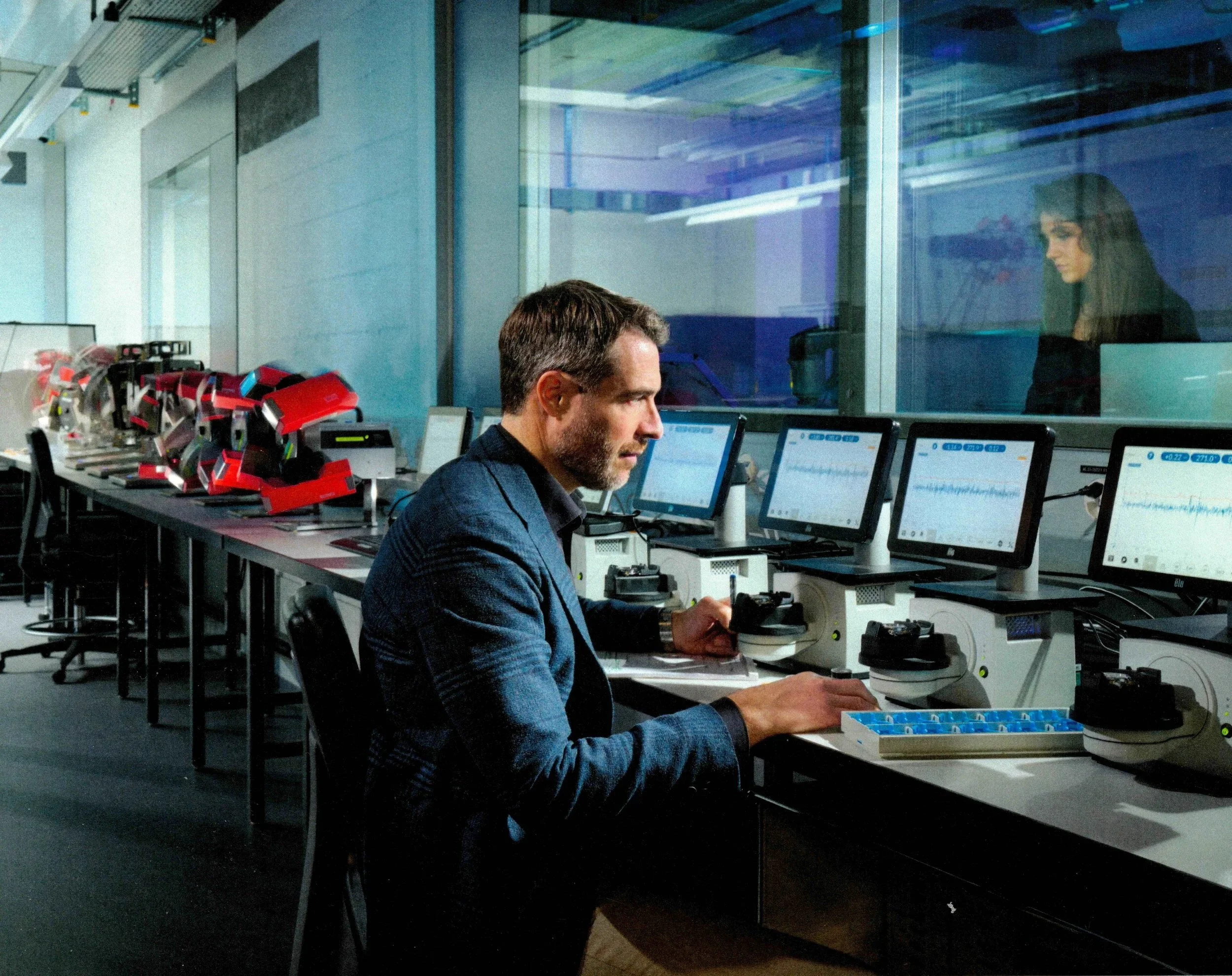
The Timekeeper’s keeper. (Photo credit: Rolex)
Chronometry has been in the news recently after the Contrôle Officiel Suisse des Chronomètres introduced a new certification with tighter tolerances to meet “the evolving expectations of both manufactures and clients.”
At Rolex, however, whose latest movement, the Calibre 7135, took a decade to develop yet carries the same precision rating as movements released by the brand 10 years ago, the focus is not on tightening tolerances. “Ce n'est pas la précision, mais c'est la protection de la précision,” a Rolex representative in Geneva told Coronet.
The goal with Calibre 7135, which incorporates 16 patents, was not to chase a stricter rating, but to protect the current one from “a long list of factors that can disrupt a movement’s smooth running,” according to Félix Grasser, a Rolex employee and chronometry specialist in its R&D division. Mr. Grasser said they routinely rely on hundreds of human volunteers who wear modified or standard watches, sometimes fitted with sensors, to study their long-term behavior, a sort of beta testing at Rolex.
“We have found that the way a watch is worn is the leading cause of accuracy issues,” Mr. Grasser said. “Rolex wearers lead very different lifestyles. Some are highly active, others more sedentary. It is not necessarily the most active who will see their watches become less accurate. The type and frequency of gesticulations, even if they seem perfectly normal, can have an impact.”