
Do Vintage Seikos Really Conform to the Brand’s Design Rules?

Grand Seiko Hi-Beat 36000 4520-8010 / Credit: S.Song Watches
When it comes to design, Seiko has had a really unique approach over the decades, from its intricate dials to its quirky case shapes. A lot of this comes from a concept of Seiko’s called its Grammar of Design, a set of rules originated by Seiko engineer, Taro Tanaka, in the 1960s. While Seiko has been consistent in following these rules over the years, we want to look at a few cases in which vintage Seikos deviated from the Grammar of Design.
What Is Seiko’s Grammar of Design?
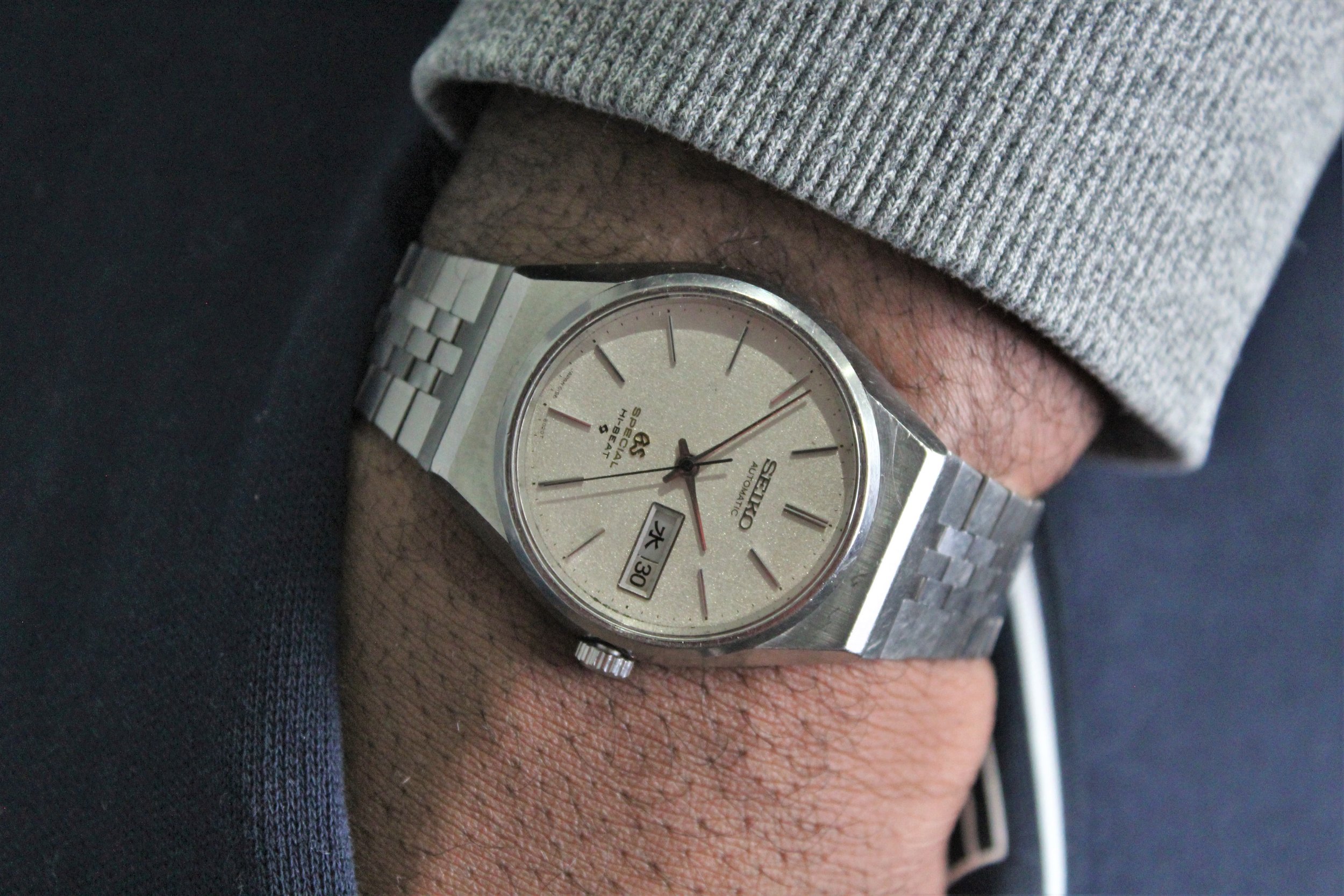
Grand Seiko Hi-Beat Special 6156-8040, for sale on Toronto Vintage Watches
Seiko’s Grammar of Design is a concept originated in the 1960s by Seiko engineer Taro Tanaka. The first series of Grand Seiko watches to feature this design were the third for Grand Seiko, the 44GS, launched in 1967. These were also the first Daini produced Grand Seiko watches. Thus far, Seiko and Grand Seiko had focused mostly on the mechanics behind their watches as opposed to the aesthetics. That changed when Tanaka, a design graduate, joined Seiko in the late ‘50s. Tanaka spent time at the Wako store in Ginza, observing how people went about purchasing timepieces. He concluded that Grand Seiko watches had great individual designs, but lacked commonality when looking at the collection as a whole. He also noted that the watches that performed the best sales-wise had sharper edges, high polishes, and generally stood out. These observations are what eventually led him to develop Seiko’s Grammar of Design’s Nine Enduring Elements of the Grand Seiko Style. The ‘Nine Enduring Elements’ were: double indexes at 12 o’clock, multi-faceted rectangular markers, multi-faceted hour and minute hands, highly polished bezels, highly polished planes with 2-D surfaces, a half-recessed crown, a flat dial to minimize distortion on the dial, a curved sideline, and a reverse slanted bezel and case side.
How Consistent Was Seiko in Following Its Grammar of Design?
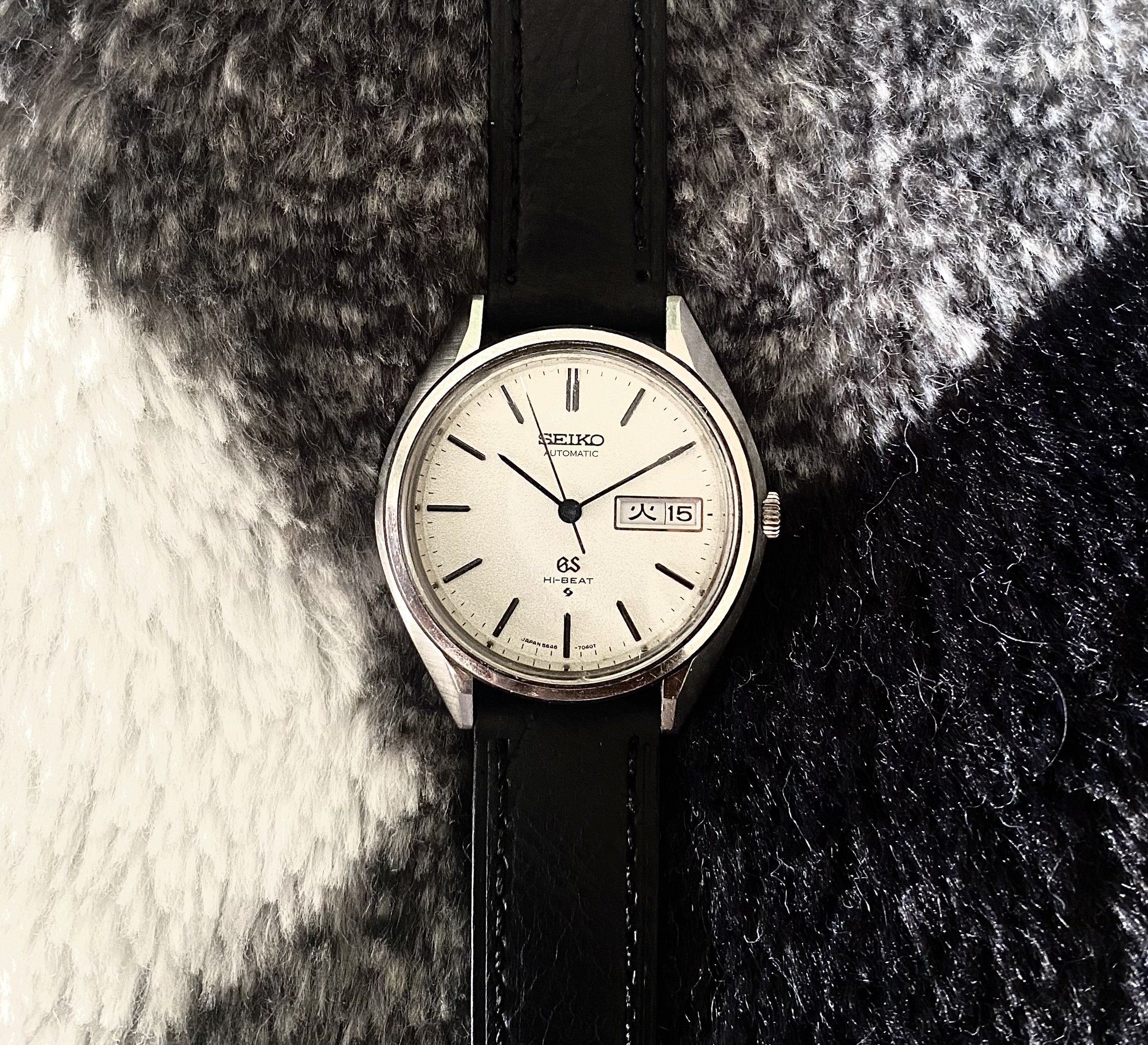
Grand Seiko Hi-Beat 5646-7030
In general, Seiko has had very consistent design, particularly as far as vintage Grand Seiko and King Seiko are concerned. While Seiko’s design style did lean towards the eccentric side throughout the 1970s and 1980s, not all vintage Seikos, vintage Grand Seiko and King Seiko in particular, always stuck to the Grammar of Design.
While some aspects of the Seiko’s Grammar of Design were closely attended to, others may not have been. It seems that virtually all vintage Grand Seikos had double indexes at 12 o’clock and multi-faceted rectangular markers. The same extends to flat dials and curved sidelines.
One thing that was not present on a few Grand Seikos made during the 15-year period that the sub-brand was originally active, are highly polished planes with 2-D surfaces. The first part of that, highly polished planes, was not exactly the case for several models in gold, that instead of polished surfaces had textured yellow gold cases – which also means no 2-D surfaces. There were three Grand Seiko models in particular like this: the Seiko Astronomical Observatory Chronometer 4520-8020, Grand Seiko Hi-Beat 36000 4522-8010, and Grand Seiko Hi-Beat 36000 4520-8010. So, while these Grand Seiko models may not exactly have polished surfaces, it is for good reason – gold cases.
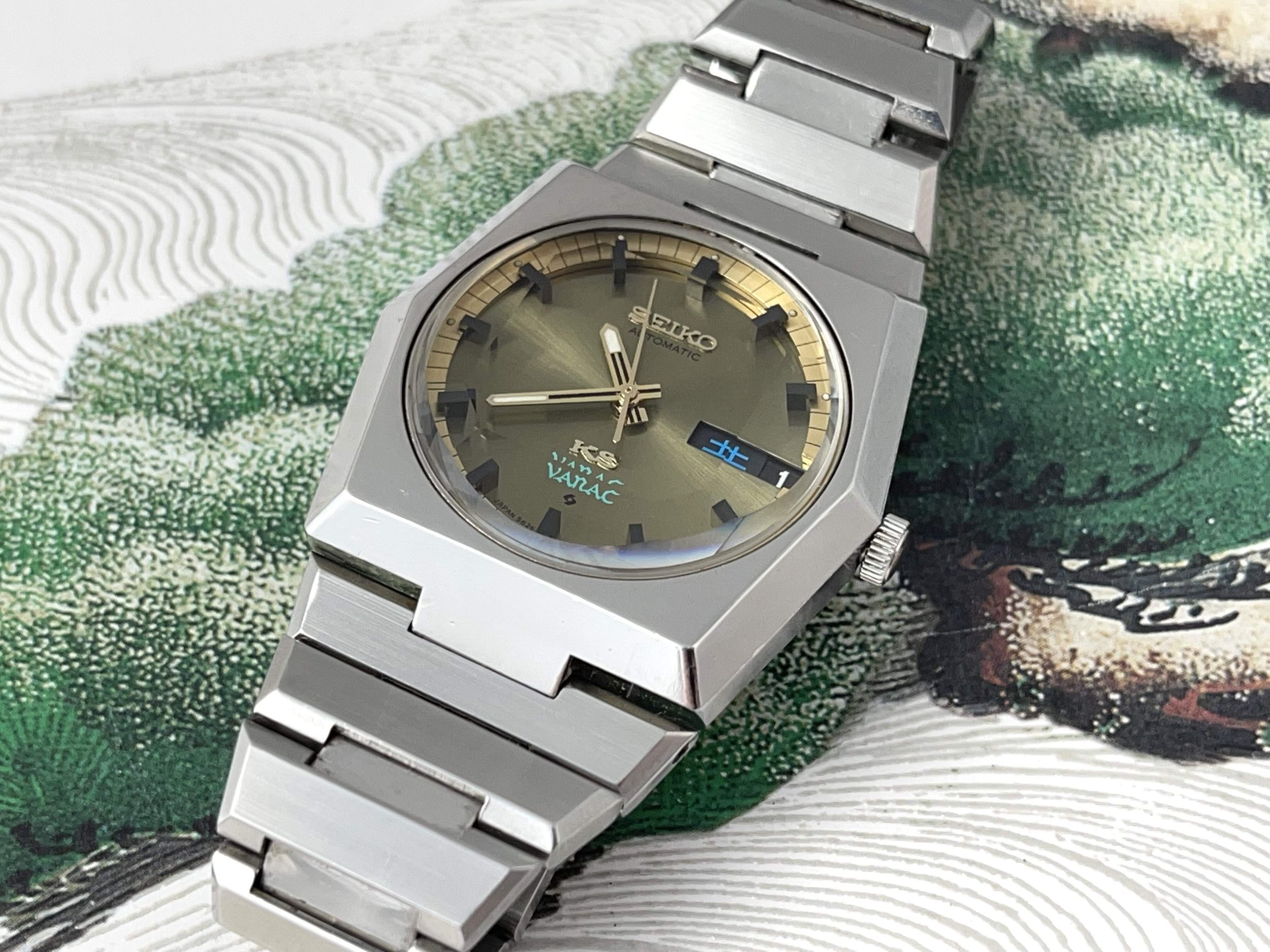
King Seiko Vanac 5626-6010
There are also several models that do not have multi-faceted hour and minute hands. I have one, the Grand Seiko Hi-Beat 5646-7030, and there are also several others, like the Grand Seiko Hi-Beat 5641-7000.
Apart from Grand Seikos, there are also several King Seikos that do not exactly adhere to Seiko’s Grammar of Design, King Seikos with odd case shapes like the 5626-6010, that do not have curved sidelines.
So, while Seiko did largely adhere to these design principles, and it even continues to do so to some extent today, there have been several models over time that, iin different ways, did not follow Seiko’s Grammar of Design. Whether it was because they had beautiful textured yellow gold cases or for other design considerations, it seems like Seiko’s Grammar of Design was not exactly written in stone.
By: Andres Ibarguen

A vintage Grand Seiko Hi-Beat 36000 Special 6156-8000 that was recently serviced, for sale on Toronto Vintage Watches.