
Today we spoke with Rob Corder, veteran journalist and managing director at Watchpro, about Watchpro, the niche it occupies as a leader in watch industry news, watch media at large, and even a bit on the market in the United Kingdom.

Watchpro co-founders Rob Corder and Daniel Malins
Andres Ibarguen: Watchpro is different from most watch magazines for its focus on the watch industry, what is so special about this niche in watchmaking?
Rob Corder: It is not just executives in the trade that are interested in what is happening in the watch business, our experience has shown that consumers are just as fascinated. Everybody wants to be first to see a new watch, which is why we work at such speed to provide a quick digest every day about what is fresh. We don’t create 2,000-word opuses about watches. There are sites that do that far better than we could, and we actively encourage Watchpro readers to go to those sites if they want the full immersion treatment. Our role is to be the daily newspaper for the watch world, giving trade executives and consumers an immediate take on our fascinating industry.
We also have a strong editorial voice. If we see something we like, or don’t like, we will say so. And we have great columnists who are given the freedom to do the same. Oddly, it is unusual for a watch title to be so opinionated, which I think is a key reason Watchpro has such a loyal and growing audience.
AI: How was Watchpro founded? How has it grown since inception?
RC: Watchpro launched in the UK ten years ago and we have subsequently added unique editions for the United States and Germany. It was created as a digital B2B title with a free magazine circulated to executives in the trade. What has happened since is that, while the print magazine is still very much focused on business, the audience for the website and social media have grown to over 250,000 unique users per month, with over 95% of those being consumers. These consumers love reading about the business side of watches, just as people like the Wall Street Journal or Financial Times for giving them all the news and opinion, not just business and finance coverage. We have expanded our coverage in response to this huge audience.
AI: What is your background in relation to the watch industry?
RC: My background is over 30 years in journalism, I only started writing about watches when we launched Watchpro in 2011. Watchpro’s parent company, ITP, is the largest media business in the Middle East, with hundreds of people working at our Dubai headquarters where we publish titles ranging from GQ and Harper’s Bazaar to B2B titles for industries including aviation, hospitality, construction, and broadcast. ITP has offices in Dubai, Doha, Riyadh, Mumbai, and London.
AI: Watchpro also runs different events like Watchpro Salon and different markets, what is your goal with these events?
RC: Watchpro has a single stated mission: to help businesses profit from the sale of watches. Our events are an extension of our web, print, and social media output because they do the same job: presenting what is new and interesting to trade executives and consumers. The last two years has seen a dramatic widening of the market for watch brands that aren’t just Rolex, Omega, Breitling etc. People have discovered independent watchmakers during the pandemic and they want to see the watches up close. That is what our events aim to do. We also insist that the events are enjoyable to be part of, so we always have lots of opportunities to socialise and share stories about buying, selling, and owning watches.
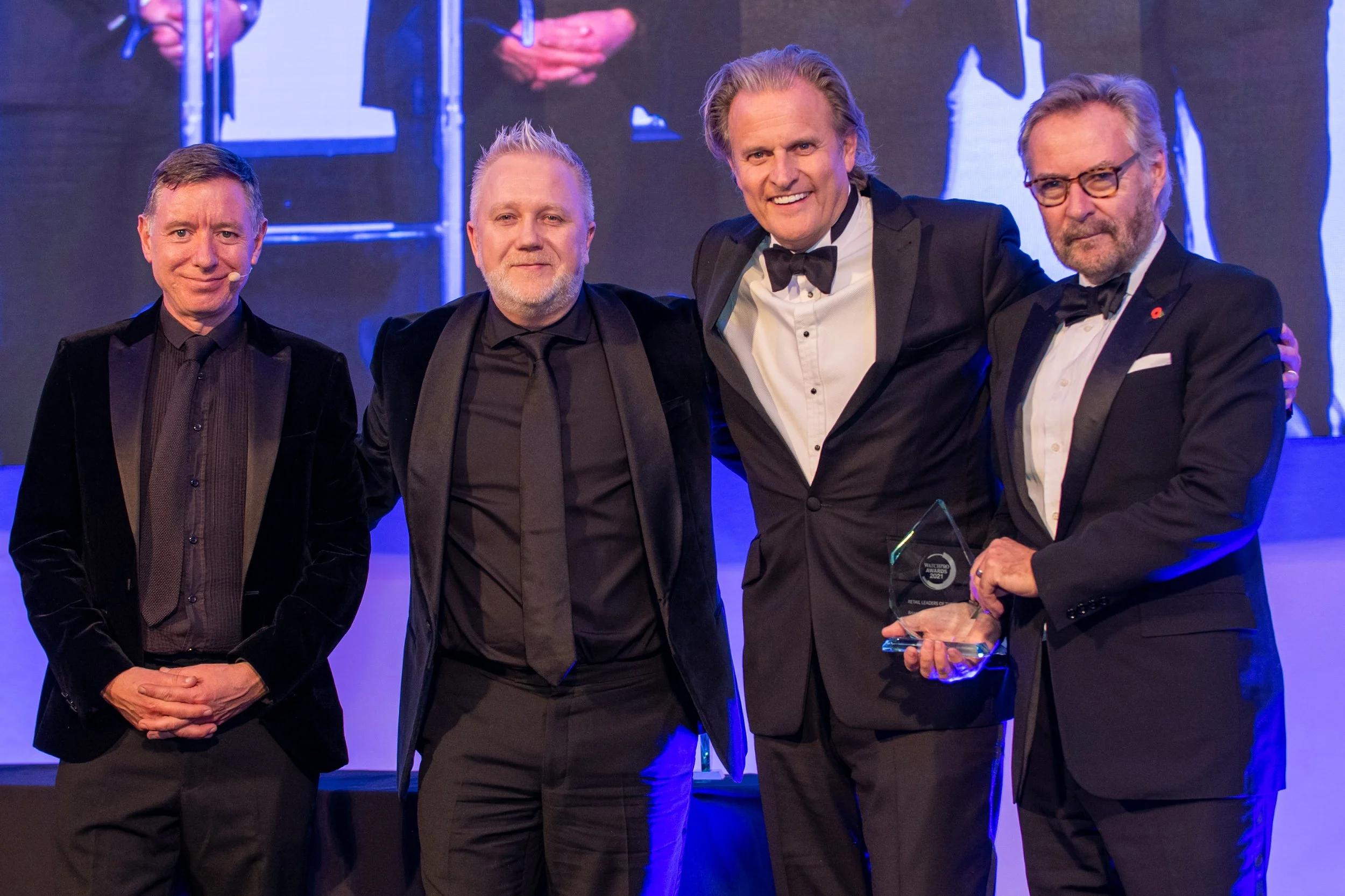
Watches of Switzerland CEO and Executive Director Brian Duffy and Craig Bolton accept a 2021 Watchpro Award from Rob Corder and WOLF CEO Simon Wolf.
AI: How vital do you see community and community building to having a successful watch publication or publication in general?
RC: I think community is an overused buzzword, but it is important to understand your audience and appreciate that they come to your publication for a reason. In the case of Watchpro, I think the audience likes our independent voice that is not swayed by the biggest brands trying to influence our coverage by leveraging their advertising spend or by inviting us on lavish press trips. We get almost zero advertising from LVMH, Swatch Group, Richemont, Rolex, AP, or Patek Philippe, which is around 80% of the market. We’d love their advertising, but will never lose our independence.
AI: What would you view as the biggest challenges facing watch media as we approach 2022?
RC: There are no new challenges, just the same ones that have been around forever, in my experience. You have to keep changing to keep pace with what your audience wants from the point of view of content and how they consume media. I went through the transition from print to digital over the past 20 years, which was not easy. Now we have social media and video, which is new to traditional media businesses, and it is vital we master this too. Watchpro events are part of staying connected to our audience, which is why we are expanding this side of our operation so fast.
AI: How important is it to develop relationships with brands and other companies as a watch publication?
RC: It is important insofar as we are all working towards the same goals, which is to help businesses profit from the sale of watches. Given this fact, it seems strange to me that Watchpro receives so many complaints from brands that feel our coverage is unfair in some way. It is not unfair, it is simply that we will not slavishly cut and paste the press releases they send us. Most executives understand and appreciate this, but not all.
AI: We’ve seen many different watch publications start different kinds of partnerships with brands, evening launching special editions. What role do you think watch media has to play in shaping tastes in the watch industry, or building up hype, if you will.
RC: I think media companies becoming retailers is inevitable because advertising no longer supports the huge expense of running a great editorial team. Consumers are also put off when editorial is encroached upon by advertising, so there is a limit to how many banners you can place on a site.
Social media companies are taking over three quarters of all digital advertising today and rising. They do not carry the cost of creating content. If that trend continues and you have only social media, then journalism will end as a viable profession and media companies will have to find new revenue streams like becoming retailers or changing for other services.
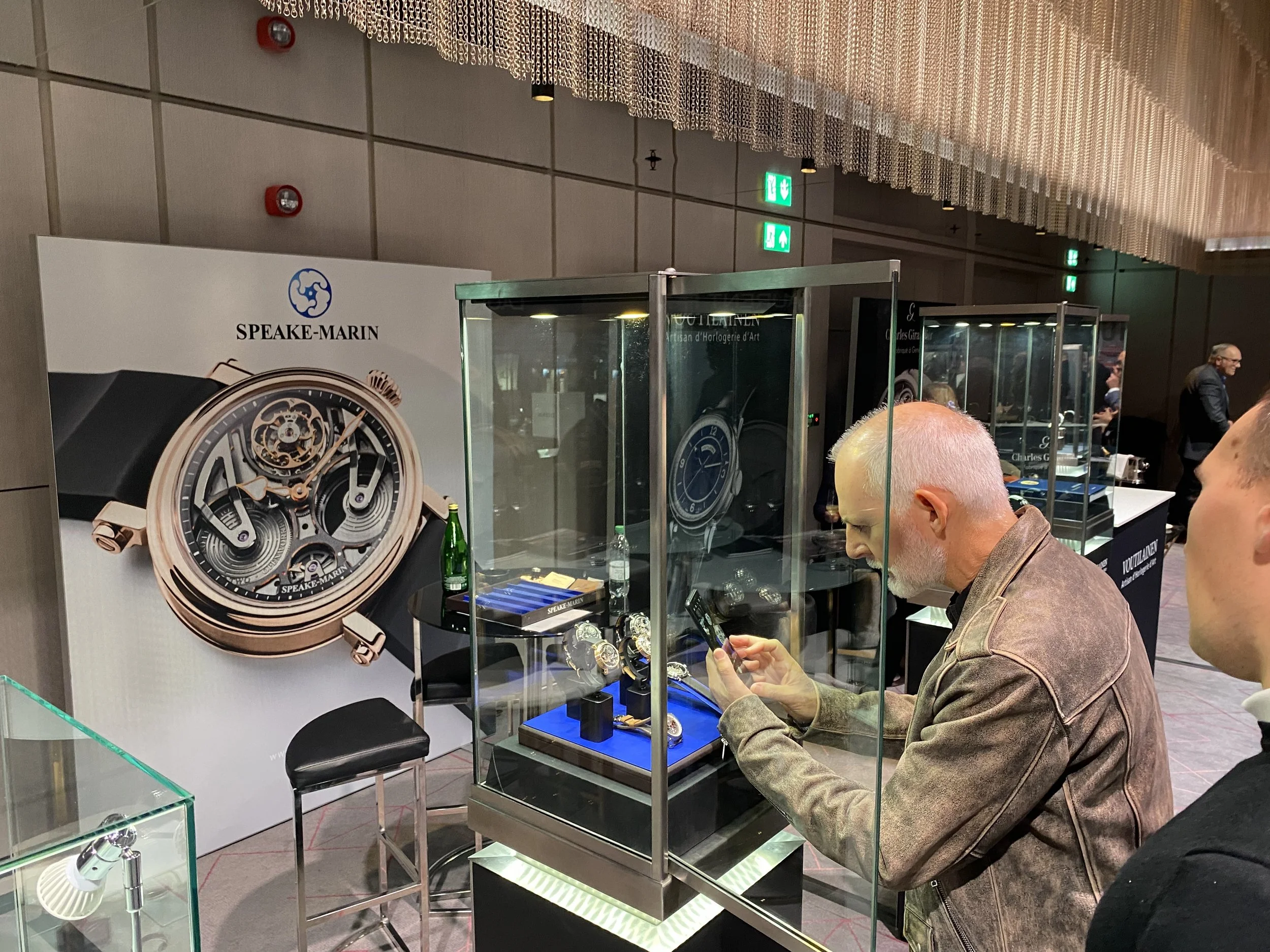
Scenes from November’s successful Watchpro Salon
AI: How is the watch market and community different in the UK than it might be in other geographies, is there an affinity for any particular brands or styles?
RC: In my experience, the UK is the most sophisticated retail market in the world for watches. We have massively powerful groups like Watches of Switzerland competing with family-owned independents all over the country. This competition is driving up standards and that is great for consumers. The UK is the fourth largest market for Swiss watches in the world and it would be even bigger if retailers could secure better supply.
One thing that is disappointing about the UK market is the lack of access to independent watchmakers. We are too dominated by the big industrialised groups, which demand every inch of real estate within the best stores and squeeze out incredible independents. Two big names in Mayfair closed down in the past few years: William & Son and Marcus. These were champions of independents at a time when they were tough to sell. If they had continued to today, I think business would have been booming because there is almost no representation for red hot independent watchmakers in the UK right now.
AI: How do you think Brexit may have affected the UK watch market?
RC: In 2016, when the UK voted to leave the EU, it crashed the pound and made the UK one of the cheapest places in the world for foreigners to fly in and buy very expensive watches. Although that was only a temporary advantage, the money that flooded in has been used to expand and upgrade stores, and these fantastic showrooms, among the best in the world, continue to make the UK one of the most desirable destinations to shop for watches.
When the pandemic hit and tourism stopped, retailers were well-prepared to focus their energy on domestic customers, and the watch loving British public has responded by spending more than ever on luxury watches.
Retail analyst GfK reports that the value of sales this year will comfortably exceed pre-pandemic 2019. That is without tourism returning to the UK.
Thank you for speaking with us today, Rob!