
Perpetualwatchlover a.k.a. Bert Mengels is a bit of an unconventional online watch dealer, making him all the more interesting for those looking to indulge. Having started off early in the watch industry, he is able to source very interested pieces, with a particular focus on vintage Seiko. We talked about how he got into the business, along with his views on the prospects for the watch industry going forward.

Perpetualwatchlover a.k.a. Bert Mengels
Andres Ibarguen: When did you first get interested in vintage watches?
Bert Mengels: I started early on, as I was born in the watch industry. I got in touch with old watches both NOS as well as worn ones when I was about 6 or 7 years old.
AI: What was the first vintage watch you got?
BM: When I was 11, I formally inherited a two-tone Seamaster from my godfather. The watch is quartz and has a dual-time feature, both analog and digital. Quite the odd piece for an 11-year-old!
AI: And how did you decide to start selling vintage watches and create Perpetualwatchlover?
BM: Due to the being born in the industry, I started finding my own route with old watches. The very first ‘flip’ I ever did was actually an El Primero diver with a grey dial. Killer piece but way too big for me. From one thing comes another and before you know it, I was paying taxes on second-hand watches!
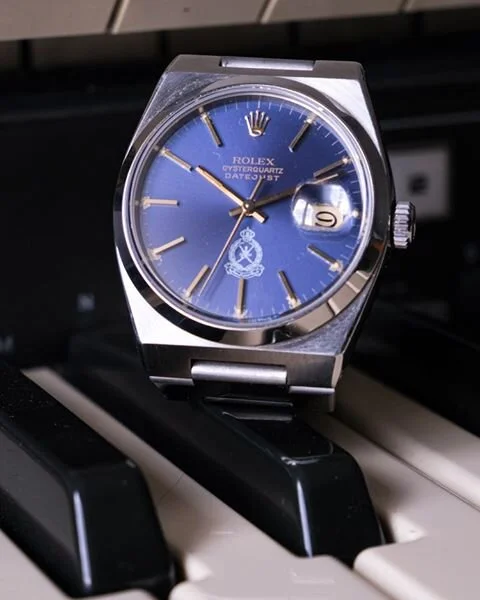
Bert’s rare 1980 Rolex ‘Kanjar’ ref. 17000
AI: What’s the most important aspect, in your view, of the relationship you have with your clients?
BM: I like to offer something unique to the people, not just a regular old Seiko. I want to hunt down the JDM things or the odd dials. That does not mean that I won’t source you a basic silver dial 1601 every day of the week. The passion just goes deeper than simply making a buck.
AI: How do you think that relationship differs online versus in person? Is one ‘better’ than the other in terms of relationships with customers?
BM: As I experience both, I do tend to argue that online is the perfect method for niche retail while in-person is the ultimate source for client service. In all honesty, I don’t open my doors for a client to buy a watch anymore, only for repairs.
AI: How do you usually find clients? What’s your best sales channel?
BM: I usually use my website but I am trying to combine it with things like Montres Publiques Market. In the end I always get shocked when I sell a watch. It is such an abstract idea to think about someone looking at my watches, without seeing them, do so. It is even crazier when they fill in the PayPal password, haha!
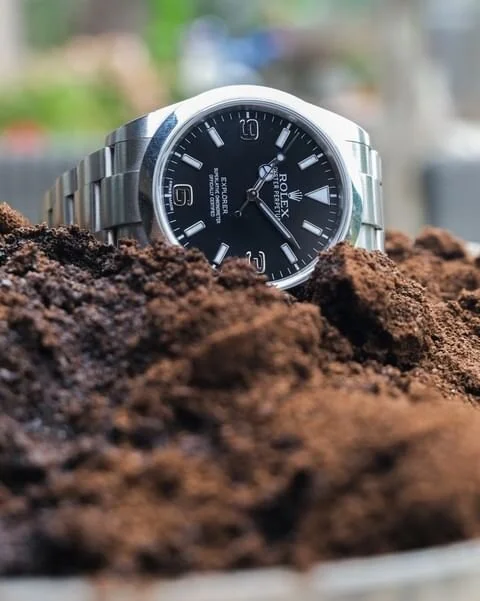
Bert’s first Rolex, an Explorer ref. 214270
AI: Do you have any particular focus in terms of the watches you sell?
BM: SERVICEABILITY! I don’t want a watch that is impossible to repair, only things that are straight forward and easy to maintain!
AI: How do you think online dealers such as yourself will fair going forward with respect to competition from traditional, retail-based, dealers?
BM: I personally have the feeling that the online watch business is a niche thing. You could compare it to a comic store, I am pretty sure that there are dozens of stores like this with real gems waiting to get discovered or waiting to go bankrupt. They could be a booming business in the online world. This is the same for watches, in my opinion. A second-hand store with vintage Seikos even in a big city will be bankrupt before the end of the year, while a physical store with watches for ‘everyday’ people will still be a thing.
AI: Would you say traditional dealers are well-positioned to take advantage of online sales channels?
BM: I am not convinced, in the grand scheme of things, we already see big business turn their backs on e-commerce. If you don’t have something unique to offer you will feel the cost pressure. This is not something I would write out in an interview; you should read my thesis for that one, hopefully finished in 2021!
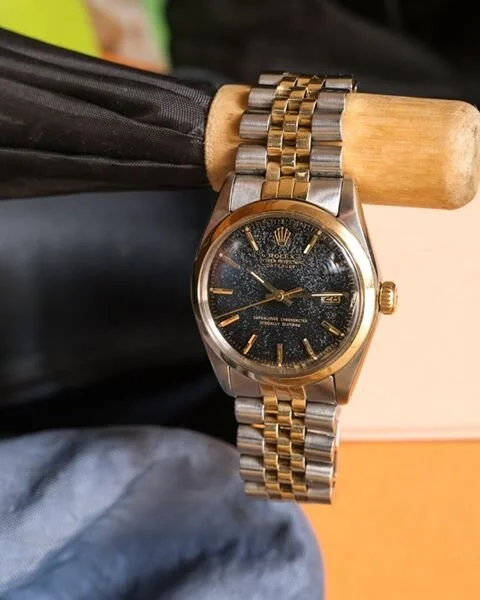
Bert’s Rolex Datejust ref. 1600 with a gilt dial. Not the dial of the watch originally but Bert prefers the gilt dial.
AI: What do you think the biggest challenges facing online dealers are today? Is the market becoming saturated?
BM: Saturated? For sure! Too many people are in it for the cash without the institutional knowledge. I am not saying that you should be a master watchmaker but if you can’t control a tweezer or a screwdriver, leave the watch business for what it is. This is, for example, a big reason why I don’t touch the ‘basic’ brands like Omega. I don’t believe in the sustainability of the watches in vintage land where there are too many one-day flies trying to make a buck. I prefer to sit on stock of watches that I love and don’t sell quickly, rather than dabble in the pond where everybody is trying to sell the same watch.
AI: We’ve heard of a lot of online retailers/dealers doing very well recently, and also some who maybe didn’t do as well. How did the recent lockdown and the pandemic, in general, affect your business?
BM: Honestly, I did not really have any major changes. Traffic on the website did go up but sales were quite the same online. Although, at the end of the day, I am a pretty small fish in a big pond.
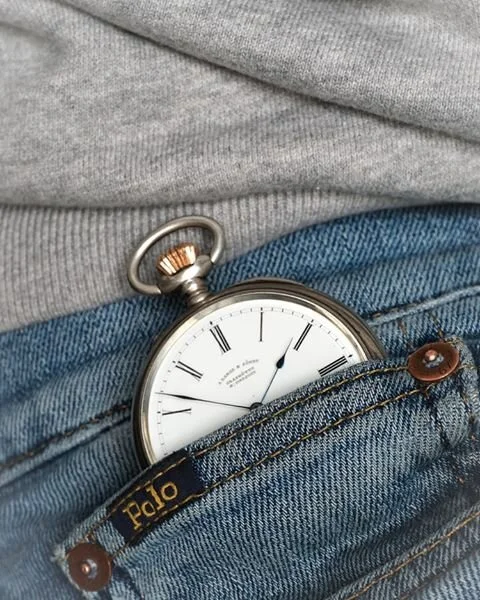
An A. Lange & Söhne pocket watch from the late 19th century
AI: You also sell accessories along with vintage watches, is this part of your future plans for expansion or will you focus more on timepieces going forward?
BM: YES! As some already know, my dad actually is a goldsmith with almost 40 years of experience! So, let’s say that we a playing around with some metal these days. Stay tuned!
AI: Do you have a grail watch?
BM: An NOS Rolex Explorer ref. 1016, matte dial and a Daini-made 62MAS! *Mic drop*
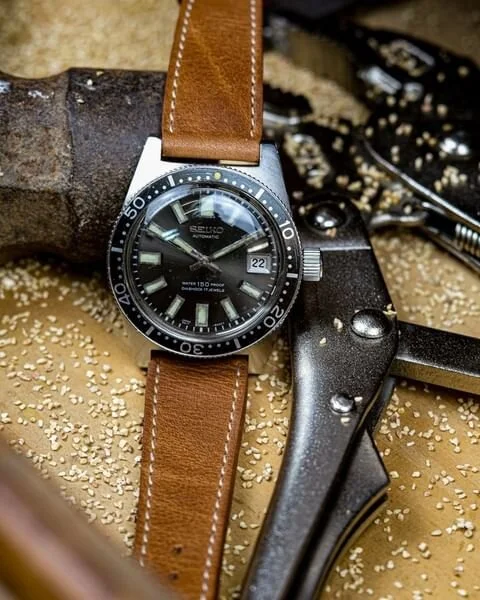
A Seiko 62MAS
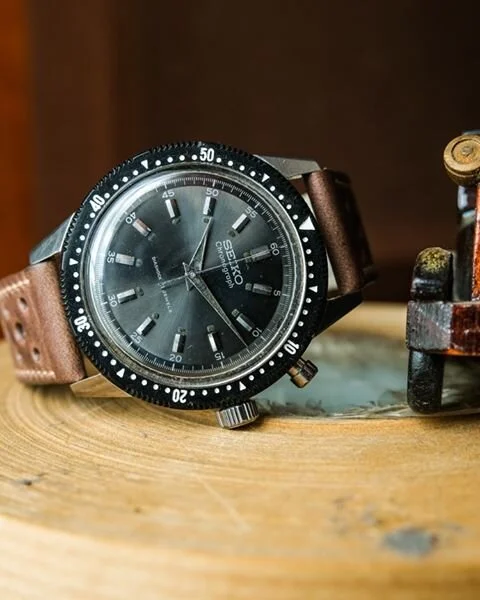
Bert’s Seiko 5719 monopusher chronograph (the first chronograph movement Seiko made for the Olympics in ‘64).